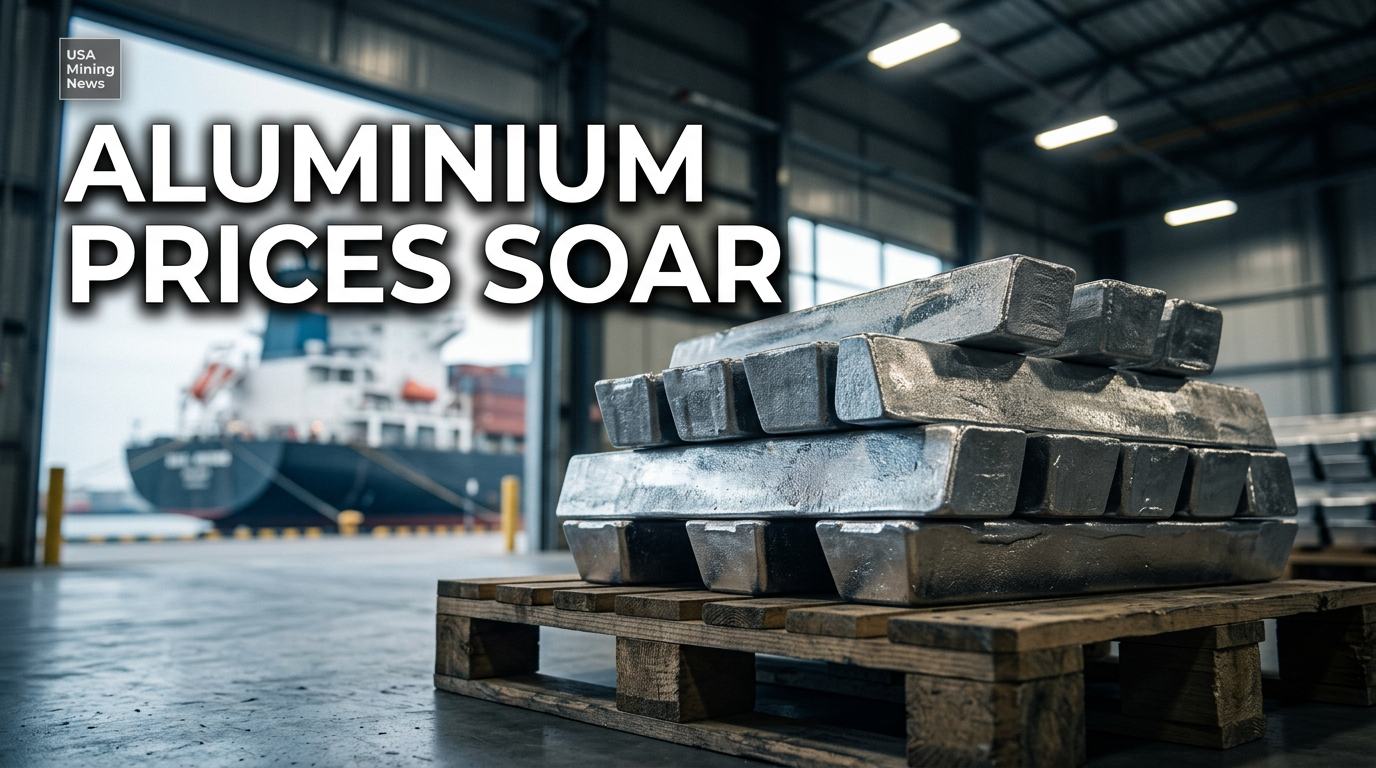
Global aluminium markets are experiencing significant upheaval after Aluminium Bahrain BSC (Alba) announced a suspension of metal deliveries due to force majeure, citing transit issues through the critical Strait of Hormuz. This disruption, stemming from escalating tensions in Iran, has propelled aluminium prices to their highest levels since 2022, underscoring the vulnerability of global commodity supply chains to geopolitical instability. The move has sparked concerns among traders and manufacturers worldwide regarding potential long-term supply interruptions for one of the world's most vital industrial metals.
Aluminium Markets Roiled as Alba Suspends Deliveries Amid Hormuz Strait Tensions
The global aluminium market has been thrust into a state of heightened volatility following a significant development on March 5, 2026. Aluminium Bahrain BSC (Alba), one of the world's largest primary aluminium producers, announced the suspension of metal deliveries to certain customers, invoking force majeure clauses within its contracts. The critical trigger for this action is a halt in shipments through the Strait of Hormuz, a maritime chokepoint whose strategic importance cannot be overstated. This disruption, a direct consequence of the ongoing conflict and escalating tensions in Iran, has sent immediate ripples through commodity markets, driving aluminium prices to their highest point since 2022.
The incident highlights the precarious nature of global supply chains for essential industrial metals, demonstrating how geopolitical flashpoints can swiftly translate into tangible economic impacts for mining operators, smelters, manufacturers, and end-consumers worldwide. For an industry heavily reliant on the smooth flow of raw materials and finished products, this development serves as a stark reminder of inherent vulnerabilities.
The Force Majeure Declaration and Market Impact
Aluminium Bahrain BSC (Alba), a prominent player in the global aluminium sector, officially declared force majeure, a legal provision that frees both parties from liability or obligation when an extraordinary event or circumstance beyond their control prevents one or both parties from fulfilling their obligations. In this instance, Alba explicitly stated that the force majeure is "tied solely to transit issues in the Strait of Hormuz, not any disruptions at its smelter facility." This distinction is crucial, as it indicates that production at Alba's operations remains unimpeded, but the ability to deliver finished product to market is severely hampered.
The market's reaction was swift and pronounced. Aluminium prices in London surged by as much as 5.1%, marking the largest single-day increase since November 2024. This spike pushed prices to their highest levels seen since 2022, reflecting deep-seated concerns among traders and investors about immediate supply availability. The ripple effect was felt across the trading landscape, causing "significant disturbances for aluminium traders" throughout the week following Alba's announcement. The implication is clear: even brief interruptions in the logistical chain for a high-volume commodity can create substantial commercial difficulties and drive rapid price appreciation, especially in markets operating with tight margins and "just-in-time" inventory systems.
The Strategic Chokepoint: Strait of Hormuz
At the heart of this disruption lies the Strait of Hormuz, a narrow waterway connecting the Persian Gulf with the Arabian Sea and the open ocean. This 39-kilometer-wide passage is undeniably one of the most critical maritime chokepoints globally, serving as the transit route for a significant portion of the world's oil, liquefied natural gas (LNG), and other commodities, including aluminium from key Middle Eastern producers. Its strategic significance means that any impediment to shipping through the Strait has far-reaching geopolitical and economic consequences.
For the mining and metals industry, especially those sourcing or producing in the Middle East, the Strait of Hormuz is an indispensable artery. Smelters like Alba, situated in Bahrain, rely on this route not only for shipping finished aluminium products to international markets but also potentially for importing bauxite or alumina if their operations are not fully integrated upstream. The current halt in shipments underscores the extreme vulnerability associated with reliance on a single, politically sensitive maritime passage. The "ongoing conflict in Iran" has directly manifested in a tangible disruption to global trade, transforming what might otherwise be a regional conflict into an issue with global economic ramifications.
Aluminium's Critical Role and Supply Chain Vulnerabilities
Aluminium holds a pivotal position in the global industrial landscape, ranking as the second most prevalent industrial metal after steel. Its unique properties – lightweight, strong, corrosion-resistant, and highly recyclable – make it indispensable across a vast array of sectors, from automotive and aerospace to construction, packaging, and electronics. The demand for aluminium continues to grow, driven by global urbanization, electrification trends, and the push for lighter, more fuel-efficient products.
The production of primary aluminium is a complex, energy-intensive process involving an intricate global supply chain. It begins with the mining of bauxite ore, which is then refined into alumina, and subsequently smelted into aluminium. This network of "bauxite mines, alumina refineries, and aluminium smelters" is globally dispersed but interconnected, making the entire chain susceptible to disruptions at any point. Manufacturers worldwide depend on these facilities to produce "highly specialised forms of aluminium" essential for their operations.
The current situation starkly illustrates the dangers for manufacturers who operate with "just-in-time purchasing" strategies. While efficient for inventory management and cost control, this approach offers minimal buffer against sudden supply interruptions. Factories reliant on a steady, predictable supply of aluminium face "substantial commercial difficulties" when shipments are delayed, even briefly. Unlike alternatives like copper, which might be costlier but potentially have more diversified supply routes in certain regions, aluminium's cost-effectiveness often relies on efficient, uninterrupted logistics. The potential for "chaos across industries" is very real if Middle Eastern smelters, including Alba, face prolonged shipping disruptions.
Geopolitical Undercurrents: Iran Conflict and Regional Stability
The immediate cause of the shipping halt through the Strait of Hormuz is firmly rooted in the "ongoing conflict in Iran" and the associated escalation of tensions. While the source material does not provide specific details about the nature of this conflict, its impact on maritime security in such a critical region is undeniable. The Middle East remains a geopolitical hotspot, and events there can readily spill over to affect international trade and commodity flows.
The global community, and particularly commodity traders and investors, are now grappling with both the immediate and "long-term market impacts" of this instability. The situation is further complicated by political interventions and assurances. Despite statements from US President Donald Trump that "the US Navy will escort commercial vessels through Hormuz," traders remain "sceptical about a swift return to normal operations through this essential chokepoint." This skepticism underscores a broader distrust in the ability of political assurances to immediately mitigate deeply ingrained geopolitical risks and operational realities in a conflict zone. The perception of risk itself can create market friction, regardless of official statements.
Broader Implications for the Global Mining and Metals Industry
Alba's force majeure and the subsequent surge in aluminium prices serve as a potent case study for the entire mining and metals industry. It highlights several critical vulnerabilities and considerations:
* **Supply Chain Resilience:** This incident underscores the necessity for mining companies, refiners, and smelters to continually assess and build resilience into their supply chains. Diversification of sourcing, processing, and shipping routes where possible, along with strategic inventory management, becomes paramount.
* **Geopolitical Risk Assessment:** The direct link between the "ongoing conflict in Iran" and a major commodity market disruption emphasizes the need for sophisticated geopolitical risk analysis in investment and operational planning for any entity involved in global resource extraction and processing.
* **Logistics and Infrastructure:** The dependence on critical infrastructure like the Strait of Hormuz illustrates that even with ample resources in the ground or refined product ready for shipment, the ability to move goods to market is fundamental. Investment in secure and diversified logistics is as crucial as mining technology.
* **Market Volatility:** Episodes like this demonstrate how quickly commodity markets can react to perceived or actual supply shocks. Companies must be prepared for increased price volatility and develop robust hedging or risk management strategies.
The Road Ahead: Monitoring, Mitigation, and Future Outlook
The immediate future for aluminium markets hinges on a swift resolution to the transit issues in the Strait of Hormuz. Each "day of shipment delays adds complexity to consumer markets" and exacerbates potential supply deficits. Traders, manufacturers, and mining industry professionals will be closely monitoring geopolitical developments in the region, particularly any shifts in the "tensions in Iran" and the operational status of the Strait.
Should the disruptions persist, the industry could face more profound challenges. Middle Eastern smelters, representing a significant portion of global aluminium output, would continue to struggle with deliveries, potentially leading to sustained higher prices. For manufacturing sectors, this could mean escalating input costs, production cuts, or an urgent search for alternative metal supplies—a challenging prospect given aluminium's widespread use and the significant lead times involved in securing new contracts and logistics.
Ultimately, this episode serves as a powerful reminder that global commodity markets are intricately linked to geopolitical stability. For the mining and metals sector, understanding and preparing for such external shocks is not merely a strategic advantage but a fundamental requirement for sustained operation and profitability in an increasingly interconnected and unpredictable world.