American Lithium's Falchani Pilot Plant Goes Live in Peru, Exceeding Recovery Expectations
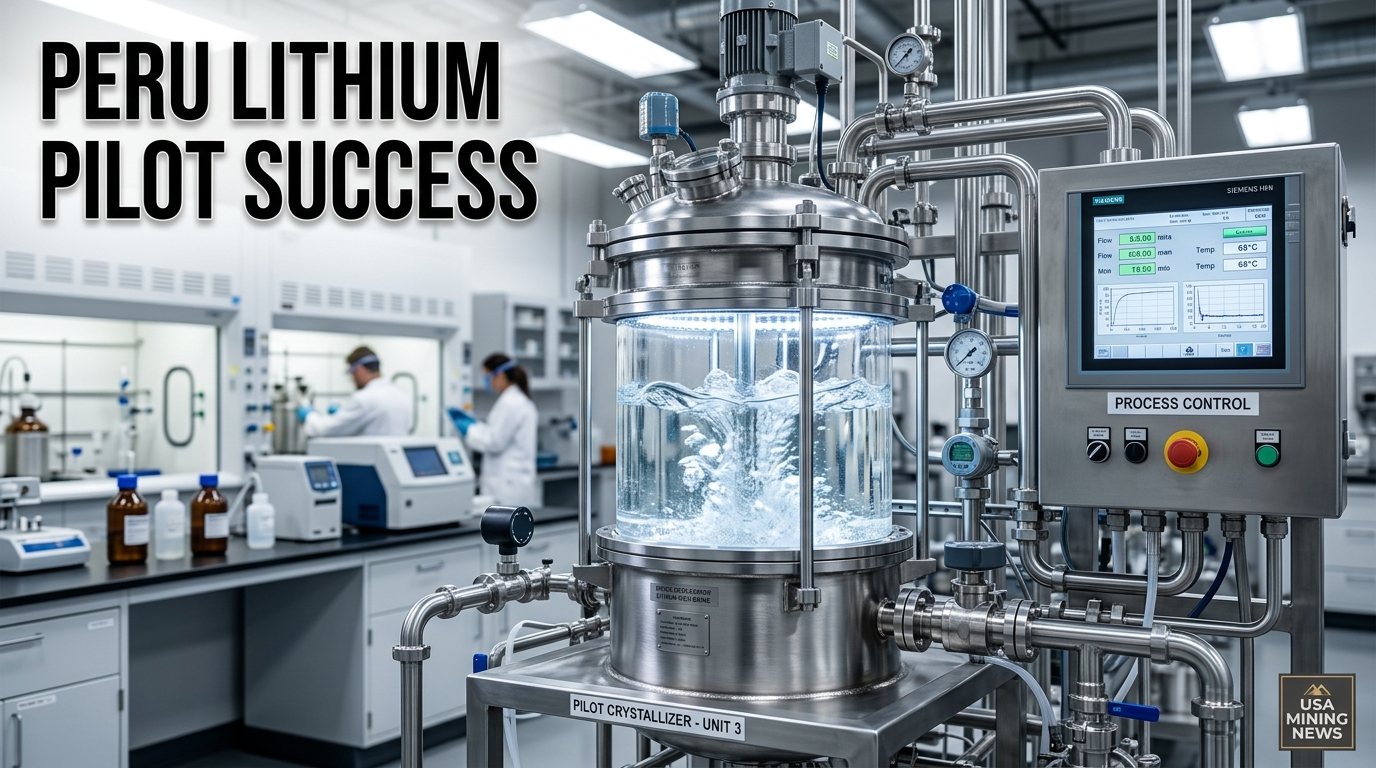
Lima, Peru – September 17, 2026 – American Lithium Corp. has officially announced the commencement of full operations at its Falchani Lithium Project pilot plant in Lima, southern Peru. This significant milestone marks a crucial advancement for one of the world's most promising volcanic-hosted lithium deposits, positioned to potentially contribute a substantial new supply of battery-grade lithium carbonate to the global market. The facility, developed in collaboration with TECMMINE, is now actively processing Falchani mineralisation, with initial results demonstrating impressive operational efficiency and higher-than-anticipated lithium recovery rates.
The successful commissioning of the pilot plant is a pivotal step in de-risking the Falchani project, moving it from conceptual studies towards commercial production. The pilot plant's primary objective is to validate and optimize the metallurgical flowsheet on a larger scale, providing robust data essential for upcoming feasibility studies. For an industry grappling with ever-increasing demand for lithium—a critical component in electric vehicle batteries and renewable energy storage solutions—the consistent progress at Falchani offers a compelling outlook for future supply diversification and security.
Operational Milestones and Exceeding Expectations
American Lithium confirmed that all systems at the Falchani pilot plant are fully installed and operating as planned. The facility is systematically testing various components, all of which are reportedly performing within expected parameters. This methodical approach is designed to ensure the reliability and efficiency of each stage of the processing flowsheet.
A key highlight of the initial operational phase involves recent laboratory bench testing conducted using the pilot plant’s actual equipment in a semi-continuous process. These tests yielded an average lithium extraction rate of 88.7%. This figure is not only robust on its own but also significantly surpasses the 80% lithium recovery rate that was referenced in the company’s preliminary economic assessment (PEA) published in February 2024. The test results during this phase ranged from 88% to 89.9%, showcasing remarkable consistency and indicating a strong understanding of the ore's metallurgical characteristics.
Such high recovery rates at this stage are a crucial indicator of a project's potential economic viability. For mining projects, a higher recovery rate directly translates to more salable product from a given volume of ore, thereby enhancing revenue potential and often offsetting operational costs. Exceeding PEA targets so early in pilot operations provides a strong foundation for optimizing project economics in subsequent feasibility studies.
Technical Process and Flowsheet Simplicity
The encouraging recovery results were specifically obtained through pilot plant equipment focused on crystallisers and evaporators. These are fundamental components in the process of extracting lithium from solution and converting it into a refined product, typically lithium carbonate. American Lithium reported that lithium losses during various critical stages — including alum crystallisation, pre-neutralisation, neutralisation, mechanical evaporation, and precipitation — were mere fractions of a per cent per phase. This detailed reporting of minimal losses underscores the efficiency and tightness of the proposed flowsheet.
A significant characteristic of the Falchani project, highlighted by American Lithium, is its unique volcanic-hosted lithium mineralisation. This geological setting is distinguished by its inherently low impurity profile. The presence of low impurities is a considerable advantage for any mineral processing operation, as it generally allows for a comparatively simpler processing flowsheet. Simpler flowsheets often translate into lower capital expenditures (CAPEX) for plant construction, reduced operating expenditures (OPEX) due to fewer reagents and energy inputs, and a lower risk of operational complexities.
The ultimate objective of this streamlined processing strategy is to produce battery-grade lithium carbonate with purity levels exceeding 99.5%. Achieving this purity is paramount for the automotive and energy storage sectors, which demand stringent specifications for their battery manufacturing processes. A highly pure product commands a premium in the market and ensures wider acceptance by end-users.
Strategic Implications for Project Development
With all flowsheet equipment now installed and validated, the pilot plant is progressing towards full end-to-end flowsheet validation on a continuous scale. This transition from semi-continuous to continuous operation is a critical step, as it mimics the conditions of a full-scale commercial plant, allowing for the identification and resolution of any potential bottlenecks or inefficiencies that might arise in an uninterrupted operational environment.
The facility is designed to operate at target rates for more than three months, processing between six tonnes (t) and 10t of Falchani mineralisation. This extended period of continuous operation will generate a substantial volume of data, which is indispensable for the comprehensive engineering and economic analyses required for future feasibility studies, such as Pre-Feasibility (PFS) and Definitive Feasibility Studies (DFS). These studies will refine the capital and operating cost estimates, optimize the mine plan, and provide a detailed blueprint for the commercial development of the project.
Laurence Stefan, President and COO of American Lithium, expressed strong confidence in the project's trajectory. “The results from the key core processing stages have been very encouraging. The consistency we are seeing gives us strong confidence as we move rapidly toward full pilot plant operations,” Stefan commented. He further added, “Every stage we bring online has added to our understanding of how this deposit will perform at scale, optimising to build on the promising recent results.” This executive endorsement underscores the positive momentum and robust technical progress being made.
Falchani's Unique Geologic Context and Market Advantage
The Falchani project stands out due to its volcanic-hosted lithium mineralisation, a geological setting that is distinct from the more common brine or pegmatite (hard rock) deposits. While still relatively uncommon globally, such deposits, if processed efficiently, can offer unique advantages. The low impurities noted at Falchani simplify the metallurgical process, potentially leading to lower environmental footprints and more cost-effective operations compared to projects dealing with complex contaminant profiles. This inherent advantage could position Falchani as a competitive producer in the burgeoning lithium market.
Peru, traditionally renowned for its copper and gold production, could see its mineral export profile significantly diversified with the successful development of Falchani. The nation's established mining infrastructure and experienced workforce provide a supportive environment for large-scale projects. The introduction of lithium production could further bolster Peru's role as a critical minerals supplier, aligning with global efforts to secure diverse and stable supply chains for the energy transition.
Broader Impact on the Lithium Supply Chain
The global demand for lithium continues its relentless ascent, fueled by the aggressive expansion of electric vehicle manufacturing and grid-scale energy storage solutions. Experts project that lithium demand could grow several-fold over the next decade, necessitating a continuous pipeline of new, economically viable projects. Projects like Falchani, demonstrating strong technical performance and a clear path to high-purity battery-grade product, are vital for meeting this demand.
A successful Falchani project would contribute to geographical diversification of lithium supply, reducing reliance on a limited number of jurisdictions and improving the resilience of the global supply chain. For investors and industry professionals, the progress at Falchani highlights the potential for innovative geological settings and processing technologies to unlock new sources of critical minerals, offering compelling opportunities for growth and strategic investment in the energy transition economy. The coming months, as the pilot plant moves to continuous operation and generates data for future feasibility studies, will be closely watched by the entire mining community.