Bozeman, Montana – In a strategic move bolstering its exploration efforts in the Western United States, American Pacific Mining has announced the deployment of a second drill rig at its Madison Copper-Gold Project in Montana. This significant expansion, revealed on July 14, 2026, marks an intensified phase in the company’s fully funded 15,000-meter drill program, designed to systematically investigate both near-surface, high-grade skarn targets and deeper, larger-scale porphyry-style mineralization. The Madison project, wholly owned by American Pacific Mining, is increasingly drawing industry attention as a potential new domestic source for essential base and precious metals.
Dual Exploration Strategy Takes Center Stage at Madison
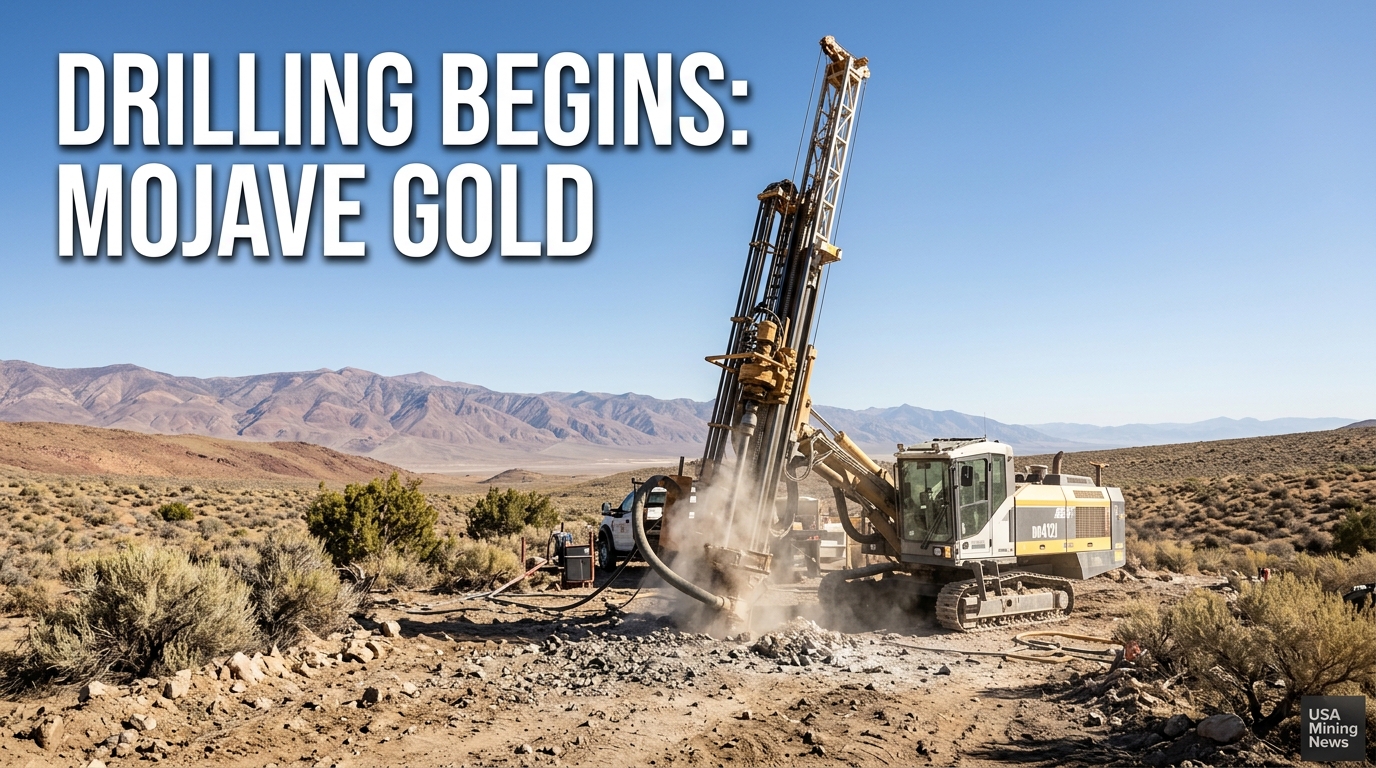
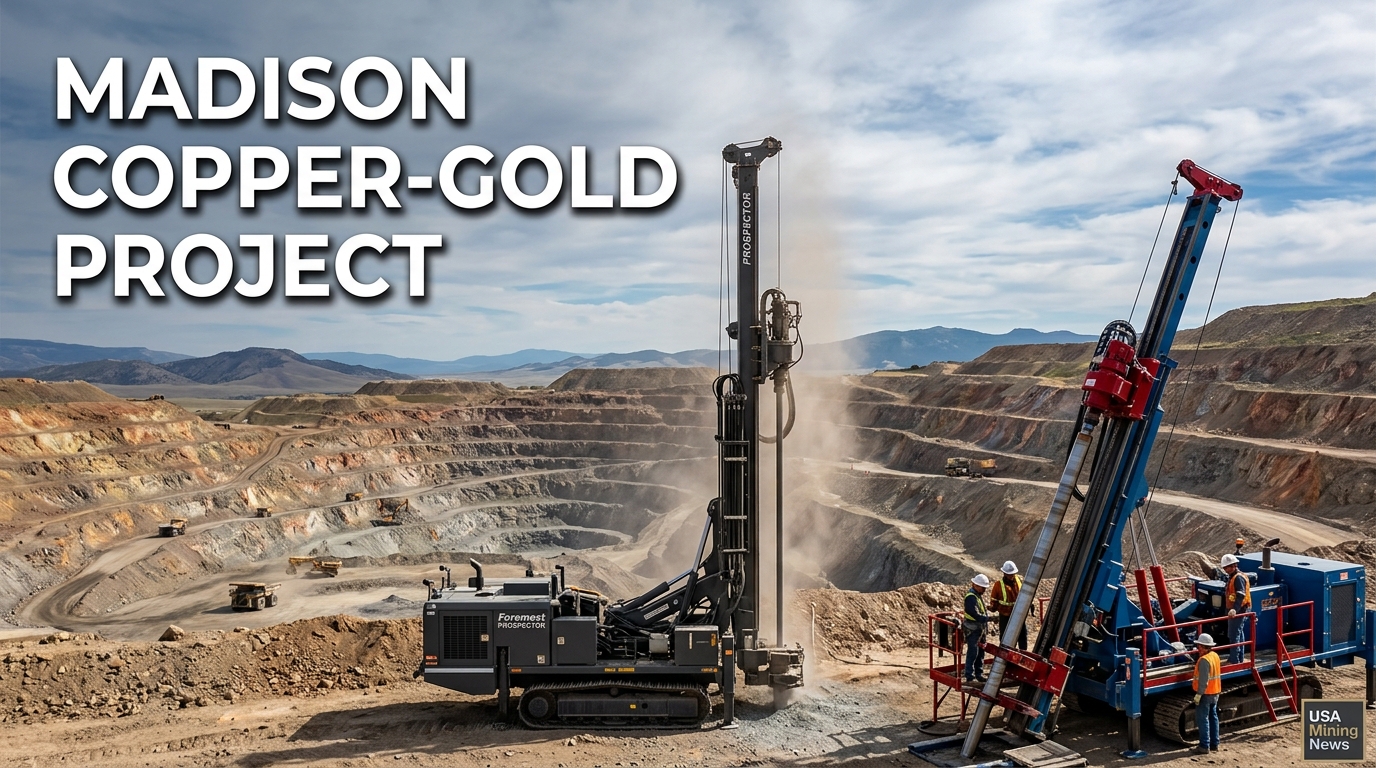
The commencement of operations for the second drill rig, a Reverse Circulation (RC) unit, signifies a pivotal moment for the Madison project. This RC rig is specifically tasked with testing multiple near-surface skarn targets, a geological formation known for hosting impressive concentrations of copper and gold. Simultaneously, a core drill rig, which has been operational, continues to probe the deeper porphyry environment. This dual approach is a cornerstone of American Pacific Mining's exploration strategy, reflecting a sophisticated understanding of the multifaceted geological potential within the Madison land package.
The decision to employ both diamond core and RC drilling methodologies within the overarching 15,000-meter program highlights a commitment to comprehensive data collection. RC drilling is typically faster and more cost-effective for shallow penetration, providing rapid assays for widespread, near-surface targets. Conversely, diamond core drilling offers superior geological information, including structural data and rock fabric, which is critical for understanding the complex geometry and controls on deeper, larger-tonnage porphyry systems. By combining these techniques, American Pacific Mining aims to efficiently delineate both the extent of known mineralization and the potential for a significantly larger, underlying system.
According to the company’s leadership, the primary objective of this current campaign is to determine the potential to expand the known mineralized zone around the skarn system. Such expansion could significantly enhance the project’s economic viability, providing both open-pittable and potentially deeper, underground mining opportunities. The ultimate goal is to vector into what management believes could be a substantial copper-gold system, positioning Madison as a cornerstone asset for the company.
Historical Context and Geological Promise
The Madison project area is not new to mineral exploration and production; it is steeped in a rich history of mining activity. The latest drill targets build upon the geological characteristics of the historic Madison and Broadway mines area, locations with a documented record of high-grade copper and gold production. This historical precedent provides a strong indication of the area's prospectivity and acts as a valuable guide for modern exploration efforts. Miners have long sought out such deposits due to their potential for economic concentrations of metals, and with today's advanced exploration techniques, there is significant potential to uncover extensions or entirely new ore bodies previously undetected.
- Skarn Deposits: These are metamorphic rock formations formed when hot, chemically-active fluids interact with carbonate-rich rocks, often near intrusive igneous bodies. They are renowned for hosting high-grade mineralization, particularly copper, gold, silver, and lead-zinc. The historic high grades at Madison and Broadway suggest that the skarn targets being tested by the RC rig could yield similarly rich intersections, providing valuable near-term resource potential.
- Porphyry Deposits: Often considered the world's primary source of copper and a significant source of gold, molybdenum, and silver, porphyry deposits are large, low-to-medium-grade intrusions associated with granitic rocks. They typically represent vast, multi-million-ton mineralized systems capable of supporting long-life, large-scale mining operations. The investigation into a deeper porphyry-style mineralization at Madison reflects American Pacific Mining's long-term vision for the project, aiming for a resource with significant scale and longevity.
The co-existence of both skarn and porphyry targets within the same project area is particularly compelling. Skarns often form at the margins of porphyry systems, providing valuable “leakage” or indicator mineralization that can guide exploration towards the larger, underlying porphyry body. This geological relationship underscores the strategic importance of the dual exploration approach deployed by American Pacific Mining.
Operational Details and Program Objectives
The ongoing 15,000-meter drill program is meticulously planned to achieve several critical objectives, moving the Madison project closer to formal resource definition and potential development. The program is fully funded, providing stability and continuity to the exploration activities through the crucial summer months of 2026.
Key objectives of the current drilling campaign include:
- Targeting Near-Surface Skarns: The RC rig is focusing on multiple areas exhibiting geological characteristics similar to the historic high-grade zones, with the aim of delineating additional shallow mineralization. This is crucial for establishing initial resource blocks that could potentially be mined early in a project’s life.
- Building on Previous Exploration: The selection of the latest drill targets is informed by and designed to expand upon earlier exploration work. This iterative process allows for continuous refinement of geological models and more precise targeting.
- Expanding Known Mineralization: A core goal is to extend the known mineralized envelope around the existing skarn system, transforming isolated drill intercepts into a continuous and measurable resource.
- Vectoring to a Larger System: By systematically testing both shallow and deep targets, the company aims to "vector" into a larger, potentially concealed copper-gold system. This involves interpreting geochemical, geophysical, and geological data to pinpoint the heart of the mineralization.
- Informing the Maiden Mineral Resource Estimate: Crucially, the drilling results from this campaign are intended to inform the first mineral resource estimate (MRE) for Madison, which American Pacific Mining has scheduled for 2027. An MRE is a fundamental step in project development, allowing for transparent reporting of the quantity and quality of a mineral deposit in accordance with recognized industry standards (e.g., CIM Definition Standards for Mineral Resources and Mineral Reserves or JORC Code). This provides a foundational dataset for preliminary economic assessments and feasibility studies.
Leadership Insights and Strategic Importance
Eric Saderholm, American Pacific Mining’s exploration managing director, articulated the company’s vision and the significance of the current drilling operations. “With RC drilling now under way to test multiple near-surface skarn targets and the core rig already stepping into the deeper porphyry environment, we are now in a position to generate steady results through the summer and, we hope, demonstrate the true scale of this system,” Saderholm stated. His comments emphasize the strategic intent behind the dual rig deployment: to accelerate data acquisition and comprehensively evaluate the project’s scope.
Saderholm further underscored the long-term potential of Madison, noting, “If we are successful in extending the known mineralisation and vectoring into a larger copper-gold system, we believe Madison has the potential to become a cornerstone asset that can drive meaningful value for our shareholders.” The concept of a “cornerstone asset” suggests a significant, long-life, and high-margin operation that could fundamentally transform American Pacific Mining's profile, providing a stable foundation for future growth and significantly enhancing shareholder value.
Market Context and Industry Implications
The pursuit of substantial copper-gold systems like Madison holds profound implications for the broader mining industry and global commodity markets. Copper and gold are two of the most strategically important metals today, driven by distinct yet equally powerful demand catalysts.
- Copper: The Metal of Electrification: Copper is indispensable to the global energy transition, serving as a critical component in electric vehicles, renewable energy infrastructure (solar panels, wind turbines), and enhanced electricity grids. As the world decarbonizes, demand for copper is projected to surge dramatically, creating an imperative for new discoveries and robust supply chains. A significant new copper discovery in the United States, like Madison, could contribute to domestic supply security, reducing reliance on potentially unstable foreign sources and mitigating geopolitical risks in the supply chain.
- Gold: The Timeless Store of Value: Gold continues to serve as a vital safe-haven asset, a hedge against inflation, and a component in high-tech electronics and jewelry. Its enduring appeal ensures consistent demand, regardless of economic cycles. The potential for high-grade gold production at Madison adds an attractive dimension to the project's economics, providing a valuable revenue stream and enhancing its overall resilience.
For the US mining sector, the Madison project represents a promising domestic venture in a period where securing critical mineral supply chains is a national priority. New domestic discoveries not only contribute to economic growth through job creation and local investment but also bolster national security by reducing dependence on external markets for strategic metals. Junior exploration companies like American Pacific Mining play a vital role in this process, taking on the high-risk, high-reward endeavor of discovering the next generation of mines that will feed global industry.
Next Steps and Future Outlook
As drilling continues through the summer of 2026, the market will be keenly watching for assay results that provide concrete evidence of Madison’s potential. These results, combined with detailed geological modeling, will be instrumental in the development of the inaugural mineral resource estimate for Madison, slated for 2027. The successful completion of this MRE will be a significant de-risking event for the project and a clear signal of its economic potential.
Following a positive MRE, American Pacific Mining would likely proceed with further stages of project development, which typically include a Preliminary Economic Assessment (PEA), followed by Pre-Feasibility (PFS) and Full Feasibility Studies (FS). Each of these stages involves escalating levels of engineering detail, cost estimation, and environmental assessment, ultimately leading to a construction decision. The timeline from discovery to production for a large-scale mining project can span many years, but the initiation of a robust, dual-target drill program is a critical foundation for this journey.
The Madison Copper-Gold Project, under American Pacific Mining’s diligent stewardship, is establishing itself as a key exploration play in the burgeoning US mining landscape. With a focused exploration strategy, a fully funded program, and the clear objective of defining a substantial resource, Madison stands as a project with significant potential to contribute to the future supply of critical metals and unlock considerable value for stakeholders in the coming years.