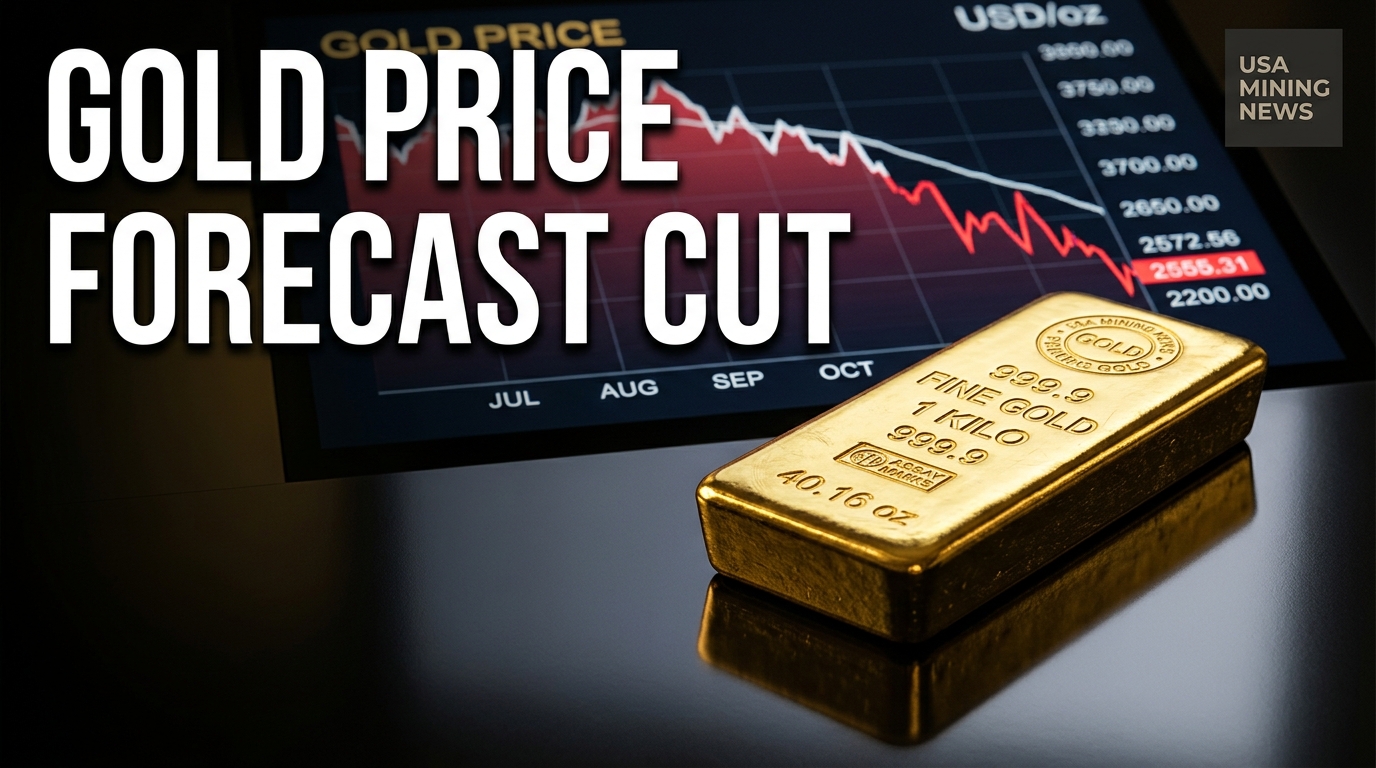
In a significant market recalibration, Goldman Sachs has cut its gold price forecast for the end of 2026 by $500 per ounce, settling on a new target of $4,900 per ounce. This revision, announced on June 19, 2026, marks a considerable shift from the bank’s earlier projection of $5,400 per ounce, which had been maintained as recently as late March. The updated outlook is primarily driven by an increased likelihood of the US Federal Reserve opting for interest rate hikes, a scenario that fundamentally alters the investment landscape for the non-yielding precious metal. For the global mining industry, particularly those with exposure to gold, this forecast adjustment underscores the intricate interplay between macroeconomic policy and commodity valuations, demanding careful strategic planning and risk assessment.
Goldman Sachs Adjusts Gold Outlook Amidst Hawkish Fed Shift
The genesis of Goldman Sachs’ revised forecast lies squarely with the evolving stance of the US Federal Reserve. Just two days prior to the bank's announcement, the Fed, under the leadership of its new Chair, Kevin Warsh, signaled a decidedly hawkish pivot in its monetary policy. In his inaugural press conference, Chair Warsh emphasized a firm commitment to restoring price stability, a strong indicator that interest rate increases could be on the horizon. This marked a departure from previous expectations and has sent ripples through financial markets.
Before this hawkish turn, Goldman Sachs had established its $5,400 per ounce target for the end of 2026 earlier in the year, buoyed by robust demand from private-sector investors. At that time, gold was trading near $5,000 per ounce and was on the cusp of reaching its record high of nearly $5,600 per ounce. Despite weeks of subsequent sharp decline driven by escalating geopolitical tensions in the Middle East and concerns over global inflation, the $5,400 target was left intact through late March. However, the intensifying inflation worries have progressively diminished the prospects of Fed rate cuts, diminishing the attractiveness of gold.
Gold prices have since retreated significantly, currently stabilizing around the $4,100 per ounce level. This represents a substantial 27% decline from its January highs. The yellow metal recorded three consecutive monthly losses between March and May and is now down 4% year-to-date. Goldman analysts Lina Thomas and Daan Struyven, in their note on Friday, acknowledged the tactical caution required, stating, "Our gold price views remain structurally constructive but tactically cautious, with near-term downside risk and medium-term upside risk." This suggests that while they anticipate some recovery in the latter half of 2026, it will be less pronounced than previously expected.
The Federal Reserve's Pivot Under Kevin Warsh
The appointment of Kevin Warsh as the new Federal Reserve Chair has proven to be a pivotal factor. His first meeting at the helm brought an overtly hawkish tone, surprising many investors who had anticipated a less aggressive stance. This expectation was partly due to previous administration rhetoric, including US President Donald Trump’s expressed dissatisfaction with former Chair Jerome Powell's reluctance to cut interest rates. Warsh's decisive move to prioritize price stability has, however, largely curtailed concerns regarding the Fed's independence from political influence.
The market has quickly internalized this shift. According to the CME FedWatch Tool, traders now assign an 87% probability to a US rate hike occurring in December 2026. This is a dramatic increase from the 61% probability observed just prior to the Fed's decision. Such a significant re-pricing of interest rate expectations directly impacts gold, which, as a non-yielding asset, typically sees its appeal diminish when interest rates rise. Higher rates increase the opportunity cost of holding gold compared to interest-bearing investments like government bonds.
Goldman economists have also revised their projections for future rate cuts. Previously, rate reductions were anticipated in December 2026 and March 2027. Now, these are pushed back to June and December of next year (2027). Furthermore, slower inflows into gold-backed exchange-traded funds (ETFs) have been factored into Goldman’s updated outlook. This trend in ETF behavior further reflects a broader investor sentiment that is less enthusiastic about gold in a rising rate environment, as capital seeks higher-yielding alternatives.
Impact on Gold's Performance and Investor Sentiment
The prospect of sustained higher interest rates profoundly alters the investment thesis for gold. When real interest rates — the nominal rate minus inflation — are positive and rising, gold typically struggles. Investors are incentivized to move capital into assets that offer a yield, rather than holding something that incurs storage costs and does not pay interest or dividends. This dynamic is a critical headwind for gold prices. The recent performance of the yellow metal, with three consecutive months of decline, aptly illustrates this sensitivity to shifting monetary policy expectations.
The "tactically cautious" stance articulated by Goldman analysts Thomas and Struyven signals that while gold may still possess long-term appeal (structurally constructive), its near-term price action is highly vulnerable to macroeconomic developments. For investors and portfolio managers, this means a period of heightened scrutiny and potential rebalancing away from gold in the short term, despite its traditional role as a safe-haven asset.
Downside Risks and Potential Further Revisions
The downside risks to gold are not insignificant. Goldman analysts have stated that in the event of an actual rate hike, their year-end gold price forecast could face a further reduction of $500 per ounce, potentially dropping to an ominous $4,400 per ounce. This would occur as "demand for gold as a macro policy hedge could unwind more persistently." This scenario highlights the potential for a deeper unwinding of positions if the Fed's hawkish posture translates into concrete rate increases.
Adding weight to this possibility, Rob Kaplan, Vice Chairman at Goldman Sachs and former Dallas Fed president, recently suggested in a Bloomberg interview that the Fed might need to raise rates as early as September 2026 if inflationary pressures remain elevated. Such statements from influential figures within Goldman Sachs underscore the internal consensus regarding the potential for aggressive Fed action, further solidifying the bearish immediate outlook for gold.
Persistent Pillars of Support: Central Bank Demand
Despite the prevailing headwinds posed by a hawkish Federal Reserve, Goldman Sachs still identifies a crucial supportive factor for gold prices: robust central bank buying. Official sector purchases have remained a significant pillar of demand, with analysts projecting purchases of 50 tons per month this year and 40 tons per month next year. This steady, institutional demand from central banks, often driven by diversification away from the US dollar and geopolitical hedging, acts as an important floor for gold prices, mitigating some of the downside pressure from Western private-sector disinterest driven by higher rates.
For gold mining companies, understanding this bifurcated demand picture is crucial. While ETF outflows and reduced retail investor interest in Western markets may impact futures pricing and speculative positions, the consistent demand from sovereign entities provides a fundamental level of support for physical gold, which can influence long-term production decisions and resource valuations.
Strategic Implications for the Mining Sector
Gold price fluctuations directly impact the profitability and strategic decisions of gold mining companies. A sustained period of lower gold prices, consistent with Goldman's revised forecast and potential further downside, presents several challenges and opportunities for the sector:
- Project Economics: Lower price forecasts can render marginal exploration and development projects uneconomical, leading to deferred investments or outright cancellations. Mines with higher operating costs will face significant pressure on their margins.
- Exploration Budgeting: Companies may tighten exploration budgets, focusing on brownfield expansions or high-grade deposits rather than greenfield exploration, which requires a long-term bullish price outlook.
- Mergers and Acquisitions (M&A): A weaker price environment can spur M&A activity as larger, more financially robust companies look to acquire distressed assets or gain consolidation advantages at lower valuations.
- Hedging Strategies: Gold miners often utilize hedging strategies to lock in prices for a portion of their future production. In a falling or uncertain market, the effectiveness and necessity of these strategies come under intense review to protect revenue streams.
- Investor Confidence: Lower price forecasts tend to depress share prices of gold mining equities, impacting their ability to raise capital for expansion or debt repayment. Investors may rotate out of gold stocks into other commodity sectors or interest-bearing assets.
- Cost Management: Companies will intensify efforts to reduce operational costs, optimize mine plans, and improve efficiencies to maintain profitability in a lower price regime.
The revised forecast demands that gold producers diligently review their forward-looking financial models and ensure they are stress-tested against a variety of price scenarios, especially considering the potential for gold to drop to $4,400 per ounce if a rate hike materializes.
Outlook: Navigating Volatility in the Precious Metals Market
Goldman Sachs' updated forecast serves as a critical warning shot for the gold market. The shift in US monetary policy, spearheaded by Chair Kevin Warsh, signals a commitment to taming inflation that prioritizes interest rate hikes over cuts in the near to medium term. While the bank maintains a "structurally constructive" view on gold, implying long-term appreciation, the immediate future is characterized by "tactical caution" and significant downside risks.
For mining industry professionals and investors, this outlook necessitates a nuanced approach. The resilience of central bank buying offers a degree of fundamental support, but the overwhelming influence of US monetary policy on gold's non-yielding nature cannot be overstated. Navigating this dynamic environment will require vigilance, adaptability, and a deep understanding of macroeconomic signals as the mining sector grapples with the implications of a potentially prolonged period of higher interest rates and a more constrained gold price landscape.