Global Reach for Critical Minerals Recycling: Amermin and Ulterra Expand International Partnership
Houston, Texas — In a strategic development poised to enhance the security and sustainability of critical mineral supply chains, U.S. critical minerals recycler and refiner Amermin and Ulterra Drilling Technologies announced an international expansion of their waste stream recycling partnership on Monday, April 20, 2026. This collaboration, which has seen Amermin process more than 1.4 million pounds of material from Ulterra in 2025, will now incorporate waste streams from Ulterra’s operations in Argentina and Canada, significantly broadening the scope beyond their established U.S.-based activities.
This initiative represents a tangible step towards building more resilient and diverse critical mineral supply networks, an increasingly urgent imperative for industrialized nations. By recovering and reprocessing end-of-life materials into manufacturing-grade inputs, the Texas-based companies aim to contribute meaningfully to the domestic and allied supply of minerals essential for advanced technologies, thereby mitigating dependence on high-risk, often concentrated, global supply chains.
The Expanded Partnership: Scope and Scale
The core of this partnership centers on Amermin's advanced capabilities in metallurgical processing, allowing it to extract valuable critical minerals from Ulterra's industrial waste. Ulterra, a significant player in drilling technologies, generates substantial waste streams that contain a diverse array of these vital materials. The expanded agreement will see Amermin process these materials not only from Ulterra's U.S. facilities but also from its operations throughout Canada and Argentina. This internationalization injects a new dimension into the existing recycling framework, demonstrating a multinational approach to resource recovery.
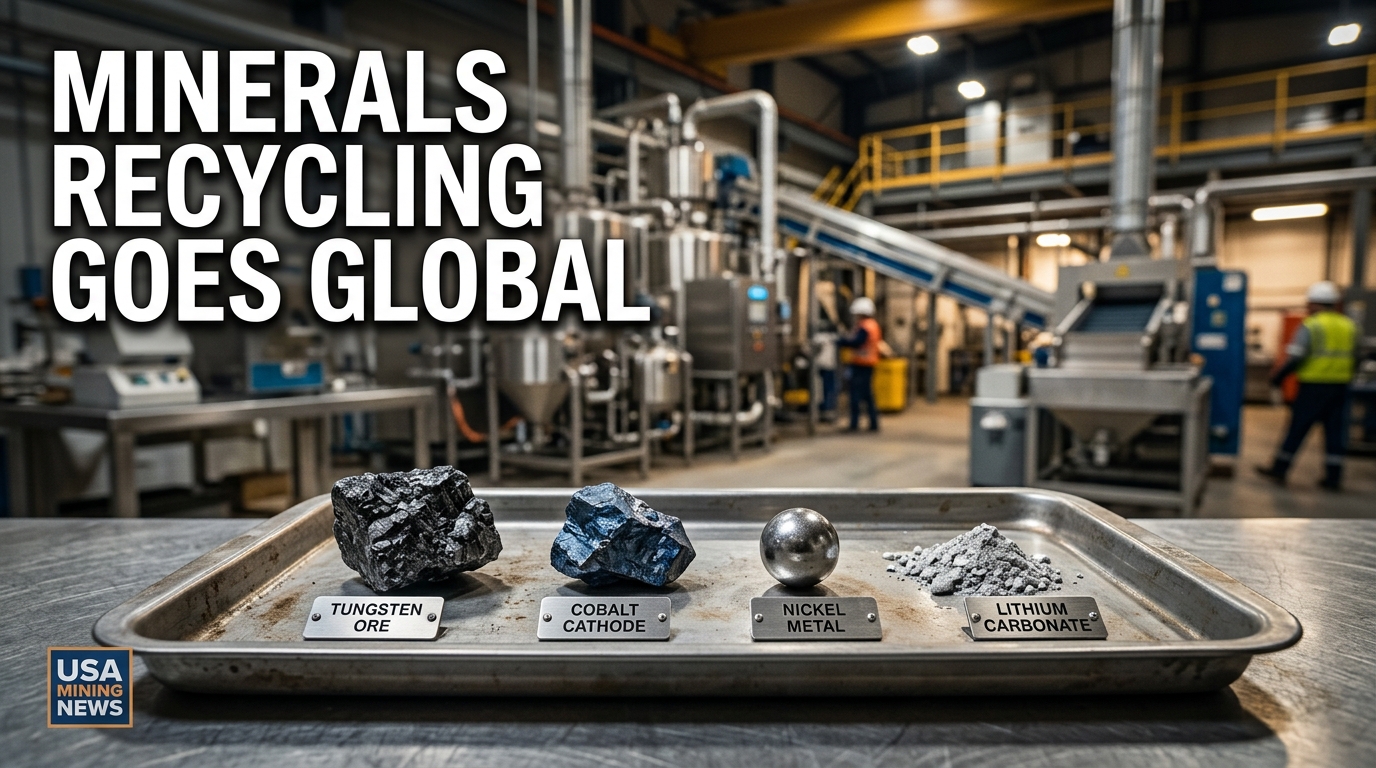
Collectively, Amermin and Ulterra manage and recycle more than 21 distinct waste streams. The impressive list of recovered materials underscores the breadth of their technical capabilities and the economic and strategic value being captured. These include:
- Tungsten: Crucial for cutting tools, alloys, and specialized electronics.
- Cobalt: A key component in rechargeable batteries for electric vehicles (EVs) and portable electronics, as well as superalloys for aerospace.
- Copper: Fundamental for electrical conductivity, widely used in wiring, electronics, and construction.
- Nickel: Essential for stainless steel, high-performance alloys, and, increasingly, EV batteries.
- Zinc: Used in galvanizing steel, batteries, and die-casting alloys.
- Silver: Valued for its conductivity in electronics, as well as in photography and jewelry.
- Carbon: Recovered in various forms, including as a component of steel and in industrial applications.
- Iron: The backbone of steel production and various industrial components.
- Manganese: Primarily used in steel production to improve strength and reduce brittleness.
- Blast Media: Abrasive materials often containing various metals that can be recycled.
- Synthetic and Industrial Diamond: Highly specialized materials used in cutting, grinding, and drilling applications, indicating high-value recovery processes.
The ability to recover such a diverse portfolio of critical minerals from industrial waste represents a significant technological and logistical achievement, contributing directly to the principles of a circular economy within the mining and manufacturing sectors.
Strategic Imperative: Strengthening Supply Chain Security
The impetus behind this expanded partnership is deeply rooted in contemporary geopolitical and economic realities. The global demand for critical minerals is surging, driven largely by the transition to green energy technologies, advanced manufacturing, and defense applications. However, the supply chains for many of these minerals are highly concentrated, often in regions with notable geopolitical risks or varying environmental and labor standards.
Ryan McAdams, CEO of Amermin, articulated this strategic vision in a recent news release. “Reducing dependence on geopolitically complex supply chains for critical minerals is a strategic priority for the United States,” McAdams stated. He emphasized, “Building resilient, allied supply networks, alongside scaling domestic and international recycling, will be key to meeting the growing demand for advanced technologies. Our expanded partnership with Ulterra supports the recovery of critical minerals from trusted partners, strengthening both supply security and sustainability.”
This sentiment resonates strongly with broader U.S. policy objectives, which increasingly prioritize the development of secure and sustainable sources for critical minerals. Recycling, alongside responsible primary mining, forms a critical pillar of this national strategy, aiming to reduce vulnerabilities and foster economic resilience.
Government Support and Scaling Capabilities
Amermin’s expanded capacity and ambition have received significant backing from the U.S. government. In January 2026, Amermin was awarded an $11.5 million grant from the U.S. Department of Energy’s (DOE) Office of Fossil Energy and Carbon Management. This substantial financial injection is earmarked for scaling up Amermin’s processing capabilities, enabling the company to handle larger volumes of diverse waste streams and increase the efficiency of its critical mineral recovery operations.
The DOE, through initiatives like these, plays a pivotal role in accelerating the commercialization of technologies that can bolster U.S. energy security and combat climate change. By investing in advanced recycling infrastructure, the DOE aims to create a robust domestic critical minerals ecosystem that can support long-term economic growth and innovation. This grant is a clear signal of the U.S. government’s commitment to fostering a circular economy for critical minerals, recognizing recycling as a viable and strategic pathway to mineral independence.
Broader Industry Implications and Future Outlook
The global expansion of the Amermin-Ulterra partnership carries significant implications for the wider mining and manufacturing industries. It highlights several key trends:
- Growing Importance of Urban Mining: As primary mining projects face increasing regulatory hurdles, environmental scrutiny, and lengthy development timelines, the recovery of minerals from urban and industrial waste streams is gaining prominence. This partnership exemplifies how industrial waste, traditionally viewed as a disposal challenge, is rapidly becoming a valuable resource.
- Circular Economy Mandate: The concept of a circular economy, where resources are kept in use for as long as possible, extracting maximum value from them whilst in use, then recovering and regenerating products and materials at the end of each service life, is moving from theory to practice within the mining sector. This partnership demonstrates a pragmatic application of these principles.
- International Collaboration: Addressing critical mineral supply challenges often requires cross-border solutions. The inclusion of Canadian and Argentine waste streams illustrates the potential for international partnerships to strengthen allied supply chains, moving beyond a purely domestic focus.
- Technological Advancement in Recycling: The ability to recover more than 21 different waste streams, including high-value materials like tungsten and synthetic diamond, points to sophisticated metallurgical and separation technologies. Continued innovation in these areas will be crucial for the economic viability and scalability of critical mineral recycling.
Looking ahead, the success of this expanded partnership could serve as a model for other industries and companies generating mineral-rich waste. The challenges will include optimizing international logistics, navigating varying regulatory frameworks in Canada and Argentina, and continually enhancing processing efficiencies to ensure economic competitiveness against virgin mineral extraction. However, the strategic benefits of reduced supply chain risk, enhanced sustainability, and the creation of a resilient domestic mineral economy are compelling. This initiative underscores that the future of critical mineral supply will likely involve a multi-pronged approach, with recycling playing an increasingly vital role alongside responsible new mining developments.
The Amermin-Ulterra alliance, now global in its reach, reinforces the message that securing the critical minerals necessary for modern society is not just about digging new mines, but also about intelligently and sustainably repurposing what has already been extracted and utilized.