In a significant development for sustainable mining and critical mineral supply chains, pH7 Technologies, a Canadian critical metals processing company, is embarking on a strategic expansion of its operating facility in Vancouver. This move, supported by substantial governmental funding, aims to scale the recovery of vital platinum group metals (PGMs) and other base metals from both recycled materials and notoriously challenging primary ores, employing a groundbreaking, environmentally conscious process. As the global mining industry navigates increasing demand for critical minerals alongside stringent environmental regulations, pH7’s approach offers a compelling dual solution: enhancing metal recoveries while drastically reducing ecological footprints.
Catalyzing Cleaner Critical Metal Production in Canada
The expansion project by pH7 Technologies has received strong backing from the Canadian government, underscoring a national commitment to fostering innovation in the critical minerals sector. Specifically, the company is set to receive advisory services and up to C$4 million (approximately $2.8 million USD) in funding from the National Research Council of Canada Industrial Research Assistance Program (NRC IRAP). This investment is designed to accelerate the development and scale-up of pH7’s proprietary metallurgical processing technologies, particularly its organo-electrochemical processes for recovering platinum, palladium, and rhodium from diverse material streams.
Mélanie Joly, Minister of Industry and Minister for Canada Economic Development, highlighted the strategic importance of this investment. “Investing in pH7 Technologies through the National Research Council of Canada Industrial Research Assistance Program will help Canada capitalize on the rising global demand for critical minerals, add value and jobs here at home, and reinforce our global leadership in responsible mineral development,” Minister Joly stated. This emphasizes Canada's focused strategy not only on securing critical mineral supplies but also on establishing itself as a leader in environmentally responsible extraction and processing technologies. PGMs, including platinum, palladium, and rhodium, are indispensable in numerous high-tech applications, notably catalytic converters for automotive emissions control, but also in hydrogen fuel cells, electronics, and medical devices, making their efficient and sustainable recovery a global priority.
Proprietary Organo-Electrochemical Processing: A Closed-Loop Solution
At the heart of pH7 Technologies’ innovation is an organo-electrochemical platform developed since the company's founding in 2021. This technology represents a significant departure from conventional mineral extraction methods, which often rely on highly toxic reagents such as cyanide or strong acids, and generate vast quantities of wastewater and solid tailings. pH7’s process is engineered to sidestep these persistent industry challenges entirely. CEO Mohammad Doostmohammadi articulated the company’s foundational vision: “Our goal from the beginning was to address tailings and wastewater in mineral processing.”
The novel platform achieves metal extraction without hazardous chemicals and, crucially, without producing tailings-related wastewater. This is accomplished through a closed-loop system where the core chemistry is continuously regenerated and reused. “It’s a closed-loop process — the chemistry is reused over and over,” Doostmohammadi explained. This eliminates the need for expensive and environmentally risky effluent treatment, greatly reducing the operational footprint and long-term liabilities associated with traditional mineral processing. The electrochemical generation of oxidants within the system is a key differentiator, offering a controlled and sustainable alternative to conventional chemical leaching agents.
From Recycling Success to Mining Innovation
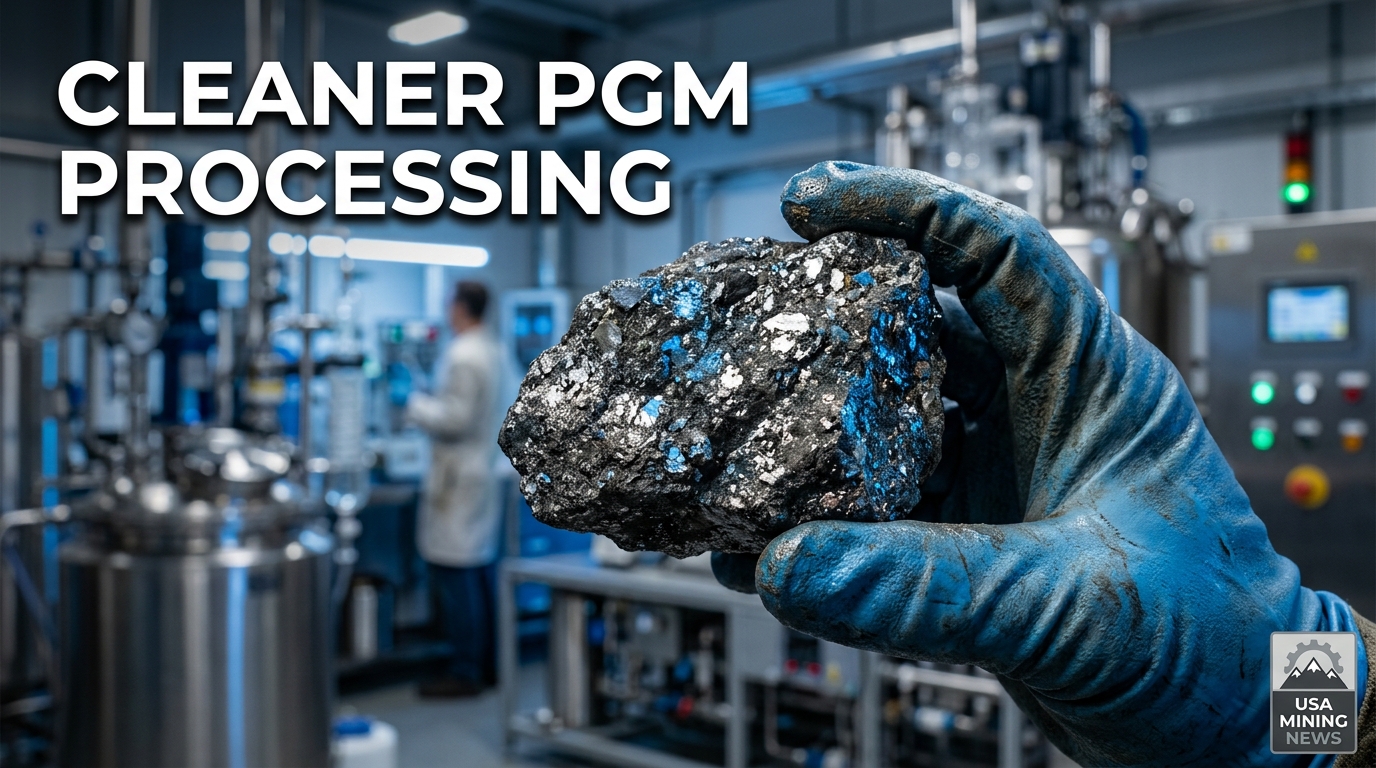
Before focusing on primary mining applications, pH7 Technologies has already demonstrated the commercial viability and efficacy of its technology within the recycling sector. The company’s Vancouver facility is successfully operating at a commercial scale, processing spent catalytic converters. These end-of-life materials are a rich source of PGMs, including platinum, palladium, and rhodium, which are critical for the automotive industry but also increasingly valuable in the broader circular economy. The plant currently produces a substantial volume, between 30,000 and 40,000 ounces of platinum-equivalent metals annually.
pH7 operates a flexible business model within its recycling division. The company offers toll processing services to clients, allowing them to leverage pH7’s advanced recovery capabilities. Concurrently, pH7 also directly purchases materials from suppliers and then sells the recovered metals through established partnerships, including a notable collaboration with multinational conglomerate Mitsubishi. With its recycling operations firmly established and proving successful, pH7 is now strategically channeling its efforts towards scaling its innovative technology for direct application in primary mining operations, aiming to revolutionize how minerals are extracted from the earth.
Unlocking Value from Complex Ores and Declining Grades
The true transformative potential of pH7’s technology lies in its ability to unlock value from ores that are traditionally considered difficult and costly to process. The company's unique process is particularly aimed at sulfide ores, including common minerals like chalcopyrite, which is a primary ore for copper. Sulfide ores are notoriously challenging due to their refractory nature and the environmental impact associated with conventional smelting or acid leaching, which can release sulfur dioxide. By using electrochemically generated oxidants, pH7 states that it can enable heap leaching of these ores without the need for cyanide or other hazardous chemicals, offering a paradigm shift for miners grappling with complex geology.
Beyond PGMs, the technology also demonstrates the capability to extract both copper and gold, significantly broadening its appeal and potential impact within the mining industry. This offers miners a crucial pathway to improve recoveries from lower-grade and more complex deposits. In an era where high-grade, easily accessible ore bodies are increasingly depleted, this capability is becoming ever more relevant. As Doostmohammadi succinctly put it, “The good ore is gone. What’s left is harder to extract—and that’s where our technology shines.” The ability to economically and sustainably process these previously uneconomical deposits could extend the life of existing mines and open up new resource opportunities worldwide. pH7 is currently collaborating with mining companies across South America, Africa, and Australia, rigorously testing ore samples at its Vancouver laboratory to validate and demonstrate significant recovery improvements.
Strategic Deployment and Global Expansion
Looking ahead, pH7 Technologies is targeting the on-site deployment of its processing technology at commercial mining operations within the next year. This ambitious timeline follows ongoing pilot work with strategic industry partners. Successful pilot deployment will be a critical milestone, moving the technology from laboratory validation to industrial application and proving its operational scalability and efficiency in real-world mining environments.
Parallel to its focus on primary mining applications, pH7 also plans to aggressively expand its recycling footprint globally. New facilities are currently under consideration in key strategic regions, including the United States, Europe, and South Asia. This global expansion strategy highlights the company’s dual commitment to both responsible resource extraction and the principles of a circular economy. In the broader industry landscape, pH7 enters a growing field of innovative companies striving to improve sulfide leaching, including prominent players like Jetti Resources and Rio Tinto-backed Nuton. However, pH7's key differentiator lies in its electrochemical approach, which sets it apart from competitors that often pursue biological or conventional chemical methods. The company’s innovative strides have already garnered significant industry recognition, with accolades last year as a Top Innovator in UpLink-World Economic Forum Sustainable Mining and Canada’s Clean50 awards, as well as being named Export Development Canada’s “Company to Watch,” underscoring its potential for significant impact.
A Dual Mandate: Environmental Stewardship and Economic Optimization
By combining cleaner processing methodologies with demonstrably improved recovery rates, pH7 Technologies is strategically positioning its technology as both a critical environmental solution and a powerful financial enabler for the mining sector. The global mining industry faces unprecedented scrutiny and pressure to reduce its environmental footprint, particularly concerning water usage, waste generation, and chemical impact. Simultaneously, there is an escalating global demand for critical minerals required for the energy transition, digitalization, and advanced manufacturing.
Technologies that can unlock greater value from existing resources—without increasing environmental liabilities—are poised to play an increasingly pivotal role in meeting these complex challenges. By expanding its processing operations, pH7 aims to augment domestic capacity for the recovery and processing of critical metals, thereby reducing reliance on potentially less sustainable international supply chains. More importantly, it offers a tangible solution to mitigate the environmental impacts historically associated with conventional metal production. As Doostmohammadi articulated, “We help miners extract more from their deposits, increase recoveries and improve cash flow.” The company’s ultimate objective underscores this ambition: “Our goal is to have our footprint on the mining site in the next year or two.” This vision encapsulates a future where mining can be both more profitable and profoundly more responsible.