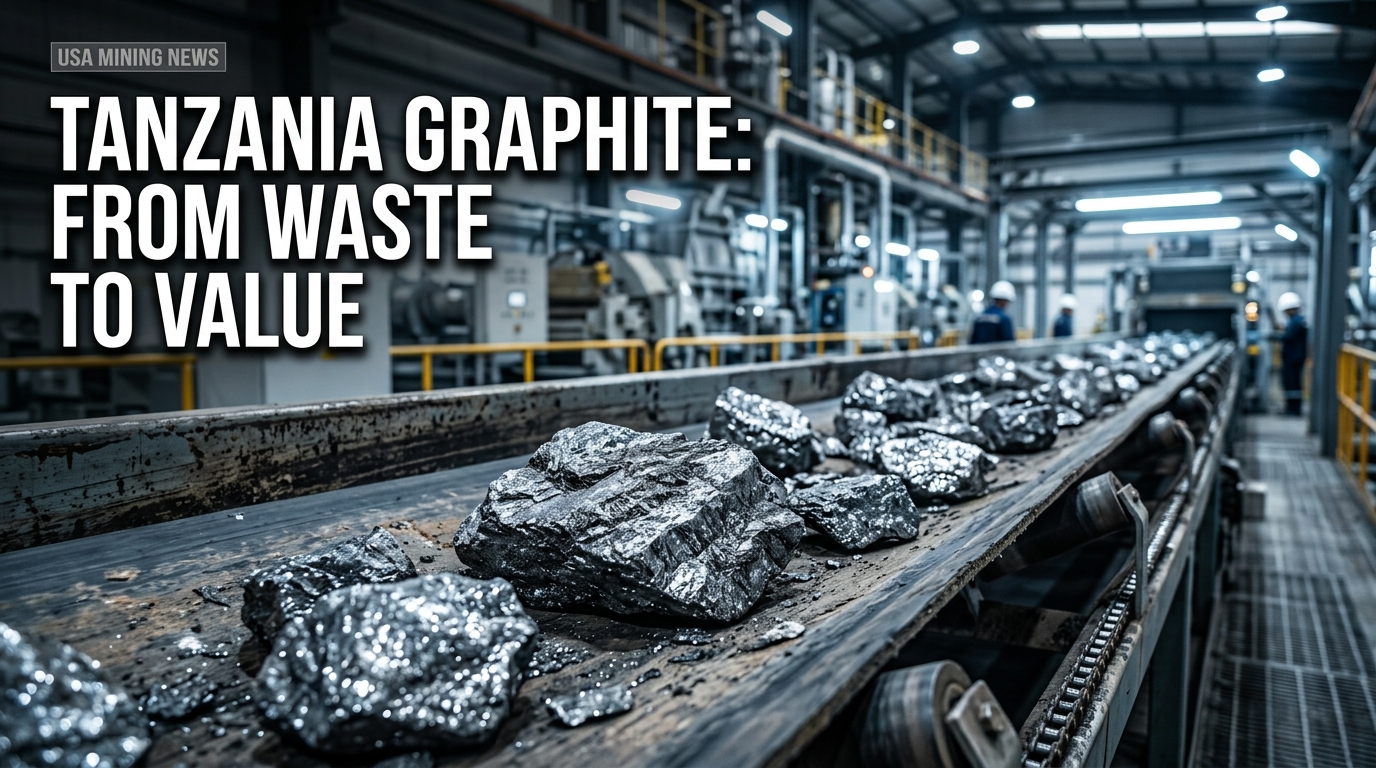
In a significant development for the global critical minerals sector, Amigo Resources and the State Mining Corporation of Tanzania (STAMICO) announced on August 21, 2026, the signing of a memorandum of understanding (MoU) to evaluate the feasibility of an ambitious graphite tailings recovery and beneficiation project in Tanzania. This strategic partnership underscores a growing industry focus on sustainable resource management and the unlocking of value from historical mining waste, particularly as demand for graphite continues its upward trajectory driven by the burgeoning electric vehicle (EV) battery market and green energy initiatives.
A Strategic Partnership for Resource Optimization
The MoU establishes a formal framework for collaboration between the Australian-based Amigo Resources and STAMICO, Tanzania's state-owned mining entity. The core objective is to undertake comprehensive technical, commercial, and regulatory assessments of graphite-bearing material found within various project areas across Tanzania. This initiative is particularly pertinent in an era where resource efficiency and environmental stewardship are paramount concerns for mining companies and governments alike.
Under the terms of this preliminary agreement, Amigo Resources will assume the leading role in both guiding and financing a detailed technical due diligence program. This commitment highlights Amigo's confidence in the potential of this venture and its readiness to deploy capital and expertise towards exploring a potentially high-value resource. STAMICO, in turn, will leverage its intrinsic understanding of the Tanzanian operating environment. Its responsibilities include liaising with relevant Tanzanian Government bodies, fostering engagement with local artisanal mining communities, and facilitating critical access to the designated project sites and associated non-confidential data. This division of labor capitalizes on each entity’s strengths, creating a synergistic approach to project development.
The Technical & Operational Blueprint: From Waste to Value
The heart of this project lies in transforming what was once considered waste into a valuable commodity. Amigo Resources’ technical due diligence program is designed to be rigorous and comprehensive, encompassing several critical stages:
- Sampling: Extensive collection of graphite-bearing material from various tailings dumps and residues.
- Metallurgical Tests: Detailed laboratory analysis to determine the most effective methods for separating and concentrating graphite from the collected material. This will involve assessing different beneficiation techniques to optimize recovery rates and purity.
- Independent Laboratory Analysis: Verification of results by third-party experts to ensure accuracy, reliability, and to meet international industry standards for graphite quality and specifications.
The ultimate aim of these technical investigations is to ascertain the potential for extracting saleable graphite from material that has previously been "regarded as having limited value." Historically, mining operations often generated significant volumes of tailings—finely ground rock and processing residues—that contained low concentrations of target minerals or minerals that were not economically recoverable with prevailing technologies and market prices. However, advancements in processing techniques, coupled with surging demand and higher commodity prices for critical minerals like graphite, are increasingly rendering these historical waste streams economically viable. Amigo Resources, in particular, will retain exclusive ownership of its existing intellectual property, including proprietary methodologies, throughout this assessment process, suggesting a specialized approach to tailings reprocessing.
Craig Ransley, Executive Chair of Amigo Resources, articulated the profound implications of this endeavor, stating, "This MoU gives Amigo and STAMICO the opportunity to determine whether graphite-bearing material that is currently unused or regarded as waste can be transformed into a valuable mineral product." He further emphasized the broader significance, noting, "The potential significance of the project extends beyond graphite recovery; if successful, it could improve the productive use and management of historical mining residues while creating an additional income opportunity for eligible local miners and material owners." This statement underscores the dual benefits of environmental remediation and economic empowerment inherent in such projects.
Navigating the Tanzanian Landscape: Government and Community Engagement
STAMICO’s role is particularly crucial in ensuring the project’s successful integration within the Tanzanian regulatory and social landscape. Its engagement with Tanzanian Government bodies will be vital for securing necessary permits, licenses, and ensuring compliance with local mining laws and environmental regulations. Such collaboration is foundational for any major mining project, providing stability and predictability for investors.
Equally important is STAMICO's commitment to working with local artisanal mining communities. Artisanal and small-scale mining (ASM) is a significant economic activity in many parts of Africa, including Tanzania. Engaging these communities is not only a matter of corporate social responsibility but also a practical necessity for harmonious operations. By providing access to project sites and relevant non-confidential data, STAMICO facilitates a transparent and cooperative environment. If the project proves successful, the potential for creating an "additional income opportunity for eligible local miners and material owners" could foster significant goodwill and long-term community benefits, aligning with best practices in sustainable resource development.
Commercial Framework and Path Forward
While the MoU itself is non-binding regarding future project development, it establishes a clear roadmap and legally binding provisions for key aspects of the preliminary assessment. These binding clauses cover critical areas such as confidentiality, cost allocation, dispute resolution mechanisms, exclusivity, governing law, and the term of the agreement. The exclusivity provision is particularly noteworthy, granting Amigo Resources sole negotiation rights with third parties concerning the project for the duration of the MoU. This allows both Amigo and STAMICO dedicated time and space to negotiate definitive long-form contracts should the feasibility studies yield satisfactory results.
The immediate next steps involve both parties proceeding to structured due diligence. This phase will entail a deeper technical and commercial evaluation, complemented by extensive mineralogical testing to refine understanding of the resource characteristics. Should these investigations prove fruitful, the stated aim of Amigo and STAMICO is to negotiate a definitive agreement for the full development of the graphite tailings project. This phased approach allows for systematic risk assessment and ensures that significant investment decisions are made only after thorough technical and economic validation.
Market Implications: Graphite's Critical Role and Sustainability
The proposed graphite recovery project in Tanzania comes at a critical juncture for the global commodity markets. Graphite is a cornerstone material for the burgeoning EV battery industry, where it is used as the anode material. Beyond EVs, it is vital for energy storage systems, nuclear reactors, lubricants, and various advanced industrial applications. The demand for graphite is projected to surge in the coming decades, prompting an urgent need for diversified and sustainable supply sources.
Tanzania holds significant graphite potential, with several known deposits and emerging projects. A successful tailings recovery operation would not only add to Tanzania's production profile but also demonstrate an innovative approach to resource management. From a sustainability perspective, reprocessing tailings offers multiple advantages:
- Reduced Environmental Footprint: It minimizes the need for new mining operations by reutilizing existing disturbed areas, thereby reducing land use and habitat disruption.
- Waste Remediation: It addresses historical environmental liabilities by reprocessing and potentially stabilizing existing tailings dumps.
- Circular Economy Principles: It embodies the principles of a circular economy by extracting value from materials previously considered waste, contributing to greater resource efficiency.
- ESG Alignment: Such projects align strongly with Environmental, Social, and Governance (ESG) criteria, which are increasingly important for investors and consumers.
Future Outlook and Broader Industry Impact
If the Amigo Resources-STAMICO partnership successfully navigates the technical and commercial hurdles, it could establish a compelling precedent for similar tailings recovery projects across the mining industry, particularly in regions with a long history of resource extraction. The project has the potential to:
- Diversify Supply Chains: Add a new, potentially significant source of graphite to the global market, enhancing supply chain resilience.
- Boost Local Economies: Provide long-term employment, skill development, and economic opportunities for Tanzanian communities.
- Showcase Innovation: Serve as a model for how advanced processing technologies can unlock economic value from low-grade or legacy resources.
- Strengthen Tanzania's Position: Further cement Tanzania's role as a key player in the supply of critical minerals essential for the global energy transition.
The collaboration between Amigo Resources and STAMICO represents a forward-looking strategy that combines technological innovation with responsible resource management. As the world continues its drive towards decarbonization, projects that optimize existing resources and minimize environmental impact will be increasingly vital. The coming months will be crucial as structured due diligence progresses, offering valuable insights into the viability of transforming Tanzania's historical graphite tailings into a vibrant part of its mineral future.