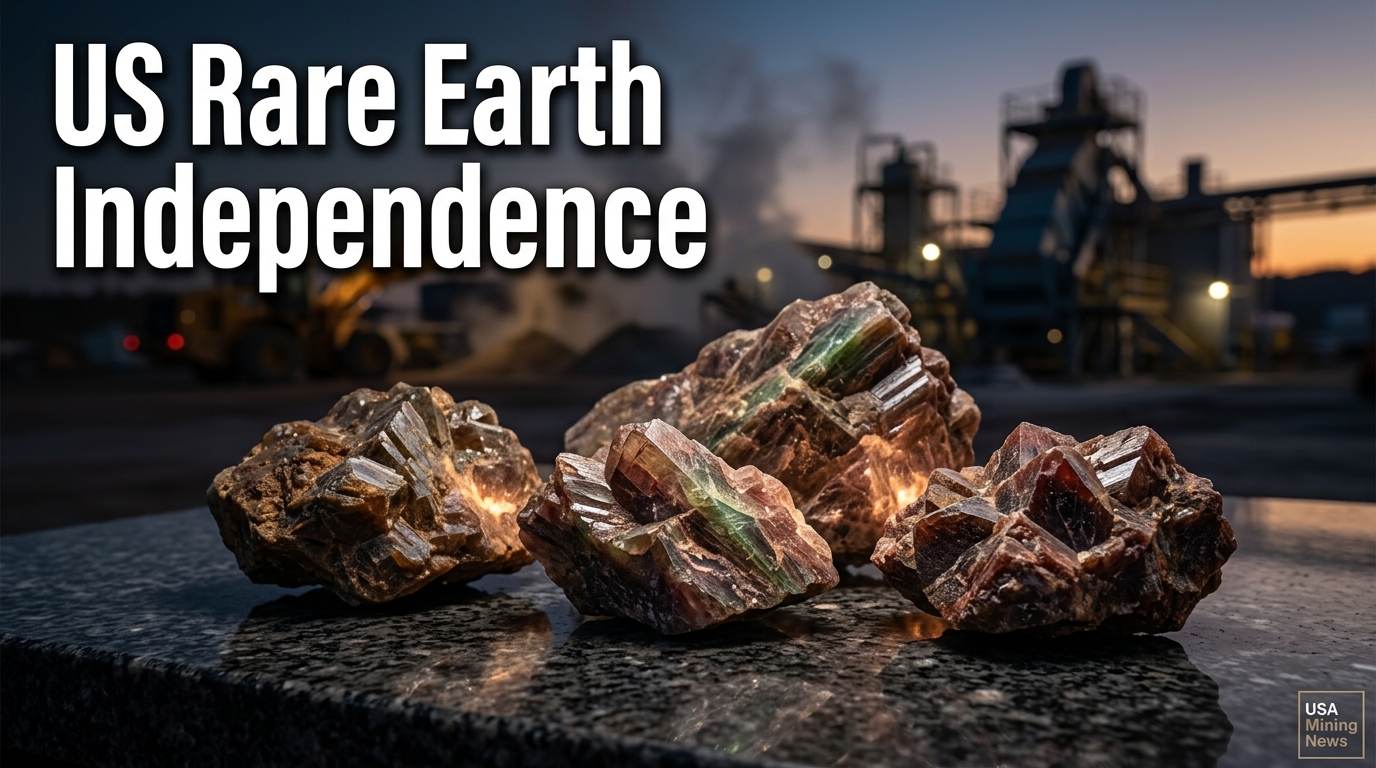
In a significant move poised to bolster American self-sufficiency in critical minerals, American Rare Earths (ARR) announced on August 17, 2026, the signing of a Memorandum of Understanding (MoU) with Novex, a US-based technology firm specializing in rare earth processing. This strategic agreement, executed through ARR’s wholly owned subsidiary, Wyoming Rare (USA), marks a pivotal step toward realizing a fully integrated, domestic mine-to-magnet supply chain for rare earth elements – a long-standing strategic imperative for the United States.
The collaboration directly targets one of the most significant vulnerabilities in the Western rare earth supply chain: the conversion of rare earth oxides (REOs) into metals, a process largely controlled by China. By forging this partnership, ARR and Novex aim to establish robust domestic capabilities, ensuring a secure and independent source of these vital materials for advanced manufacturing, defense applications, and the burgeoning clean energy sector.
Forging a Domestic Mine-to-Magnet Pathway
At the core of the MoU is a clear objective: to create a secure, US-based pathway from raw rare earth ore to finished permanent magnets. Under the terms of the agreement, Novex will receive neodymium-praseodymium oxide from ARR’s demonstration plant. This specific rare earth oxide is crucial for producing high-strength permanent magnets, which are indispensable components in electric vehicles, wind turbines, advanced electronics, and a wide array of defense systems.
The neodymium-praseodymium oxide will originate from ARR’s flagship Halleck Creek Project in Wyoming. This project, which boasts an estimated mineral resource of 2.63 billion tonnes, represents one of the largest rare earth deposits in North America. Its location entirely on state land further streamlines permitting processes, underscoring its potential for rapid development. The output from Halleck Creek’s planned demonstration plant will serve as the feedstock for Novex’s specialized conversion processes, laying the groundwork for a new era of domestic rare earth production.
Strategic Partnership and Process Optimization
Beyond the initial supply arrangement, the MoU outlines a deeper collaboration focused on technological advancement and infrastructure development. Both companies are committed to working together on process optimization for the oxide-to-metal conversion. This includes refining existing methodologies and potentially developing new ones to enhance efficiency, reduce environmental impact, and lower production costs – all critical factors for achieving commercial viability and competitiveness in the global market.
A key outcome of this joint effort will be the development of the design for a full-scale domestic rare earth metal production facility. This facility is envisioned to house the advanced metallization capabilities required to transform REOs into the metals needed for magnet manufacturing. Novex brings significant expertise to this partnership, having previously developed similar oxide-to-metal processes. The company operates a technology center in Bellingham, Washington, which serves as a hub for its research, development, and engineering efforts in this specialized field.
Addressing Critical Supply Chain Bottlenecks
The timing of this MoU is highly strategic, directly addressing pressing geopolitical and supply chain vulnerabilities. The conversion of REOs to metal has long been identified as a critical bottleneck in the magnet manufacturing process, with the vast majority of global supply currently controlled by China. This dominance presents significant risks to nations like the United States, particularly concerning national security and economic independence.
Recent policy shifts underscore the urgency of developing domestic capabilities. In April 2025, China introduced new export licensing requirements for several key rare earth elements, including samarium, gadolinium, terbium, dysprosium, and yttrium. These elements are vital for the production of high-temperature and defense-grade magnets, signaling China’s intent to exert greater control over the global supply. Even more significantly for the US defense sector, new regulations will prohibit US defense contractors from using magnets containing rare earth elements mined, refined, or separated in China starting from January 2027. This impending prohibition creates an immediate and compelling need for robust, alternative domestic metal production capabilities, elevating the ARR-Novex partnership to a position of national importance.
Technological Advancement: Molten Salt Electrolysis
American Rare Earths has undertaken a comprehensive review of various metallization technologies to identify the most suitable pathway for its operations. This review assessed several advanced methods, including fluoride conversion with calciothermic reduction, lanthanothermic reduction, and high-temperature molten salt electrolysis. After thorough evaluation, molten salt electrolysis emerged as the most promising primary candidate for development.
Molten salt electrolysis is recognized for its potential for cleaner processing and its ability to produce high-purity rare earth metals. ARR CEO Mark Wall commented, "Our technology review demonstrated that molten salt electrolysis is the cleanest path from oxide to metal, and Novex has been developing that capability in the US for years while working with various areas of the US Government and leading consulting companies." While molten salt electrolysis will be the primary focus, lanthanothermic reduction will be kept in reserve for certain metals, offering flexibility and redundancy in production strategies.
The Halleck Creek Project: A Foundation for Domestic Supply
The viability of the ARR-Novex partnership is significantly underpinned by the substantial potential of the Halleck Creek Project. Located in Wyoming, the project’s estimated mineral resource of 2.63 billion tonnes positions it as a cornerstone for future US rare earth production. Its advantageous location entirely on state land simplifies permitting and regulatory navigation, which can often be protracted for mining projects in the US. This geological and jurisdictional advantage has attracted significant federal and state support.
Notably, the Halleck Creek Project has received a non-binding letter of interest for up to $456 million in potential funding from the US Export-Import Bank. Such substantial financial backing from a federal institution underscores the project’s strategic importance and its alignment with national economic and security objectives. This potential funding, combined with the technical partnership with Novex, creates a robust framework for accelerating the project’s development and realizing its full potential to contribute to the US rare earth supply chain.
Executive Vision and Future Outlook
Mark Wall, CEO of American Rare Earths, articulated the profound significance of the MoU: "This MoU is a critical step in advancing our stated intention of building the only fully US domestic vertically integrated mine-to-magnet supply chain." His statement highlights the ambitious, holistic vision that drives ARR, aiming not just to extract raw materials but to participate in every stage of value addition within US borders.
The immediate next step for the companies is to finalize the commercial structure and terms of a long-term supply and collaboration agreement. Both parties aim to achieve this within the next 12 months, indicating a strong commitment to moving quickly from preliminary agreement to a concrete operational framework. This expedited timeline reflects the urgency driven by both market demand and regulatory mandates, particularly those affecting the defense sector.
The partnership between American Rare Earths and Novex represents a significant stride toward re-establishing a comprehensive and secure domestic rare earth supply chain in the United States. By tackling the critical metallization bottleneck and leveraging the vast resources of the Halleck Creek Project, this collaboration offers a blueprint for how US industry can regain independence in the production of these essential strategic materials. For mining industry professionals and investors, this development signals a growing opportunity in the domestic rare earth sector, driven by both market forces and compelling national interests.