U.S. Federal Agencies Forge Alliance to Revolutionize Mining Through Advanced Technology and Enhanced Safety
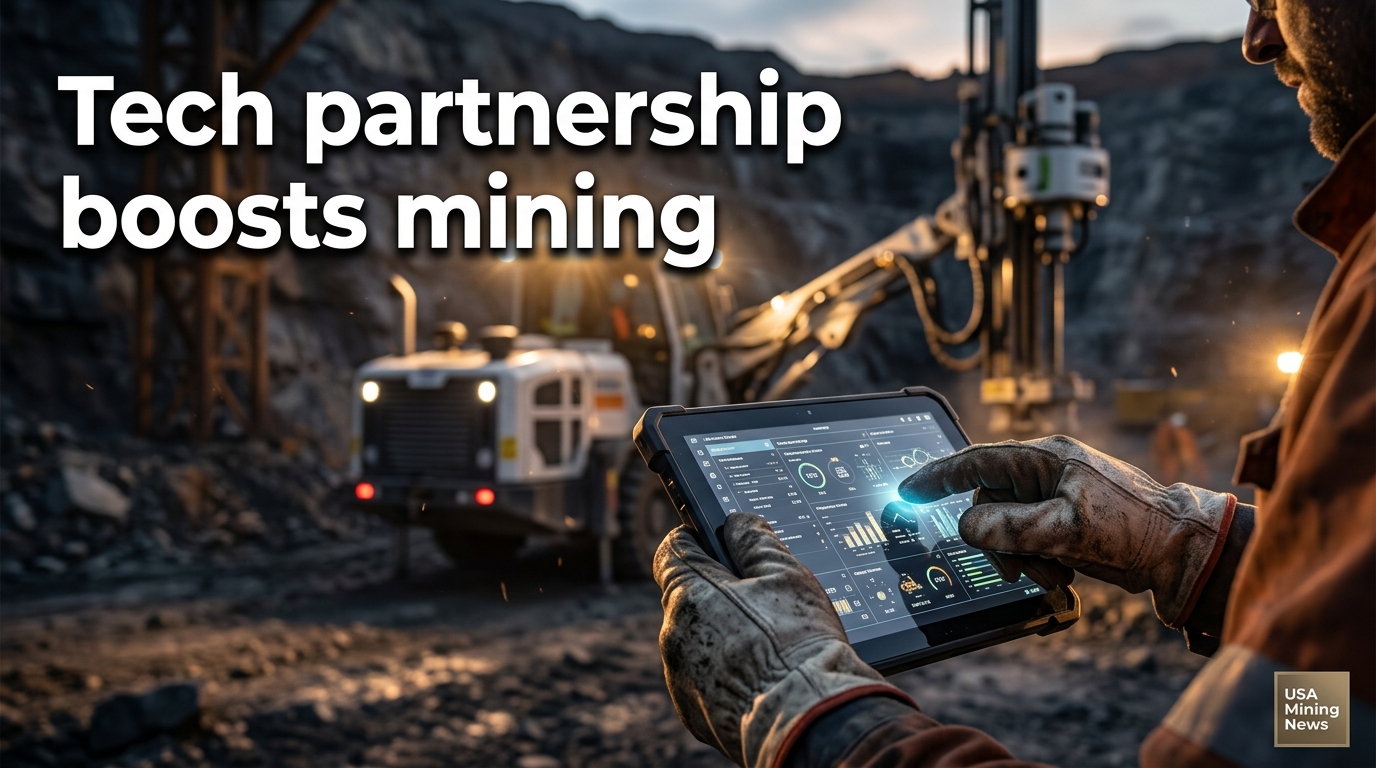
WASHINGTON – In a significant move set to reshape the landscape of the American mining industry, the U.S. Department of Energy (DOE) and the U.S. Department of Labor (DOL) today, July 21, 2026, announced the signing of a pivotal Memorandum of Understanding (MOU). This five-year agreement establishes a comprehensive framework designed to fast-track the deployment of cutting-edge technologies, including artificial intelligence (AI), automation, and advanced sensors, into the nation’s diverse mining operations. The accord underscores a unified federal commitment to not only bolster mining innovation but also dramatically enhance worker safety, elevate productivity, and secure the domestic production of critical minerals essential for national security and economic prosperity.
The strategic partnership synergizes the DOE’s profound expertise in energy technologies and resource recovery with the DOL’s steadfast leadership in mine safety through its Mine Safety and Health Administration (MSHA). This collaborative endeavor directly supports the Trump Administration’s broader pledges to fortify critical mineral supply chains, generate high-paying American employment opportunities, and solidify the nation's energy dominance on the global stage. Industry analysts note that this MOU represents a concerted effort to modernize a foundational sector, ensuring its competitiveness and resilience in the 21st century.
A Vision for a Stronger Domestic Mining Sector
The importance of this federal collaboration was succinctly articulated by U.S. Secretary of Energy Chris Wright. "America’s security and economic future depend on developing a strong domestic mining sector," Secretary Wright stated. "By pairing the Energy Department’s technical expertise with the Labor Department’s leadership on mine safety, we can support American miners, secure domestic supply chains, and put cutting-edge technology to work for the people who power our nation." This statement highlights the dual strategic imperatives of the MOU: leveraging technological advancement for economic and national security benefits, while simultaneously prioritizing the well-being and prosperity of the mining workforce.
Echoing this sentiment, Acting Secretary of Labor Keith Sonderling emphasized the agreement's role in advancing the administration's energy goals. "Today’s agreement ensures that the Department of Labor and the Department of Energy will work side by side to prepare the mining workforce, advance mining technology, and support the safe production of the coal that powers America’s future," said Acting Secretary Sonderling. He further affirmed, "It is our commitment to you that this MOU will further President Trump’s promise to restore coal as a key driver of America’s energy supply chain and American coal will again be the envy of the world for generations to come." These remarks underscore the administration's particular focus on revitalizing the coal sector alongside the broader push for critical mineral independence, integrating advanced technologies as a means to achieve both safety and productivity targets.
Core Pillars of the Collaborative Framework
Under the terms of the five-year agreement, specific offices within both departments will engage in close cooperation. The DOE’s Hydrocarbons and Geothermal Energy Office (HGEO) and the Office of Critical Minerals and Energy Innovation (CMEI) will work in tandem with the DOL’s Mine Safety and Health Administration (MSHA). This collaboration is structured to facilitate the sharing of non-proprietary data, research findings, and technical expertise, all of which are crucial for the successful deployment of next-generation mining technologies. The MOU outlines five key areas of focus:
- Fostering Collaborative Research and Development: This pillar emphasizes joint efforts in research, testing, and demonstration projects. By pooling resources and expertise, the agencies aim to accelerate the development and validation of AI, automation, advanced sensors, and other technologies specifically tailored to improve the efficiency, safety, and environmental footprint of mining operations. Such collaboration can de-risk innovation and provide validated solutions faster than individual entities might achieve.
- Leveraging Federal Expertise: The partnership is designed to harness the collective knowledge of multidisciplinary teams, particularly those at DOE’s National Energy Technology Laboratory Coal Center of Excellence. This integration of specialized scientific and engineering talent is crucial for accelerating technology development from conception through to practical, large-scale deployment. The Coal Center of Excellence, with its historical focus on energy resources, will play a vital role in adapting and applying these advanced technologies to both traditional and critical mineral mining contexts.
- Improving Mine Safety: A paramount objective of the MOU is to significantly enhance the safety of mining operations. The application of advanced technologies is envisioned to strengthen hazard detection capabilities, thereby reducing the incidence of mining accidents. Furthermore, these technologies are expected to substantially improve emergency preparedness and response systems, offering real-time data and capabilities that can save lives and mitigate widespread risks in the event of an incident. This focus directly addresses MSHA's core mission and aims to leverage technology to prevent injuries and fatalities.
- Facilitating Workforce Development: Recognizing that technological advancement must be accompanied by a skilled workforce, the agreement includes a strong focus on workforce development. This involves identifying future workforce needs – the new roles and competencies required by technology-driven mining operations – and supporting various education and training opportunities. These programs will equip miners with the necessary skills to operate, maintain, and interact with advanced systems, ensuring that job opportunities remain robust and high-paying as the industry evolves.
- Enhancing Data Access and Digitization: A critical bottleneck in modernizing any industry is often the accessibility and usability of historical data. The MOU commits to working with stakeholders to digitize legacy mining data and improve public datasets. This initiative is aimed at better characterizing domestic mineral resources, including those on federally managed lands, providing a comprehensive data foundation for future exploration, planning, and operational optimization. Improved data access is fundamental to enabling AI and machine learning applications that can unlock new insights into resource availability and extraction methodologies.
Technological Momentum for a Vital Sector
The push for artificial intelligence, automation, and advanced sensors in mining is not merely a modernization effort; it is a strategic imperative. AI applications in mining can span from predictive maintenance of heavy machinery, optimizing drilling patterns based on geological data, to real-time risk assessment and decision support for ground control. Automation can lead to autonomous haulage systems, remote-controlled drilling, and automated material handling, significantly removing human workers from inherently dangerous environments. Advanced sensors, capable of real-time monitoring of air quality, ground stability, water levels, and even individual worker biometrics, offer unprecedented levels of safety oversight and operational efficiency.
The integration of these technologies promises a transformative impact on mining productivity. By optimizing operations through data-driven insights and reducing downtime, mines can increase output while simultaneously lowering per-unit costs. This enhanced efficiency is particularly crucial for critical minerals, where domestic production capabilities are often challenged by economic viability compared to international competitors. Securing a reliable domestic supply chain for minerals like lithium, cobalt, rare earth elements, and nickel, which are vital for renewable energy technologies, electric vehicles, and defense applications, is a cornerstone of the nation's energy security strategy.
Broader Industry Implications and Future Outlook
This federal MOU sends a clear signal to the U.S. mining industry and its investors: the government is committed to supporting technological innovation and ensuring a safe, competitive domestic sector. For companies operating or looking to invest in American mining, this agreement indicates potential for increased federal support for R&D, access to valuable data, and a policy environment conducive to technological adoption. It also signals a renewed focus on regulatory frameworks that can adapt to, and even foster, the safe deployment of these advanced systems.
The emphasis on workforce development is equally critical. As mining shifts towards more technology-intensive operations, the demand for skills in data science, robotics engineering, remote operation, and cybersecurity will surge. The MOU’s commitment to training ensures that the existing mining workforce can transition into these new roles, mitigating potential job displacement and fostering a highly skilled, high-wage labor force. This will not only create opportunities for current miners but also attract new talent to the industry, dispelling misconceptions about mining being solely a manual labor-intensive industry.
Over the next five years, the mining industry can anticipate a concentrated drive towards integrating these advanced technologies across both critical mineral extraction and traditional resource recovery, including coal. The collaboration between DOE and DOL, leveraging MSHA’s regulatory insight, aims to create a blueprint for safe and productive mining operations in the 21st century. The success of this MOU will be measured not only by the deployment of new technologies but by tangible improvements in worker safety metrics, increased domestic mineral output, and the resilience of U.S. supply chains. As the nation seeks to strengthen its industrial base and maintain technological leadership, the modernization of its mining sector stands as a foundational priority.