Anglo American Solidifies Iron Ore Supply with China Mineral Resources Group in Key Deal
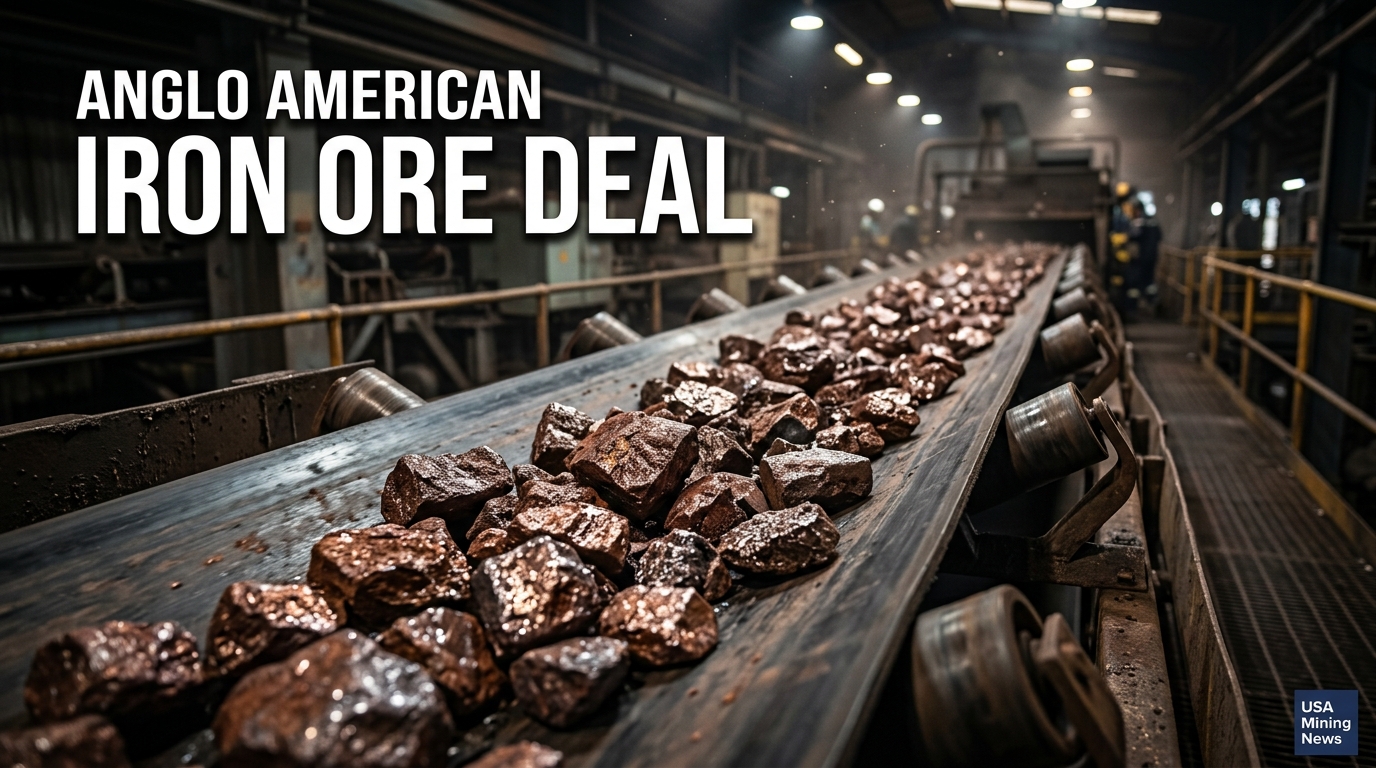
The global iron ore market is witnessing a strategic realignment in procurement dynamics, underscored by the recent announcement from Anglo American. On August 14, 2026, the diversified mining giant confirmed a year-long iron ore supply agreement with the China Mineral Resources Group (CMRG). This significant deal, set to commence deliveries on April 1, 2026, and run through March 31, 2027, involves iron ore produced by Anglo American’s South African subsidiary, Kumba Iron Ore, a key producer of high-grade material.
This development places Anglo American in step with other major global miners, most notably BHP Group, which finalized a similar supply agreement with CMRG earlier this year. The engagement with CMRG, a state-backed entity responsible for centralizing iron ore procurement for more than half of China’s steelmakers, signals a continuing shift in how the world’s largest iron ore consumer secures its vital raw material supply. For industry professionals and investors, this agreement offers critical insights into evolving trade relationships, market power dynamics, and the strategic positioning of premium iron ore producers.
The Key Players: A Closer Look at Anglo American, Kumba, and CMRG
Understanding the entities involved is crucial to grasping the full scope of this agreement.
- Anglo American plc: As a leading global mining company, Anglo American boasts a diverse portfolio spanning diamonds, copper, platinum group metals, and iron ore. Headquartered in London, the company operates across Africa, Australia, North and South America, and Asia. Its iron ore division is a critical component of its revenue stream, with operations in South Africa (through Kumba Iron Ore) and Brazil (Minas-Rio). The company’s strategic decisions in iron ore supply, especially towards its largest consumer, China, are closely watched by the market.
- Kumba Iron Ore Limited: A subsidiary of Anglo American, Kumba is a prominent pure-play iron ore producer based in South Africa. Kumba is renowned for its high-quality, high-grade iron ore products, which are particularly sought after by steelmakers looking to improve blast furnace efficiency and reduce carbon emissions. The company reported impressive sales figures in 2025, moving approximately 37 million tonnes (mt) of its premium product to global markets. Kumba's operations, primarily centered around the massive Sishen and Kolomela mines, are integral to South Africa's export economy and a cornerstone of Anglo American's iron ore business.
- China Mineral Resources Group (CMRG): Established in late 2022, CMRG represents a groundbreaking initiative by the Chinese government to consolidate and centralize the procurement of iron ore for its vast steel industry. Its mandate is to enhance China's bargaining power in negotiations with global miners, optimize purchasing strategies, stabilize raw material costs, and ensure long-term supply security for Chinese steelmakers. By acting on behalf of more than half of China’s steel mills, CMRG aims to move away from fragmented, competitive purchasing towards a unified, strategic approach. This shift has profound implications for global iron ore price discovery and supply chain management.
Contractual Specifics and Strategic Nuances
The agreement’s details, though not fully disclosed in terms of contract size or specific pricing, provide significant insights into the evolving market landscape. The year-long duration, from April 1, 2026, to March 31, 2027, suggests an initial phase of engagement for Anglo American with the centralized procurement model.
Notably, the deal explicitly involves iron ore from Kumba Iron Ore’s South African operations, excluding ore produced at Anglo American’s Minas-Rio project in Brazil. This distinction is important; Kumba's ore typically commands a premium due to its high iron content and low impurities, making it highly desirable for specific steelmaking processes. The exclusion of Minas-Rio could be attributed to existing long-term contracts for that specific product, differing logistical pathways, or a strategic decision to focus the initial CMRG engagement on a particular product stream.
Ebrahim Dadoo, Anglo American’s global head of sales and trading, offered context during a recent earnings call for analysts in late July. He stated, "We’ve had very constructive engagements with CMRG, we’ve got an agreement in place with them as of the first of April, and that does impact our products that we sell to CMRG member mills." While underscoring the positive nature of the discussions, Dadoo also indicated that the volumes supplied under this specific CMRG contract represent "a small portion" of Anglo American’s total output. He further clarified that approximately 54% of the company’s total iron ore production is sold into China through various channels, including spot sales and other non-CMRG contracts. This highlights Anglo American's balanced approach to market access, diversifying its sales channels to mitigate risks associated with over-reliance on any single buyer or procurement mechanism.
Market Implications: Reshaping Global Iron Ore Procurement
The emergence and growing influence of CMRG marks a pivotal moment for the global iron ore market. Historically, major miners like Anglo American, BHP, Rio Tinto, Vale, and Fortescue Metals Group have engaged in direct, often bilateral, negotiations with hundreds of individual steel mills in China. This decentralized model frequently led to price volatility and periods of intense competition among Chinese buyers.
CMRG’s mission to centralize procurement aims to inject greater stability and predictability into the supply chain for China. By consolidating demand, CMRG seeks to leverage its collective buying power to negotiate more favorable terms, potentially influencing benchmark prices and securing long-term supply at optimized costs. For global miners, this translates into a new and powerful counterparty that demands a sophisticated and unified sales strategy. The fact that both BHP and now Anglo American have signed agreements indicates an acknowledgment of CMRG’s growing significance.
The focus on Kumba’s higher-grade product within this agreement is also noteworthy. As the global steel industry increasingly prioritizes efficiency and decarbonization, higher-grade iron ore becomes more valuable due to its lower energy consumption and reduced emissions during the steelmaking process. This trend positions Kumba Iron Ore favorably and ensures its products remain in high demand, even within a consolidated procurement framework.
Challenges and the Future Outlook
Engaging with CMRG is not without its complexities. Reports of "lengthy negotiations" faced by companies like BHP and Fortescue suggest that CMRG is a firm negotiator, committed to its mandate of securing optimal terms for Chinese steelmakers. This sets a precedent for future contract renewals and negotiations across the industry, indicating that miners will need robust strategies and a clear understanding of their product's value proposition.
Looking ahead, the industry will keenly watch whether other major producers, particularly Rio Tinto and Vale, will also fully integrate into CMRG’s centralized procurement model for significant portions of their output. The evolution of CMRG's role will likely reshape how iron ore prices are discovered and how long-term supply contracts are structured. A significant shift of volume from spot markets to long-term, centrally negotiated contracts could alter market liquidity and price volatility dynamics.
Furthermore, this deal underscores the enduring strategic importance of South Africa as a reliable source of high-quality iron ore. For Anglo American, securing this agreement with CMRG, particularly from its highly valued Kumba asset, provides a layer of stability and market access for a core commodity. This strategic move could be viewed as bolstering its iron ore segment amidst broader corporate strategic reviews and portfolio adjustments.
Conclusion
Anglo American’s year-long iron ore supply agreement with China Mineral Resources Group marks a significant development in the global mining sector. It solidifies Kumba Iron Ore’s position as a preferred supplier of high-grade material to the world’s largest steel-producing nation and aligns Anglo American with the evolving centralized procurement strategy being championed by China. As the industry navigates a complex interplay of demand, supply, and geopolitical considerations, such agreements will continue to define the future landscape of global commodity trade, demanding adaptability and strategic foresight from all players involved. The coming year will undoubtedly bring further clarity on how these foundational agreements will reshape the iron ore market for decades to come.