The global mining landscape is undergoing a profound transformation, characterized by a strategic re-evaluation of portfolios and a decisive pivot towards commodities essential for the burgeoning energy transition. A striking demonstration of this shift recently emerged with Anglo American’s reported sale of its Queensland steel-making coal assets to Dhilmar, a transaction signaling a significant acceleration of the mining major's long-term strategy. As reported by Alejandro Gonzalez on May 18, 2026, this divestiture marks a critical step for Anglo American as it increasingly focuses on copper and the broader suite of critical minerals, aligning its operations with future global demand and sustainability imperatives.
Anglo American's Strategic Pivot Towards Future Minerals
For decades, Anglo American has stood as one of the world's leading diversified mining companies, with a portfolio spanning a wide array of commodities, from diamonds and platinum group metals to copper, iron ore, and coal. However, in recent years, the company has embarked on an ambitious journey to streamline its asset base, shedding less core or carbon-intensive operations to concentrate on higher-growth, future-enabling commodities. The sale of its Queensland coal assets is not an isolated event but rather a continuation of this well-defined strategic trajectory.
The impetus behind this pivot is multi-faceted. Firstly, global pressure from investors, regulators, and the public for companies to reduce their carbon footprint and contribute to climate change mitigation has intensified dramatically. Operating significant thermal coal assets, in particular, has become increasingly challenging from a social license and capital access perspective. While steel-making coal (metallurgical coal or coking coal) remains indispensable for traditional steel production—a fundamental input for infrastructure and manufacturing—it too faces long-term decarbonization challenges through alternative steelmaking processes like green hydrogen.
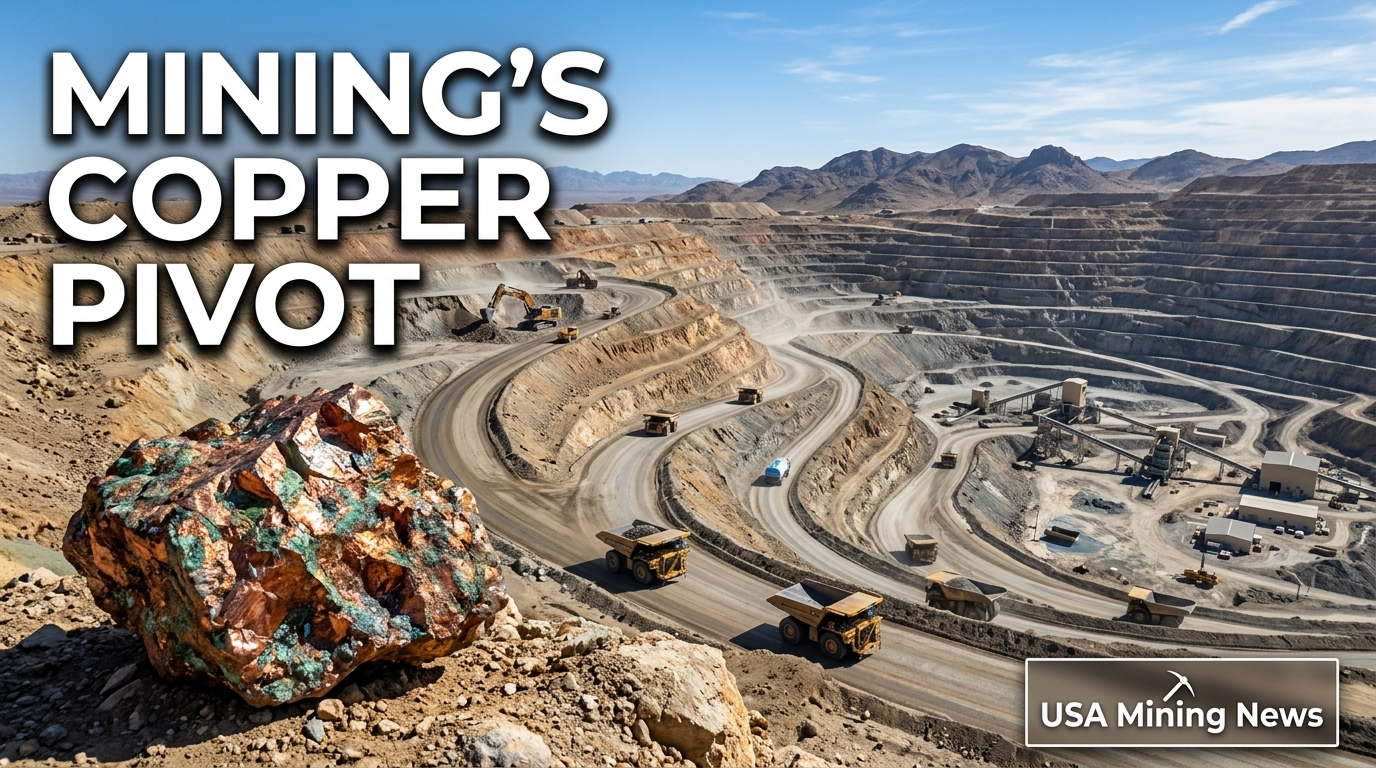
Secondly, the accelerating global energy transition, driven by the imperative to electrify economies and deploy renewable energy infrastructure, has created unprecedented demand for certain minerals. Copper, often dubbed the "metal of electrification," is central to this shift, being a critical component in electric vehicles, charging infrastructure, wind turbines, solar panels, and electrical grids. Similarly, other critical minerals such as nickel, lithium, cobalt, and rare earth elements are experiencing surging demand due to their roles in battery technologies and advanced manufacturing. Anglo American's strategy is to position itself at the forefront of supplying these essential inputs to a greener economy.
The Queensland Coal Portfolio Transaction
The reported agreement for the sale of Anglo American's Queensland steel-making coal portfolio to Dhilmar represents a substantial transaction in the current mining environment. The deal is said to comprise an upfront cash payment of $2.3 billion, providing immediate capital for Anglo American. Furthermore, the total value of the transaction could significantly increase through contingent payments of up to $1.58 billion, which are reportedly linked to future coal prices. This structure allows Anglo American to participate in potential upside from a robust metallurgical coal market while divesting operational control and the associated long-term liabilities. The maximum potential value of the deal, should all contingent payments materialize, reaches $3.88 billion.
The specific assets included in the Queensland portfolio were not detailed in the source material, but Queensland is globally renowned for its high-quality metallurgical coal deposits, which are crucial for steel production. These operations often involve large-scale open-cut and underground mines, sophisticated processing facilities, and extensive logistics chains to port for export to key steel-making hubs, particularly in Asia. For Anglo American, this sale effectively offloads its remaining significant coal exposure, enabling a sharper focus on its core growth commodities.
Dhilmar's Role and Expansion in the Australian Market
While the source provides limited details on Dhilmar, the acquisition of a significant portfolio of Queensland steel-making coal assets immediately positions the company as a key player in Australia's vital metallurgical coal sector. Such acquisitions by private entities or less globally diversified miners are becoming an increasing trend as major publicly listed corporations divest fossil fuel assets. This allows a new generation of owners, often with different capital structures, risk appetites, or market focus, to optimize the operations and potentially extract further value from these assets.
For Dhilmar, this transaction offers an opportunity to gain substantial production capacity and market share in a commodity that, despite decarbonization pressures, remains critically important for global industrial development. High-quality coking coal from Queensland is typically sold under long-term contracts to steel mills worldwide, providing a relatively stable revenue stream, albeit with price volatility. Dhilmar's acquisition could indicate confidence in the sustained demand for metallurgical coal, especially for blast furnace steelmaking, in the medium to long term, particularly in emerging industrial economies.
Broader Implications for Australia's Coal Sector
GlobalData’s analysis suggests that Anglo American’s sale highlights a "broader Australian coal transition." Australia is one of the world's largest exporters of both thermal and metallurgical coal, and its mining sector is deeply intertwined with the global energy and industrial landscape. The ongoing divestment of coal assets by international mining giants like Anglo American, BHP, and Rio Tinto reflects a significant strategic reorientation within the industry.
Several factors are driving this broader transition in Australia:
- ESG Pressures: Institutional investors, pension funds, and asset managers are increasingly adopting ESG (Environmental, Social, and Governance) criteria, leading to divestment from companies with significant fossil fuel exposure. This puts pressure on major miners to clean up their portfolios.
- Capital Allocation: By divesting coal, companies free up capital that can be reinvested into growth projects for copper, nickel, lithium, and other critical minerals, which are generally seen as having stronger long-term growth prospects due to the energy transition.
- Decarbonization Targets: Many multinationals have set ambitious net-zero targets. While operational emissions are a focus, divesting high-carbon assets also contributes to a cleaner portfolio profile.
- Market Dynamics: While metallurgical coal remains robust, the long-term outlook for thermal coal is challenging, with global efforts to reduce coal-fired power generation. The perception, if not the reality, of the entire coal sector is increasingly negative.
This transition, however, does not imply the immediate demise of Australia's coal industry. The sector continues to be a major employer and contributor to the Australian economy, particularly in states like Queensland and New South Wales. Rather, it signifies a shift in ownership, with assets moving from large, globally diversified, and often publicly-traded companies to smaller, regionally focused, or privately-held entities that may be less sensitive to global ESG pressures or have different investment horizons. The challenge for Australia will be to manage this transition, supporting regional economies while adapting to evolving global commodity demands.
The Rising Demand for Copper and Critical Minerals
Anglo American's strategic realignment underscores a critical macro trend: the burgeoning demand for copper and critical minerals. This shift is not merely a corporate strategy; it is a fundamental re-wiring of the global supply chain in response to the climate crisis and technological advancement.
Consider the following drivers:
- Electric Vehicles (EVs): An average EV uses significantly more copper than a conventional internal combustion engine vehicle, plus substantial quantities of lithium, nickel, cobalt, and graphite for its battery pack.
- Renewable Energy Infrastructure: Wind turbines, solar farms, and the massive grid upgrades needed to transmit intermittent renewable power all require vast amounts of copper and other metals.
- Energy Storage Systems (ESS): Beyond EVs, large-scale battery storage is crucial for grid stability, driving demand for battery metals.
- Decarbonization Technologies: Emerging technologies like carbon capture, hydrogen production, and advanced nuclear power will also be highly mineral-intensive.
Companies like Anglo American are actively exploring and developing new projects in copper-rich regions, such as Chile and Peru, and expanding their footprint in other critical mineral jurisdictions. This investment in the future of mining is perceived as a necessary step to meet the estimated exponential growth in demand for these metals over the next few decades, which some analysts suggest will necessitate a supply increase of 3 to 5 times current levels for certain critical minerals by 2050.
Market Reactions and Future Outlook
The market's reaction to such strategic moves by major miners is generally positive, especially from an ESG perspective. Investors are increasingly favoring companies with cleaner energy portfolios and clear pathways to decarbonization. For Anglo American, the capital freed up from the coal sale provides significant optionality: it can be used to fund new copper or critical mineral projects, reduce debt, or be returned to shareholders. This flexibility is critical in a dynamic commodity market.
Looking ahead, the global mining industry will likely witness more such transactions. The bifurcation of assets—with 'green' commodities attracting premium valuations and 'brown' assets increasingly being divested—is expected to continue. Australia, with its rich endowment of both traditional minerals and critical minerals, will remain a focal point for these transitions. The challenge for the nation will be to balance the economic benefits of its legacy industries with the imperative to foster new supply chains for the minerals of the future. The Anglo American-Dhilmar deal is not just a corporate transaction; it is a clear signal of the industry's evolving priorities and its commitment to shaping a more sustainable, resource-efficient future.