Deadly Landslide at Unlicensed Colombian Gold Mine Exposes Peril of Informal Operations
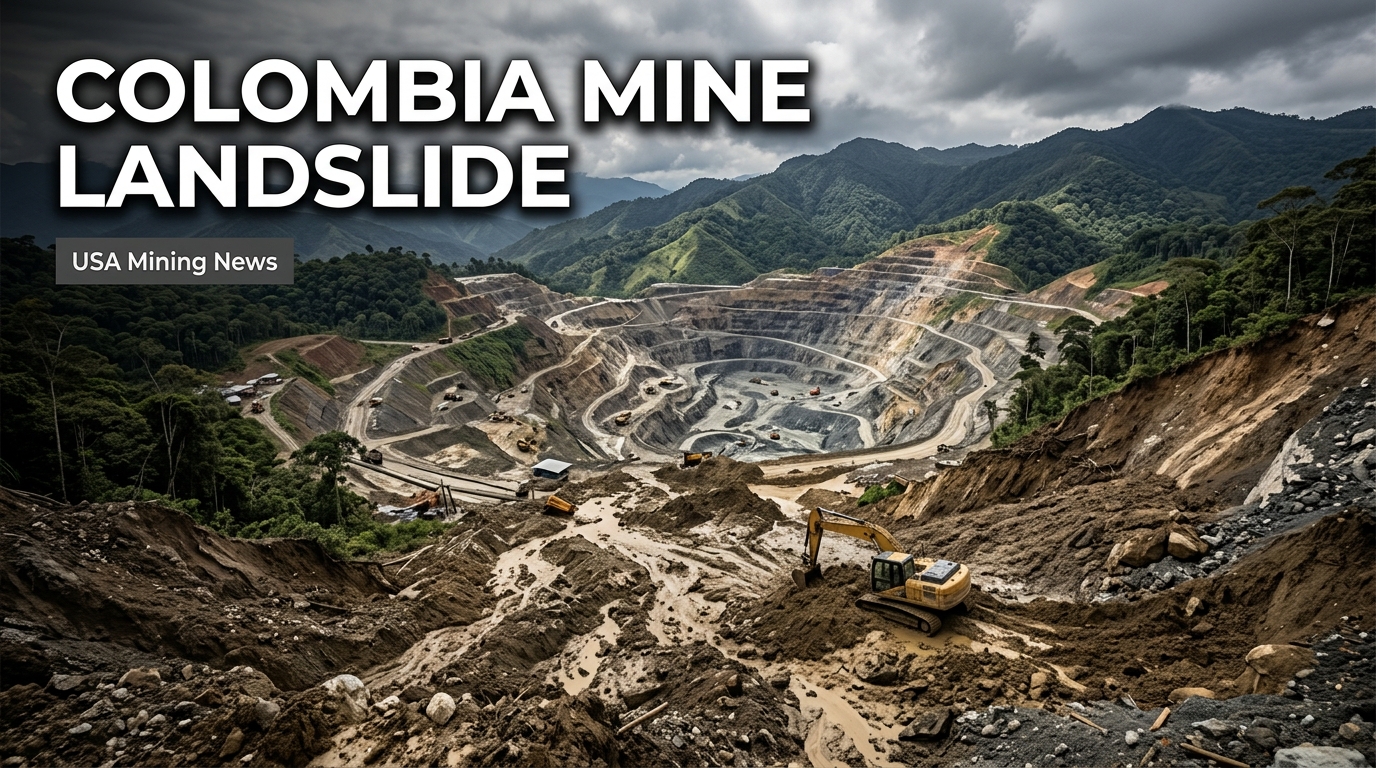
BOGOTÁ, Colombia – August 21, 2026, marks a somber date for Colombia’s mining sector, as a devastating landslide at an unlicensed open-pit gold mine in the village of Puerto Rico, within the Policarpa municipality of Nariño, resulted in the confirmed deaths of 13 individuals and left seven others injured. The National Mining Agency (ANM) of Colombia swiftly confirmed the fatalities, signaling yet another tragic reminder of the inherent dangers and often-fatal consequences associated with unregulated mining activities across the nation.
The incident occurred when a significant section of the mine slope gave way, reportedly due to unstable soil conditions. Initial assessments by the ANM indicate that the collapse took place at a site where gold mining was being conducted without official authorization, allegedly utilizing heavy machinery in the absence of any government supervision or regulatory oversight. This lack of formalization is a critical factor, as it bypasses essential safety protocols, geological assessments, and engineering safeguards that are standard requirements for licensed operations.
Immediate Response and Agency Involvement
Upon news of the tragedy, the ANM mobilized its specialized Mining Safety and Rescue team, which became an integral part of the emergency response from the outset. Working in close collaboration with local authorities and other emergency services, the team commenced immediate search and rescue operations, although efforts were severely hampered by the unstable ground and the scale of the collapse.
Beyond the immediate rescue efforts, the ANM also extended its profound support to the families of the victims, those who sustained injuries, and the broader local community profoundly affected by the incident. Such expressions of solidarity are crucial in communities where mining is often a generational livelihood, and accidents reverberate deeply through social structures. The agency’s involvement underscores its mandate to not only respond to emergencies but also to advocate for improved safety across the country's mining landscape.
The Human Toll and Community Impact
The human cost of this disaster is particularly poignant. Among the 13 confirmed fatalities, initial reports highlighted that four were tragically members of a single indigenous family. This detail, reported by the BBC, underscores the deep communal ties often found within informal mining operations and amplifies the devastating impact on tightly-knit indigenous groups. Local residents indicated that the mine regularly employed approximately 50 people, with a significant proportion belonging to the Quillacinga indigenous group. For these communities, often in remote regions with limited alternative economic opportunities, mining, even in its informal state, represents a primary, if perilous, source of income. The loss of life in such numbers not only creates immediate grief but also has long-term socio-economic repercussions for the affected families and the entire community.
The Pervasive Challenge of Unlicensed Mining in Colombia
This incident in Policarpa is unfortunately not an isolated event but rather a stark illustration of a systemic challenge within Colombia’s mining sector. Fatal incidents occur with alarming frequency, particularly in mines operating without official authorization, where a lack of stringent safety protocols, proper geological studies, and robust emergency preparedness plans exponentially increases risk.
Artisanal and small-scale mining (ASM) is a significant economic activity in Colombia, estimated to involve between 200,000 and 400,000 people. These miners, often working with rudimentary tools or, as alleged in this case, heavy machinery without the necessary technical supervision, extract precious metals and gemstones from diverse geological settings. For countless families, the sale of these recovered minerals is the sole means of sustenance, creating a complex socio-economic dilemma where livelihood often trumps safety concerns. The drive to extract resources, coupled with the immediate economic necessity, often pushes individuals into precarious and dangerous working environments.
- Lack of Regulatory Oversight: Unlicensed mines operate outside government supervision, meaning no mandatory safety inspections, no professional engineering assessments, and no enforcement of environmental or labor standards.
- Geological Instability: Without expert geological surveys and geotechnical engineering, miners are often unaware of inherent slope instabilities, ground saturation, or other geological hazards, making collapses like the one in Nariño a constant threat.
- Substandard Equipment and Practices: The use of heavy machinery without proper maintenance, operator training, or adherence to established mining methods can exacerbate dangerous conditions and contribute to accidents.
- Environmental Degradation: Beyond safety, informal mining often leads to significant environmental damage, including deforestation, water pollution from mercury and cyanide, and landscape alteration, further destabilizing terrain.
A Pattern of Incidents: Colombia's Ongoing Safety Struggle
The Policarpa tragedy is the latest in a series of severe mining accidents that have plagued Colombia in recent years, highlighting an urgent need for enhanced safety measures and comprehensive formalization strategies.
- May 2026, Sutatausa: Just months prior to the Nariño landslide, nine individuals perished following an explosion at a coal mine in Sutatausa, situated north of Bogotá. Authorities attributed this devastating incident to a build-up of explosive gases, a common hazard in underground coal operations. Fortunately, emergency responders were able to rescue six miners from the site, underscoring the critical importance of trained rescue teams and prompt action.
- July 2025, Antioquia: In another significant event a year earlier, 18 workers were trapped for 18 grueling hours at a gold mine in the Antioquia region. Their entrapment was caused by faulty equipment, a recurrent issue in operations lacking consistent maintenance and safety inspections. All 18 workers were eventually rescued, a testament to coordinated emergency efforts, but the incident again underscored the vulnerabilities inherent in the sector.
These repeated incidents demonstrate a persistent pattern of safety failures, predominantly concentrated in the unregulated or poorly regulated segments of the mining industry. While larger, formally licensed operations generally adhere to international safety standards, the vast informal sector presents a formidable challenge for both regulatory bodies and communities.
Regulatory Framework and the Path Forward
The ANM, as Colombia's primary mining authority, plays a pivotal role in promoting responsible and safe mining practices. Following the Policarpa disaster, the agency reiterated its commitment to collaborate closely with authorities and affected communities. Their stated objective is to "promote strategies that enhance the safety of miners operating within the legal framework." This statement, while crucial, also implicitly acknowledges the enormous challenge posed by the hundreds of thousands of miners currently operating outside this framework.
Formalizing artisanal and small-scale mining is a complex endeavor that requires a multi-faceted approach. It involves not only enforcing existing regulations and conducting oversight but also providing economic alternatives, technical assistance, access to capital, and pathways for legal registration. Without viable formalization pathways, many miners may continue to operate in the shadows, perpetuating the cycle of risk and tragedy. The industry context suggests that solutions must be both regulatory and developmental, balancing enforcement with support for sustainable livelihoods.
Implications for the Broader Mining Industry
For the global mining industry and its investors, such tragedies, even in the informal sector, carry significant implications. They often raise broader questions about:
- Reputational Risk: While distinct from formal operations, such events can cast a shadow over the entire national mining industry, influencing investor perception and public trust.
- Supply Chain Due Diligence: Increased scrutiny on ethical sourcing and responsible supply chains means that companies must be increasingly vigilant about the provenance of minerals, particularly gold, to avoid inadvertently supporting operations with poor safety and human rights records.
- Government and Industry Collaboration: These incidents often spur calls for greater collaboration between governments, large mining companies, and NGOs to develop sustainable solutions for ASM, including formalization programs, technology transfer, and social development initiatives.
The tragic loss of life in Policarpa serves as a somber reminder that the pursuit of minerals, particularly precious metals like gold, often comes at a steep human cost in regions where informal operations proliferate.
Conclusion
The landslide at the unlicensed gold mine in Policarpa on August 21, 2026, resulting in 13 fatalities and seven injuries, is a stark and sorrowful testament to the acute risks faced by miners operating outside the protective embrace of regulations. As Colombia grapples with the immense challenge of formalizing its vast artisanal mining sector, the incident underscores the urgent need for comprehensive strategies that prioritize human life, ensure occupational safety, and foster sustainable economic development within legal and ethical frameworks. The ANM's ongoing collaboration with local authorities and communities will be critical in navigating this complex landscape, aiming to prevent future tragedies and build a safer, more responsible mining industry for all.