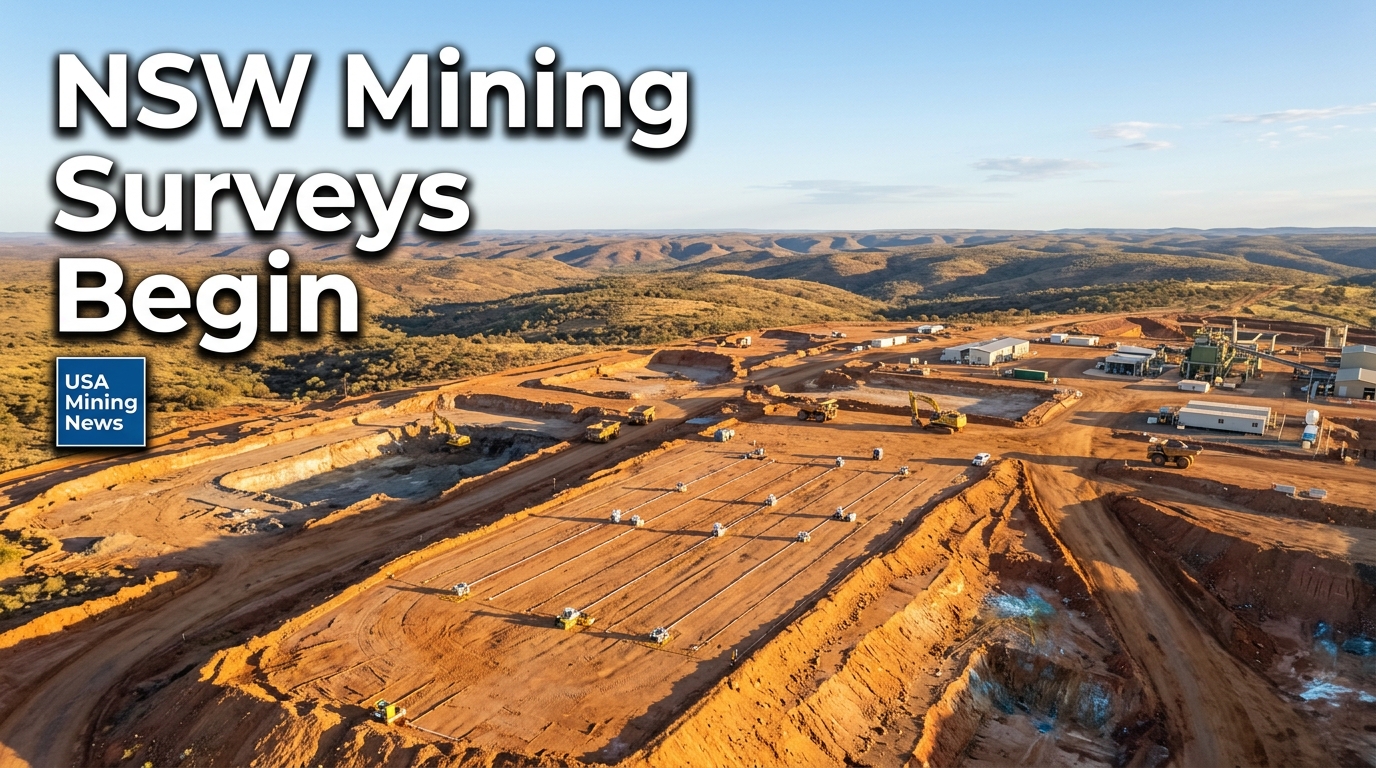
Perth, Western Australia – Arrow Minerals has taken a decisive step forward in the exploration of its Yarraloola Copper Project, strategically located in the mineral-rich Pilbara region of Western Australia. The company recently announced the completion of an infill gravity survey, a crucial geophysical undertaking designed to sharpen exploration targets ahead of an anticipated drilling campaign later in 2026. This development is further bolstered by the securement of a grant from the Western Australian Government's Exploration Incentive Scheme (EIS), earmarked for an extensive electromagnetic (EM) survey at the promising site.
The progression at Yarraloola underscores a broader industry trend of heightened exploration activity, particularly for critical minerals like copper, which are essential for the global energy transition. Arrow Minerals' systematic approach, integrating multi-faceted geophysical techniques, positions the company to effectively de-risk and advance the project towards potential resource definition.
Geophysical Foundation for Future Drilling
The recently concluded infill gravity survey by Arrow Minerals represents a foundational phase in the sophisticated process of mineral exploration. Covering an impressive 791 stations, the survey specifically focused on the Ava, Fraser, and Mr Thomas areas within the Yarraloola tenement. The primary objective of this detailed survey was to refine anomalies for the subsequent drilling program, slated for the latter half of 2026.
Gravity surveys are indispensable tools in the early to mid-stages of exploration. They measure subtle variations in the Earth's gravitational field, which can indicate differences in rock density beneath the surface. Mineral deposits, particularly those rich in base metals like copper, often exhibit higher densities compared to surrounding host rocks. By meticulously mapping these density contrasts, geophysicists can delineate potential mineralization zones or structural features that control ore emplacement. This data supplements previous magnetic and electrical geophysical studies near historical workings at Yarraloola, creating a more comprehensive subsurface picture. The integration of various geophysical datasets significantly enhances the accuracy of geological models, thereby improving the probability of success for subsequent drilling programs and optimizing exploration expenditure.
Strategic Funding and Advanced Electromagnetic Surveys
A significant catalyst for the next phase of exploration at Yarraloola is the financial backing secured from the Western Australian Government's Exploration Incentive Scheme (EIS). The EIS is a highly regarded state initiative designed to encourage private sector mineral exploration in Western Australia, providing co-funding for innovative drilling and geophysical programs that might otherwise be deemed too high-risk for smaller companies to undertake independently. Such government support signals confidence in the prospectivity of the region and effectively reduces the upfront capital expenditure for explorers.
The EIS grant will specifically support a detailed electromagnetic (EM) survey, a powerful technique intended to detect new copper mineralization and characterize known deposits. Arrow Minerals plans to employ advanced EM techniques, including induced polarization (IP) and the fixed-loop electromagnetic (FLEM) method. IP surveys are particularly effective at identifying disseminated sulphide mineralization and zones of chargeability caused by sulphide grains, which can indicate the presence of significant ore bodies. FLEM surveys, on the other hand, are excellent for detecting massive sulphide bodies, which are often high-grade and have strong conductive responses, especially when adjacent to existing mineralization.
The data generated from this EM survey will be meticulously integrated with the previously acquired magnetic and gravity data. This multi-layered approach to geophysical interpretation is considered best practice in modern mineral exploration, allowing geoscientists to piece together a robust three-dimensional understanding of the subsurface geology and target potential ore bodies with greater precision. Such methodology is critical for pinpointing the most prospective zones for the upcoming drilling campaign.
The Yarraloola Copper Project: A Pilbara Prospect
The Yarraloola Copper Project is strategically positioned approximately 80 kilometers east of Onslow, a coastal town in the north of Western Australia. Its accessibility via gravel roads from the North West Coastal Highway provides a logistical advantage, reducing the challenges often associated with remote exploration in the vast Australian outback. The Pilbara region itself is globally renowned for its extraordinary mineral wealth, primarily iron ore, but increasingly recognized for its potential in other commodities, including copper, gold, and lithium.
The project area is not without historical significance, featuring historical mine workings that indicate past recognition of its mineral potential. Furthermore, recent surface exploration has revealed exciting gold findings, adding another layer of prospectivity to the copper focus. More intriguingly, past drilling at Yarraloola has already confirmed the presence of polymetallic mineralization, containing not only copper but also silver, lead, and zinc. This multi-commodity potential can significantly de-risk a project and enhance its overall economic viability, appealing to a broader spectrum of investors interested in base and precious metals.
The geological setting of the Pilbara, characterized by ancient greenstone belts and extensive fault systems, provides fertile ground for various styles of mineralization. Copper deposits in the region can occur in diverse forms, from stratiform sedimentary deposits to structurally controlled vein systems or disseminated porphyry-style mineralization. The integration of historical data with modern geophysical techniques will be key to understanding the specific geological controls at Yarraloola and unlocking its full potential.
Arrow Minerals' Strategic Acquisition and Path Forward
Arrow Minerals' commitment to the Yarraloola Copper Project solidified earlier this year with a strategic acquisition. In April 2026, the company entered into a sale and purchase agreement to acquire an 80% interest in the project. This significant transaction received shareholder approval on June 17, 2026, and was officially finalized on June 24, 2026, marking a pivotal moment in Arrow Minerals' corporate strategy. This move demonstrates a clear intent to grow its portfolio of promising base metal assets in Tier-1 mining jurisdictions like Western Australia.
Following the completion of the gravity survey and the securing of EIS funding, Arrow Minerals, in collaboration with its geoscience consultant, Newexco, has already identified three primary drill targets: Fraser, Ava, and the area surrounding the historical Yarraloola Copper Mine. Newexco's expertise in geophysical interpretation and drill targeting is invaluable in translating complex data into actionable exploration plans. Beyond these initial targets, Arrow Minerals plans to generate further targets in the northern (Mr Thomas) and southern zones through supplementary ground geophysics and, where appropriate, geochemical sampling, ensuring a comprehensive evaluation of the tenement's prospectivity.
Currently, Arrow Minerals is actively reviewing and expanding its 2026 work program. This includes preparing to engage a range of contractors and consultants to execute the upcoming exploration activities, from the EM survey to the crucial drilling phase. The systematic progression from early-stage geophysical work to drill targeting reflects a diligent and professional approach to project development.
Industry Context and Future Outlook
The developments at the Yarraloola Copper Project are particularly pertinent in the current global mining landscape. Copper demand is projected to surge in the coming decades, primarily driven by the electrification of the global economy, the expansion of renewable energy infrastructure, and the widespread adoption of electric vehicles. Analysts forecast a significant supply deficit for copper in the medium to long term, making new discoveries and project developments critical for achieving global climate objectives and supporting industrial growth.
Western Australia, with its stable regulatory framework, established infrastructure, and rich endowment of minerals, remains one of the world's most attractive jurisdictions for mineral exploration and mining investment. The Western Australian Government's EIS plays a vital role in de-risking early-stage exploration and attracting investment into the state, fostering a vibrant and innovative mining sector.
For Arrow Minerals, the successful execution of its planned EM survey and subsequent drilling program at Yarraloola could be transformative. Positive drilling results demonstrating significant copper mineralization could lead to resource definition, attracting further investment and potentially elevating the project's profile significantly. The progression of Yarraloola from an early-stage prospect to a potentially defined resource would add valuable supply to a market hungry for copper, contributing to the global energy transition and demonstrating the enduring value of grassroots exploration.
The mining industry will be closely watching as Arrow Minerals advances its Yarraloola Copper Project. The integration of advanced geophysical techniques, strategic government support, and focused drill targeting underlines a robust exploration strategy. The coming months, particularly the results from the EM survey and the subsequent drilling, will be crucial in determining the full potential of this promising copper asset in the heart of Western Australia's legendary Pilbara region.