AuKing Mining Secures Machinga HREE Project, Bolstering Critical Minerals Portfolio in Malawi
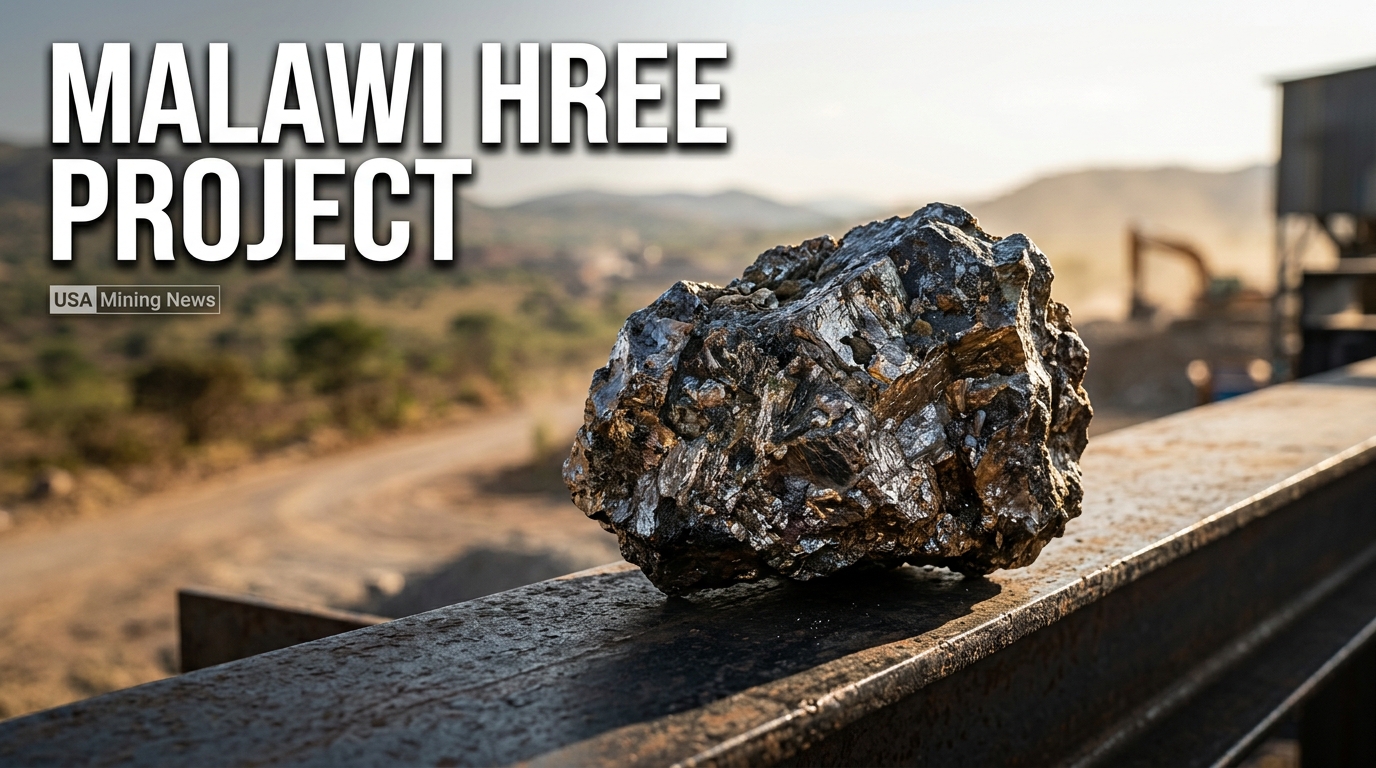
Perth, Australia – August 4, 2026 – AuKing Mining, an emerging player in the critical minerals sector, has announced a significant strategic move with its agreement to purchase 100% of the Machinga Heavy Rare Earth Elements (HREE) Project in southern Malawi. This acquisition marks another pivotal step in AuKing’s broader strategy to assemble a robust portfolio of high-quality critical minerals assets, particularly within the promising geological landscapes of Malawi.
The Machinga Project, encompassing two distinct exploration licenses that collectively span an area of approximately 200.4km², is strategically located in a region increasingly recognized for its rare earth potential. Situated nearly 20km north of the city of Zomba, a key urban center in Malawi, the project also lies roughly 40km east of Lindian Resources’ notable Kangankunde Project, placing it within a burgeoning rare earth exploration corridor in the country.
Strategic Acquisition in Malawi's Chilwa Alkaline Province
The acquisition of the Machinga HREE Project aligns directly with AuKing’s stated ambition to become a significant participant in the critical minerals supply chain. The project's location within the Chilwa Alkaline Province is of particular geological interest to industry professionals. This province is renowned for its unique geological formations and alkaline igneous systems, which are often highly prospective for rare earth element deposits, including the highly sought-after heavy rare earth elements.
AuKing Mining’s managing director, Paul Williams, underscored the strategic importance of this acquisition, stating, “The proposed acquisition of the Machinga Heavy Rare Earths Project represents another important step in AuKing’s strategy to build a portfolio of high-quality critical minerals projects in Malawi.” Williams further highlighted the project’s prospectivity, noting, “Historical exploration, together with the more recent work undertaken by DY6 Metals/Tusker Minerals, has confirmed Machinga as a highly prospective heavy rare earth and niobium project.” This emphasis on both historical data and recent findings provides a solid foundation for future exploration and development efforts.
Financial Structure and Milestones
The completion of this acquisition is contingent upon receiving the necessary regulatory approval from the Mining and Minerals Regulatory Authority in Malawi, a standard but crucial step in any significant mining transaction in the country. AuKing has structured the acquisition with a staged payment plan, demonstrating a prudent approach to capital deployment while also aligning vendor interests with project success.
The financial terms of the agreement are detailed and tied to specific milestones:
- AuKing has already paid a non-refundable A$5,000 (approximately $3,504 USD) to secure exclusivity for the project, allowing for the completion of due diligence and initial approvals.
- Upon the official completion of the acquisition, AuKing will make a cash payment of A$750,000.
- Concurrently, the company will issue A$750,000 in ordinary shares to the vendor. These shares will be issued at a price of $0.025 per share.
- A significant portion of the consideration is structured as A$1.25 million in performance shares. These shares are subject to a critical performance milestone: the reporting of a Joint Ore Reserve Committee (JORC)-compliant mineral resource. This resource must demonstrate a minimum of ten million tonnes at 0.65% total rare earth oxides (TREO) within a three-year timeframe from the acquisition's completion.
This performance-based payment structure is a common mechanism in the mining industry, designed to incentivize rapid and successful resource definition, aligning the vendor’s financial benefit with the project’s technical progression. For investors, it signals AuKing’s confidence in Machinga’s potential while managing upfront financial commitment, linking substantial payments to tangible project value creation.
Machinga's Promising Heavy Rare Earth Mineralization
The technical merits of the Machinga project are particularly compelling. Historical exploration activities have already identified significant mineralization across an impressive strike length of 2km. Early drilling and sampling results have yielded promising intercepts, including a notable 15.1m at 1.01% TREO, accompanied by niobium. Other historical holes have indicated a range of grades from 0.6% to 1.4% TREO, suggesting consistent mineralization across the explored zone.
A key differentiator for Machinga lies in its heavy rare earth oxide (HREO) content. According to the source material, HREO accounts for approximately 28–30% of the total rare earth content within the project. This percentage is notably higher than levels reported in many conventional ionic clay deposits, which are often heralded for their HREE endowment. Heavy rare earth elements such as dysprosium, terbium, europium, and yttrium are considered particularly critical due to their indispensable roles in high-tech applications, including permanent magnets for electric vehicles (EVs), wind turbines, defense technologies, and advanced electronics. A higher proportion of HREOs significantly enhances the economic viability and strategic importance of a rare earth deposit.
Geologically, the mineralization at Machinga is hosted within an alkaline igneous system. This geological setting bears similarities to other significant rare earth projects globally, such as the Bokan-Dotson Ridge project in Alaska, USA. Such geological analogues provide a strong framework for understanding the deposit model and guiding future exploration. Furthermore, the project area features surface-exposed mineralization. This characteristic is highly advantageous as it indicates potential for open-pit mining approaches, which typically offer lower operating costs and greater production flexibility compared to underground methods, especially during initial development phases.
AuKing's Expanding Critical Minerals Strategy
AuKing Mining's strategic pivot towards critical minerals, particularly rare earths, reflects a broader industry trend driven by global demand for cleaner energy technologies and advanced manufacturing. The Machinga acquisition in Malawi is not an isolated event but part of a calculated expansion. Paul Williams' comments clearly articulate a strategy centered on building a portfolio. This strategy was also evident in March 2025, when AuKing announced an agreement to acquire up to a 50% shareholding in Orion Resources, the proposed new owner of the Cloncurry Gold Project in northern Queensland, Australia. While Cloncurry focuses on gold, its inclusion in the company’s portfolio highlights a diversified approach to resource development, although the current emphasis appears to be strongly on critical minerals like rare earths and niobium in Malawi.
For investors, AuKing’s consistent pursuit of critical minerals projects in geopolitically stable and geologically prospective regions like Malawi signals a forward-thinking management team attuned to evolving market dynamics and global supply chain vulnerabilities. The focus on HREEs, in particular, positions AuKing to potentially capture significant value in a market segment facing persistent supply constraints and increasing demand.
Malawi: An Emerging Hub for Rare Earths
Malawi is progressively gaining recognition as an emerging jurisdiction for rare earth element exploration and development. The country's Chilwa Alkaline Province, in particular, is attracting significant attention from mining companies due to its known rare earth endowments. The geological characteristics of this region, featuring carbonatites and alkaline igneous complexes, are analogous to some of the world's most significant rare earth deposits.
The presence of other projects, such as Lindian Resources’ Kangankunde, within close proximity to Machinga, further validates the region's prospectivity and potential to host multiple economically viable rare earth deposits. The development of projects like Machinga could contribute significantly to Malawi's economic diversification and its role in the global critical minerals supply chain, attracting further foreign direct investment and fostering local economic growth.
Market Implications and Future Outlook
The global market for rare earth elements, particularly HREEs, is experiencing robust growth, primarily driven by the electrification of transportation, the expansion of renewable energy infrastructure, and advancements in defense and consumer electronics. Geopolitical considerations, including efforts to diversify supply chains away from dominant producers, are also fueling interest in new, reliable sources of these strategic materials.
The Machinga Project, with its high HREO content and potential for open-pit mining, could become a valuable source of these critical elements. AuKing's immediate next steps will involve securing the necessary regulatory approvals from the Malawian authorities. Following this, the company will likely embark on further systematic exploration and drilling programs aimed at upgrading the historical resource data to a JORC-compliant status, a crucial step towards defining a maiden mineral resource estimate within the three-year timeframe set by the performance share conditions.
Success at Machinga could not only transform AuKing Mining into a significant HREE producer but also solidify Malawi's position on the global rare earths map. As industries worldwide continue their transition towards sustainable technologies, reliable and diversified supplies of heavy rare earth elements will remain paramount, making strategic acquisitions like Machinga increasingly vital for the future of the global mining industry.