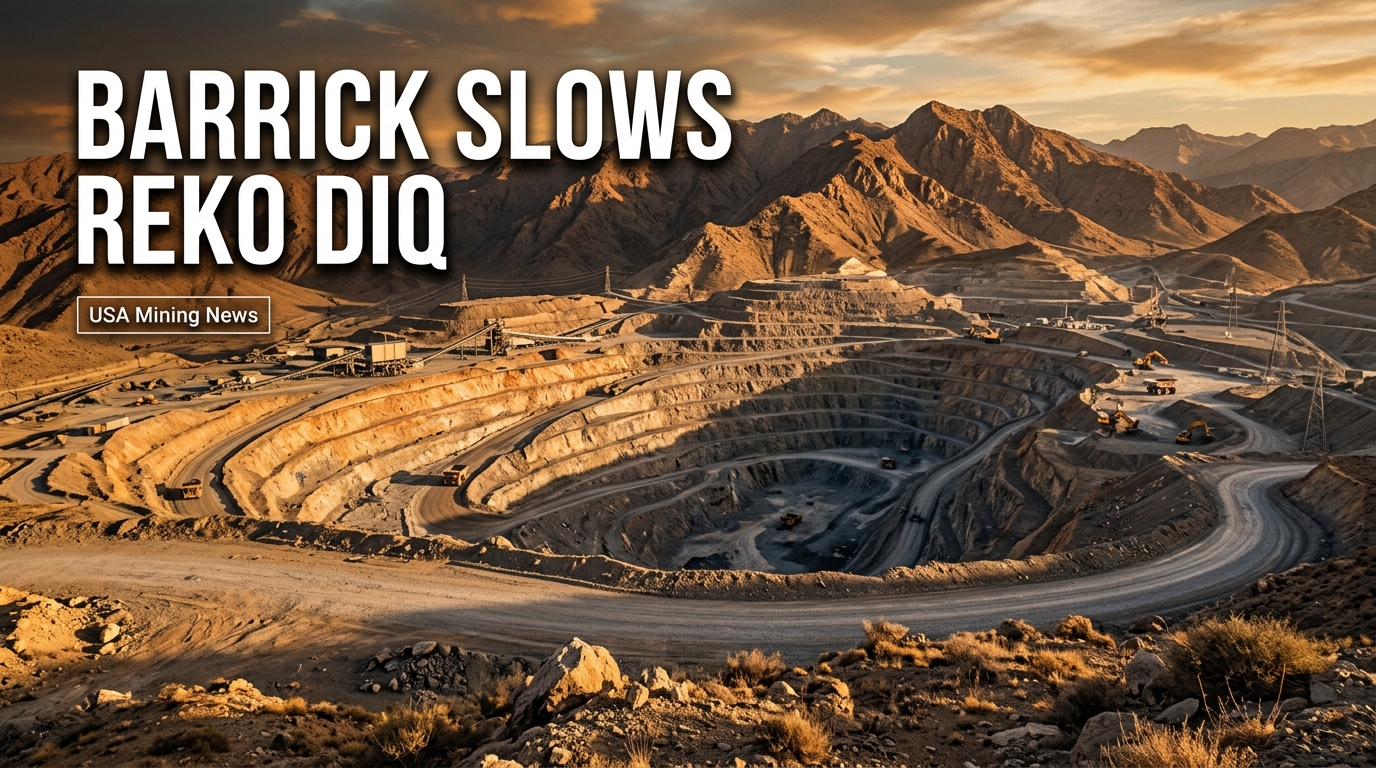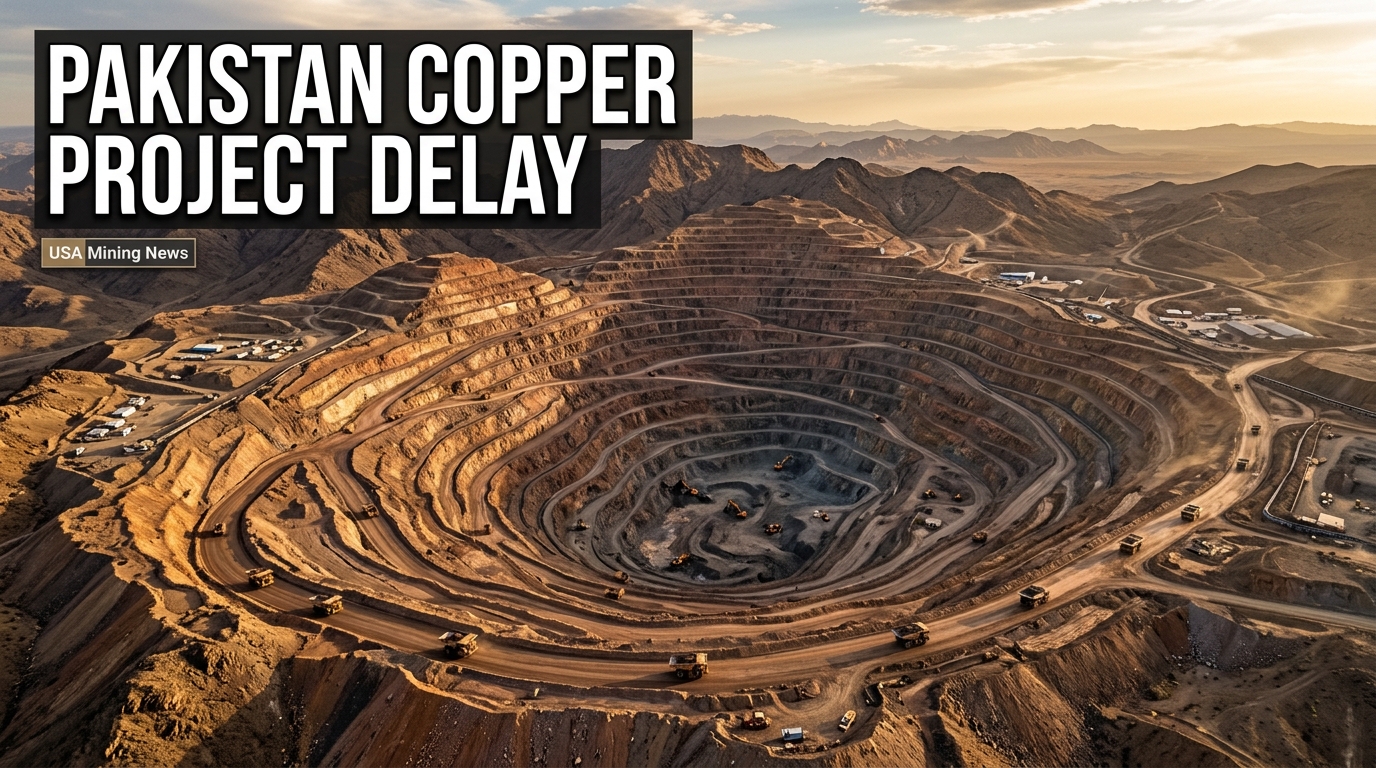
April 2, 2026 – Barrick Mining (NYSE:B)(TSX:ABX) has signaled significant anticipated revisions to the financial and temporal parameters of its flagship Reko Diq copper-gold project in Pakistan. The Canadian mining giant announced on Thursday that it foresees “significant increases” to both the total estimated capital budget and the project timeline, which will necessitate a deeper and extended review process for what is considered one of the world’s largest undeveloped copper deposits.
Strategic Imperative: Barrick's Vision for Reko Diq
The Reko Diq project, located in the remote, insurgency-hit western province of Balochistan, has long been a cornerstone of Barrick’s strategic ambition to establish itself as a Tier 1 producer of copper. With an estimated 15 million tonnes of copper reserves, the deposit holds immense potential not only for Barrick but also for the global copper market, which is increasingly focused on securing future supply amidst the accelerating energy transition. The classification of Reko Diq as a "Tier 1" asset underscores its potential for long-life, low-cost production at scale, offering significant value creation over an extended period. Such projects are rare and highly sought after by major mining houses, given their capacity to anchor a company’s portfolio and provide consistent returns.
Barrick operates the Reko Diq project in an equal 50% partnership with Pakistani authorities, specifically the governments of Pakistan and Balochistan. This joint venture model is common in major resource developments in emerging markets, aimed at ensuring shared benefits and local involvement. The project’s development has been a multi-year endeavor, with Barrick working closely with its government partners to navigate the complexities inherent in such large-scale, international undertakings.
Initial Project Scope and Financial Commitments
Prior to this latest announcement, Barrick had outlined a substantial financial commitment for the development of Reko Diq. The previously disclosed total estimated capital cost for Phase 1 of the project was projected to be between $5.6 billion and $6.0 billion, calculated on a 100% basis and exclusive of capitalization of financing costs. Phase 2 of the development was estimated to require an additional $3.3 billion to $3.6 billion, also on a 100% basis and excluding financing costs. This brought the total estimated capital expenditure for the full development of Reko Diq to a range between $8.9 billion and $9.6 billion.
Under the original plan, Barrick had targeted first production from the Reko Diq mine by the end of 2028. This ambitious timeline reflected the company's eagerness to bring this significant copper asset online to capitalize on anticipated market dynamics and reinforce its position in the global copper supply chain. The project’s eventual commissioning was explicitly stated to be subject to financing. Such a large capital outlay necessitates robust financing strategies, often involving a mix of corporate funds, debt, and potentially project-specific financing tailored to the significant scale and long-term nature of the investment.
The Shifting Landscape: Security Concerns Drive Project Review
The decision to anticipate significant increases in both budget and timeline stems directly from a comprehensive re-evaluation triggered by evolving geopolitical and security dynamics. On March 26, Barrick had initially announced its intention to slow the development of the Reko Diq deposit and extend the project’s review period. The primary driver for this strategic shift was cited as mounting security concerns in the Middle East and, more specifically, a "further escalation of security issues in Pakistan and the region."
In a statement released just after market close in Toronto, Barrick elaborated on its position, stating, “Barrick continues to believe in the long-term value of Reko Diq. Following the preliminary findings of the review and the further escalation of security issues in Pakistan and the region, the company considers it necessary to slow the development activity and continue the project review until mid-2027.” This extension effectively pushes the re-evaluation period by an additional year, providing Barrick with an extended window to thoroughly assess the multifaceted challenges now confronting the project.
The prolonged review is designed to allow the company to comprehensively assess several critical factors:
- Evolving Security Situation: A deep dive into the current and projected security landscape in Balochistan and the broader regional context.
- Capital Requirements: A reassessment of the estimated capital expenditure, which is now expected to trend significantly higher than previous estimates. This will likely account for potential increased costs associated with security measures, inflation, supply chain disruptions, and revised scope.
- Project Financing: A re-evaluation of the optimal financing structure, considering the increased capital requirements and potentially higher risk premiums associated with the regional security environment.
- Project Scope and Timeline: A comprehensive review to determine if the project’s design, scale, and anticipated stages of development need to be adjusted, consequently impacting the overall timeline for first production.
The decision underscores the critical role that geopolitical stability and security considerations play in the feasibility and execution of large-scale mining projects, particularly in remote and sensitive areas. Such factors can significantly alter project risk profiles, increase operational costs, and deter timely capital deployment.
Operational Adjustments and Community Engagement
Despite the slowdown in development activity and the extended review period, Barrick emphasized that the Reko Diq project will not be halted entirely. Instead, it will remain under "active management with a reduced capital spend." This pragmatic approach allows Barrick to maintain a presence, continue essential groundwork, and retain institutional knowledge, albeit at a slower pace and with a focus on cost control during this uncertain phase. This strategy aims to minimize the impact of a full demobilization while providing the flexibility needed for a thorough reassessment.
Crucially, Barrick has reaffirmed its commitment to the local communities surrounding the Reko Diq project. The company stated its intention to “continue to invest in and honor its existing in-country community and social programs.” This commitment is vital, particularly in a region like Balochistan, where community relations and social license to operate are paramount. Maintaining strong ties with local populations through ongoing social investments can mitigate potential resistance, foster goodwill, and create a more stable operating environment upon eventual resumption of full development. Mining companies operating in sensitive regions often prioritize these programs as a fundamental aspect of their long-term operational success and ethical responsibilities.
Economic Potential and Long-Term Value
Barrick’s continued belief in the "long-term value" of Reko Diq remains a central theme, even amidst the current challenges. The projected economic impact of the mine is substantial. Once operational, the Reko Diq mine is forecast to generate over $70 billion in free cash flow and over $90 billion in operating cash flow over its anticipated 37-year lifespan. These figures highlight the immense economic contribution the project could bring to Pakistan and, specifically, to the Balochistan province, addressing key development needs and providing significant revenue streams for the government partners.
For Barrick, these projections underpin the strategic importance of Reko Diq in its global portfolio. A project capable of generating such significant cash flows over nearly four decades provides a stable, long-term earnings base that can support shareholder returns and future growth initiatives. The long-life nature of the asset also makes it less susceptible to short-term commodity price fluctuations, offering enduring value.
Implications for the Global Mining Sector and Copper Market
The anticipated delays and increased costs at Reko Diq carry broader implications for the global mining sector and, particularly, for the copper market. As one of the largest undeveloped copper-gold deposits, Reko Diq’s trajectory is closely watched by analysts, investors, and fellow miners. Any significant delay in such a massive project contributes to a tighter outlook for future copper supply at a time when demand is projected to surge due to electrification, renewable energy infrastructure, and electric vehicles.
Project inflation and geopolitical risks are increasingly prevalent concerns across the mining industry. The Reko Diq situation serves as a stark reminder of how external factors—be they security challenges, economic volatility, or regulatory shifts—can significantly impact project timelines and budgets, even for highly attractive assets managed by experienced operators. This can lead to increased capital expenditure requirements globally for new projects, which must factor in higher risk premiums and potentially higher costs for security, logistics, and insurance.
Furthermore, the slowdown could influence investor sentiment towards large-scale, frontier mining projects in regions perceived as geopolitically unstable. While the long-term fundamentals for commodities like copper remain robust, the challenges faced by Reko Diq underscore the complexities in converting vast resources into economic production, emphasizing the need for thorough risk assessment and adaptive project management strategies.
Looking Ahead: Navigating Uncertainty
Until mid-2027, Barrick will continue its intensive review of the Reko Diq project. This period will be crucial for the company to solidify its revised plans for capital allocation, financing, and operational strategy. The market will be closely observing for further announcements detailing these "significant increases" and a clearer pathway forward.
The ultimate success of the Reko Diq project hinges on Barrick’s ability to effectively mitigate these evolving security challenges, optimize its financial structure, and reach a new consensus on scope and timeline with its Pakistani government partners. While the immediate outlook presents uncertainty and increased costs, Barrick’s ongoing commitment to the project, coupled with its immense long-term value, suggests that Reko Diq remains a pivotal asset despite the current headwinds.
The situation at Reko Diq offers a critical case study for the global mining industry: demonstrating the delicate balance between capitalizing on world-class mineral endowments and navigating complex, often volatile, geopolitical landscapes. The industry will watch closely to see how Barrick, a seasoned operator, adapts its strategy to bring this critical copper-gold resource to fruition.