Beyond the Purchase Price: Unpacking the True Cost of Mining Haul Truck Engines
For mining operations globally, the acquisition of heavy equipment, particularly the colossal haul trucks that are the workhorses of material movement, represents a substantial capital expenditure. However, an insightful analysis from Rolls Royce Mining, released on September 21, 2026, casts a critical light on the common practice of evaluating these assets primarily by their initial purchase price. The report underscores a fundamental truth in the mining sector: the sticker price of a haul truck engine is merely the entry fee to a much larger and more complex economic equation.
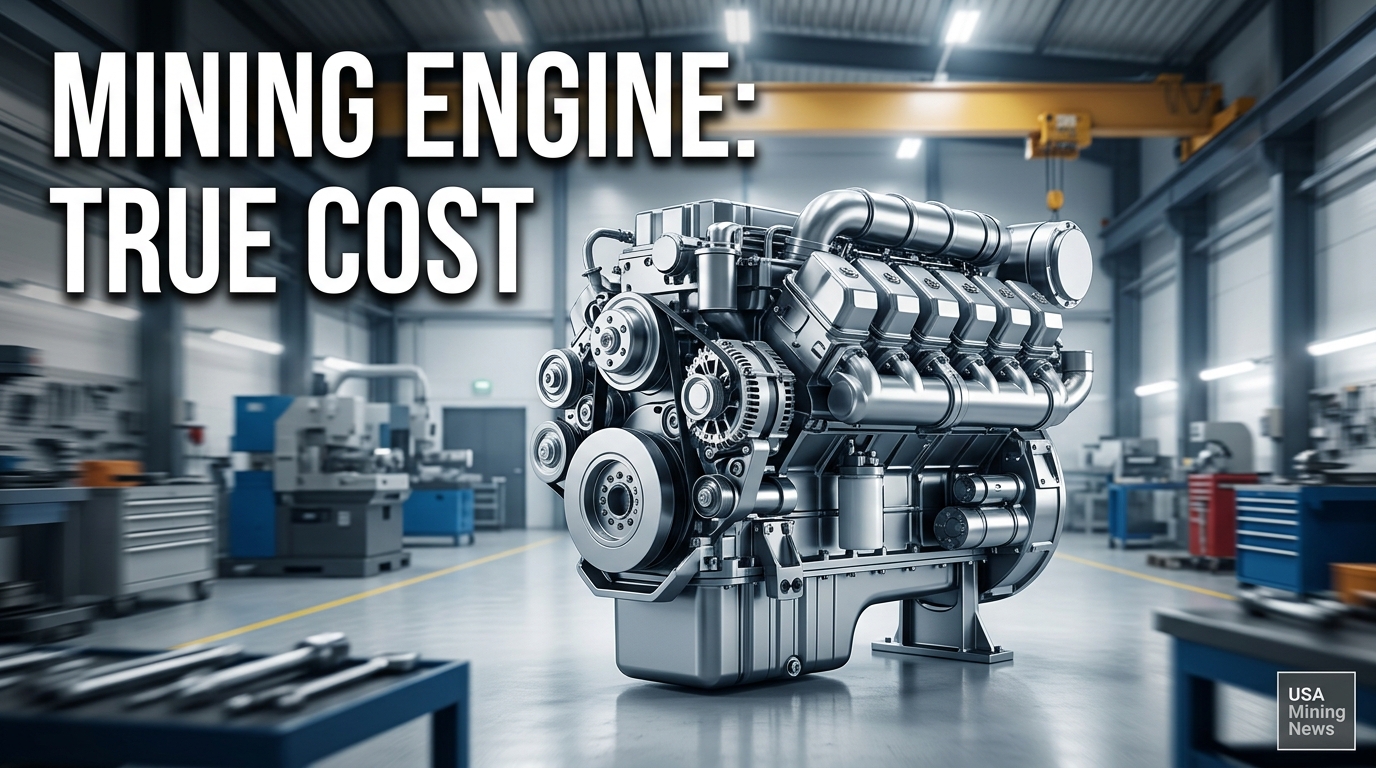
The core message of the Rolls Royce Mining study, amplified through an associated whitepaper titled Repowering mining fleets efficiently, is that the true financial burden of an engine is determined by its total cost of ownership (TCO) over its entire working life. This TCO framework encompasses a range of operational factors, including fuel consumption, planned and unplanned maintenance, major overhaul intervals, and perhaps most critically, the production losses incurred when a truck is taken out of service. For mining fleets that operate around the clock, even marginal shifts in engine availability can cascade into significant impacts on a site's overall material movement targets and profitability.
The Illusion of Initial Savings: Understanding Engine Procurement
In a capital-intensive industry like mining, procurement decisions are often heavily influenced by upfront costs. An engine with a lower initial purchase price might appear, on paper, to be the more economically prudent choice. However, this perspective frequently overlooks the long-term operational expenses that accumulate over thousands of hours of rigorous service. The Rolls Royce Mining analysis strongly suggests that such short-sighted decision-making can inadvertently lead to higher overall costs, eroding potential savings through unforeseen expenditures and diminished productivity.
Mining companies operate within incredibly tight margins, constantly balancing the need for robust, reliable equipment with the imperative to manage capital expenditure (CapEx). This pressure can sometimes tilt procurement decisions towards options that offer immediate financial relief but fail to deliver optimal performance or cost efficiency over the asset's extended lifecycle. The challenge, as highlighted by Rolls Royce Mining, is to shift the focus from a purely CapEx-driven approach to one that meticulously accounts for Operational Expenditure (OpEx) throughout the entire lifespan of the asset.
Beyond the Sticker Price: Key Components of Total Cost of Ownership
The Rolls Royce Mining report meticulously dissects the critical elements that contribute to an engine’s true cost. These factors, when aggregated, often dwarf the initial purchase price and fundamentally alter the economic calculus for fleet managers and mine operators.
- Fuel Consumption: This is arguably one of the most significant and persistent operational expenses. Modern mining haul trucks, especially the ultra-class variants, consume vast quantities of fuel under continuous heavy loads and challenging terrain. Even a small percentage difference in fuel efficiency between engine models can translate into millions of dollars in savings or additional costs over the operational life of a fleet. Engine technology, design efficiency, and the precise calibration of fuel injection systems play a pivotal role in optimizing consumption rates. Given the volatility of global fuel prices, an engine that consistently demonstrates superior fuel economy offers a robust hedge against market fluctuations and directly contributes to a mine's bottom line.
- Maintenance Requirements: Routine servicing and preventive maintenance are essential to ensure the longevity and reliability of any mining equipment. The complexity, frequency, and cost of these maintenance events vary significantly between engine designs and manufacturers. An engine that requires specialized tools, lengthy procedures, or proprietary parts can quickly escalate maintenance costs. Furthermore, the availability of spare parts and the expertise of technicians in remote mining locations are crucial considerations. A well-designed engine, engineered for ease of serviceability and boasting a strong support network, contributes significantly to lower long-term maintenance expenses.
- Overhaul Intervals: Major engine overhauls are a critical part of a haul truck's lifecycle, restoring components to near-new condition and extending the asset's productive life. The duration between these major overhauls (Time Between Overhaul, or TBO) is a key metric. As the Rolls Royce Mining report emphasizes, "Longer times before overhaul helps reduce mining engine costs." Engines designed for extended TBOs reduce the frequency of these capital-intensive and time-consuming events. This translates directly into fewer instances of major expenditure and, crucially, less downtime for the critical asset. Reliability engineers and metallurgists work diligently to select materials and designs that can withstand the extreme stresses of continuous operation, thereby pushing the boundaries of TBO.
- Downtime and Lost Production: Perhaps the most insidious and often underestimated cost component is downtime. When a haul truck is unavailable, whether for planned maintenance, an unscheduled repair, or a major overhaul, it ceases to move material. In a high-volume, continuously operating mine, every hour an asset is idle represents lost production. This lost production has a direct financial impact, not just from the material not moved, but also from potential disruptions to downstream processing facilities. The Rolls Royce Mining analysis explicitly states that "For fleets operating around the clock, even a small change in engine availability can affect how much material the site moves." The cascading effect of even one truck's absence can slow an entire production chain, making engine reliability and rapid servicing capabilities paramount.
The Strategic Imperative: Repowering Mining Fleets
The Rolls Royce Mining whitepaper, Repowering mining fleets efficiently, delves into the strategic advantages of repowering existing haul trucks. Rather than scrapping an aging but structurally sound truck body, mines can extend its life and enhance its performance by installing a new, more efficient, and reliable engine. This approach presents a compelling alternative to continuous new equipment purchases, especially when seeking to optimize operational costs and improve fleet performance.
The whitepaper makes a strong case for utilizing "established technologies" when considering engine choice for repowering. The rationale is clear: tried-and-tested engines offer proven reliability, a robust service history, and readily available parts and technical support. These are critical factors in minimizing risk and maximizing uptime. Repowering with such established technologies can "enhance operational performance and significantly reduce costs," providing a viable path for mines to modernize their fleets without incurring the full capital expense of entirely new trucks.
Reliability and Availability: Cornerstones of Mining Productivity
The insights from Rolls Royce Mining reinforce that in the demanding environment of modern mining, engine reliability and availability are not merely desirable features; they are foundational requirements. A mining operation is a complex, interconnected system. A failure in one critical component, like a haul truck engine, can create bottlenecks and disrupt the entire production flow, from the pit face to the processing plant.
The ability to quickly diagnose and repair issues, coupled with a readily accessible supply chain for spare parts, is essential. This is where "established technologies" shine; their widespread adoption often means a more mature support ecosystem, including trained technicians, specialized diagnostic tools, and strategically located parts inventories. This minimizes the duration of downtime, ensuring that critical assets return to service swiftly and reliably.
Market Implications and Future Outlook for Mining Executives
The comprehensive TCO approach advocated by Rolls Royce Mining holds significant implications for mining industry professionals, from procurement specialists to mine managers and investors. It shifts the strategic conversation from initial investment to long-term value creation. Companies that embrace this holistic view are better positioned to achieve sustained operational excellence and superior financial performance.
This perspective aligns with broader industry trends focusing on optimizing asset utilization, leveraging data for predictive maintenance, and enhancing overall operational efficiency. As mines push towards deeper pits, longer haul distances, and increasingly complex geological conditions, the demands on haul truck engines will only intensify. Therefore, understanding the true cost of these vital components becomes even more critical for strategic planning and competitive advantage.
The Rolls Royce Mining whitepaper serves as a timely reminder that astute decision-making in mining requires looking beyond immediate price tags. By focusing on the totality of an engine's lifecycle costs – encompassing fuel, maintenance, overhauls, and the profound impact of availability – mining companies can make more informed choices that genuinely drive down costs and bolster productivity for decades to come.