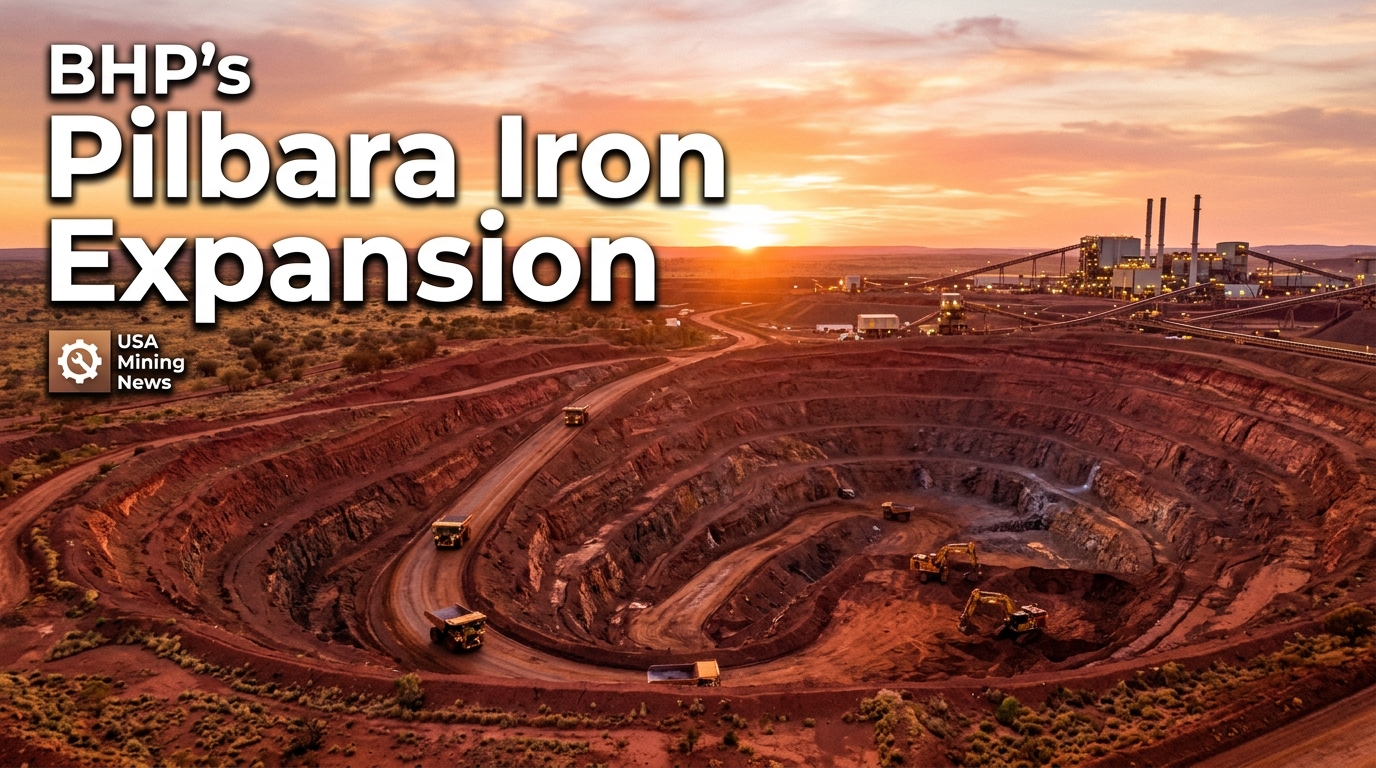
In a strategic move bolstering its core iron ore operations, global mining giant BHP has officially approved a substantial investment of $900 million (A$1.28 billion) for the development of the Ministers North Project. This significant capital allocation underscores BHP's sustained commitment to its high-quality iron ore assets in Western Australia’s resource-rich Pilbara region, a cornerstone of the global seaborne iron ore market.
Strategic Investment in Pilbara's Future
The Ministers North Project represents a pivotal expansion within one of the world's most prolific iron ore belts. Located south-east of the established Yandi mine site, this new high-grade iron ore deposit is poised to extend the operational life and production capacity of BHP's extensive Pilbara infrastructure. The investment by BHP, a leading producer of a range of commodities, signals confidence in the long-term demand for high-quality iron ore, critical for steel production globally.
The Pilbara region, renowned for its vast deposits of iron ore, has been a critical engine for Australia's economy and a stable source of supply for international markets, particularly in Asia. Projects like Ministers North are crucial for maintaining the region's output longevity and competitive edge. This infusion of capital into a new deposit within an established operational footprint highlights a prudent strategy of leveraging existing expertise and infrastructure to maximize value.
Leveraging Existing Infrastructure for Enhanced Production
Central to the Ministers North strategy is its envisioned role as a satellite extension of the Yandi operations, which have been a foundational asset in BHP's Western Australia Iron Ore (WAIO) portfolio for over three decades. This approach is highly efficient, minimizing greenfield development costs and accelerating the path to production by integrating new orebodies into an existing, proven operational model.
The project will operate under an established joint venture structure, reflecting long-standing partnerships in the region. BHP holds the majority interest at 85%, with Japanese trading houses Itochu Corporation and Mitsui & Co holding 8% and 7% interests, respectively. These partnerships are common in large-scale Australian mining, bringing together capital, technical expertise, and crucial market access, particularly within key Asian markets.
Once fully operational, Ministers North is expected to deliver approximately 20 million tonnes per annum (mtpa) of iron ore. This new production volume is strategically important, as it will directly support BHP’s WAIO division’s medium-term production target of 305 mtpa on a 100% basis. Maintaining and growing production volumes from high-quality, low-cost assets is a key objective for major miners like BHP, enabling them to meet global demand and sustain their competitive position in volatile commodity markets.
Operational Scope and Timeline
The scope of the Ministers North Project is comprehensive, designed to seamlessly integrate the new deposit with the existing Yandi operations while enhancing overall efficiency and throughput. Key components of the development include:
- Development of New Orebodies: Extensive work to prepare the new Ministers North orebody for mining operations.
- Haul Road Construction: The construction of a 13-kilometer haul road, a vital artery for transporting ore from Ministers North directly to the Yandi processing facilities.
- Land Bridge: Creation of a land bridge, further facilitating the efficient movement of materials and personnel between the two sites.
- Yandi Infrastructure Upgrades: Significant upgrades to Yandi’s primary infrastructure, including the installation of new primary and secondary crushers. These enhancements are critical to accommodate the increased ore feed from Ministers North and improve the overall processing capacity and efficiency of the combined operation.
The project development timeline indicates a swift progression from approval to production. Site works for Ministers North are scheduled to commence in July 2026, marking the immediate start of construction and development activities. The operational target is to achieve first ore in financial year 2029 (FY29). This relatively rapid development cycle, from approval to first production within approximately three years, speaks to the mature state of planning and the advantages of leveraging existing regional infrastructure and operational teams.
Executive Outlook and Financial Projections
The decision to invest in Ministers North was met with enthusiastic commentary from BHP's leadership. Tim Day, BHP WA iron ore asset president, highlighted the enduring legacy and strategic importance of the Yandi operations. "Yandi has been an important part of our WA iron ore operations for more than 30 years," Day stated. "Our investment in Ministers North helps us build on that legacy. We are making the most of the infrastructure, skills and experience we already have to bring a new orebody into production and keep our high-quality Pilbara iron ore flowing."
This statement underscores BHP's strategic rationale: maximizing the value of existing assets and regional expertise. By extending the life and output of a mature operation like Yandi, BHP can capitalize on established supply chains, community relationships, and a skilled workforce, enabling more cost-effective and efficient production.
Financially, the company anticipates robust returns from the Ministers North Project, projecting yields of more than 30%. Such a high expected return on investment is a strong indicator of the project's economic viability and its potential to deliver significant value to shareholders. This profitability is derived from a combination of high-grade ore, efficient exploitation of existing infrastructure, and the relatively favorable cost structure of integrated satellite operations.
BHP's Broader Production Performance and Strategic Focus
The approval of Ministers North comes against a backdrop of strong operational performance for BHP's iron ore segment. The company recently reported record iron ore production at WAIO, reaching an impressive 265 million tonnes (mt), which represents a 1% increase from the previous year. This consistent growth in output from its Pilbara operations demonstrates the company's operational excellence and capacity to deliver on production targets.
Looking ahead, BHP has set robust production guidance for WAIO in financial year 2027 (FY27) at 260–272 mt. This guidance reflects a strategic balance between maximizing output from existing assets and integrating new capacity from projects like Ministers North. The company also realized an average price of $84.56 per wet tonne for WAIO iron ore in the reporting period, a 3% increase compared to the previous year, highlighting favorable market conditions and the premium attached to BHP's high-quality products.
While iron ore remains a dominant segment, BHP's broader financial updates also highlighted diversification. The company reported that copper production totaled approximately 2 mt for the second consecutive year, showcasing its significant footprint in other critical minerals. BHP continues to focus on managing unit costs across its portfolio and advancing various copper projects, aligning with the global transition towards a cleaner energy economy where copper is a vital component.
Diversification and Sustainability Initiatives
Beyond its primary commodity focus, BHP is also actively engaged in sustainability initiatives, particularly in reducing its operational emissions. The company highlighted ongoing efforts through the trial of two innovative Cat 793 XE battery-electric haul trucks at its WAIO operations. These trials are crucial for assessing the viability and effectiveness of new technologies in reducing the carbon footprint of heavy mining equipment, aligning with broader industry and global decarbonization goals. Investing in new technologies for emissions reduction in its iron ore operations exemplifies BHP's commitment to responsible mining practices, a growing priority for investors and stakeholders worldwide.
Industry Implications and Market Context
The Ministers North Project carries significant implications for the global mining industry. For Australia, it reinforces the country's position as a reliable supplier of high-quality iron ore, critical for steel production in key markets such as China, Japan, and South Korea. For BHP, this investment solidifies its market leadership and demonstrates a proactive approach to managing its resource base to ensure long-term production sustainability. By expanding existing operations through satellite orebodies, the company optimizes its infrastructure utilization and retains a competitive advantage in a market that constantly demands efficiency and scale.
Moreover, the project's focus on high-grade iron ore is particularly relevant in the context of global steelmaking. Higher-grade ores require less energy and produce fewer emissions during the steel production process, a factor that is increasingly valued by steelmakers striving to meet their own environmental targets. This strategic emphasis on quality positions BHP favorably in a future market that will likely prioritize sustainable sourcing and cleaner production inputs.
Future Outlook
As site works commence in July 2026 and the project steadily advances towards first ore in FY29, Ministers North is expected to become a vital contributor to BHP's future production profile. It will not only add significant tonnage but also ensure the continued flow of high-quality Pilbara iron ore well into the next decade. This project exemplifies BHP's strategy of disciplined capital allocation, focusing on projects that deliver strong returns, leverage existing strengths, and support long-term production targets. The success of Ministers North will further cement BHP's position as a low-cost, high-volume producer, capable of navigating market fluctuations and continuing its legacy of contributing substantially to the global economy.