A Strategic Re-Alignment in Western Australia’s Exploration Landscape: Rincon Resources Sells Stake in West Arunta
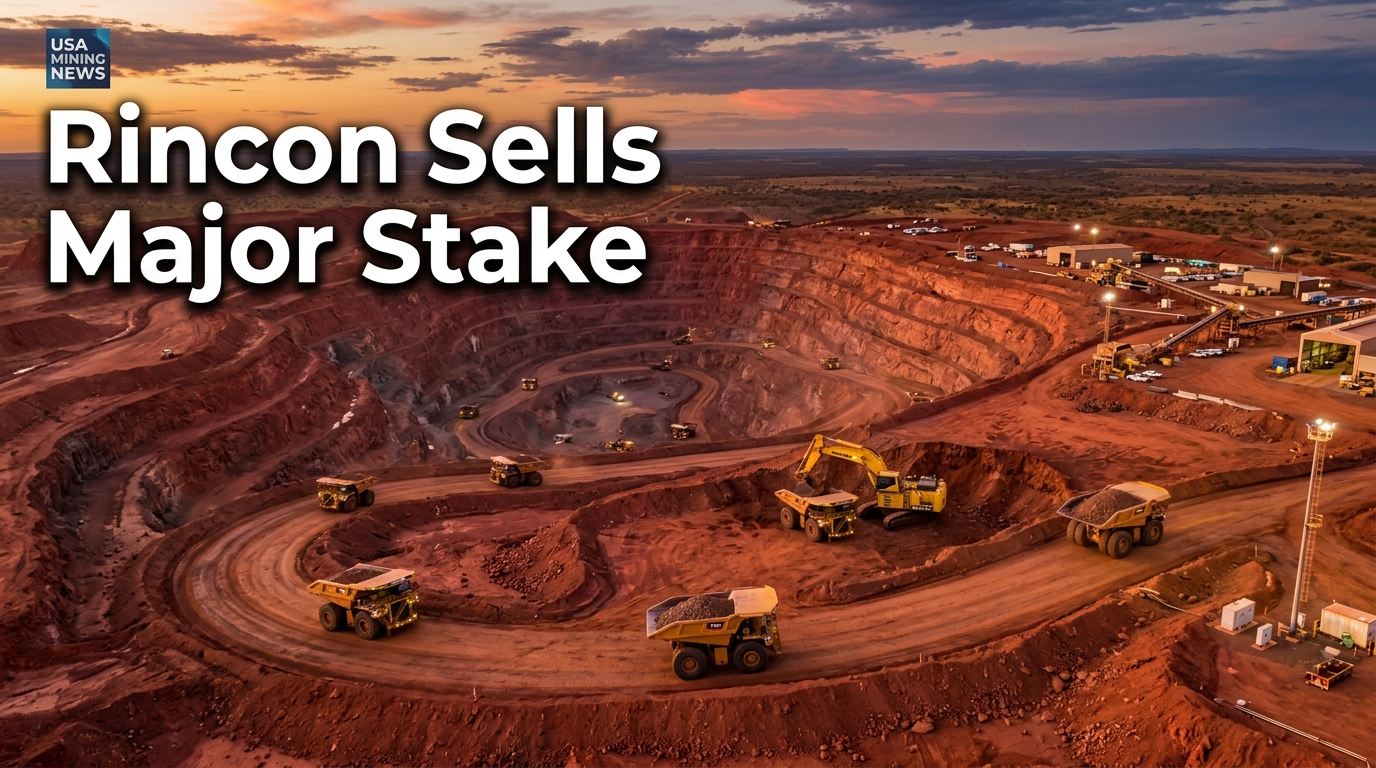
Perth, WA – The dynamic landscape of mineral exploration in Western Australia continues to witness significant strategic maneuvers as companies adapt to market conditions and optimize their project portfolios. In a notable development announced on July 1, 2026, Rincon Resources, an Australian explorer with a focus on copper and gold, has entered into a binding heads of agreement to divest a substantial portion of its interest in Lyza Mining to Maverick Minerals Australia. Lyza Mining is the corporate entity holding the tenements comprising Rincon’s West Arunta Project, situated in a region gaining increasing attention for its resource potential. This transaction represents a calculated move by Rincon to secure immediate capital and equity, reduce its financial commitments, and strategically re-focus its exploration efforts on other key assets.
The deal, which sees Rincon Resources selling 90% of its stake in Lyza Mining to Maverick, is more than a simple divestment; it’s a carefully structured partnership designed to afford both parties specific advantages. Upon the completion of the transaction, Rincon will retain a 10% interest in the West Arunta Project, to be held through a joint venture (JV) arrangement with Maverick. Crucially, this 10% interest will be free-carried until a formal decision to mine is made, a provision that significantly de-risks Rincon’s ongoing exposure to exploration and development costs while maintaining its upside potential in the event of a discovery.
The Nuances of Free-Carried Interest in Mining Ventures
For those familiar with the intricate financial structures common within the mining industry, a “free-carried interest” is a pivotal component of many joint venture agreements. In essence, it means that the partner holding the free-carried interest is not required to contribute funds toward the project’s expenses—specifically, in this case, until the decision to proceed with mining operations is formally taken. All exploration, pre-feasibility, and feasibility study costs, and potentially even initial development expenditures, are borne entirely by the other JV partner(s)—in this instance, Maverick Minerals Australia. This arrangement is particularly advantageous for junior explorers like Rincon, allowing them to participate in the potential success of a project without incurring proportional financial obligations or diluting their shareholder base to fund ongoing exploration. It provides a strategic hedge, ensuring that Rincon shareholders can benefit from any future exploration success at West Arunta without the associated capital risk.
Financial Framework and Conditional Payments
The financial consideration for this strategic divestment is multi-faceted, reflecting the inherent stages and risks of exploration projects. Rincon Resources is set to receive an upfront payment totaling A$600,000, which is structured as follows:
- Cash Component: A$100,000 in immediate cash, providing Rincon with critical working capital.
- Equity Component: A$500,000 in Maverick Minerals Australia shares. These shares will be subject to a six-month escrow period, a standard practice designed to ensure market stability post-transaction.
Beyond the initial payment, the agreement includes a deferred consideration of A$500,000, which will also be paid in Maverick shares and is contingent upon specific exploration milestones at the West Arunta Project. This deferred payment is divided into two equally sized tranches:
- First Tranche (A$250,000): Payable upon the successful completion of an initial drilling program at the West Arunta Project. This links a portion of the payment directly to early-stage operational success.
- Second Tranche (A$250,000): Payable following the completion of a secondary drilling program at the project, further incentivizing and rewarding continued exploration advancement.
The issue price for the Maverick shares forming both the upfront and deferred equity components has been set at A$0.015 per share. It is important to note that the issuance of these shares is subject to approval from Maverick shareholders, reflecting good corporate governance and regulatory compliance. The overall completion of the deal is also contingent upon satisfying customary conditions precedent, with finalization anticipated within two months once these conditions are either met or waived.
Safeguarding Rincon’s Interest: The Buy-Back Clause
A distinctive feature of this heads of agreement is a robust buy-back clause, strategically designed to protect Rincon’s interests and ensure Maverick’s commitment to active exploration. Under this provision, if the joint venture fails to commence an initial drilling program within 24 months of the transaction’s completion, or if it does not complete the secondary drilling program within 36 months, Rincon Resources retains the right to buy back shares in Lyza Mining. This buy-back would occur for a nominal sum of A$1, a symbolic figure that vastly undervalues the potential geological upside, effectively acting as a penalty for inaction.
The consequence of exercising this clause would be a significant restructure of the joint venture interests: Maverick’s share in the project would be reduced to 25%, while Rincon’s interest would increase to a commanding 75%. Furthermore, Rincon’s 75% interest would also be free-carried, meaning Maverick would then bear the vast majority of future exploration and development costs. This clause not only provides Rincon with a powerful lever to ensure timely exploration but also demonstrates a sophisticated approach to risk management, ensuring that the project’s potential is actively pursued.
Strategic Rationale: Fueling Focus and Reducing Funding Requirements
Michael Griffiths, Rincon’s Technical Director, articulated the company’s rationale behind this strategic transaction, emphasizing the pragmatic benefits it delivers. “This transaction represents an attractive outcome for the company, securing cash and equity consideration while retaining a 10% free-carried interest in the West Arunta Project,” Griffiths stated. His comments underscore the dual advantage of immediate financial bolstering alongside a sustained, de-risked exposure to future exploration success.
The most significant strategic driver, however, appears to be the substantial reduction in Rincon’s funding requirements. Exploration, particularly in frontier regions, is capital-intensive and inherently risky. By divesting the majority interest and securing a free-carried position, Rincon can reallocate its financial and human resources more effectively. Griffiths explicitly highlighted this redirection: “This partial divestment paves the way for Rincon to dedicate further funds towards its Telfer South Gold-Copper Project.” This statement signals a clear strategic pivot, allowing Rincon to concentrate its capital and technical expertise on what it considers to be its core, high-priority assets, thereby maximizing the potential for discovery across its most promising tenements.
Rincon’s Broader Portfolio and the Significance of Western Australia
Rincon Resources maintains full ownership of three distinct exploration projects within Western Australia, a jurisdiction renowned globally for its rich mineral endowment and supportive mining ecosystem. These projects are considered highly prospective for copper and gold, two of the most sought-after commodities in the current global market, driven by electrification, industrial demand, and gold’s enduring safe-haven status. Rincon’s portfolio includes:
- The South Telfer Project: Located in a highly prospective region known for significant gold-copper deposits, this project is now positioned to receive enhanced funding and focus from Rincon.
- The Crackerbox Gold Project: Situated within the Murchison Gold Field, a historical and prolific gold-producing region of Western Australia.
- The West Arunta Project: The subject of this transaction, and part of the broader portfolio of copper-gold prospective targets in WA.
Western Australia continues to be a magnet for mineral exploration and development, attracting both major miners and junior explorers due to its geological prospectivity, stable political environment, and advanced infrastructure. The strategic decision by Rincon to streamline its portfolio within this jurisdiction reflects an industry-wide trend of focused exploration, where junior companies often seek partners to de-risk projects and unlock value, rather than attempting to fund all endeavors independently.
Market Implications and Future Outlook
This transaction holds several implications for the broader mining industry, particularly for junior explorers and investors:
- Funding Models: It underscores the increasing prevalence of joint venture structures and staged payments in exploration, offering a template for how junior companies can secure funding, manage risk, and retain exposure to upside without significant capital outlay.
- Strategic Prioritization: The deal exemplifies how companies adapt their strategies to focus limited capital on projects deemed most likely to deliver a significant return, a common challenge for smaller entities with diverse exploration portfolios.
- Value Creation: By bringing in a partner like Maverick Minerals Australia, Rincon is aiming to accelerate exploration at West Arunta, potentially unlocking value that might otherwise remain dormant due to funding constraints.
- Western Australia’s Appeal: The ongoing investment and strategic restructuring within regions like West Arunta further highlight Western Australia’s continued appeal as a premier destination for mineral exploration and development.
As the customary conditions precedent are met and Maverick shareholder approval secured, the focus will shift to the ground, where the specified drilling programs will commence. The success of these programs will not only dictate the timing of deferred payments but also the ultimate long-term value of the West Arunta Project, potentially shaping the future trajectories of both Rincon Resources and Maverick Minerals Australia.
Conclusion: A Blueprint for Sustainable Exploration Growth
Rincon Resources’ divestment of a majority stake in its West Arunta Project to Maverick Minerals Australia, while retaining a free-carried 10% interest, stands as a compelling example of strategic portfolio management in the junior exploration sector. By securing immediate capital and equity, reducing its future funding requirements, and implementing a robust buy-back clause, Rincon has positioned itself to de-risk one asset while simultaneously bolstering its ability to accelerate exploration at another key project, Telfer South. This transaction not only reflects sound financial and operational planning but also provides a potential blueprint for other junior explorers navigating the complex and capital-intensive world of mineral discovery, demonstrating how smart partnerships can lead to sustainable growth and long-term value creation for shareholders.