SUMMARY:
A new analysis from GlobalData, published on March 25, 2026, highlights that accelerating global biodiversity loss due to mining operations now constitutes a material business threat. To mitigate escalating physical, regulatory, market, financing, and reputational risks, mining companies must urgently adopt comprehensive, nature-positive strategies. The report emphasizes that protecting and restoring biodiversity is no longer merely a corporate social responsibility but an essential component of financial and operational resilience.
ARTICLE:
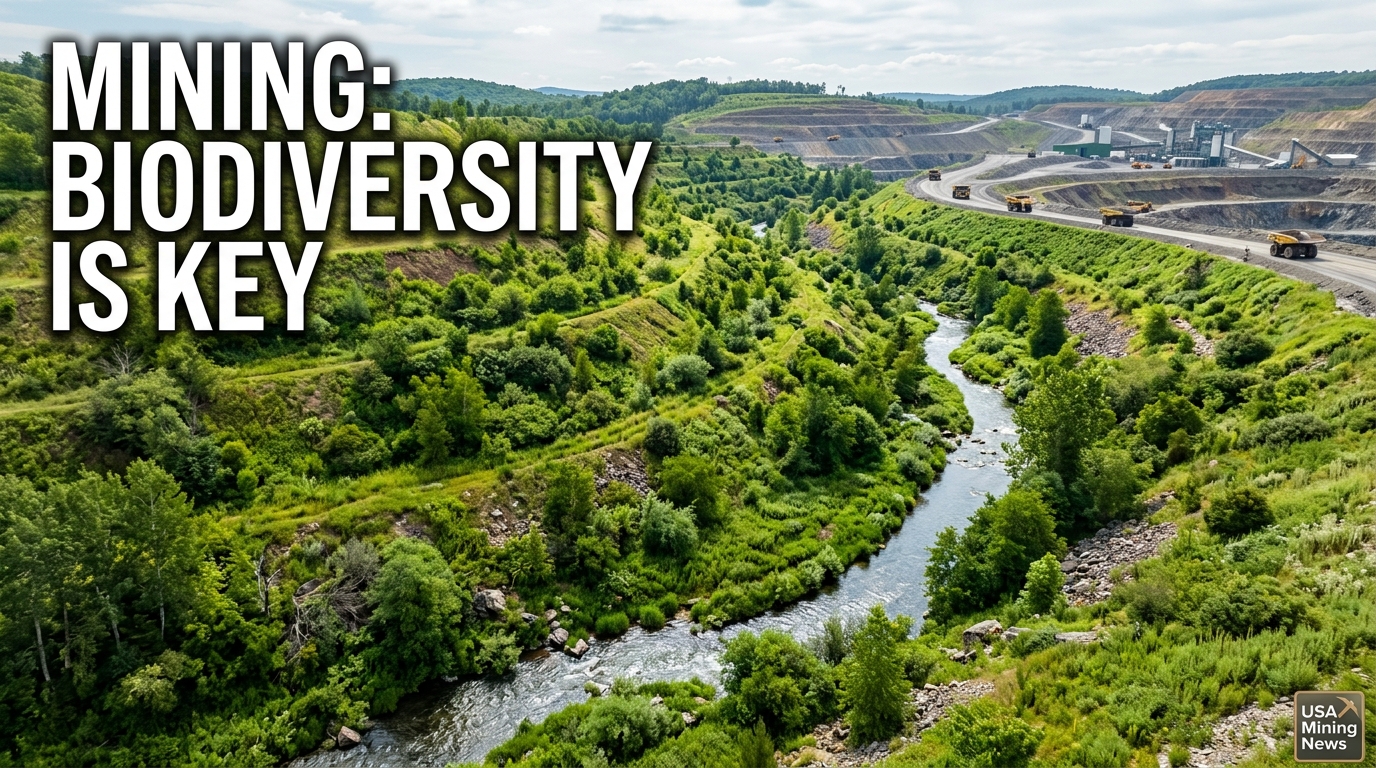
The global mining industry, while foundational to modern technological advancement and convenience, stands at a critical juncture regarding its environmental footprint. An insightful analysis from GlobalData, published on March 25, 2026, underscores a stark reality: the sector's accelerating contribution to global biodiversity loss is rapidly transforming into a significant, material business threat. This pivotal assessment urges mining companies to fundamentally rethink their operational strategies, advocating for immediate adoption of nature-positive approaches to safeguard both ecosystems and their own long-term viability.
The Intrinsic Link: Mining Operations and Ecosystem Health
The extraction of essential minerals and metals invariably involves substantial intervention in natural landscapes. From the initial stages of exploration and site development to active excavation and the eventual creation of vast tailings storage facilities, mining operations exact a heavy toll on biodiversity—the intricate web of life that forms the bedrock of the global economy. This impact manifests in various critical forms:
- Habitat Degradation and Destruction: Developing new mining sites necessitates extensive land-use change, which almost always involves the removal of vegetation, soil degradation, and direct habitat destruction. This process disrupts ecological corridors and can lead to the displacement or even extinction of local species.
- Freshwater Depletion: Mining operations are inherently water-intensive, particularly in processing ores and suppressing dust. Large-scale water abstraction can lead to freshwater depletion, placing immense pressure on local water sources and impacting aquatic ecosystems and human communities.
- Pollution: The use of various chemicals and processes can lead to the production of toxic pollutants, such as mercury and cyanide. These substances, if not properly managed, can contaminate soil, water bodies, and air, with far-reaching consequences for flora, fauna, and human health.
Paradoxically, while mining significantly impacts these natural systems, the sector itself is profoundly reliant on the very ecosystem services it often degrades. Access to fresh water, stable soil conditions for infrastructure, and natural flood protection mechanisms are all critical inputs for efficient, safe, and cost-effective mining operations. The erosion of these natural assets, therefore, directly undermines the sector's ability to operate sustainably and profitably.
Ecosystem Degradation: Externalized Costs Become Internal Risks
Historically, many of the economic costs associated with biodiversity loss have been "externalized" by mining companies, meaning they were borne by society or the environment rather than directly by the operators. However, this dynamic is rapidly shifting. As environmental awareness grows and regulatory frameworks strengthen, the impacts of ecosystem degradation are increasingly translating into direct business risks that threaten companies' bottom lines. These risks span legal standing, financial health, brand reputation, and even the physical ability to conduct operations.
The economic value of ecosystem services, such as water filtration, air purification, carbon sequestration, pollination, and oxygen production, is immense. These "regulating services" maintain environmental stability and support human well-being. Should governments be forced to replicate these services through artificial means, estimates suggest the cost could exceed global GDP. Mining's contribution to biodiversity loss therefore carries profound real-world economic impacts, exposing companies to significant and growing business risk.
GlobalData's Framework: Five Material Risks for Miners
GlobalData’s comprehensive Climate Risk Framework provides a valuable lens through which to understand the evolving threats posed by biodiversity loss. Applied to the mining sector, it outlines five key risks that companies will increasingly face if they fail to implement robust, nature-positive policies and biodiversity strategies:
- Physical Risk: This arises directly from the failure of ecosystem services. As natural systems degrade, mining operations become more vulnerable to disruptions such as water scarcity, increased flooding, extreme weather events, or slope instability. These physical impacts can severely hamper production, damage infrastructure, and endanger nearby communities and employees.
- Regulatory Risk: Governments worldwide are tightening environmental protections, specifically targeting biodiversity conservation. Noncompliance with evolving permitting requirements, pollution control standards, or habitat protection laws can lead to substantial fines, forced operational shutdowns, and costly, drawn-out litigation. The regulatory landscape is becoming increasingly complex and punitive for environmental infractions.
- Market Risk: The influence of Environmental, Social, and Governance (ESG) concerns on investor decisions and consumer preferences is undeniable and growing. Mining companies perceived as lacking strong biodiversity credentials may find themselves losing market share, facing divestment from major institutional investors, or struggling to attract capital from funds with strict ESG mandates.
- Financing Risk: Lenders, insurers, and other financial institutions are increasingly demanding robust nature-related credentials as a prerequisite for engaging with mining projects. Without a credible and demonstrable biodiversity strategy, firms may face higher borrowing costs, conditional financing agreements that impose strict environmental performance targets, or even outright denial of essential financial support for new projects or expansions.
- Reputational Risk: In an era of instant global communication, companies face significant reputational damage from policies or practices that harm nature, or from a perceived failure to deliver on public environmental commitments. Unsustainable practices, or accusations of "greenwashing" (making unsubstantiated claims of environmental friendliness), can expose companies to intense activist campaigns, consumer boycotts, and severe erosion of brand trust, impacting everything from talent acquisition to community relations.
Real-World Consequences: Cautionary Tales from Rio Tinto and Alamos Gold
History offers compelling evidence of the potential fallout when biodiversity and environmental risks are overlooked or inadequately managed. Recent incidents underscore that these risks are not theoretical but translate into tangible legal, financial, and reputational damage:
- In 2024, villagers living near a Rio Tinto mine in Madagascar initiated legal action following water contamination tests that revealed dangerous levels of lead and uranium. This incident vividly highlighted the significant human health impacts and the legal liabilities that can arise from mineral extraction gone awry, intensifying public and regulatory scrutiny on the environmental performance of major miners.
- In 2025, Alamos Gold and its contractors faced substantial penalties from the Ontario government in Canada. They were fined a total of C$177,500 (approximately $128,654 USD) for violating the Environmental Protection Act. The infraction stemmed from the dispersal of "fly rock" at its Magino project, an incident that demonstrated how even seemingly minor operational lapses can result in material regulatory and financial consequences.
These examples illustrate that regulatory and reputational risks are currently prominent in the mining sector's risk profile. However, GlobalData's analysis cautions that as biodiversity loss accelerates globally, physical, market, and financing risks are set to become equally, if not more, acute. This trajectory necessitates a paradigm shift in how mining companies approach environmental stewardship.
Strategic Imperative: Integrating Biodiversity into Core Operations
To effectively mitigate this expanding spectrum of risks, biodiversity protection and restoration must transcend its traditional role as a peripheral corporate social responsibility initiative and become a core, integrated component of mining companies' strategic planning and operational execution. The most cost-effective approach involves proactive investment and action now. Key strategic elements include:
- Mapping and Assessment: Companies must first meticulously map where their current and planned mining operations intersect with sensitive ecosystems and biodiversity hotspots. This involves comprehensive baseline studies and ongoing monitoring to understand potential impacts.
- Board-Level Accountability: Clear accountability for biodiversity performance must be established at the highest levels of corporate governance, including the board of directors. This ensures that biodiversity considerations are integrated into strategic decision-making and resource allocation.
- Minimizing Harm in Site Preparation and Extraction: Investing in advanced site preparation and extraction processes designed to minimize environmental harm is crucial. This includes employing techniques like avoiding highly sensitive areas, implementing progressive land restoration during operational phases, systematically reducing the overall operational footprint, and utilizing biodiversity offsetting or credits where unavoidable impacts occur.
- Embracing Nature-Based Solutions (NbS): Integrating NbS into operational and closure plans is vital. This involves actively restoring degraded habitats, stabilizing slopes using ecological engineering principles, improving soil health through organic matter addition and revegetation, and planting native species to promote ecosystem recovery and resilience.
These proactive measures not only address immediate environmental concerns but also enhance operational resilience, strengthen community relations, and improve access to capital, ultimately contributing to long-term shareholder value.
Future Outlook: A Nature-Positive Path Forward
The imperative for mining companies to adopt nature-positive strategies is no longer negotiable; it is a fundamental requirement for future success and legitimacy. The escalating pace of biodiversity loss, coupled with increasing stakeholder scrutiny and evolving regulatory landscapes, presents an undeniable challenge that demands a transformative response. By proactively protecting and restoring biodiversity, mining companies can transition from being perceived as drivers of ecological degradation to becoming leaders in sustainable resource management, securing their license to operate and contributing positively to global environmental goals. The time for strategic action is unequivocally now.