In a decision that reverberated across the international mining community and dramatically reshaped the trajectory of an entire national industry, the United States announced in November 1959 that it would not renew its uranium supply contracts with Canada. These pivotal contracts, integral to Canada's position as the world's leading uranium producer, were scheduled to expire between 1962 and 1963. The unilateral move by Washington, while anticipated by some astute market observers due to the developing U.S. domestic uranium supply, nevertheless caught many Canadian producers and associated boomtowns flat-footed, triggering an immediate and severe re-evaluation of the industry's future.
This historical pivot, recently revisited in The Northern Miner's "Blast from the Past" series on May 10, 2026, by Colin McClelland, serves as a potent reminder of the inherent vulnerabilities within commodity markets tied to geopolitical demands. The event underscores the critical interplay between national energy security, industrial development, and the often-volatile nature of mineral resource economics.
Canada's Mid-Century Uranium Dominance
By the mid-1950s, Canada had emerged as a formidable force in the global resource sector, propelled by the insatiable demand for uranium during the height of the Cold War. The metal, deemed strategically critical for both weapons development and nascent nuclear energy programs, saw its value surge, transforming previously untapped regions into bustling industrial hubs. By 1958, Canada had ascended to become the world's top uranium producer, with exports of the metal surpassing all other commodities in value and bolstering the national economy significantly. This era was characterized by unprecedented investment in exploration, mine development, and processing facilities, particularly within regions rich in proven uranium deposits.
The strategic importance of Canadian uranium to its allies, especially the United States, was immense. The U.S. military-industrial complex relied heavily on a secure and abundant supply of nuclear fuel to support its strategic defense objectives. This demand fostered a period of rapid expansion in Canadian mining, attracting substantial capital and a burgeoning workforce to remote areas. Far from being a niche industry, uranium mining became a cornerstone of Canada’s economic output and global diplomatic standing.
The Boomtown Phenomenon: Elliot Lake as a Case Study
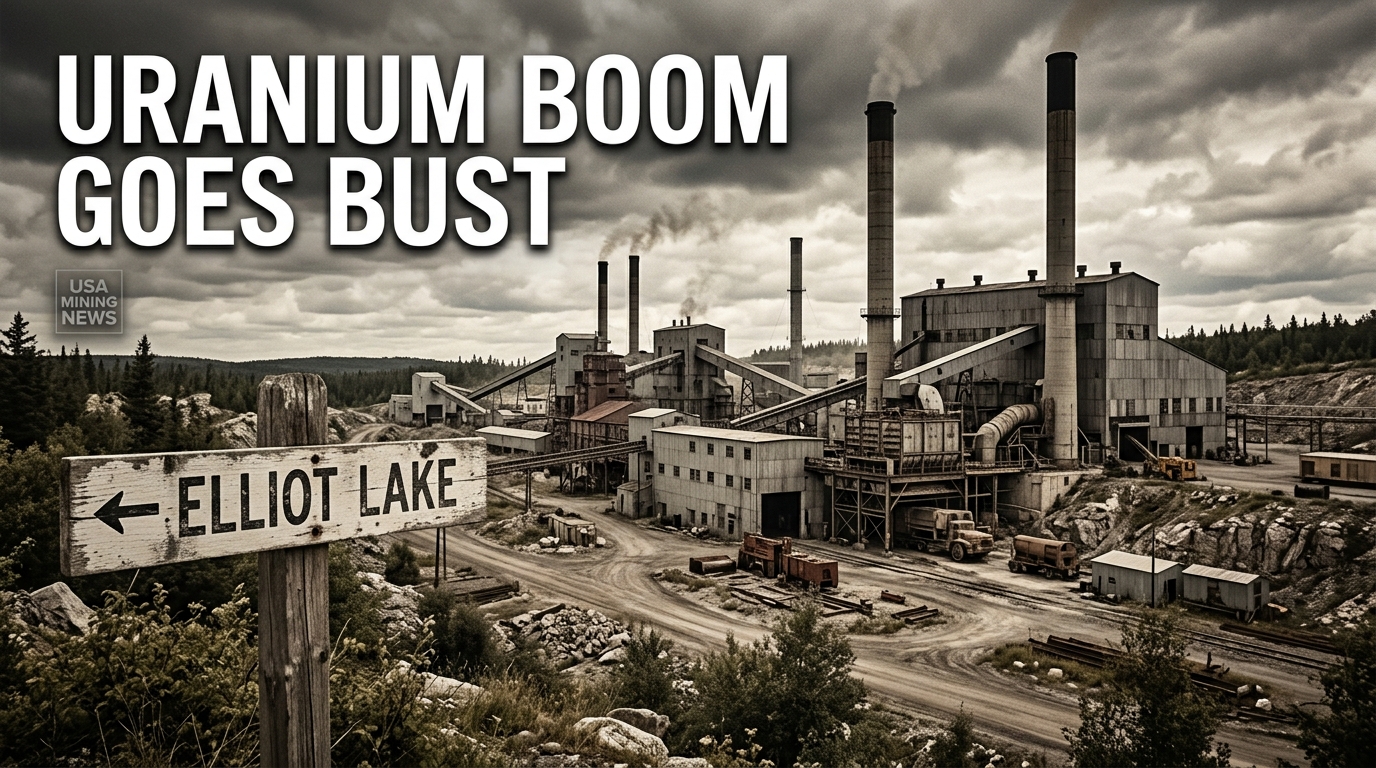
Nowhere was the speculative fervor and rapid industrialization more evident than in the creation and meteoric rise of "boomtowns" across northern Ontario. Elliot Lake stands as a prime example of this phenomenon. Conceived almost entirely around the promise of vast uranium deposits, the town experienced an unparalleled period of rapid expansion, building out infrastructure and services at an astonishing pace to accommodate the influx of thousands of miners, engineers, and support staff. Housing developments, commercial districts, and public facilities sprang up in what had previously been wilderness, symbolizing the audacious ambition and confidence placed in the future of uranium.
The tangible proof of this expansive growth was exemplified by the opening of a state-of-the-art, 116-bed hospital in Elliot Lake in September 1959. This medical facility, representing a significant investment of then C$3 million (equivalent to US$3 million), was not merely an amenity but a critical piece of social infrastructure designed to support a thriving, rapidly growing population and a demanding industrial workforce. Its inauguration just weeks before the U.S. announcement perfectly encapsulated the industry's peak, a moment when optimism for sustained growth was at its zenith. The hospital’s grand opening stood as a physical testament to a community’s belief in a bright, long-term future, making the subsequent policy reversal all the more devastating.
Washington's Pivotal Decision: Non-renewal of Contracts
The abrupt shift in mood came swiftly and dramatically. In November 1959, Washington officially conveyed its decision: the uranium supply contracts with Canada, foundational to the Canadian industry, would not be renewed upon their expiration in 1962 and 1963. This announcement signaled a profound and immediate threat to the economic viability of Canada's uranium sector, raising widespread fears that the industry's very foundation could disappear almost overnight. The magnitude of this decision cannot be overstated; it effectively pulled the economic rug out from under a specialized industry that had been operating at peak capacity based on long-term procurement agreements.
While the decision undeniably shocked many, some industry observers had, in fact, predicted such a move. The U.S. had been actively pursuing and developing its own domestic uranium supply capabilities, a strategic imperative driven by national security considerations and the desire to reduce dependency on foreign sources, even from close allies. This internal production shift, coupled with an evolving understanding of future defense requirements, rendered the extensive and high-volume Canadian imports less critical. However, despite these underlying currents, the sudden and definitive nature of the announcement still caught many Canadian producers and the communities reliant on them flat-footed, leaving little time for strategic pivots or mitigation planning.
Immediate Repercussions for the Canadian Uranium Sector
The ramifications for the Canadian uranium sector were swift and severe. Mining operations, particularly those with higher operating costs that relied on the guaranteed volumes and prices of the U.S. contracts, faced immediate pressure. Many such mines were forced to shut down entirely, leading to significant job losses and a mass exodus of workers from communities that had only recently boomed. The economic engine of these towns, fueled by resource extraction, suddenly sputtered to a halt, creating widespread social and economic distress.
Amidst the widespread closures and economic contraction, a period of consolidation ensued. Stronger operators, those with more resilient balance sheets, lower operating costs, or diversified interests, were able to absorb some of the available assets from their struggling peers. This strategic consolidation aimed to streamline operations and position remaining companies for survival in a drastically diminished market. However, even for these more robust players, the landscape had fundamentally changed, necessitating a drastic revision of their long-term growth strategies. Communities like Elliot Lake, which had personified the boom, were left to absorb a steep and painful downturn, grappling with population dispersion, declining property values, and the daunting challenge of economic diversification.
The Lingering Impact and Market Evolution
The U.S. decision initiated a prolonged period of uncertainty and contraction for the Canadian uranium industry, forcing a fundamental reassessment of its market drivers and future direction. The vibrant, expansive activity of the mid-1950s gave way to a leaner, more cautious environment. The industry's recovery would not gather significant momentum until later in the decade, when a new demand source emerged: civilian nuclear power generation. As nuclear energy gained traction as a viable and increasingly attractive option for electricity production globally, it provided a much-needed lifeline to the sector. This shift demonstrated the critical importance of market diversification and the ability of an industry to adapt to evolving end-user demands, transitioning from purely military-driven procurement to commercial energy supply.
The experience of 1959 highlighted the acute risks associated with over-reliance on a single major customer or geopolitical imperative. It forced Canadian producers to re-evaluate their operational efficiencies, explore new markets, and innovate in the face of adversity. This period of stagnation and subsequent revival through civilian demand laid the groundwork for the more diversified and strategically robust Canadian uranium industry that would eventually re-emerge.
Lessons from the Past for Today's Uranium Market
The historical events of 1959, as highlighted by The Northern Miner in its May 2026 'Blast from the Past' series, linking this historical event to current trends, offer enduring and critical lessons for mining industry professionals and investors today, especially given the renewed global interest in nuclear power as a component of the energy transition. The current surge in uranium companies and nuclear power initiatives aimed at meeting global energy demands resonates deeply with the dynamics observed over six decades ago.
First, the incident powerfully illustrates the profound impact of geopolitical shifts on commodity markets. National strategic interests, whether in defense or energy security, can dramatically alter demand patterns and supply contracts, often with little warning. Mining companies operating in strategically critical sectors must continuously monitor international relations and policy developments to anticipate potential disruptions. Second, the Elliot Lake experience serves as a stark warning about the risks associated with single-customer dependence. Diversifying client portfolios and exploring multiple end-use applications for commodities can mitigate the fallout from sudden contract cancellations or policy changes by a dominant buyer.
Furthermore, the rapid build-up and equally rapid decline of boomtowns underscore the societal responsibilities and economic vulnerabilities inherent in resource development. Sustainable mining practices today include robust community engagement, economic diversification planning for host communities, and investment in transferable skills to minimize the long-term negative impacts of commodity cycle volatility. The experience also emphasizes the critical role of market intelligence and foresight. While the decision caught many off guard, some observers had anticipated the U.S. move, demonstrating the value of deep market analysis and understanding the evolving supply-demand fundamentals, even within seemingly stable long-term contracts.
Conclusion: Navigating Geopolitical Shifts and Commodity Cycles
The U.S. decision in November 1959 to cease renewing Canadian uranium contracts stands as a watershed moment in the history of global mining. It abruptly ended Canada's short but spectacular reign as the world’s leading uranium producer, demonstrating the inherent volatility and geopolitical sensitivity of critical mineral markets. The plight of communities like Elliot Lake, transformed from vibrant boomtowns to areas of acute economic distress within weeks, serves as a poignant reminder of the human element in large-scale industrial policy shifts.
For today's mining industry professionals and investors, this historical episode provides invaluable insights into navigating complex commodity cycles, geopolitical influences, and the critical importance of strategic foresight. As the world once again turns its attention to nuclear energy for a cleaner transition, understanding the fragility of supply agreements and the necessity of resilient, diversified operations remains paramount. The past offers a potent education: in an interconnected global economy, what appear to be stable, long-term contracts can undergo sudden, unilateral reconsideration, fundamentally altering market dynamics almost overnight.