Boliden Pursues Transformative Acquisition: A Deep Dive into the Potential Nexa Deal
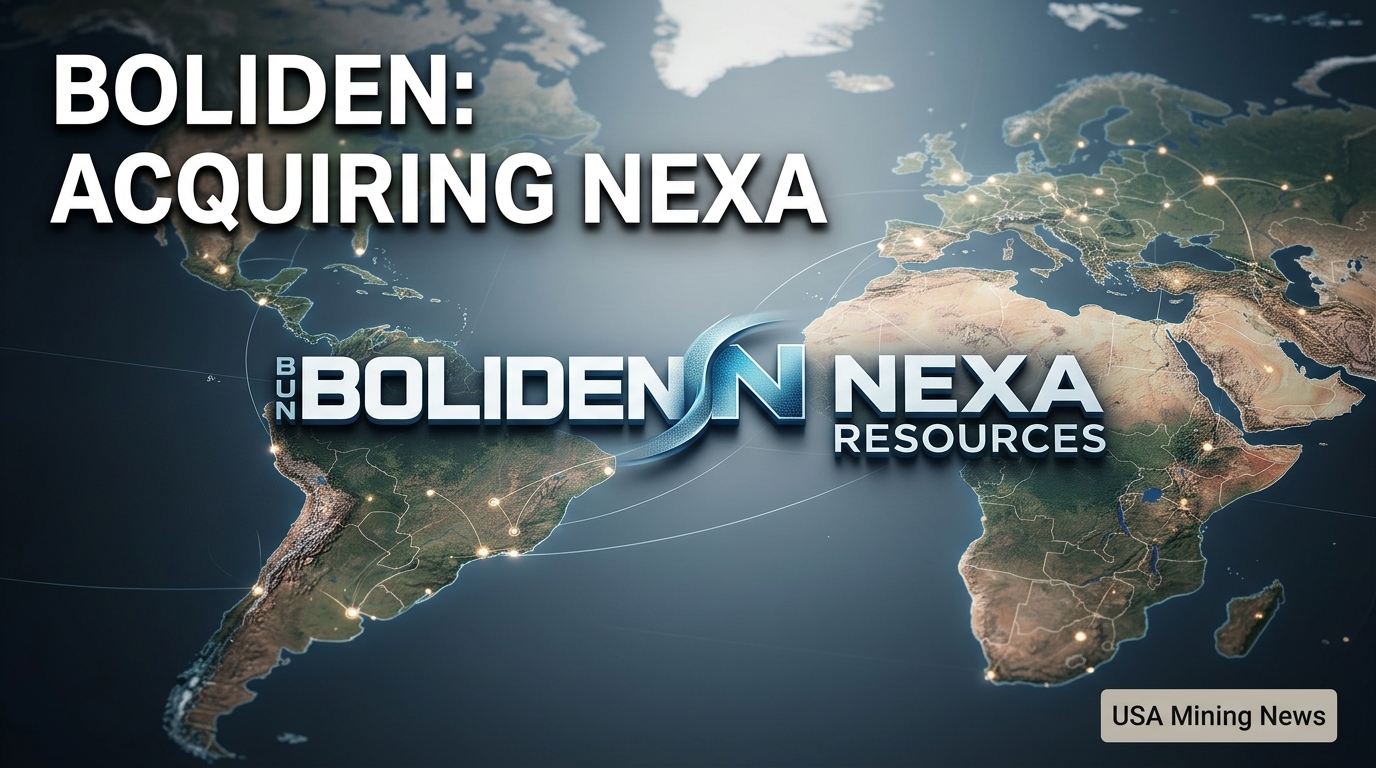
Stockholm, Sweden & Sao Paulo, Brazil – July 2, 2026 – The global mining sector is abuzz with news of a potentially transformative acquisition that could significantly redraw the map for zinc and base metals production. Swedish mining and smelting giant Boliden (STO: BOL) has confirmed it is engaged in discussions to acquire a majority stake in Nexa Resources (NYSE: NEXA), a prominent polymetallic miner and smelter, from its principal shareholder, the Brazilian investment group Votorantim.
The confirmation came late on Thursday, July 1, 2026, from both Boliden and Nexa, following earlier market speculation. While the companies refrained from disclosing detailed terms of the ongoing negotiations, they emphasized that there is no absolute certainty that these discussions will culminate in a definitive transaction. Nevertheless, the mere announcement sent ripples through the market, with Nexa’s shares jumping 2.8% in after-hours trading, pushing its market capitalization to approximately $1.8 billion.
This strategic pursuit by Boliden underscores a growing trend of consolidation within the base metals sector, driven by the desire for enhanced scale, geographical diversification, and improved supply chain integration. Should the deal materialize, it would mark a significant expansion for Boliden, extending its formidable operational capabilities from its European strongholds into the resource-rich regions of Brazil and Peru.
The Contenders: Boliden and Nexa Resources
Boliden, headquartered in Stockholm, Sweden, has carved out a sterling reputation as an integrated mining and smelting company, primarily focused on zinc, copper, lead, and nickel, with significant precious metals by-products. Its operations are predominantly located across Sweden, Finland, Norway, and Ireland, encompassing a portfolio of sophisticated mines and highly efficient smelters. Boliden's long-standing strategy has focused on sustainable production, technological innovation, and maximizing value from its ore bodies, making it a key European supplier of critical industrial metals.
Nexa Resources, on the other hand, represents a significant force in the Latin American mining landscape. As one of the world's leading zinc producers, Nexa operates a robust portfolio comprising five polymetallic mines and three smelting facilities strategically located across Brazil and Peru. Key among its mining assets is Cerro Lindo in Peru, a significant operation known for its zinc, copper, and lead concentrate production. Nexa’s integrated business model, which includes both upstream mining and downstream smelting, provides it with a competitive edge in controlling its value chain and adapting to market dynamics. The company's focus on base metals, particularly zinc, aligns well with global industrial demand, making it an attractive target for companies looking to bolster their exposure to these critical commodities.
Votorantim's Strategic Divestment
The ongoing talks with Boliden are not an isolated event but rather a continuation of a broader strategic divestment program initiated by the Brazilian investment group Votorantim. The conglomerate, which holds a controlling 64.7% interest in Nexa, has been actively re-evaluating and optimizing its portfolio in recent years. Reports earlier in 2026 indicated Votorantim’s keenness to monetize its stake in Nexa. In April, the group informed the local newspaper Estadao that it was nearing a deal for its Nexa holdings, estimating the value in the region of 7 billion reais, which translates to approximately $1.4 billion at current exchange rates.
This potential sale follows Votorantim's prior significant divestiture of its aluminum producer CBA. In a move completed earlier, Votorantim sold CBA for approximately 4.7 billion reais in a transaction involving global mining behemoths Chinalco and Rio Tinto. Such high-profile sales underscore Votorantim's strategic shift, likely aimed at reallocating capital, reducing debt, or focusing on other core business segments. For the mining industry, Votorantim's systematic exit from these major assets signals significant opportunities for other players seeking growth and market consolidation.
Operational Synergies and Market Impact
The acquisition of Nexa would provide Boliden with substantial operational synergies and strategic advantages. Boliden's existing expertise in efficient mining, advanced mineral processing, and smelting technologies could be leveraged across Nexa’s Latin American assets. Specifically:
- Geographical Diversification: Boliden's current operational footprint is heavily concentrated in Northern Europe. Acquiring Nexa would instantly provide a strong presence in South America, diversifying geological and political risk, and opening new avenues for exploration and growth in a region known for its rich mineral endowments.
- Enhanced Zinc Exposure: As a leading global zinc producer, Nexa's portfolio would significantly amplify Boliden's position in the zinc market. With five polymetallic mines and three smelters, Nexa's operations offer robust production capacity and an integrated value chain from ore to refined metal. This would allow Boliden to exert greater influence on global zinc supply and pricing dynamics.
- Polymetallic Advantage: Nexa's polymetallic mines, yielding zinc, lead, copper, silver, and gold, align well with Boliden’s strategy of maximizing value from complex ore bodies. This diversification of revenue streams from multiple metals can provide greater resilience against commodity price fluctuations.
- Smelting Capacity: Nexa's three smelters in Brazil and Peru would add considerable downstream processing capacity to Boliden's portfolio. Integrated mining and smelting operations are often more efficient and resilient, allowing for better control over product quality and cost, and reducing reliance on third-party processors.
From a broader market perspective, a combined Boliden-Nexa entity would emerge as an undeniable powerhouse in the global base metals sector. The zinc market, crucial for galvanizing steel, die-casting alloys, and increasingly, nickel-zinc batteries, is experiencing evolving supply-demand fundamentals. An enlarged Boliden, with diversified geographical and operational assets, would be exceptionally well-positioned to capitalize on future demand trends driven by global industrialization and the transition to a greener economy.
Financial Considerations and Valuation
The reported indicative value of 7 billion reais ($1.4 billion) for Votorantim's 64.7% stake positions the potential transaction as a significant deal in the global mining M&A landscape. This valuation, when compared to Nexa’s current market capitalization of approximately $1.8 billion, implies a total enterprise value that Boliden would need to consider, encompassing Nexa's debt and other liabilities. Such large-scale acquisitions typically involve careful due diligence, extensive financial modeling, and consideration of various financing options, including debt, equity, or a combination thereof. Investors will be keenly watching the financial structure of any potential deal, assessing its accretion potential to Boliden's earnings per share and its impact on the company's balance sheet.
Regulatory Landscape and Future Outlook
While the discussions are progressing, any major cross-border acquisition of this scale is subject to rigorous regulatory approvals. Anti-trust authorities in Brazil, Peru, Sweden, and potentially other jurisdictions would scrutinize the transaction to ensure it does not unduly concentrate market power or harm competition. Given the complementary nature of Boliden's and Nexa's operations, with limited geographical overlap, regulatory hurdles might be manageable, but their review processes can often add significant time to deal completion.
Both companies have prudently cautioned that there is no certainty of a deal materializing. This standard disclaimer reflects the complexity of large-scale M&A, where factors such as valuation disagreements, material adverse changes, or unforeseen due diligence findings can derail even advanced negotiations. Should the deal proceed, the integration of two distinct corporate cultures, operational methodologies, and geographical workforces would present its own set of challenges, requiring careful planning and execution.
Conclusion: Reshaping the Global Zinc Landscape
The ongoing talks between Boliden and Votorantim concerning Nexa Resources represent a potential landmark event for the global mining industry. For Boliden, it is an opportunity to significantly enhance its scale, diversify its asset base, and solidify its position as a leading global producer of essential base metals. For Nexa, it promises access to Boliden's deep technical expertise and strong balance sheet, potentially unlocking further growth and optimization opportunities. And for Votorantim, it marks a continuation of a strategic portfolio rebalancing.
As the mining world awaits further announcements, the implications of this potential merger for the global zinc, lead, and polymetallic markets are profound. A successful acquisition would not only create a new, vertically integrated powerhouse but also signal a robust environment for strategic M&A activity as companies strategically position themselves to meet the increasing demand for critical minerals in the years ahead.