WASHINGTON D.C. – The United States Department of Energy (DOE) has unequivocally applauded a pivotal decision by the Federal Energy Regulatory Commission (FERC), announced on June 18, 2026. This action signifies a concentrated effort by federal agencies to streamline energy infrastructure development and ensure a reliable, affordable power supply for the nation's burgeoning industrial demands, a development with profound implications for the energy-intensive mining sector.
U.S. Secretary of Energy Chris Wright and Deputy Secretary of Energy James P. Danly released statements underscoring the importance of FERC's move, which follows a large load interconnection proceeding initiated directly under Secretary Wright’s directive. The Commission's decision reflects a proactive stance to address the escalating electricity demands driven by manufacturing resurgence, technological innovation, and robust economic growth across the United States.
FERC's Directive: Catalyzing Grid Modernization
At its open meeting today, FERC issued parallel show cause orders under Section 206 of the Federal Power Act. These orders direct each of the nation's six regional grid operators under FERC’s jurisdiction to either justify their existing tariffs for major energy consumers, such as data centers, or present a comprehensive plan for their reform. This mandate is specifically designed to achieve what the DOE terms "speed-to-power," a critical factor for supporting American innovation, bolstering national security, and concurrently protecting electricity ratepayers.
The core issue at hand is the efficiency and equity of the interconnection process—the mechanism by which new or expanded large-scale energy loads connect to the existing electricity grid. Delays, complex procedures, and unclear cost allocations in current interconnection queues have long been a bottleneck for large industrial projects. By compelling regional grid operators to review and potentially revise these tariffs, FERC is aiming to remove significant barriers, thereby accelerating the deployment of essential power infrastructure.
Addressing Unprecedented Demand and Infrastructure Needs
Secretary Wright articulated the backdrop for these urgent reforms, stating, “Thanks to President Trump, America is entering a period of unprecedented electricity demand driven by manufacturing, innovation, and economic growth. Meeting that demand requires building more energy infrastructure and bringing new power online faster.” This pronouncement highlights a national recognition of the intrinsic link between energy accessibility and economic competitiveness. Rapid industrial expansion, particularly in sectors requiring significant computing power or heavy manufacturing, places immense strain on existing grid capacity and often faces lengthy delays in securing adequate power connections.
The Secretary emphasized the Administration's commitment to systematically remove these infrastructural impediments, accelerate development timelines, and safeguard a future where America possesses "affordable, reliable, and secure energy" to power a new era of prosperity. This aligns with President Trump’s "Ratepayer Protection Pledge," promising to balance industrial growth with consumer affordability.
Key Players and Policy Drivers
The coordinated action between the DOE and FERC illustrates a unified federal strategy. U.S. Secretary of Energy Chris Wright, who initiated the preceding large load interconnection inquiry, plays a central role in driving this agenda. Deputy Secretary of Energy James P. Danly reinforced this commitment, acknowledging FERC Chairman Swett's responsiveness. Deputy Secretary Danly stated, “FERC’s announcement today demonstrates Chairman Swett’s commitment to addressing Secretary Wright’s directive and delivering on President Trump’s goal of American energy dominance while maintaining affordability, reliability, and flexibility.”
The overarching policy framework is guided by President Trump’s vision of "American energy dominance," which encompasses not only robust energy production but also efficient distribution and consumption. The Administration's focus extends to ensuring that the energy transition and economic expansion do not impose undue financial burdens on existing customers, thus reinforcing the "Ratepayer Protection Pledge." This dual emphasis on industrial acceleration and consumer protection forms the bedrock of the current regulatory shifts targeting grid operators.
Operational Implications for Large Energy Users
The reforms mandated by FERC are designed to yield several critical operational improvements for large energy consumers, including major industrial facilities and, notably, mining operations:
- Improved Interconnection Processes: By requiring justification or reform of existing tariffs, FERC aims to standardize and streamline the procedures for connecting new large loads to the grid, reducing bureaucratic hurdles and project delays.
- Support for Flexible Load and Generation Arrangements: The directive encourages grid operators to accommodate more dynamic energy consumption patterns and integrate diverse generation sources efficiently. This includes a greater emphasis on flexible power solutions that can adapt to varying demand profiles.
- Acceleration of New Generation Addition: By making interconnection processes more efficient, the reforms indirectly facilitate faster deployment of new power generation capacity, alleviating supply constraints for expanding industries.
- Increased Transparency: A key aspect of the "show cause orders" is to compel grid operators to be more transparent about their tariff structures and interconnection queues, providing greater predictability for project developers.
- Prevention of Unjust Cost Shifts: Deputy Secretary Danly specifically highlighted the prevention of "unjust cost shifts onto existing customers." This commitment ensures that the costs associated with new large-scale energy infrastructure are allocated fairly, protecting both residential ratepayers and existing industrial consumers from disproportionate burdens.
The Mining Industry's Stake in Grid Efficiency
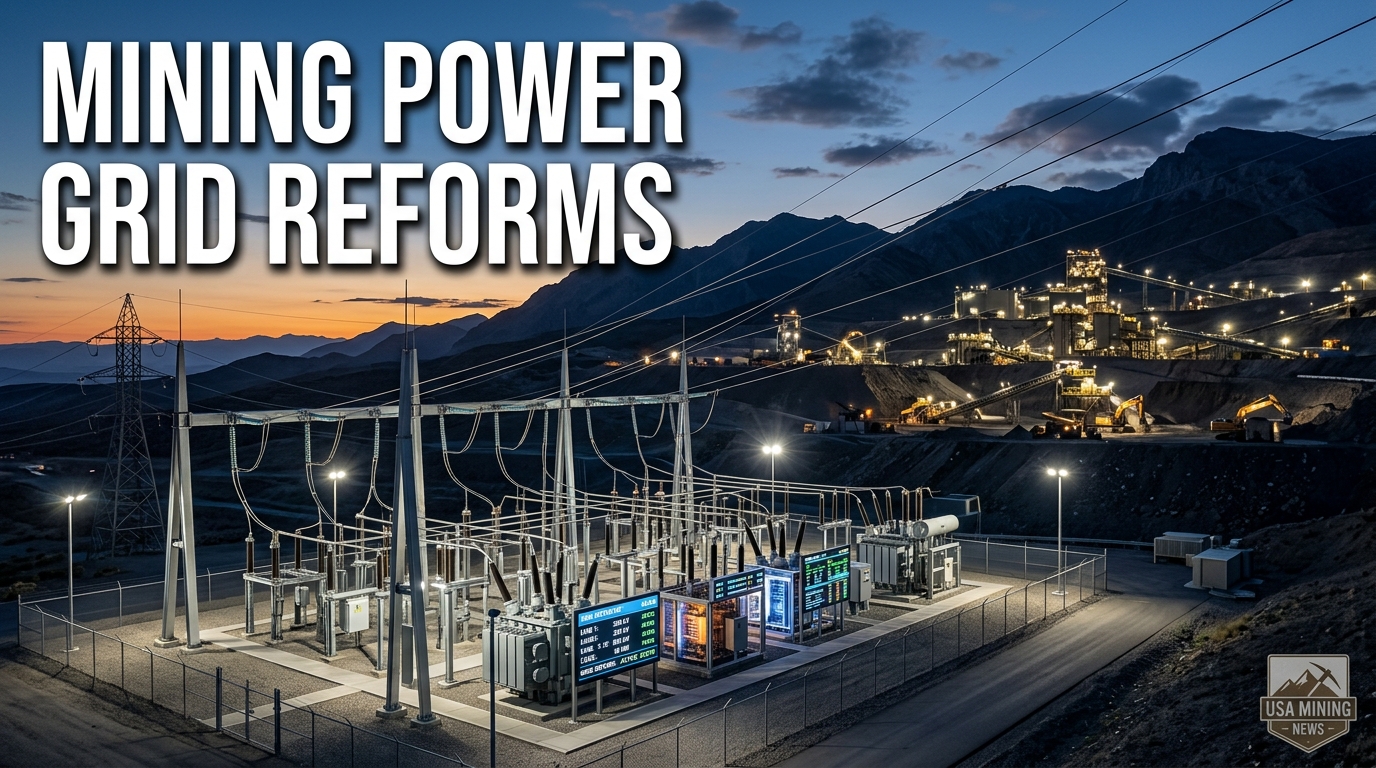
For the U.S. mining industry, which stands as one of the most significant "other large energy users" alongside data centers, FERC's actions hold immense strategic importance. Mining operations, from initial exploration and drilling to comprehensive processing and refining, are inherently energy-intensive. Modern mining techniques, including advanced crushing, grinding, ventilation, and increasingly, electric fleets, demand substantial and reliable power supplies. The ability to connect new mine sites or expand existing facilities expediently and cost-effectively to the national grid is paramount for project viability and operational efficiency.
Key impacts for the mining sector include:
- Project Development Acceleration: New mine projects or significant expansions often require new or upgraded power connections. Lengthy interconnection queues and unpredictable costs can add years and tens of millions of dollars to project timelines and budgets. Streamlined processes promised by these reforms could significantly cut lead times, bringing critical mineral resources to market faster.
- Cost Predictability and Control: Electricity typically represents a major operating cost for mines. Tariffs that are transparent and justly allocated, as advocated by FERC, will help mining companies better forecast and manage their energy expenditures, contributing to more stable and competitive production costs. Prevention of "unjust cost shifts" is particularly crucial, ensuring that mining operations are not disproportionately burdened by grid upgrades prompted by other large users.
- Support for Electrification: As the mining industry moves towards greater electrification of its mobile and stationary equipment to reduce emissions and improve efficiency, the demand for reliable, high-capacity grid connections will only intensify. More efficient interconnection pathways will be vital for facilitating this strategic shift.
- National Security Minerals: The DOE's emphasis on "national security" directly resonates with the mining industry's role in supplying critical minerals essential for defense, high-tech manufacturing, and renewable energy technologies. Faster development of domestic mining projects, enabled by more efficient grid access, directly supports national strategic objectives.
- Integration of Renewable Energy: Mining companies are increasingly exploring hybrid power solutions, integrating solar, wind, and battery storage with traditional generation. Reforms supporting "flexible load and generation arrangements" will simplify the connection of these diverse power sources, promoting greener and more resilient mining operations.
Future Outlook and Strategic Importance
The actions taken by FERC, strongly championed by the DOE, mark a pivotal step toward a more responsive and efficient national energy grid. By addressing the bottlenecks in large load interconnection, the federal government aims to foster an environment conducive to continued industrial growth and technological advancement. For the mining industry, a sector undergoing significant technological transformation and facing increasing demands for essential resources, these reforms are not merely regulatory adjustments but fundamental shifts that will impact everything from feasibility studies to operational profitability.
The goal of "American energy dominance" is intricately linked to the ability of industries like mining to access reliable and affordable power. As the nation prepares for a future of increased manufacturing output and innovation, securing the foundation of robust energy infrastructure capable of meeting these escalating demands—without compromising affordability for the wider populace—is paramount. Secretary Wright's initiative and FERC's decisive response lay the groundwork for a more agile, predictable, and ultimately more resilient energy landscape for all major industrial players, including the critical U.S. mining sector.