Strategic Partnership Forges New Path for Domestic Lithium Supply
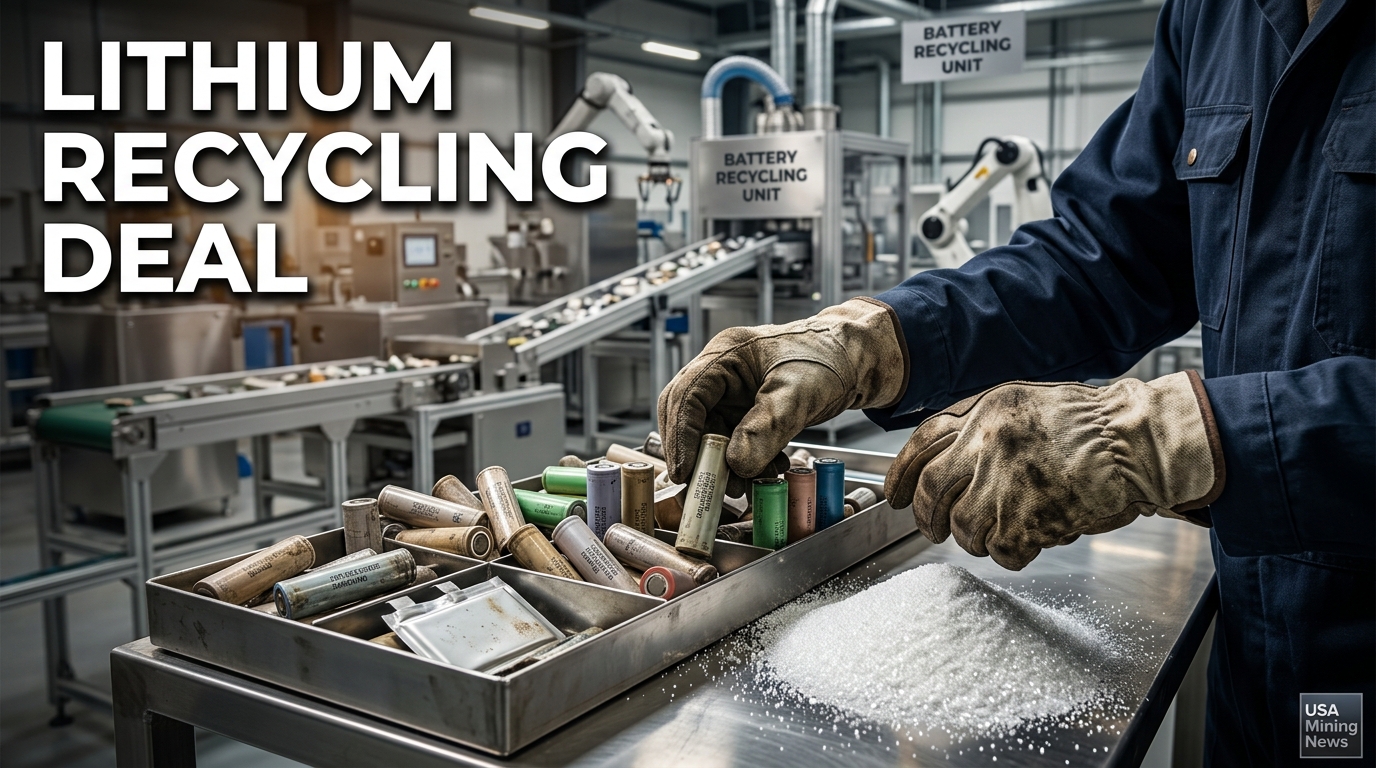
In a pivotal development poised to reshape the landscape of critical mineral supply chains, Bridge Green Upcycle and Hartree Partners announced on September 22, 2026, a comprehensive eight-year commercial agreement focused on recycled lithium carbonate. This strategic alliance not only secures a substantial volume of battery-grade lithium for the US market but also underscores the accelerating industry shift towards sustainable resource recovery and domestic supply resilience. The deal, estimated to be worth between $500 million and $1 billion under current market conditions, represents a robust commitment to developing a circular economy for vital materials.
The agreement tasks Hartree with the exclusive rights to market approximately 10,000 tonnes per annum (tpa) of lithium carbonate, encompassing all grades, produced from Bridge Green’s facilities. This long-term commitment, which includes an option to renew for an additional seven years, extends the partnership potentially to a remarkable 15 years, highlighting the strategic foresight and mutual confidence between the two entities. Anticipated initial volumes of lithium carbonate are slated to commence reaching Hartree in 2028, setting a clear timeline for this critical supply to enter the market.
An Eight-Year Commitment to Sustainable Lithium
At the core of this transformative agreement lies the commitment to an eight-year off-take and marketing arrangement for recycled lithium carbonate. For Bridge Green Upcycle, a company at the forefront of battery recycling and critical mineral refining, this partnership provides a validated pathway for its output and crucial financial backing for its ambitious expansion plans. For Hartree Partners, a global merchant commodities firm, it solidifies its position in the burgeoning critical minerals sector, aligning perfectly with its stated growth strategy.
Beyond the exclusive marketing rights, Hartree has also made a significant equity investment in Bridge Green. This funding infusion is part of Bridge Green’s bridge financing round and is specifically earmarked to support the company’s planned expansion of its battery recycling and critical mineral refining operations. Such integrated financing and supply arrangements are becoming increasingly common in the mining industry, especially for projects focused on novel technologies or those deemed strategically important for national interests. They provide stability and capital, enabling companies like Bridge Green to scale their innovative processes and meet escalating demand.
Key Players Driving the Circular Economy
The collaboration brings together distinct but complementary expertise:
- Bridge Green Upcycle: Founded and led by CEO Balki Iyer, Bridge Green is dedicated to developing circular supply chains for critical minerals. The company’s approach focuses on advanced recycling technologies to recover high-value materials from end-of-life batteries. Iyer emphasized the significance of this agreement, stating, “This agreement marks a defining milestone and a significant step towards developing a circular supply chain for Bridge Green. The scale and long term commitment by Hartree following a rigorous evaluation process, provides strong validation of our technology and business model. More importantly, this accelerates deployment to support the domestic need for critical minerals.” Bridge Green has already commissioned its Circularity Center India, which boasts a nameplate capacity of approximately 7,200 tpa of lithium-ion battery input, demonstrating its operational capabilities. The company’s upcoming Series A funding round is expected to finance integrated refining facilities in both India and the United States.
- Hartree Partners: As a global merchant commodities firm, Hartree Partners brings extensive market reach and financial prowess to the table. Landon Berns, head of battery and critical minerals at Hartree, articulated the company’s strategic vision: “Critical minerals are a key pillar of Hartree’s growth strategy, and securing domestic supply and returning recovered materials to productive use are core parts of our approach.” Hartree’s proactive stance in the critical minerals space is further evidenced by its selection as a supplier for the US Government’s Project Vault, a proposed $12 billion public-private Strategic Critical Minerals Reserve launched in February 2026. This new supply agreement with Bridge Green is a direct component of Hartree’s broader plan to build a robust position in this crucial sector.
The Broader Context: Bolstering US Critical Mineral Security
This agreement is not an isolated transaction; rather, it is deeply embedded within a broader national and global push towards securing resilient critical mineral supply chains. The US government has explicitly identified lithium as a strategic commodity, essential for the nation's economic prosperity and national security, particularly in the context of the burgeoning electric vehicle and renewable energy sectors. Both private industry initiatives and government policies are converging to reduce reliance on foreign sources for these vital materials.
The establishment of Project Vault by the US Government highlights the urgency and scale of this endeavor. By creating a strategic reserve, the government aims to mitigate supply disruptions and stabilize pricing for critical minerals. Hartree’s involvement as a selected supplier for Project Vault positions it as a key player in this national security initiative, and its partnership with Bridge Green directly contributes to the goal of domestic supply. This synergy between government policy and private sector action is a powerful driver for the industry.
Further reinforcing this domestic focus, the US Department of Commerce enacted a one-year export ban on battery-recycling material last month. This policy mandates that volumes of such material be prioritized for US-based buyers, effectively incentivizing domestic processing and creating a protected market for companies like Bridge Green. Such regulatory interventions demonstrate the government’s commitment to fostering an internal ecosystem for critical mineral recovery and refining, providing a stable foundation for investments in this space.
Operational Timelines and Future Growth
The structured timeline for this agreement provides a clear roadmap for execution and expansion. With initial volumes of lithium carbonate anticipated in 2028, both companies are working towards an aggressive ramp-up. Bridge Green’s existing Circularity Center India, with its 7,200 tpa lithium-ion battery input capacity, serves as an initial operational base, but the strategic intent is global, with a strong focus on the US market.
The bridge financing round, bolstered by Hartree’s equity investment, is a crucial stepping stone for Bridge Green. This will be followed by a forthcoming Series A funding round, which is expected to provide the capital necessary for the construction and commissioning of integrated refining facilities in both India and the United States. These facilities will be instrumental in processing recycled battery materials into high-purity lithium carbonate, meeting the stringent specifications required by battery manufacturers. The dual-country expansion strategy indicates Bridge Green’s aspiration to become a globally significant player in the circular economy for critical minerals, while directly addressing US domestic supply needs.
Implications for the Mining and Battery Industry
This agreement carries profound implications for the broader mining and battery industries:
- Validation of Recycling Technologies: The long-term commitment and significant investment from Hartree serve as a strong validation of Bridge Green’s recycling technology and business model. This could encourage further investment and innovation in the nascent, yet rapidly growing, battery recycling sector.
- Shift Towards Circularity: The deal exemplifies the industry's increasing emphasis on circular supply chains, moving away from purely extractive models. As primary mineral resources become more challenging or costly to access, and as environmental, social, and governance (ESG) pressures mount, recycling will play an ever-larger role in meeting demand.
- Enhanced Supply Security: By securing a domestic, recycled source of lithium, the United States takes a tangible step towards reducing its reliance on foreign geopolitical landscapes and vulnerable international supply lines. This enhances the security and stability of the entire battery manufacturing value chain within the US.
- Market Dynamics: While 10,000 tpa of lithium carbonate represents a fraction of global demand, its consistent, domestically sourced, and sustainable nature adds a valuable dimension to the market. It offers a premium for manufacturers seeking secure, environmentally responsible inputs.
- Investment Landscape: The partnership signals a strong investment trend in critical mineral processing and recycling. Investors are increasingly looking for opportunities that align with national strategic objectives and offer long-term growth potential in the energy transition.
Conclusion: A Blueprint for Resilient Supply Chains
The eight-year agreement between Bridge Green Upcycle and Hartree Partners marks a significant milestone in the journey towards building resilient, sustainable, and domestically secure critical mineral supply chains. By leveraging innovative recycling technologies and strategic partnerships, this collaboration not only addresses the immediate need for lithium carbonate but also lays a blueprint for future endeavors in the circular economy. As the US government continues to prioritize critical mineral independence through initiatives like Project Vault and targeted trade policies, partnerships of this nature will be instrumental in transforming policy ambitions into tangible operational realities. The mining industry, traditionally focused on primary extraction, is now clearly embracing a future where resource recovery is not just an environmental imperative but a strategic economic necessity.