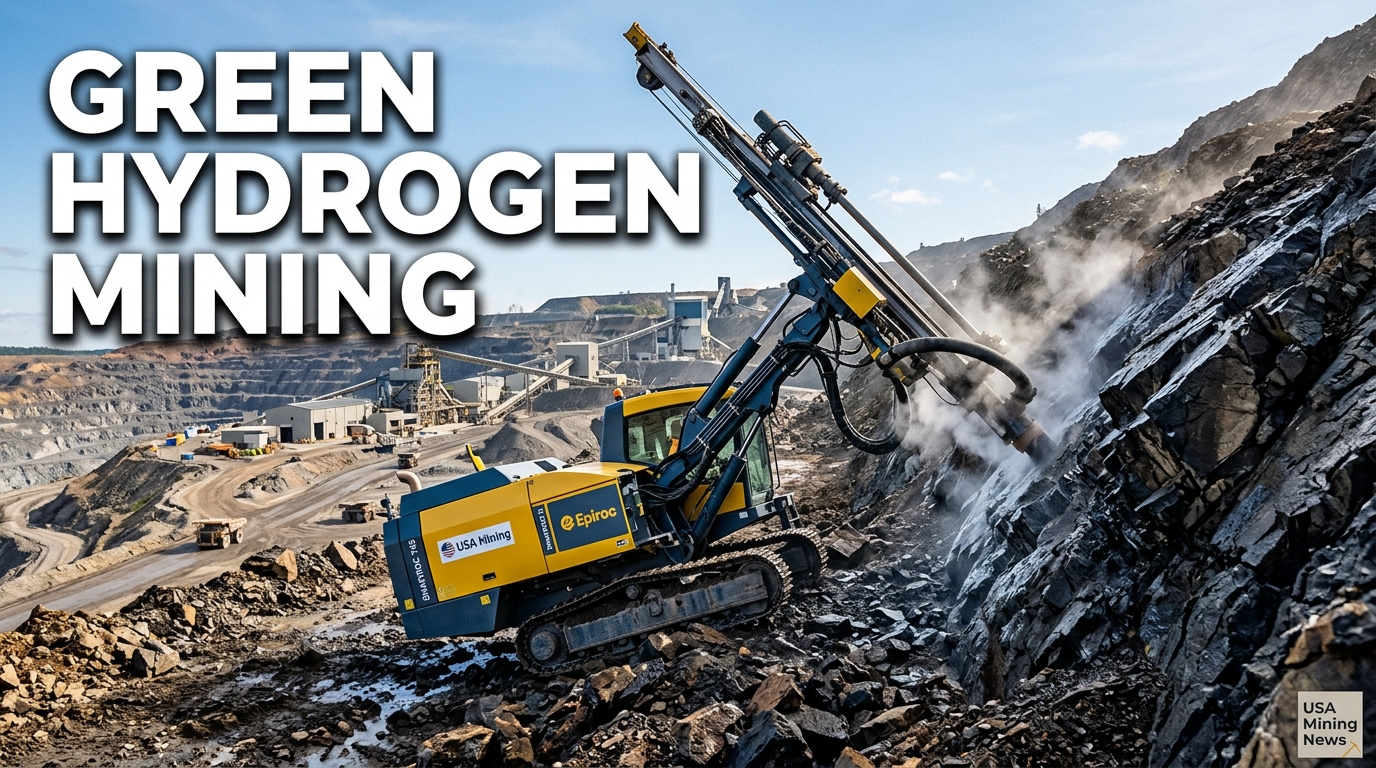
Timmins, Ontario – May 20, 2026 – In a significant move set to redefine sustainable practices within the global mining sector, Canada Nickel Company (TSXV: CNC) and GeoRedox Corporation have officially embarked on a groundbreaking partnership. The two entities announced a Memorandum of Understanding (MOU) to develop the world’s first stimulated geologic hydrogen well, located strategically at Canada Nickel’s flagship Crawford nickel project near Timmins, Ontario. This innovative collaboration signals a foundational step towards a truly zero-carbon industrial footprint, leveraging the unique geological characteristics of the region to produce clean hydrogen.
A Groundbreaking Partnership for Green Hydrogen
The core of this partnership centers on GeoRedox’s proprietary technology, designed to produce zero-carbon hydrogen directly from specific geological formations. For this initiative, the focus is on ultramafic rock formations – the very same geology that hosts Canada Nickel’s extensive portfolio of over 20 projects across the prolific Timmins Nickel District. This synergy is not coincidental; it represents a strategic alignment between a company possessing a novel clean energy technology and another with vast, ideal geological assets.
Under the terms of the MOU, GeoRedox Corporation will shoulder the full financial responsibility for the demonstration program. This commitment underscores GeoRedox's confidence in its technology and its potential to unlock a new frontier in sustainable energy production. Canada Nickel, in turn, will provide crucial on-site support, contributing valuable assets such as site access, geological rock samples for testing, and its extensive technical expertise derived from years of exploration and development in the region. Furthermore, Canada Nickel will share essential data and other resources necessary for the meticulous planning and successful implementation of the project at its Crawford site.
Mark Selby, CEO of Canada Nickel, articulated the importance of this collaboration in a recent news release. “The ultramafic rock that hosts our Crawford deposit and twenty-plus projects across the Timmins Nickel District is precisely the geology GeoRedox’s technology is designed for,” Selby stated. This highlights the unparalleled fit between GeoRedox’s innovation and Canada Nickel’s extensive land package, which could collectively support a transformative energy transition.
Crawford Project: A Strategic Hub for Critical Minerals and Carbon Solutions
The selection of the Crawford project as the host site for this pioneering hydrogen initiative further amplifies its strategic importance within Canada’s burgeoning critical minerals landscape. Located within Ontario’s designated Critical Minerals Corridor, Crawford is not merely a nickel mine; it is envisioned as a multifaceted industrial hub. Earlier this year, in January 2026, the Ontario provincial government underscored Crawford’s significance by naming it the second project to be fast-tracked under its "One Project, One Process" permit framework. This designation is a testament to the project’s strategic value and its alignment with provincial objectives to streamline regulatory processes for key resource developments, thereby accelerating project timelines and de-risking investment.
Upon anticipated construction and operation, the Crawford project is projected to rank among the largest nickel sulphide projects in the Western world. Beyond its scale, Canada Nickel has consistently emphasized its ambition for Crawford to be among the world’s lowest-carbon nickel operations. This commitment to environmental stewardship makes Crawford an ideal proving ground for GeoRedox’s zero-carbon hydrogen technology. The project’s inherent geology, rich in ultramafic rocks, forms the bedrock not only for its valuable polymetallic deposits – including nickel, chromium, and cobalt – but also for the innovative hydrogen production planned. This dual utility of the geology creates a unique symbiotic relationship, where the very rock being mined to supply critical minerals can also supply the clean energy needed to process them sustainably.
Leveraging Ultramafic Geology for Zero-Carbon Fuel
The concept of producing hydrogen from geological formations, often referred to as "geologic hydrogen" or "natural hydrogen," is an emerging field with enormous potential for decarbonization. Unlike traditional hydrogen production methods, which often rely on fossil fuels (like steam methane reforming) or energy-intensive electrolysis, this approach harnesses natural geological processes. While specific details of GeoRedox’s proprietary technology remain confidential, the general principle involves stimulating chemical reactions within ultramafic rocks. These rocks, rich in iron-bearing minerals like olivine and pyroxene, naturally react with water at elevated temperatures and pressures through a process called serpentinization, releasing hydrogen.
By applying proprietary stimulation techniques, GeoRedox aims to accelerate and optimize this natural process to produce hydrogen at commercial scales directly from the subsurface. This method offers several compelling advantages:
- Zero-Carbon Footprint: The hydrogen produced is inherently carbon-free, as it does not involve the combustion of fossil fuels or the emission of greenhouse gases during its formation.
- On-Site Production: Producing hydrogen directly at the mining site eliminates the need for complex and energy-intensive transportation of hydrogen, reducing overall supply chain emissions and costs.
- Resource Synergy: It transforms what might otherwise be inert rock within a mining concession into a valuable energy resource, maximizing the utilization of the geological asset.
- Scalability Potential: Given the widespread occurrence of ultramafic rock formations globally, successful demonstration at Crawford could pave the way for a widely scalable, sustainable hydrogen source.
This innovative approach represents a paradigm shift from conventional energy supply models for industrial operations, offering a self-sufficient, environmentally benign energy source that could significantly reduce the operational carbon intensity of mineral processing.
Towards a Zero-Carbon Industrial Cluster in Northeast Ontario
The vision underpinning this partnership extends far beyond merely powering the Crawford mine. Both Canada Nickel and GeoRedox aspire to create a "zero-carbon industrial cluster" in Northeast Ontario. Canada Nickel CEO Mark Selby emphasized this ambitious goal, stating, “This partnership brings us a significant step closer to a zero-carbon industrial cluster in Northeast Ontario – one that converts our concentrates into finished critical mineral products including nickel, chromium and cobalt, while leveraging the region’s significant carbon storage capacity.”
Such a cluster would represent a fully integrated supply chain for critical minerals:
- Extraction: Polymetallic ores (nickel, cobalt, chromium) mined from Crawford and potentially other Canada Nickel projects.
- Processing: Concentrates produced using energy from the locally sourced, carbon-free geologic hydrogen.
- Refining/Conversion: Further processing to create finished critical mineral products within the region, powered by the same green hydrogen.
- Carbon Management: Utilizing the region's existing and substantial carbon storage capacity to offset any remaining process emissions, moving towards net-zero or even carbon-negative operations.
This integrated approach has profound implications for the economic development and environmental sustainability of Northeast Ontario. It promises to create local value-added industries, foster skilled employment, and establish Canada as a leader in clean critical mineral production, directly addressing national security and economic resilience concerns surrounding global supply chains.
Funding, Phased Development, and Future Outlook
The demonstration program, fully funded by GeoRedox, marks the nascent stage of this ambitious endeavor. This initial phase is crucial for validating GeoRedox's technology in a real-world, commercial mining context. If this demonstration proves successful, the program is designed to scale up, potentially providing a large-scale, carbon-free hydrogen supply. Such an outcome would not only fulfill the energy needs of the Crawford project but could also supply other industrial consumers within the Timmins Nickel District, creating a significant clean energy node.
The long-term impact on the mining industry could be transformative. Reduced reliance on external — and often carbon-intensive — energy sources would lead to lower operating costs, enhanced energy security, and a significantly improved environmental profile for critical mineral operations. This aligns perfectly with the increasing global demand for sustainably sourced materials, putting Canadian suppliers at a distinct competitive advantage. The success of this demonstration could serve as a powerful blueprint for similar initiatives worldwide, particularly in regions rich in ultramafic geology.
Broader Implications for the Global Mining Industry
This collaboration between Canada Nickel and GeoRedox is more than just a localized project; it is a test case with global implications for the mining industry. As the world accelerates its transition to a green economy, the demand for critical minerals like nickel, cobalt, and chromium is surging. Simultaneously, investors, regulators, and consumers are placing ever-greater pressure on mining companies to decarbonize their operations and enhance their environmental, social, and governance (ESG) performance.
The Crawford hydrogen initiative stands as a tangible example of how innovation can meet these dual challenges. It demonstrates that mining sites can evolve beyond being mere resource extraction points to become producers of clean energy, fueling their own operations and potentially contributing to regional energy grids. This model offers a compelling pathway for other mining companies operating in geologically similar regions to dramatically reduce their carbon footprint, improve operational efficiency, and secure a sustainable energy supply. If successful, this partnership could inspire a new wave of integrated resource development, cementing Canada’s role at the forefront of sustainable critical mineral production and green industrial innovation.