Silver Sands Resources Secures Fairfield Gold Project, Bolstering Mexican Portfolio with High-Grade Potential
Vancouver, British Columbia – In a significant move set to expand its footprint in a globally recognized mining jurisdiction, Silver Sands Resources has announced a definitive agreement to acquire a 100% interest in the highly prospective Fairfield Gold Project. Located in Mexico’s mineral-rich State of Nayarit, this acquisition from Fairfields Gold Inc. marks a strategic expansion for Silver Sands, bringing a historic property with compelling exploration upside into its portfolio. The transaction, reported on May 1, 2026, involves a structured payment plan that combines cash and equity over a four-year period, reflecting a measured approach to securing valuable assets.
Silver Sands Expands Footprint in Mexico with Fairfield Gold Project
The definitive agreement between Silver Sands Resources and Fairfields Gold Inc. will grant Silver Sands a full 100% ownership stake in the Fairfield Gold Project. This complete control over the asset is a critical factor for junior exploration companies, providing unencumbered decision-making power for future exploration and development programs. The project itself encompasses a substantial 1,012.73 hectares, offering a significant land package for systematic exploration within a geological setting known for precious metal mineralization.
The financial framework of the acquisition involves a combination of cash payments and equity issuance, structured over a four-year timeline to align with project milestones and capital management. Silver Sands has committed to cash payments totaling approximately $675,000 USD, which translates to roughly C$916,578 based on recent exchange rates. In addition to the monetary component, Silver Sands will issue 5.15 million common shares to Fairfields Gold over the same four-year period. This blend of cash and stock is a common strategy in mining acquisitions, preserving immediate liquidity while aligning the seller’s interests with the long-term success of the acquiring company.
A standard feature of such transactions, particularly for properties with historical significance, is the inclusion of royalty agreements. The Fairfield concessions come with a 2.5% net smelter returns (NSR) royalty. This means the original vendor will receive 2.5% of the gross revenue from any future mineral production after certain deductions. Critically, Silver Sands has secured an option to repurchase 1.5% of this royalty for a payment of $1 million USD. This repurchase option provides strategic flexibility, allowing Silver Sands to consolidate a larger share of future revenues should the project demonstrate significant economic viability. Before the overall transaction can be finalized, Silver Sands' Mexican subsidiary is required to establish a separate agreement with the prior owner, solidifying the specific terms of the royalty and the aforementioned repurchase right. This step ensures all legacy interests are clearly defined and formally integrated into the new ownership structure.
Further facilitating the agreement and acknowledging the involvement of intermediaries, Silver Sands has also agreed to issue 1,050,000 common shares to a third party as a finder’s fee. Such fees are customary in deals of this nature, compensating individuals or entities for identifying and brokering the transaction. This issuance, like the main equity component of the deal, is contingent upon receiving all necessary regulatory approvals, primarily from the Canadian Securities Exchange (CSE). Adherence to statutory hold periods, as mandated by securities regulations and CSE policies, will also apply to these shares, ensuring compliance with market integrity rules.
Strategic Location and Geological Promise
The Fairfield Gold Project is strategically situated within Mexico’s State of Nayarit, a region characterized by its geological prospectivity and established infrastructure for resource projects. The project lies approximately 70 kilometers north-east of the popular Pacific coast city of Puerto Vallarta and about 25 kilometers south-west of Tepic, the state capital. This relative proximity to significant population centers and transportation networks can be advantageous for logistical planning, workforce sourcing, and access to supplies, potentially reducing operational costs compared to more remote locations.
Geologically, the Fairfield Gold Project is positioned on the northern edge of a Cretaceous hornblende granodiorite pluton. Granodiorite intrusions are often associated with the formation of various types of mineral deposits, including porphyry-style and epithermal gold-silver systems, which are common in the circum-Pacific "Ring of Fire" that extends through Mexico. The geological setting here suggests the potential for associated base and precious metal mineralization, making it a compelling target for detailed exploration work.
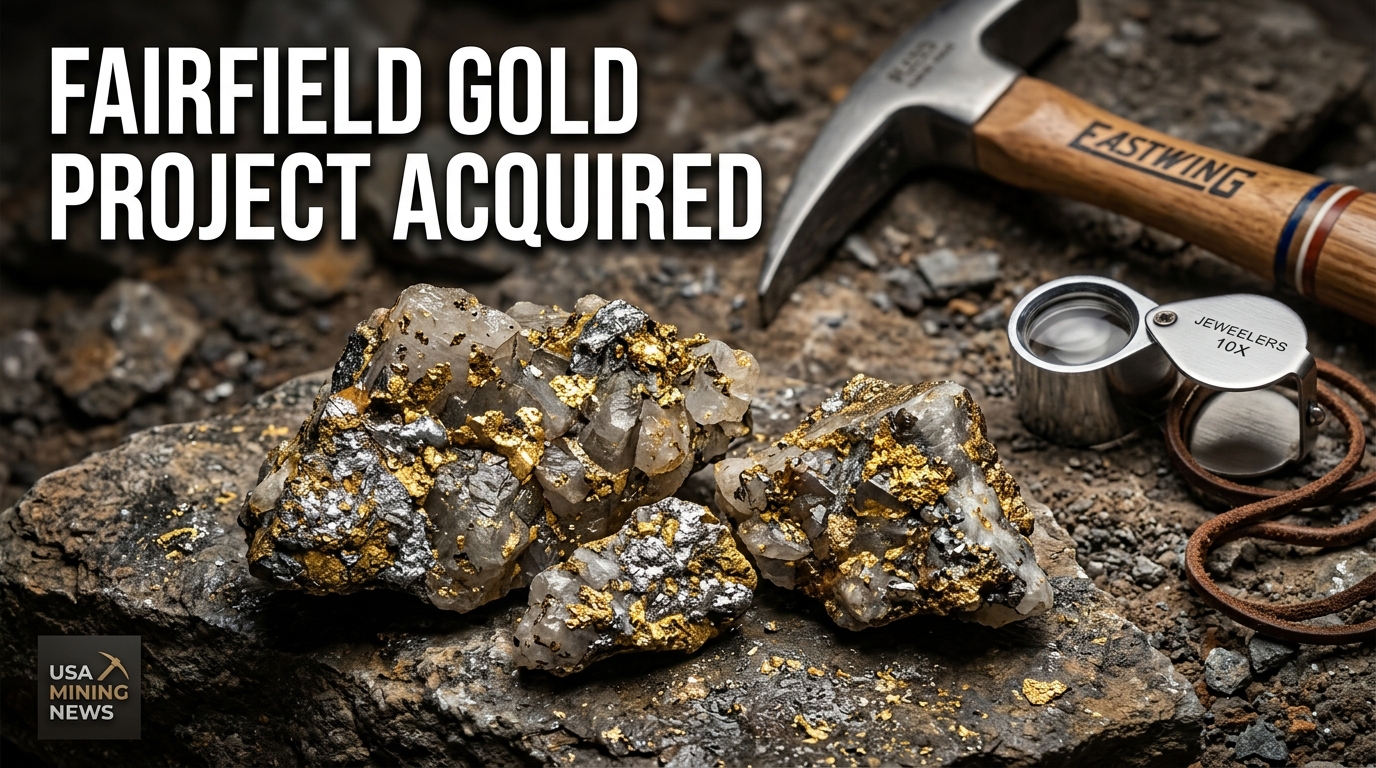
One of the most compelling aspects of the Fairfield project is its impressive historical exploration record. From 1926 to 1935, the American Smelting and Refining Company (ASARCO), a historically prominent mining conglomerate, conducted initial exploration activities on the property. ASARCO’s work at Fairfield identified significant mineral deposits along what is known as the Miravalles Vein. The reported assays from this period are particularly noteworthy, indicating average grades of 31.2 grams per tonne (g/t) gold and 401 g/t silver. To put these figures into perspective within modern mining, 31.2 g/t gold represents an exceptionally high-grade intercept, far exceeding the typical grades seen in many contemporary open-pit or even underground gold operations. Similarly, 401 g/t silver is a very strong grade that could contribute significantly to the economic viability of a precious metals target.
Industry Context and Strategic Rationale
Silver Sands CEO Keith Anderson highlighted the significance of the acquisition, stating, The Fairfield Gold Project represents an excellent opportunity in a strong mining-friendly jurisdiction for Silver Sands.
This sentiment underscores Mexico's established reputation within the global mining industry. Mexico consistently ranks among the top global producers of silver and is also a significant producer of gold, copper, and zinc. Its long mining history, comprehensive mining law, and generally stable investment environment make it an attractive destination for exploration and development capital. The presence of numerous large-scale operations by major and intermediate companies further validates its "mining-friendly" status, providing vital infrastructure and a skilled workforce.
Anderson further elaborated on the strategic potential: Historical exploration by ASARCO reported gold and silver mineralisation in the Miravalles Vein, while parallel vein structures have only been minimally explored, highlighting the broader exploration potential of the project.
This statement is crucial for understanding Silver Sands' rationale. While the Miravalles Vein exhibits undeniable high-grade historical results, the identification of parallel vein structures that have received only minimal attention opens up substantial exploration upside. Junior mining companies often seek projects with such "blue-sky" potential, where initial drilling can quickly expand the known mineralized footprint and potentially lead to significant resource discoveries beyond what historical work has defined. Verifying ASARCO's historical data with modern drilling techniques and then systematically exploring these underexplored zones will be key to unlocking Fairfield's full value.
The renewed interest in gold and silver assets like Fairfield also reflects broader market dynamics. Precious metals continue to serve as important investment hedges and industrial commodities. For exploration companies, securing projects with historically proven high grades in politically stable jurisdictions is paramount for attracting investment and demonstrating shareholder value. The reported grades at Fairfield, even if historical, provide a strong indication of the project's intrinsic geological quality and immediate tantalizing targets for follow-up work.
Regulatory Landscape and Path Forward
As with all publicly traded companies in Canada, the finalization of this agreement, including the issuance of common shares for both the acquisition and the finder's fee, is pending various regulatory approvals. Foremost among these is the endorsement from the Canadian Securities Exchange (CSE). The CSE plays a vital role in ensuring that transactions meet regulatory standards, protect investors, and adhere to sound corporate governance. Silver Sands will also need to ensure compliance with all applicable securities regulations, including the specific hold periods for newly issued shares, which prevent immediate resale and ensure market stability.
Following the successful completion of these regulatory steps, Silver Sands’ immediate focus will likely shift to validating the historical data and initiating modern exploration programs at Fairfield. This typically involves a multi-stage approach:
- Verification Drilling: Confirming the grades and continuity of mineralization within the Miravalles Vein identified by ASARCO through new drilling.
- Geological Mapping and Sampling: Detailed mapping of the broader Fairfield property to identify favourable geological structures and gather rock and soil samples across the 1,012.73-hectare concession.
- Geophysical Surveys: Employing techniques like magnetics or induced polarization (IP) to identify subsurface anomalies that could indicate additional mineralization along strike or in parallel structures.
- Systematic Exploration of Parallel Structures: Leveraging the insights from preliminary work to target the "minimally explored parallel vein structures" that CEO Anderson highlighted. This could lead to defining new zones of precious metal mineralization.
The four-year payment and share issuance schedule provides Silver Sands with time to advance exploration efforts, potentially generating new data and a updated resource estimate that could inform future financial decisions, including the possible repurchase of the 1.5% NSR royalty. Success in exploration could transform the project into a cornerstone asset for the company, significantly enhancing its market valuation and attracting further investment.
Conclusion
The acquisition of the Fairfield Gold Project represents a strategic and potentially transformative move for Silver Sands Resources. By securing a 100% interest in a property with a compelling history of high-grade gold and silver mineralization in a proven mining jurisdiction like Mexico, the company is positioning itself for significant growth. The structured payment plan, coupled with the flexibility of the royalty repurchase option, demonstrates a prudent approach to asset acquisition. With the regulatory process underway, the mining industry will be watching closely as Silver Sands embarks on verifying Fairfield’s historical promise and uncovering the full extent of its exploration potential along the fabled Miravalles Vein and beyond.