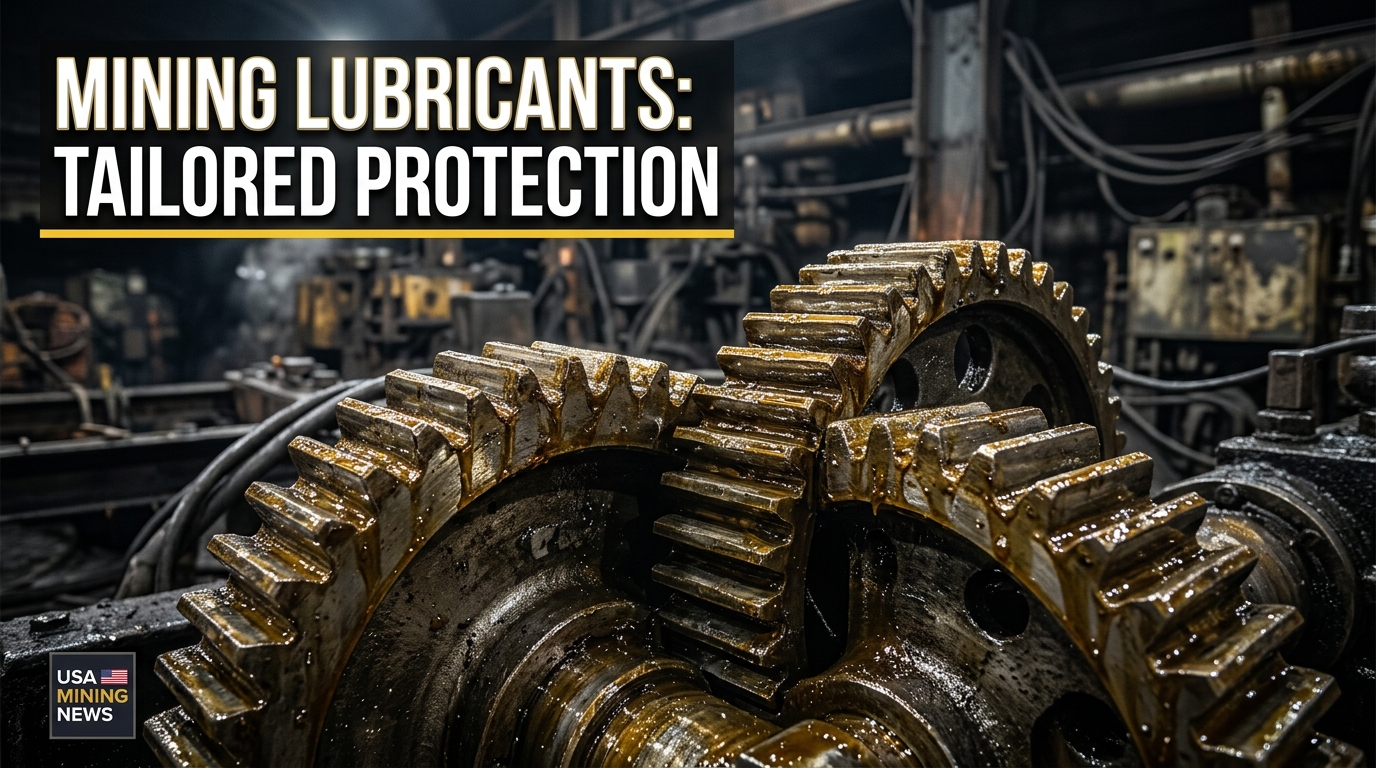
August 7, 2026 – The global mining industry stands at a critical juncture, driven by relentless demands for increased productivity, operational efficiency, and sustained performance in some of the planet’s most unforgiving environments. Modern mining operations are characterized by equipment operating under extreme conditions, a trend exacerbated by factors such as increasingly compact designs, higher operating temperatures, and the continuous, non-stop nature of autonomous machinery. These evolving realities are placing unprecedented stress on heavy-duty lubricants, necessitating a shift from conventional product selection based solely on original equipment manufacturer (OEM) specifications to a more tailored, high-performance approach.
For decades, the standard practice for mining operators selecting lubricants involved ensuring compliance with specific OEM specifications. This methodology provided a reliable baseline, offering a degree of confidence that machinery would be adequately protected under various operational stresses. However, as mining equipment becomes more sophisticated, powerful, and operates in more confined and hotter environments, the traditional capabilities of standard TO-4 oils are increasingly being pushed to their limits. The shift towards smaller fluid reservoirs, coupled with the heat generated by more powerful engines and drivelines, elevates lubricant temperatures, accelerating degradation and compromising component protection. Furthermore, the burgeoning adoption of autonomous mining equipment introduces a new layer of challenge: these machines operate continuously, without human intervention for shift changes or routine checks, demanding lubricants that can sustain performance for longer intervals and under constant load without faltering.
The Intensifying Demands on Mining Equipment
The operational landscape of modern mining is inherently harsh, subjecting equipment to a brutal combination of factors that collectively create a high-stress environment for critical components and their protective fluids. Three primary trends are particularly impactful:
- Smaller Reservoirs and Higher Operating Temperatures: Contemporary mining equipment designs frequently prioritize compactness and power density. This often translates into smaller lubricant reservoirs, which contain less fluid to dissipate heat effectively. Concurrently, engines and transmissions are engineered to deliver greater power output, leading to higher internal operating temperatures. This combination significantly increases the thermal load on lubricants, accelerating oxidation, thickening, and the breakdown of crucial additives. High temperatures compromise film thickness, leading to increased metal-on-metal contact and premature wear.
- Punishing Loads and Extreme Environments: From excavators to haul trucks, mining machinery routinely carries immense loads, operating in conditions ranging from the blistering heat of desert mines to the deep freeze of Arctic operations. These extreme temperatures, coupled with heavy dynamic and shock loads, place immense mechanical stress on transmission and drivetrain components. Lubricants must maintain stable viscosity and robust film strength across a vast temperature spectrum to protect gears, bearings, and clutches from wear and fatigue.
- Autonomous Machines and Continuous Operation: The increasing deployment of autonomous mining vehicles represents a paradigm shift. Unlike human-operated equipment that typically undergoes regular downtime for shift changes, refueling, and routine inspections, autonomous machines are designed for continuous, round-the-clock operation. This relentless duty cycle dramatically extends the periods between maintenance stops, requiring lubricants with significantly extended drain intervals and exceptional long-term stability. The absence of frequent human oversight also means that lubricants must perform flawlessly for prolonged durations, as any unexpected failure can result in costly downtime and disruption to the entire operational chain.
Petro-Canada Lubricants Addresses the Challenge with PRODURO™ TO-4+ UHP
Recognizing these escalating demands, leading lubricant manufacturers are investing heavily in research and development to engineer solutions specifically tailored for the toughest mining environments. Petro-Canada Lubricants has emerged as a key innovator in this space, developing its PRODURO™ TO-4+ UHP (Ultra High Performance) transmission/drive train oil.
The development of PRODURO™ TO-4+ UHP signifies a significant departure from merely meeting existing OEM specifications. Instead, it represents an engineering effort focused on exceeding these benchmarks through advanced additive chemistry and base oil technology. The "UHP" designation underscores its enhanced capabilities, positioning it as the most heavily boosted transmission/drive train oil Petro-Canada Lubricants has ever produced. This product is designed to offer superior protection against wear, heat, and degradation, thereby extending component life and optimizing operational efficiency under the most severe conditions.
The "Engineered to Outlast" Field Trial: A Case Study in Performance
To validate the performance claims of PRODURO™ TO-4+ UHP under real-world mining conditions, Petro-Canada Lubricants initiated a comprehensive two-year, 25-unit in-service trial with one of Canada's largest mining fleets. This extensive field trial was critical, as it provided an opportunity to test the lubricant's efficacy against the very challenges it was designed to overcome, moving beyond laboratory simulations to practical operational data.
The Canadian mining fleet in question had been experiencing the limitations of conventional TO-4 oils. Their existing lubricants were being pushed past their limits by the demanding operational profile of their heavy equipment, leading to concerns about reliability and increased maintenance requirements. The fleet’s maintenance and reliability teams were actively seeking a solution that could deliver greater performance and protection from every component within their transmission and driveline systems.
The results of the two-year, 25-unit trial were compelling and demonstrated tangible benefits for the mining operation:
- Extended Equipment Life: The trial revealed an impressive extension in equipment life of up to 6%. This figure represents a substantial gain in capital expenditure utilization, as it defers the need for equipment replacement or major overhauls, directly impacting a mining company’s balance sheet.
- Superior Film Thickness: PRODURO™ TO-4+ UHP exhibited approximately 10% better film thickness compared to a premium multigrade SAE 30 oil that met the stringent CAT TO-4 specification. Superior film thickness is critical for preventing metal-to-metal contact, reducing friction, and minimizing wear in heavily loaded gears and bearings, even under high temperatures and extreme pressures.
- All-Weather Performance: One of the most significant achievements was the lubricant’s proven ability to perform as a single, all-weather fluid. It demonstrated robust performance from frigid -35°C cold starts, ensuring reliable equipment initiation in harsh Canadian winters, through sustained operation in demanding summer heat.
- Operational Cost Savings: The comprehensive performance benefits translated directly into significant operational cost reductions. By providing stable, all-weather performance, the fleet was able to eliminate seasonal lubricant change-outs – a common and costly practice in regions with extreme temperature variations. Furthermore, the enhanced durability of the lubricant allowed for extended drain intervals, reducing both fluid consumption and labor associated with frequent oil changes. These factors collectively cut costs across every unit involved in the trial.
Implications for the Mining Industry
The success of advanced lubricants like PRODURO™ TO-4+ UHP carries profound implications for the global mining industry, particularly as it navigates complex challenges related to productivity, sustainability, and technological adoption:
- Enhanced Operational Efficiency and Uptime: By extending equipment life and reducing unscheduled maintenance, these advanced lubricants contribute directly to higher asset utilization rates and increased operational uptime. In an industry where an hour of downtime can cost hundreds of thousands of dollars, maximizing continuous operation is paramount.
- Reduced Total Cost of Ownership (TCO): While advanced lubricants may have a higher initial unit cost, the long-term savings from extended equipment life, reduced maintenance, eliminated seasonal change-outs, and extended drain intervals significantly lower the overall TCO for mining fleets.
- Support for Automation and Autonomy: As mining moves further towards autonomous operations, the reliability of every component, including lubricants, becomes even more critical. Lubricants that can perform flawlessly for extended periods without human intervention are essential enablers of this technological shift.
- Sustainability Benefits: Extended drain intervals mean less lubricant consumption and reduced waste oil generation, aligning with industry efforts to improve environmental stewardship and achieve sustainability targets. Eliminating seasonal change-outs also reduces the logistical footprint associated with lubricant management.
- Safety Improvements: Less frequent maintenance interventions reduce personnel exposure to hazardous environments and heavy machinery, contributing to an overall safer operational environment.
The Future of Lubrication in Mining
The innovations exemplified by Petro-Canada Lubricants’ PRODURO™ TO-4+ UHP are indicative of a broader trend within the industrial lubrication sector: a shift towards highly engineered, application-specific fluid solutions. The future of lubrication in mining will likely involve even greater integration of data analytics, predictive maintenance strategies, and potentially 'smart' lubricants that can provide real-time performance feedback.
As mining companies continue to push the boundaries of operational intensity, delve into deeper and more remote deposits, and embrace automation on an unprecedented scale, the role of lubricants will only grow in strategic importance. No longer a mere commodity, high-performance lubricants are becoming a critical engineering component, indispensable for safeguarding multi-million dollar assets and ensuring the continuous, profitable operation of the world's most demanding mining enterprises.
The case study of PRODURO™ TO-4+ UHP underscores a vital lesson for the mining industry: investing in tailor-made protection strategies for equipment, particularly through advanced lubrication, is not just a maintenance decision but a strategic imperative for long-term success and competitiveness in a challenging global market.