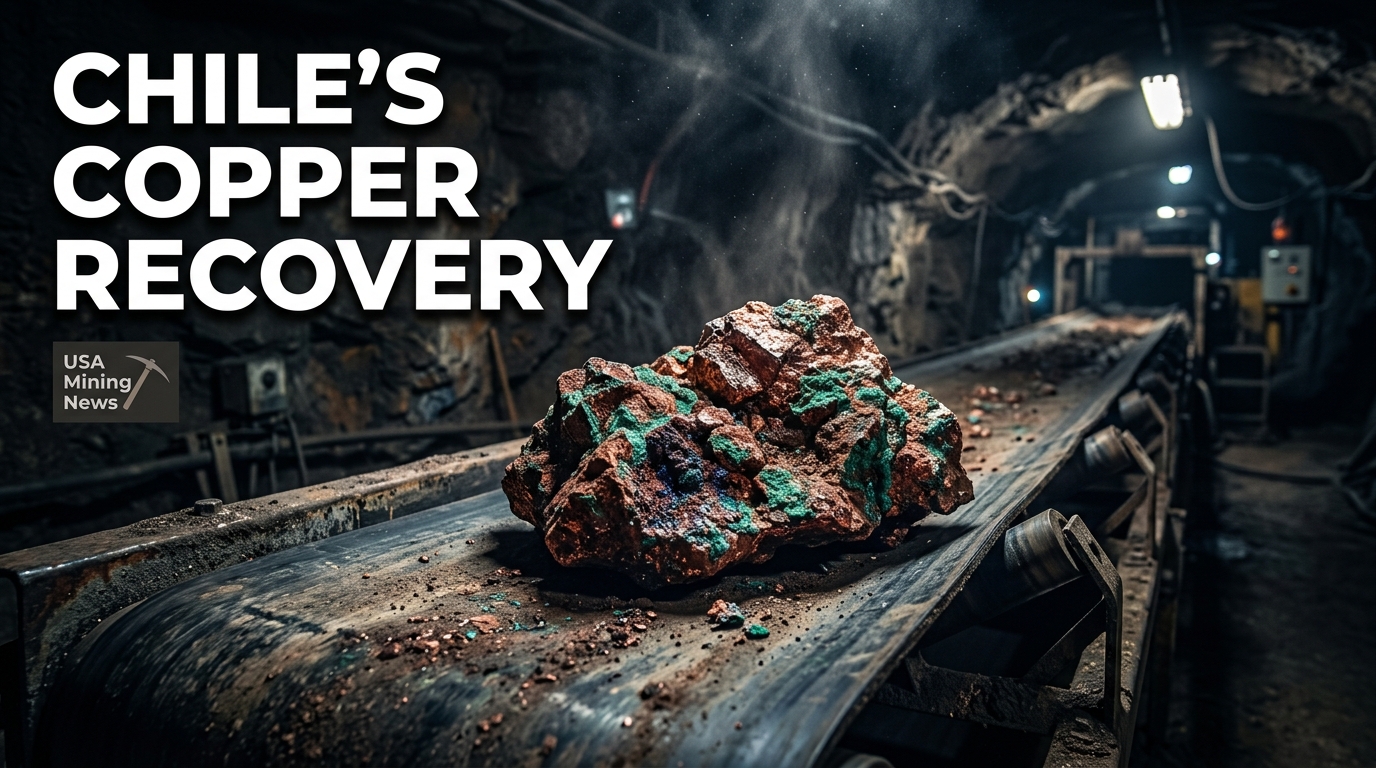
Chile, the undisputed leader in global copper production, is poised for a significant rebound, with its output projected to recover by 1.0% in 2026. This anticipated short-term recovery is part of a broader, more encouraging outlook for the South American nation, as its copper production is forecast to grow at a robust compound annual growth rate (CAGR) of 4.1% over the extensive period from 2026 to 2035. These projections, released by industry intelligence firm GlobalData on July 24, 2026, offer a vital perspective for mining professionals, investors, and policymakers navigating the complexities of the global copper market.
The report signals that after facing various operational challenges in recent years—ranging from declining ore grades and water scarcity to labor disputes and regulatory uncertainties—Chilean copper mining is set on a path toward renewed stability and expansion. Given that Chile accounts for approximately a quarter of the world's mined copper, any shift in its production trajectory carries profound implications for global supply dynamics, commodity prices, and the broader industrial landscape, particularly as the world transitions towards a more electrified and decarbonized future.
The Immediate Outlook: A 1.0% Recovery in 2026
The immediate 1.0% recovery projected for Chile's copper output in 2026 marks a crucial turning point. While seemingly modest, this figure represents a stabilization and initial reversal of trends that may have seen stagnation or even decline in prior periods. This recovery is likely underpinned by several factors. Operationally, it could signify the resolution of temporary disruptions, the successful ramp-up of specific mine phases, or marginal improvements in processing efficiencies across the nation’s extensive portfolio of copper assets.
Such an uptick in output is critical for maintaining market confidence. For major players like state-owned Codelco, BHP-operated Escondida, Lundin Mining’s Candelaria, and Antofagasta PLC’s operations, even a small percentage recovery translates into substantial volumes, given the enormous scale of their production. It also suggests that capital investments made in previous years, designed to counter geological challenges or improve infrastructure, may begin to yield discernible results. The industry will be watching closely to see which specific projects or operational enhancements contribute most significantly to this initial growth phase.
Long-Term Trajectory: A Decade of Growth (2026-2035)
Beyond the immediate rebound, GlobalData’s forecast of a 4.1% CAGR for Chilean copper production from 2026 to 2035 sketches a far more ambitious and consequential future. This decade-long growth trajectory would solidify Chile's position as the cornerstone of global copper supply for the foreseeable future, making it an indispensable partner in the global energy transition. Achieving such sustained growth dictates significant and consistent investment in both new project development and the modernization of existing infrastructure.
A 4.1% CAGR means that, over ten years, Chile's total annual copper output would increase considerably, potentially offsetting anticipated declines from aging mines and lower ore grades. This long-term expansion is vital as global demand for copper is projected to surge, driven by the proliferation of electric vehicles (EVs), renewable energy installations, and the expansion of smart grid technologies. Each EV requires substantially more copper than a conventional internal combustion engine vehicle, and offshore wind farms or concentrated solar power plants are similarly copper-intensive. Chile's ability to deliver increasing volumes of copper is therefore not just an economic imperative for the nation but a fundamental requirement for global industrial evolution.
Chile's Enduring Role in Global Copper Supply
Chile’s geological endowment in copper is unparalleled. The country's vast porphyry copper deposits, concentrated primarily in the northern Atacama Desert, have made it the world’s top producer for decades. However, this leadership position has not been without its trials. Over the past several years, Chilean miners have contended with persistent challenges:
- Declining Ore Grades: Many prolific mines are aging, leading to lower copper concentrations in the extracted ore, which necessitates processing larger volumes of material to maintain output.
- Water Scarcity: Operations in arid regions require sustainable water solutions, leading to increased reliance on costly desalination plants.
- Labor Relations: Frequent collective bargaining negotiations and occasional strikes have historically impacted production schedules and costs.
- Regulatory Shifts: Discussions around new mining royalties and stricter environmental regulations have introduced an element of uncertainty for long-term capital planning.
Despite these headwinds, the GlobalData forecast suggests that the industry is adapting and finding pathways to overcome these obstacles. The projected growth underscores the resilience and strategic importance of Chile’s mining sector.
Key Drivers of Future Production Growth
The anticipated 4.1% CAGR from 2026 to 2035 will undoubtedly be fueled by a combination of strategic investments and technological advancements:
- New Projects and Expansions: Significant capital allocation toward large-scale projects and expansions of existing mines will be critical. Examples include Codelco's extensive structural projects aimed at extending the lifespans of its aging giants like Chuquicamata, El Teniente, and Salvador, alongside major investments from private companies like BHP in Escondida and Teck in Quebrada Blanca Phase 2. These projects involve modernization, new underground sections, and updated processing facilities designed to handle lower-grade ores more efficiently.
- Technological Adoption: Innovations in mining technology will play a crucial role. This includes enhanced automation for drilling and hauling, advanced data analytics for process optimization, and improved metallurgical techniques to increase copper recovery rates from more complex ore bodies. The deployment of autonomous fleets and remote operating centers can also boost efficiency and safety.
- Sustainable Water Management: Given the severe aridity of the Atacama region, continued investment in large-scale desalination plants and efficient recycled water systems will be paramount. These projects are capital-intensive but are essential for securing the long-term water supply needed for mining operations.
- Energy Transition: Miners are increasingly looking to green energy solutions, such as solar and wind power, to reduce operational costs and their carbon footprint. Secure access to affordable, clean energy is becoming a competitive advantage and a license to operate.
Market Implications for Global Copper
For global commodity markets, Chile’s projected recovery and sustained growth trajectory are profoundly significant. As the world accelerates efforts to decarbonize and electrify, the demand for copper, often dubbed "Dr. Copper" for its insight into global economic health, is expected to intensify dramatically. A reliable and growing supply from the largest producer helps temper potential price volatility that could otherwise impede widespread adoption of green technologies.
Investor confidence in the Chilean mining sector is likely to be bolstered by these projections. Capital flows into exploration and development projects may increase, further solidifying the country's long-term production capabilities. Moreover, this sustained supply growth acts as a critical enabler for various downstream industries – from electronics manufacturing to renewable energy infrastructure development – by ensuring the availability of a foundational raw material.
Challenges and Headwinds on the Path to Growth
Despite the positive outlook, the path to achieving a 4.1% CAGR will not be without its challenges. Chilean miners will continue to grapple with:
- Geological Complexities: Deeper mining, harder rock, and more complex mineralogy demand advanced engineering and increased operational expenditure.
- Regulatory Stability: The ongoing discussions and potential implementation of new royalty regimes and stricter environmental regulations will require careful navigation to maintain an attractive investment climate.
- Social License to Operate: Mining companies must continue to strengthen relationships with local communities, addressing concerns around water usage, environmental impact, and equitable benefits.
- Global Economic Volatility: While long-term demand drivers are strong, short-term global economic slowdowns or geopolitical events could still impact copper prices and demand.
Conclusion: Navigating the Future of Copper
The GlobalData forecast, published on July 24, 2026, paints an optimistic picture for Chile's copper sector, projecting an immediate 1.0% recovery in 2026 and a robust 4.1% CAGR through 2035. This outlook is a testament to the enduring geological potential of Chile, coupled with the industry's commitment to innovation and adaptation in the face of complex operational and regulatory environments.
As global demand for copper continues its upward trajectory fueled by the clean energy transition, Chile's ability to deliver consistent and growing supply will be more critical than ever. For mining investors and industry stakeholders seeking long-term stability and growth opportunities, these projections underscore Chile's indispensable role and highlight the ongoing efforts to ensure its future as the cornerstone of the world's copper supply. The success of this projected recovery and growth will not only secure Chile's economic future but will also play a pivotal part in enabling the world's ambitious climate goals.