In an era defined by rapid technological advancement and an accelerating energy transition, the secure and sustainable supply of critical minerals like cobalt has become a paramount concern for industries globally. The challenges associated with primary cobalt extraction, encompassing geopolitical complexities, ethical sourcing considerations, and market volatility, have intensified the search for diversified and resilient supply streams. Against this backdrop, battery recycling is rapidly emerging as not just an alternative, but a strategic imperative, a perspective prominently highlighted by industry analyst Russell Woolley on August 11, 2026.
Woolley's analysis posits that as the inherent risks within the primary cobalt supply chain continue to grow, the ability to efficiently and economically recover cobalt from spent battery cells is transforming into a strategic asset. This transformation, he argues, elevates the importance of intellectual property, specifically patents, in protecting and commercializing the innovative technologies that underpin advanced battery recycling processes. For mining industry professionals and investors, understanding this evolving dynamic is critical, as it redefines resource security and opens new frontiers for investment and technological development.
The Escalating Risks in Primary Cobalt Supply
Cobalt, a silvery-blue metallic element, is indispensable in the production of lithium-ion batteries, which power everything from electric vehicles (EVs) and portable electronics to grid-scale energy storage systems. The global demand for cobalt has soared in recent years, propelled by ambitious electrification targets and a burgeoning consumer electronics market. However, the geographical concentration of primary cobalt mining operations presents significant supply chain vulnerabilities. A substantial majority of the world's cobalt originates from the Democratic Republic of Congo (DRC), where mining operations can be susceptible to political instability, regulatory shifts, and human rights concerns, particularly regarding artisanal mining practices.
This concentrated supply chain creates a bottleneck that exposes battery manufacturers and, by extension, the automotive and technology sectors, to considerable risk. Any disruption in the DRC, whether geopolitical or logistical, can trigger significant price volatility and threaten the continuity of supply, directly impacting production schedules and profitability across multiple industries. Furthermore, the environmental footprint of traditional mining, coupled with the energy-intensive nature of refining, adds another layer of complexity to the sustainability narrative surrounding cobalt.
Battery Recycling: A Strategic Imperative for Resource Security
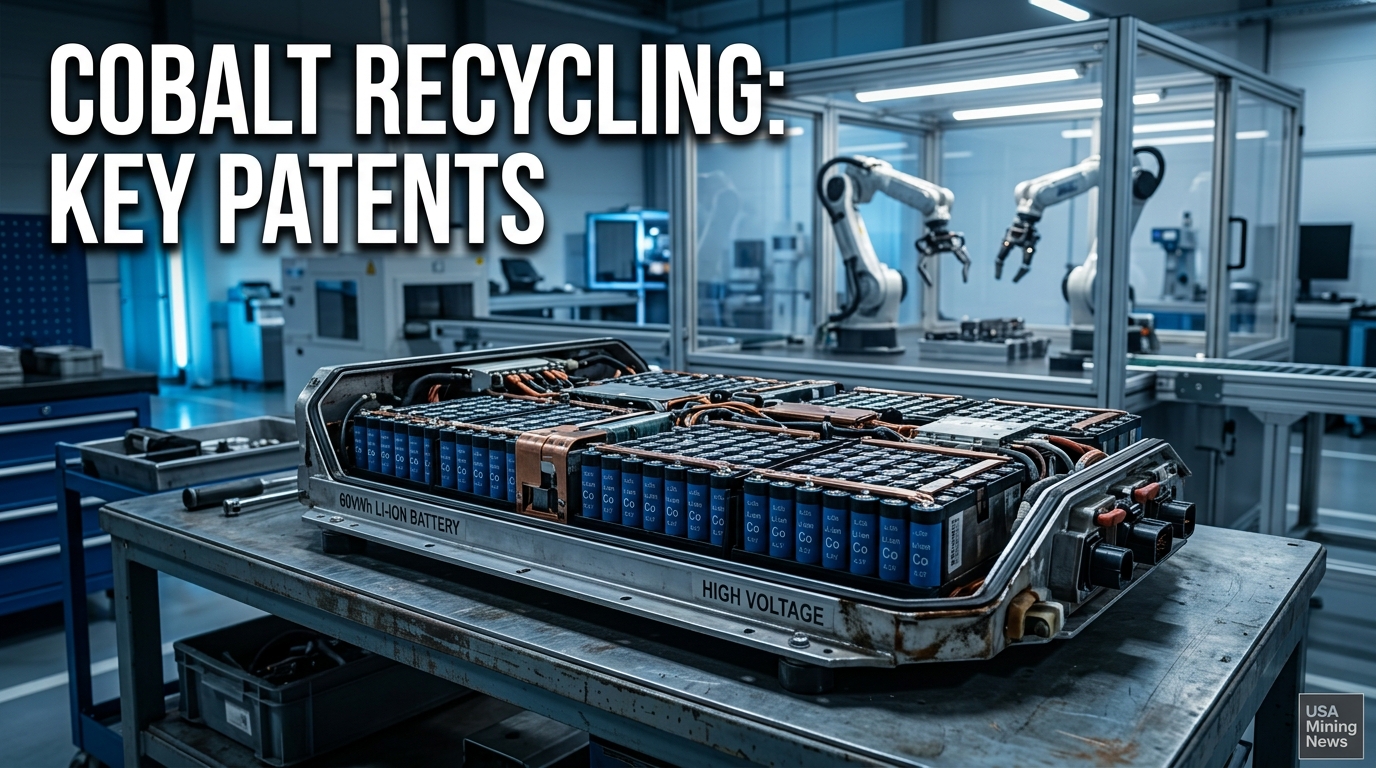
The growing recognition of these supply risks has catalyzed a significant shift towards developing robust and economically viable battery recycling infrastructure. As Russell Woolley articulated in his August 11, 2026 assessment, recycling is transitioning from a nascent, environmentally conscious endeavor to a cornerstone of strategic material supply. Spent battery cells, once considered waste, are increasingly viewed as a valuable secondary ore body, holding not only cobalt but also other critical battery metals such as lithium, nickel, and manganese.
The potential of recycling to strengthen cobalt supply chains is multifaceted:
- Diversification of Supply: It reduces reliance on geographically concentrated primary mining sources, enhancing geopolitical resilience.
- Environmental Benefits: Recycling significantly lowers the environmental impact compared to virgin material extraction, requiring less energy, water, and generating fewer emissions.
- Economic Value Creation: It transforms waste into valuable raw materials, creating new industries and jobs in collection, processing, and refining.
- Resource Security: It establishes a more circular economy for critical battery metals, ensuring a stable, long-term supply irrespective of geopolitical fluctuations or depletion of finite primary resources.
The transition to viewing recycling as a strategic source means that the efficiency, cost-effectiveness, and recovery rates of recycling processes are now paramount. This is where innovation and intellectual property play an increasingly decisive role.
The Pivotal Role of Intellectual Property: Patents in Battery Recycling
As the competitive landscape for battery materials intensifies, the protection of innovative recycling technologies through patents has become critical, as highlighted by Woolley's analysis. Patents grant their holders exclusive rights to an invention for a specified period, preventing others from making, using, or selling the invention without permission. In the context of battery recycling, this protection is invaluable for several reasons:
- Encouraging Research and Development (R&D): The significant capital and time investment required for developing sophisticated hydrometallurgical or pyrometallurgical recycling processes necessitates assurance that these innovations will be protected from immediate replication. Patents provide this security, incentivizing companies to invest further in R&D to enhance efficiency, reduce costs, and improve material recovery rates.
- Competitive Advantage: Companies holding key patents in advanced recycling technologies can gain a significant competitive edge. This allows them to offer superior recovery methods, lower processing costs, or produce higher-purity recycled materials, attracting partnerships and market share in a rapidly expanding sector.
- Facilitating Investment and Scaling: Intellectual property portfolios, particularly strong patent positions, are attractive to investors. They signal a company's defensible market position and future revenue potential, thereby facilitating the necessary capital investment to scale up recycling operations from pilot projects to industrial-scale facilities.
- Driving Standardization and Licensing: Patented technologies can become industry benchmarks, leading to licensing opportunities that further disseminate the innovation while generating revenue for the patent holder. This can accelerate the adoption of efficient recycling practices across the industry.
The strategic importance of patents extends beyond mere legal protection; it forms the bedrock for a sustainable and economically viable recycling ecosystem that can truly serve as a strategic source of critical battery materials.
Technological Innovation and Economic Viability
The journey from spent battery cell to high-purity recycled cobalt involves complex technological processes. Current recycling methods generally fall into two categories:
- Pyrometallurgy: This involves high-temperature smelting, where batteries are melted down to recover various metals. While effective for some elements, it can be energy-intensive and may not recover all valuable materials, such as lithium, efficiently.
- Hydrometallurgy: This method uses aqueous solutions to leach and extract specific metals from battery waste. It generally offers higher recovery rates for a broader range of materials, including lithium, and can yield purer products, but often requires more intricate chemical processes.
Innovations in both areas, particularly in hydrometallurgical techniques that improve selectivity, reduce chemical consumption, and lower energy footprints, are crucial. Patents covering novel pre-treatment processes, efficient leaching agents, advanced separation techniques, and closed-loop water and chemical recycling systems are highly valuable. These patented solutions not only enhance the environmental profile of recycling but also improve its economic viability, making recycled cobalt competitive with, or even superior to, primary sources in terms of cost and purity.
Implications for the Mining Industry and Investors
The rise of battery recycling as a strategic source for cobalt has profound implications for the traditional mining industry and its investors. While it does not negate the need for primary mining, it fundamentally alters the long-term supply-demand dynamics and market pricing mechanisms for critical battery metals. Primary miners may face increased competition from secondary sources, potentially influencing investment decisions in new exploration and development projects.
However, this shift also presents new opportunities. Mining companies with foresight are exploring vertical integration into recycling or forming partnerships with recycling technology firms. Investment in companies developing or utilizing patented, advanced recycling technologies could represent a significant growth area. Furthermore, the mining industry's expertise in large-scale material handling, processing, and supply chain management can be leveraged in establishing and operating industrial-scale recycling facilities. Investors should be keen to identify companies that are strategically positioned to benefit from this growing circular economy, whether through direct involvement in recycling or through innovative primary extraction methods that complement secondary supply.
Future Outlook: Towards a Circular Economy for Battery Metals
Looking ahead, the trajectory outlined by Russell Woolley suggests a future where recycled materials play an increasingly central role in meeting global demand for cobalt and other critical battery metals. Governments worldwide are already implementing policies, such as extended producer responsibility (EPR) schemes and regulations encouraging battery collection and recycling, to foster a more circular economy.
The long-term vision involves a resilient and sustainable supply chain for battery materials, where waste is minimized, resources are optimized, and the environmental footprint is significantly reduced. Achieving this vision will depend heavily on continued investment in R&D, robust intellectual property protection, and collaborative efforts across the entire value chain—from primary miners and battery manufacturers to recyclers and policy makers. The strategic importance of battery recycling, underpinned by innovative patented technologies, is not merely a trend but a fundamental shift towards a more secure and sustainable future for the global mining and energy sectors.