Coppercore Forges a New Path for Copper Production in Colombia with Strategic Facility Lease
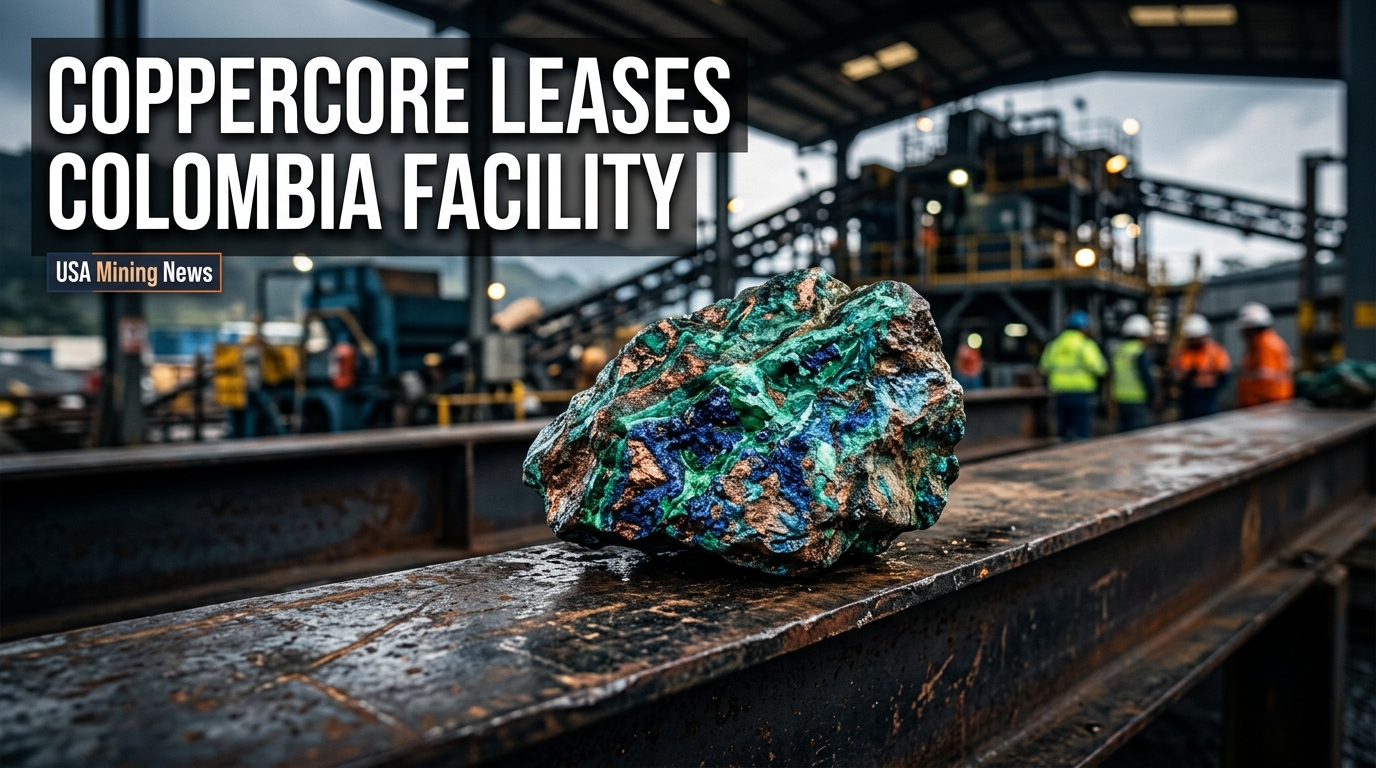
In a significant development for the South American mining landscape and the global copper supply chain, Coppercore Inc. announced on September 18, 2026, a definitive ten-year lease agreement for a copper concentration facility. Located in the Santa Marta industrial region within Colombia’s Magdalena department, this agreement includes a crucial option to purchase, underscoring Coppercore's long-term commitment to the region. This move is particularly noteworthy as it establishes a fixed operating base for the production of acid-free copper concentrate, targeting industrial buyers who prioritize scalable, lower-impact sourcing amidst increasing demand for critical minerals.
The announcement by Coppercore comes at a time when global supply chains are seeking diversified and responsibly sourced materials, with copper standing as a cornerstone for the transition to renewable energy and electrification. Colombia, traditionally known for its gold and coal production, is increasingly becoming a focal point for copper exploration and development, driven by its rich geological potential and evolving regulatory framework.
A Strategic Foothold in Colombia's Magdalena Department
Coppercore’s decision to establish operations in the Santa Marta industrial region is strategically sound, offering inherent logistical advantages given its proximity to established infrastructure and potential export routes. The ten-year lease provides the company with significant operational stability and flexibility, further enhanced by the built-in option to purchase the assets. This long-term arrangement signals a robust commitment to developing a sustainable copper production hub, rather than a short-term venture.
For the mining industry, a secure land tenure and operational base are fundamental to project success and investor confidence. The lease agreement, with its purchase option, de-risks Coppercore's operational future in Colombia, allowing for strategic planning and investment in facility upgrades and expansion without the uncertainty of short-term lease renewals. This type of agreement is often preferred by companies looking to establish a lasting presence in a new jurisdiction, ensuring that capital expenditure into the site can be justified over a prolonged period.
Phased Production Ramp-Up and Ambitious Output Targets
Coppercore has outlined an ambitious, staged approach to production, beginning with an initial Phase 1-A that targets 1,000 tonnes per month (tpm) of copper concentrate. This concentrate is expected to achieve robust grades between 22% and 25% copper, a quality standard highly sought after by smelters globally. In addition to copper, the concentrate will also include valuable silver credits, averaging around 300 grams per tonne (g/t) of silver, further enhancing the project's economic viability.
The facility is designed for significant staged expansion, reflecting Coppercore's long-term vision and confidence in its ore supply strategy. Following Phase 1-A, production capacity is slated to increase to 2,000 tpm within 12 to 18 months. The ultimate goal is an expansion to between 8,000 tpm and 10,000 tpm, a scale contingent upon consistent ore supply and efficient processing capabilities.
These production targets translate into substantial contained copper volumes over the lease term. At a steady-state rate of 2,000 tpm of concentrate, Coppercore estimates production could reach 50,000 to 60,000 tonnes of contained copper over the ten-year lease period. Should the facility achieve its maximum planned scale of 8,000-10,000 tpm, the total output could rise dramatically to an impressive 300,000 tonnes of contained copper. It is important to note, as Coppercore clarifies, that these estimates assume full-capacity operation and do not account for ramp-up periods or potential fluctuations in ore supply, factors common in initial mining operations.
Pioneering Acid-Free Processing for Oxide Ores
A distinctive feature of Coppercore's operational strategy is its commitment to an environmentally conscious processing method. The facility will employ an alkaline flotation process, specifically designed for oxide ores such as malachite and azurite. This technique represents a notable departure from the traditional sulphuric acid leaching methods often used for similar ore types.
The advantages of Coppercore's alkaline flotation process are multi-faceted and align with global environmental, social, and governance (ESG) standards increasingly demanded by investors and downstream consumers. According to Coppercore, this technique entirely eliminates the need for sulphuric acid transport, storage, and neutralization, thereby significantly reducing inherent safety and environmental risks associated with these processes. Crucially, it also prevents the creation of acidic effluent, a common environmental challenge in conventional leaching operations. By adopting an acid-free approach, Coppercore aims to set a new benchmark for lower-impact copper sourcing, appealing to industrial buyers focused on responsible supply chains.
De-risking Operations: A Decade of Preparation
Coppercore’s founder and CEO, Antonio Treminio, articulated the company’s strategic foresight, stating, "The geology was never the problem in Colombia. The operating environment was, but that is finally changing." This statement encapsulates a long-held view within the mining industry regarding Colombia's vast, yet historically challenging, mineral potential. Treminio emphasized that Coppercore undertook extensive preparatory work before the current window of opportunity opened:
- The Plant: Securing and establishing the processing facility.
- The Team: Building a skilled and experienced operational team.
- The Process: Developing and refining the acid-free flotation technique.
- The Buyers: Establishing relationships with potential international concentrate buyers.
Treminio further highlighted the immediate impact of the lease agreement, asserting, "This lease converts ten years of optionality into ten years of production capacity, with an option to purchase the assets and a path to extend beyond the initial term. This is a cash-generating asset from day one, not a multi-year development story." This assertion is particularly attractive to investors, as it implies a rapid transition from investment to revenue generation, sidestepping the often lengthy and capital-intensive development phases typical of large-scale mining projects. It positions Coppercore as a nimble producer capable of quick market entry.
Sustainable Sourcing and Energy Transition
Beyond its innovative processing, Coppercore is embedding sustainability throughout its operational model. The company plans to source its ore from legally authorized small and mid-sized producers through a centralized purchasing system. This approach not only ensures a consistent and legitimate ore supply but also supports local economies and promotes formalization within Colombia's artisanal and small-scale mining (ASM) sector, an area that has often presented social and environmental complexities in other jurisdictions. The first supply agreement has already been signed, with further negotiations actively underway to solidify the raw material pipeline.
On the energy front, Coppercore is looking ahead to a future powered by renewables. Plans include eventually operating the plant with solar and wind power, coupled with an electric truck fleet for internal transport. These initiatives underscore a commitment to reducing the project's carbon footprint and operational costs, aligning with broader industry trends towards decarbonization and electrifying mining operations. This holistic approach to sustainability, encompassing sourcing, processing, and energy, positions Coppercore as a leader in responsible mineral production.
Colombia's Evolving Regulatory Landscape and Critical Minerals Framework
Coppercore's timely entry into Colombia is significantly bolstered by recent shifts in the country's regulatory environment. The company has explicitly welcomed these changes, citing them as supportive of responsible mining practices and conducive to stable investment conditions. For years, Colombia’s mining sector faced challenges related to security, informal mining, and complex permitting processes. However, ongoing reforms and a clearer government stance on formal mining are creating a more predictable and attractive investment climate.
Furthermore, the establishment of a critical minerals framework with the United States represents a pivotal development. This framework aligns Colombia's mineral sector with strategic priorities of a major global economy, particularly as the US seeks to secure diverse and reliable sources for minerals essential to its clean energy transition and national security. Copper, being a fundamental component in electric vehicles, renewable energy infrastructure, and advanced technologies, is at the forefront of this critical minerals agenda. The bilateral framework provides a layer of geopolitical stability and market access that can be highly beneficial for companies like Coppercore operating in Colombia.
These regulatory and international policy shifts are crucial for attracting foreign direct investment into Colombia's mining sector. They provide the confidence that investors and operators need to commit significant capital and expertise, knowing that the legal and political environment supports their long-term objectives. For Colombia, this means unlocking its vast mineral wealth in a structured and responsible manner, contributing to economic development and job creation.
Market Implications and Future Outlook
Coppercore’s initiative holds several important implications for the global mining industry. Firstly, it adds a new source of copper concentrate to a market facing persistent supply deficits, driven by surging demand from electrification and green technologies. The emphasis on "lower-impact sourcing" also addresses a growing preference among downstream manufacturers for materials with verifiable environmental credentials, potentially carving out a premium market niche for Coppercore's product.
Secondly, this project could serve as a blueprint for other companies considering investment in Colombia's mineral sector, particularly for mid-tier producers and those specializing in innovative processing technologies. By demonstrating a viable and responsible operating model, Coppercore may help to de-risk perceptions of the country's mining landscape, encouraging further exploration and development.
The company’s ability to swiftly transition from optionality to production capacity, coupled with its ambitious expansion plans and commitment to sustainable practices, positions Coppercore as a significant new player. The negotiations with international concentrate buyers are critical next steps that will solidify its market position and ensure consistent off-take for its expanding production. As the global economy continues its push towards decarbonization, the demand for copper will only intensify, making Coppercore's strategic entry into Colombia a timely and potentially highly rewarding venture for both the company and the broader industry.