WASHINGTON – In a significant boost to the burgeoning American nuclear energy sector, the U.S. Department of Energy (DOE) announced on July 6, 2026, the successful completion of a zero-power fueled criticality demonstration by Aalo Atomics’ advanced reactor design, Aalo-X. This landmark event, which occurred early Saturday at the Idaho National Laboratory (INL), represents the fourth DOE-authorized advanced reactor to achieve criticality, thereby exceeding the ambitious July 4th goal set by President Trump in his May 2025 executive order.
The achievement underscores a period of accelerated innovation and construction in the domestic nuclear power industry, signaling a potential shift towards greater energy independence and decarbonization. For the mining industry, this development heralds a future of escalating demand for critical raw materials, most notably uranium, but also a portfolio of other essential minerals required for advanced reactor technologies and their associated infrastructure.
A New Milestone for Advanced Nuclear Technology
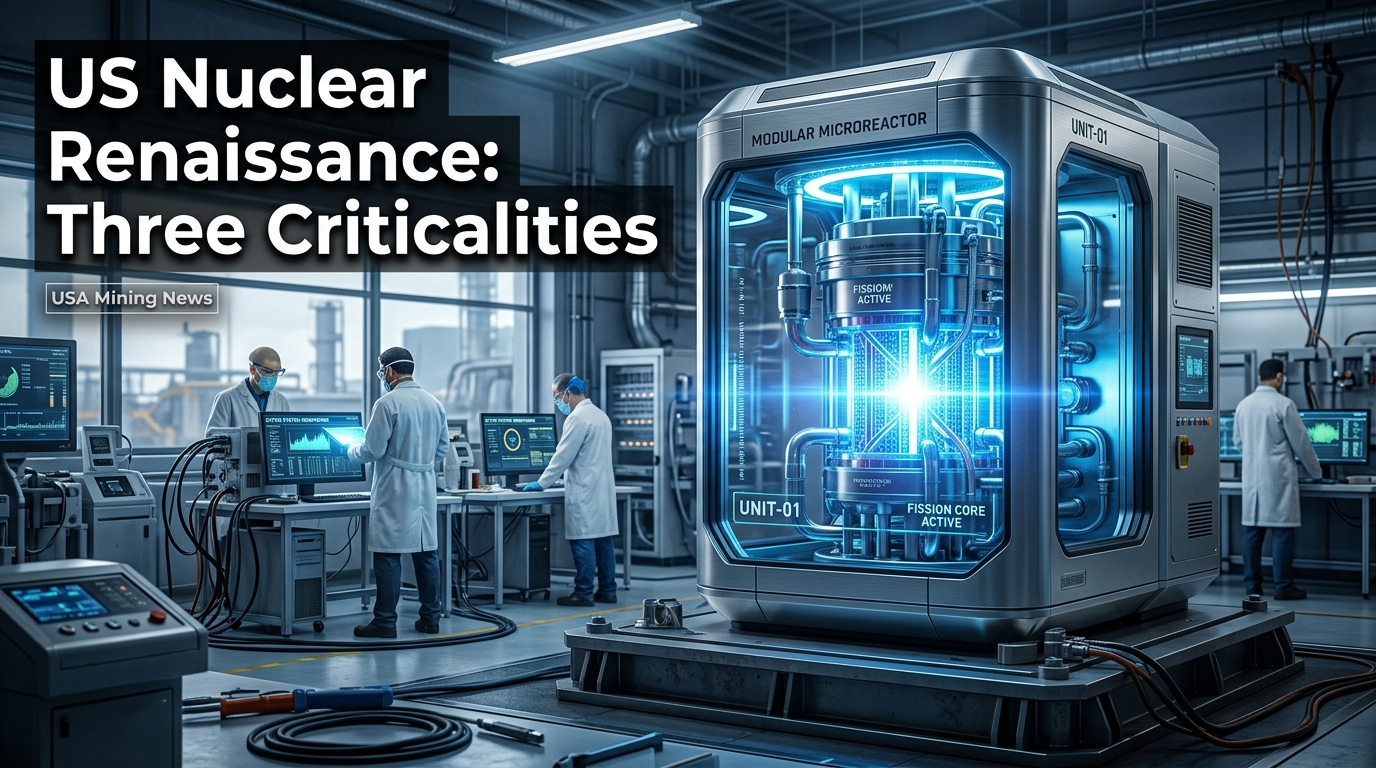
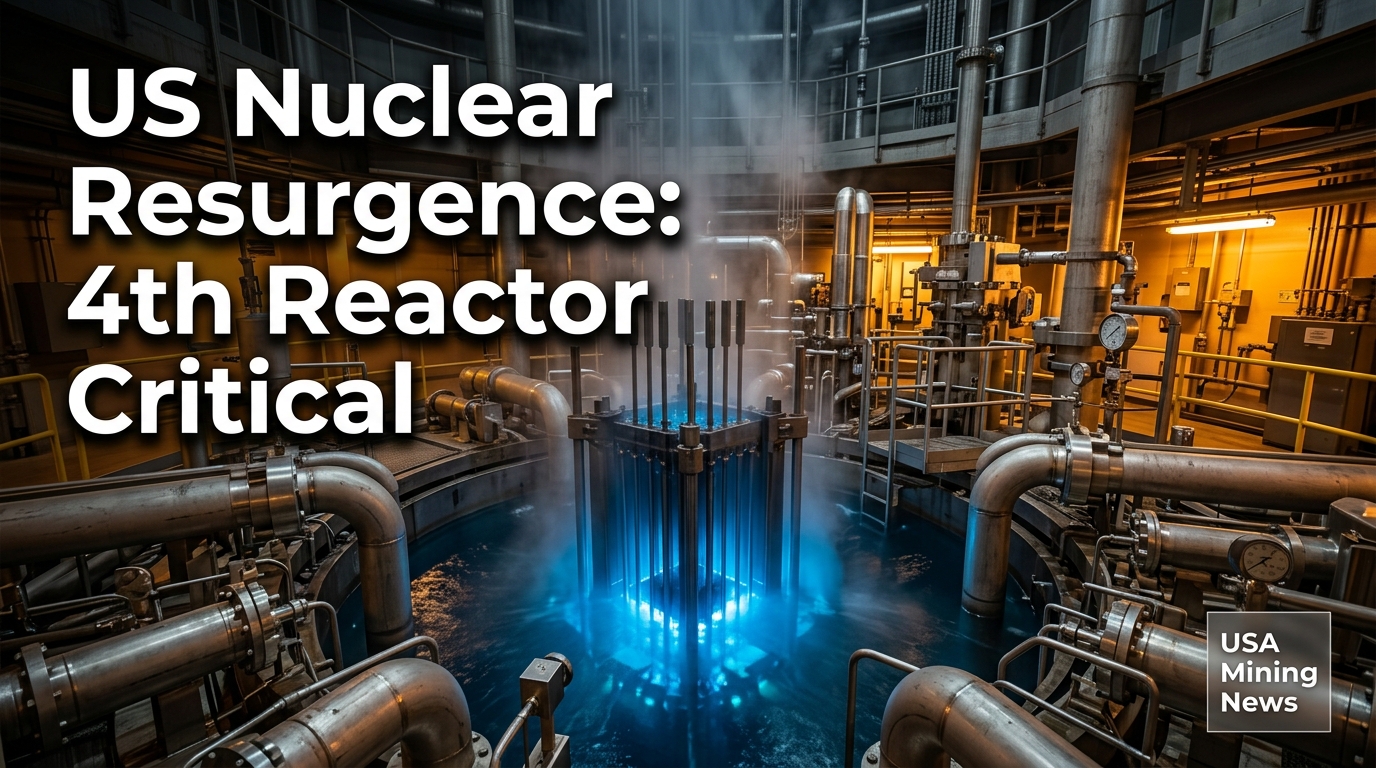
The successful criticality of Aalo-X at INL is not merely a technical accomplishment; it is a powerful demonstration of the capabilities being cultivated within the U.S. nuclear industrial base. Criticality, in the context of a nuclear reactor, refers to the moment when a nuclear chain reaction becomes self-sustaining. For the Aalo-X, achieving "zero-power fueled criticality" means that the reactor’s core, containing nuclear fuel, was able to sustain a chain reaction without generating significant heat or electricity. This is a crucial step in the commissioning process, confirming that the reactor design and its fuel loading are ready for further testing and eventual power generation.
This milestone is a direct outcome of the DOE’s Reactor Pilot Program, a strategic initiative designed to expedite the certification and construction of first-of-a-kind advanced reactor designs. The program aims to foster a new generation of nuclear power plants that are safer, more efficient, and potentially more flexible in their applications, including providing reliable baseload power, process heat for industrial uses, and even hydrogen production.
A Coordinated Effort and Rapid Execution
The enthusiasm surrounding Aalo-X's success was palpable in statements from top officials. U.S. Energy Secretary Chris Wright, who had toured the Aalo facility at INL a month prior, expressed his admiration for the team's dedication. "President Trump asked for three advanced reactors to be authorized and achieve criticality by the 250th anniversary of our great country. I’m pleased to share that through the dedication and hard work of Aalo, INL and DOE, we have surpassed that ask and delivered four!" Secretary Wright stated, highlighting the overperformance against a challenging national objective.
Yasir Arafat, President and CTO of Aalo Atomics, echoed this sentiment, emphasizing the practical triumph of engineering and execution. "The hardest problem in nuclear was never the physics, our country simply forgot how to build. The success of the Department of Energy Reactor Pilot Program is proof America can execute again," Arafat declared. He further underscored the remarkable speed of the project, noting, "We are proud to play a major role in America’s nuclear renaissance, going from breaking ground to a sustained chain reaction in just eight months, one of the fastest reactor builds in modern American history." This rapid timeline from initial construction to criticality sets a compelling precedent for future advanced reactor deployments, challenging long-held perceptions about the pace of nuclear development.
The Broader Nuclear Renaissance: A Squadron of Reactors
Aalo-X's achievement does not stand alone. It is part of a growing wave of success stories emerging from the DOE Reactor Pilot Program and the broader Nuclear Energy Launch Pad initiative. The program has been instrumental in cultivating a diverse portfolio of innovative reactor designs. In June 2026 alone, three other advanced reactors successfully achieved criticality:
- Antares Nuclear’s Mark-0 reactor
- Valar Atomics’ Ward 250
- Deployable Energy’s Unity
Each of these designs represents a unique approach to advanced nuclear technology, from small modular reactors (SMRs) to Generation IV concepts, promising enhanced safety features, greater operational flexibility, and reduced environmental footprints compared to conventional large-scale reactors. The cumulative success of these projects demonstrates a robust and accelerating momentum within the American nuclear industry, signaling a genuine "American nuclear energy renaissance" as championed by the DOE.
Regulatory Streamlining and Energy Dominance
A key factor in the rapid progress of these advanced reactor projects has been the streamlined regulatory pathway provided by the Reactor Pilot Program. This program leverages DOE authorization to expedite the certification process for first-of-a-kind designs, cutting through potential bureaucratic hurdles that have historically slowed nuclear development in the U.S.
The DOE highlights this new authorization pathway as a "shining example of how regulatory reform can accelerate innovation and help usher in a golden age for the nuclear energy industry and advancement of President Trump’s Energy Dominance agenda." This agenda prioritizes maximizing domestic energy production, strengthening energy infrastructure, and enhancing America's global energy leadership. Nuclear power, with its capacity for baseload, carbon-free electricity generation, is a critical component of achieving these objectives, providing energy security and resilience against geopolitical uncertainties in global energy markets.
Implications for the Mining Industry
For executives and investors in the mining sector, the rapid advancement of advanced nuclear reactor technology carries profound implications. A robust domestic nuclear renaissance directly translates into increased demand for a specific, vital set of mineral resources:
Uranium Demand: The most evident impact is on the uranium market. Each new reactor, whether traditional or advanced, requires uranium fuel. While advanced reactors may have more efficient fuel cycles or use different fuel forms, they still fundamentally rely on uranium as their energy source. The successful demonstration of four (and counting) advanced reactors signifies a clear intention to expand nuclear capacity in the U.S. This will necessitate a significant increase in demand for both short-term supply and long-term contracts, stimulating greater exploration and production efforts, particularly within North America, to reduce reliance on foreign imports.
Critical Minerals for Construction and Components: Advanced reactors are not merely scaled-down versions of previous generations; they often incorporate novel designs, materials, and operational parameters. This creates demand for a range of critical minerals and specialized manufactured materials:
- Zirconium and Hafnium: Used in fuel cladding and control rods due to their neutron transparency and corrosion resistance.
- Graphite: Certain advanced reactor designs (e.g., high-temperature gas-cooled reactors) utilize nuclear-grade graphite as a moderator and reflector.
- Rare Earth Elements (REEs): Some control rod materials, sensors, or specialized shielding could incorporate REEs, driving demand for these strategically important minerals.
- Nickel, Chromium, Molybdenum: Essential components of high-performance steel alloys and superalloys required for reactor vessels, piping, and other structural elements that must withstand extreme temperatures, pressures, and corrosive environments. The development of advanced alloys for these applications will be crucial.
- Lithium: Potentially used in advanced coolants or tritium breeding in certain future fusion-fission hybrid concepts, though less direct for current fission reactors.
Mining companies with diversified portfolios or those specializing in these specific critical minerals will find new and stable demand streams. The emphasis on domestic supply chains for energy independence underpins increased interest in U.S.-based mining operations for these critical components.
Energy for Mining Operations: Beyond raw material supply, nuclear energy itself presents a transformative solution for the energy-intensive mining sector. Large-scale mining and processing operations require immense, continuous power. Deploying small modular reactors (SMRs) or microreactors at remote mine sites could provide a reliable, carbon-free, and potentially cost-effective source of baseload power, reducing reliance on diesel generators or connection to often unstable grid infrastructure. This not only lowers operational costs and enhances energy security for the mine but also helps companies meet increasingly stringent environmental, social, and governance (ESG) targets by significantly decarbonizing their energy footprint. This could be particularly attractive for mines operating in remote regions with abundant mineral resources but lacking robust grid access.
Looking Ahead: Powering America's Future
The successful criticality of Aalo-X and the three other advanced reactors in June represents more than just a proof of concept; it is a tangible step towards revitalizing America's nuclear industrial base and securing its energy future. The ability to rapidly design, build, and bring advanced reactors online, as demonstrated by the eight-month timeline for Aalo-X, signifies a crucial resurgence in engineering and manufacturing capabilities.
As these advanced reactor designs move through subsequent testing phases towards commercial deployment, the demand for uranium and other critical minerals will only intensify. The mining industry, therefore, stands at the cusp of a significant growth opportunity, driven by national energy policies and technological innovation. Continued collaboration between the DOE, private companies like Aalo Atomics, and the broader supply chain—including the mining sector—will be essential to fully realize the promise of this American nuclear energy renaissance and cement the nation's "Energy Dominance" for decades to come.