Federal Policy Shift: DoE Reaffirms Coal's Strategic Role in U.S. Energy Future
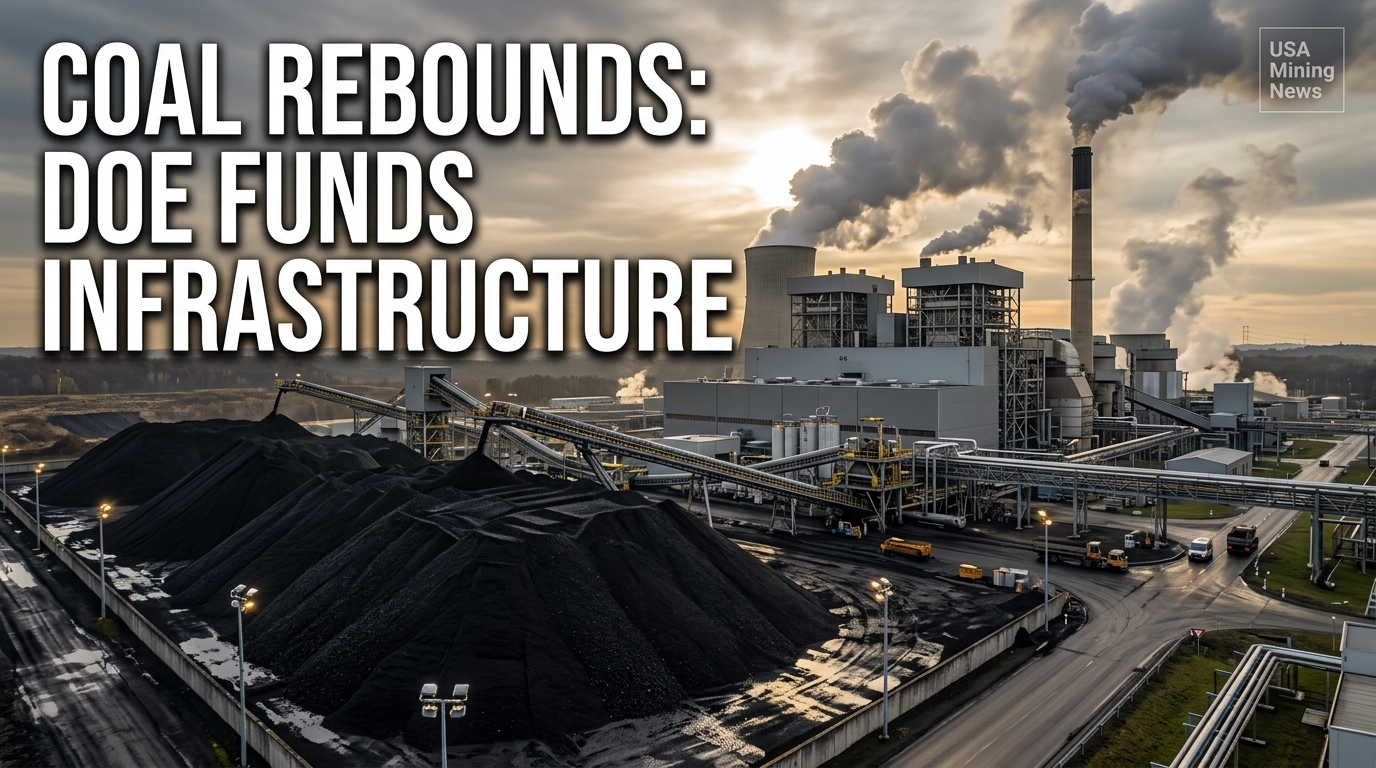
On June 5, 2026, the global mining and energy sectors witnessed a pivotal announcement from the U.S. Department of Energy (DoE), signaling a marked shift in federal energy policy. The DoE revealed plans to allocate up to $500 million in Defense Production Act (DPA) funding, strategically aimed at bolstering the nation's coal generation capacity, strengthening its domestic supply chains, and expanding its coal export infrastructure. This funding package explicitly targets support for 13 U.S. coal-fired power plants and the development of new export capabilities, most notably the West Gateway Terminal Project in Oakland, California.
This initiative represents a significant re-evaluation of coal's role within the broader U.S. energy framework, moving beyond previous trends of gradual decommissioning and towards a policy of preservation and enhancement. According to Energy Secretary Chris Wright, the funding is directly intended to reinforce national security by supporting reliable coal generation, ensuring robust domestic supply resilience, and enhancing the nation's energy export prowess. For the U.S. mining industry, this development is not merely a subsidy; it is a clear strategic signal from the federal government, potentially stabilizing demand for thermal coal and influencing investment decisions across the sector.
Bolstering Domestic Energy Security and Baseload Reliability
A substantial portion of the announced funding, up to $425 million, is earmarked for 12 distinct projects designed to strengthen the operational integrity and longevity of the U.S. coal fleet. These projects will directly support the continued operation of 13 coal-fired power plants across the country. The rationale behind this investment, as articulated by the DoE, centers on "baseload reliability" and "supply chain resilience."
Baseload power, historically a cornerstone of grid stability, refers to the minimum amount of power that an electric utility must make available to its customers over a given period. Coal-fired power plants are renowned for their ability to provide this consistent, 24/7 power output, operating independently of intermittent factors such as weather conditions that affect renewable sources like solar and wind. In recent years, many coal plants have faced significant economic pressures, including competition from inexpensive natural gas, increasing environmental regulations, and the rapid expansion of renewable energy sources. This has led to numerous plant retirements, raising concerns about the long-term stability and resilience of the nation's electricity grid, especially during periods of extreme demand or unexpected disruptions.
The DoE's decision to inject federal funding into these facilities underscores a recognition that a diversified energy portfolio, including dispatchable power sources like coal, remains critical for national security. By strengthening these plants, the DoE aims to prevent potential energy shortages, reduce vulnerabilities in the power supply chain, and ensure that the U.S. can reliably meet its domestic energy needs, even in challenging circumstances. For the coal mining sector, particularly those operations supplying thermal coal to these specific plants, this funding offers a welcome reprieve, potentially extending contract lifetimes and stabilizing demand for their products.
The West Gateway Terminal: A New Hub for Coal and Bulk Commodity Exports
Integral to the DoE's strategic funding package is an allocation of up to $75 million towards the West Gateway Terminal Project in Oakland, California. This project is poised to become a critical piece of energy infrastructure on the U.S. West Coast. Conceived as a rail-served marine export facility, the terminal is designed to handle more than ten million tons of bulk commodities annually.
DoE Under-Secretary Kyle Haustveit highlighted the terminal's role in filling a "key infrastructure gap," emphasizing its potential to improve access to global markets and strengthen energy partnerships, particularly in the Indo-Pacific region. The facility is strategically positioned to facilitate energy shipments to critical U.S. allies, including Japan, South Korea, Taiwan, Vietnam, and Malaysia. These nations often rely on a stable supply of thermal coal to meet their industrial and power generation needs, and a robust U.S. export capacity strengthens their energy security while diversifying their sourcing options.
For the U.S. mining industry, especially producers in Western states like Wyoming, Montana, and Utah, the West Gateway Terminal represents a significant new outlet. Historically, most U.S. metallurgical and thermal coal exports have moved through East Coast or Gulf Coast ports. A major new West Coast terminal offers a more direct and potentially more cost-effective shipping route to lucrative Asian markets, enhancing the competitiveness of specific U.S. coal basins. The development of such infrastructure is crucial not only for coal but also for potentially other bulk commodities, indicating a broader strategic intent to boost U.S. export capabilities and influence in global trade flows.
Understanding the Defense Production Act (DPA) Authority
The invocation of the Defense Production Act (DPA) for this funding package is particularly noteworthy. The DPA, a Korean War-era statute, grants the president broad authority to ensure the availability of materials and services deemed essential for national defense. While historically used for military procurements or emergency responses, recent administrations have expanded its application to address modern supply chain vulnerabilities, including those in critical minerals, renewable energy components, and now, traditional energy sources like coal.
The DoE's justification for using DPA funding for coal-fired power plants and export infrastructure underscores the administration's view that reliable domestic energy production and the ability to export energy to allies are direct components of national security. This approach recontextualizes coal not merely as a commodity but as a strategic asset. For the mining industry, the DPA's application here could set a precedent, indicating a potential willingness by the federal government to intervene and support other mineral supply chains deemed vital for national security or critical infrastructure, where market forces alone may not suffice.
Implications for the U.S. Coal Mining Sector
This DoE announcement carries substantial implications for the U.S. coal mining industry, which has navigated a challenging landscape marked by declining domestic demand, stringent environmental regulations, and ongoing pressure to transition to cleaner energy sources. The federal support for 13 coal-fired power plants offers a direct and tangible stabilization of domestic demand for thermal coal, potentially preventing further mine closures and preserving existing mining jobs.
Furthermore, the investment in the West Gateway Terminal holds the potential to significantly boost export volumes for U.S. coal. Increased export capacity to Asian markets, where demand for high-quality thermal coal often remains robust, could provide a crucial lifeline for U.S. producers. Mining companies supplying these markets may see opportunities for increased production, improved operational efficiencies through economies of scale, and enhanced revenue streams. This federal commitment could also de-risk certain investments in mining infrastructure, equipment upgrades, and workforce training, signaling a more predictable regulatory and market environment for the coal sector, at least in the medium term.
The announcement also suggests a potential tempering of the swift energy transition rhetoric, at least in areas where grid stability and national security are paramount. While the long-term trajectory towards decarbonization remains a federal goal, this action highlights a pragmatic recognition of coal's immediate and strategic value.
Navigating Geopolitical and Energy Transition Crosscurrents
The decision to bolster coal infrastructure is not made in a vacuum; it occurs within a complex global energy landscape defined by geopolitical tensions, climate change imperatives, and the ongoing energy transition. The DoE's emphasis on strengthening ties with Indo-Pacific allies through energy exports positions the U.S. as a reliable energy partner at a time when global energy markets are volatile and supply chains are frequently disrupted. This strategic energy leverage strengthens diplomatic relationships and helps stabilize energy markets in a critical region.
While environmental groups and proponents of an accelerated energy transition will undoubtedly scrutinize this move, the DoE's framing around national security and baseload reliability indicates a prioritization of immediate practical considerations for grid stability and international strategic positioning. This rebalancing highlights a recognition that achieving a sustainable energy future requires a multifaceted approach that addresses both environmental objectives and the foundational needs for energy security and reliability.
The Path Forward: Sustaining Reliability and Exports
As the DoE moves forward with the implementation of these funding packages, the industry will closely monitor several key aspects: the specific projects receiving funding at the 12 projects bolstering the 13 coal plants, the timelines for the West Gateway Terminal’s development, and the measurable impact on grid stability and export volumes. This federal intervention represents a significant policy inflection point, underscoring coal's enduring, if evolving, role in the U.S. energy and geopolitical strategy.
Mining industry stakeholders, investors, and policymakers will be evaluating whether this $500 million DPA funding is an isolated, tactical response to immediate energy security concerns or if it signifies the beginning of a more sustained federal commitment to leveraging U.S. coal resources for both domestic stability and international influence. For now, on June 5, 2026, the message is clear: coal is back on the federal agenda, explicitly recognized as a strategic asset for national security and economic stability.