The landscape of global energy is undergoing a transformative shift, particularly within the renewable sector. Dominating headlines and engineering discussions is the exponential growth in the scale of offshore wind turbines, ushering in what many in the industry are calling the "era of super size wind." These colossal structures, now being deployed globally, surpass capabilities that were considered ambitious just a decade ago, significantly reshaping the economic and operational paradigms of clean energy generation. This critical development, with its multifaceted implications, was the central focus of a recent episode of Energy Technology: Industry Insights, hosted by Jackie Park and released on June 2, 2026.
The podcast episode delved into the realities behind these engineering marvels, posing fundamental questions: Is bigger truly better? What are the economic, operational, maintenance, and supply chain ramifications of this rapid scaling? And how will the burgeoning competition, especially from Chinese original equipment manufacturers (OEMs) developing designs exceeding 25MW while simultaneously driving down costs, impact the global market? These inquiries are not merely academic; they directly influence the strategic planning and investment decisions of upstream industries, particularly the mining sector, which provides the foundational materials for this green revolution.
The Gigawatt-Scale Horizon: An Engineering Marvel and Economic Puzzle
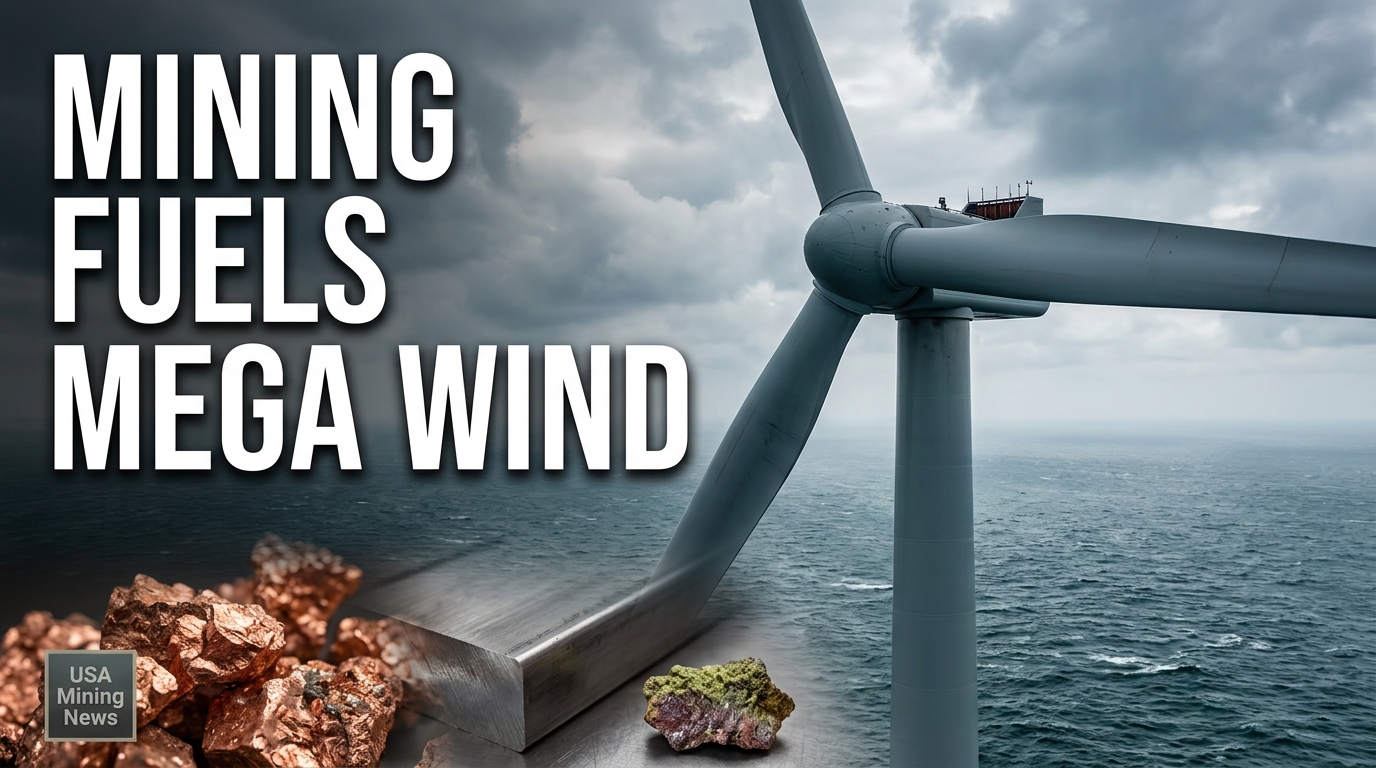
The current generation of offshore wind turbines represents an astonishing leap in engineering prowess. Modern units frequently boast power capacities exceeding 15MW, with rotor diameters that can dwarf the height of most urban skyscrapers. This scale allows for fewer turbines to generate equivalent or greater power output, potentially reducing the overall footprint of wind farms and optimizing energy capture in offshore environments where wind resources are typically stronger and more consistent.
The drive for larger turbines is rooted in sound economic principles. Larger turbines can capture more energy per unit, leading to a higher capacity factor and, theoretically, a lower levelized cost of energy (LCOE). Fewer foundation structures, less cable infrastructure, and optimized balance-of-plant components per gigawatt of installed capacity contribute to capital expenditure efficiencies. However, the path to "super size" is not without its intricate challenges. Specialized manufacturing facilities, heavy-lift installation vessels, and robust port infrastructure capable of handling components of unprecedented dimensions are all prerequisites. The capital intensity of developing, manufacturing, and deploying such immense structures is substantial, requiring significant upfront investment that can influence project financing and overall feasibility.
Supply Chains Under Strain: A Mining Industry Perspective
For the mining industry, the ascent of mega wind turbines is a dual-edged sword of opportunity and challenge, placing immense pressure on global supply chains. Achieving these monumental scales necessitates vast quantities of raw materials, creating a direct and substantial demand surge for a range of mined commodities.
- Copper: From generator windings and power cables to transformer components, copper is indispensable. As turbine sizes grow, so does the amount of copper required, fueling demand for this versatile base metal.
- Steel: The towers, foundations, and internal structures of these gigantic turbines demand high-strength steel. Offshore wind farms often utilize significant quantities of both conventional and specialized steel alloys to withstand harsh marine environments and support immense loads.
- Rare Earth Elements: Many advanced wind turbines, particularly direct-drive models chosen for their efficiency and reduced maintenance in offshore settings, rely on powerful permanent magnets. Neodymium and praseodymium, key rare earth elements, are critical for these magnets. Supplying these strategically important materials, often concentrated in specific geopolitical regions, presents both a market opportunity and a supply chain security challenge for global miners.
- Aluminum: Used in various components for its strength-to-weight ratio and corrosion resistance, aluminum consumption also increases with turbine scale.
- Zinc: Galvanization, a process using zinc, is crucial for corrosion protection in marine environments, making it vital for offshore wind infrastructure longevity.
- Specialized Composites: The enormous blades of these turbines are typically manufactured from advanced fiberglass or carbon fiber reinforced polymer composites, creating demand for the raw materials that constitute these lightweight, high-performance materials.
The sheer volume and specialized nature of these materials require a robust, resilient, and ethically sourced supply chain from the mining stage through to manufacturing. Mining companies are thus faced with the imperative to increase production while adhering to increasingly stringent environmental, social, and governance (ESG) standards. Furthermore, the logistical challenge of transporting massive components, such as turbine blades that can stretch over 100 meters, from manufacturing hubs to port facilities and then offshore installation sites, mirrors some of the complex heavy-haulage and infrastructure requirements often seen in large-scale mining operations.
Operational Complexities and Maintenance Imperatives
While larger turbines offer economic advantages through economies of scale, they introduce new layers of operational and maintenance complexity. These turbines operate in harsh, remote offshore environments, making access and repairs challenging and costly. Components for a 15MW+ turbine are significantly larger and heavier than their smaller predecessors, necessitating specialized vessels, cranes, and highly skilled technicians for both installation and ongoing maintenance.
The capital expenditure associated with purchasing and deploying these specialized installation and service vessels is considerable. Downtime for a single mega-turbine represents a substantial loss of potential power generation, emphasizing the need for highly reliable components and efficient maintenance strategies. Predictive maintenance, advanced sensor technologies, and autonomous inspection systems are becoming critical tools to minimize unscheduled outages and optimize operational expenditure (OpEx) for these industrial giants. These operational considerations directly influence the overall cost of electricity and, by extension, the economic viability of supplying renewable power to energy-intensive industries like mining.
Competitive Dynamics and the Chinese Influence
The global wind turbine market is fiercely competitive, and the rapid technological advancements in turbine mega-sizing are playing a pivotal role. The podcast highlighted the emerging influence of Chinese OEMs, which are reportedly developing next-generation designs exceeding 25MW capacity. This aggressive pursuit of scale, coupled with a demonstrated ability to drive down manufacturing costs, poses a significant competitive challenge to established European and Western manufacturers.
This dynamic shifts the global balance of power in the wind energy sector. It can lead to increased price competition, potentially accelerating the overall cost reduction trajectory for offshore wind energy. However, it also raises questions about supply chain resilience, technology transfer, and geopolitical dependencies, all of which are pertinent concerns for global industries, including mining, that rely on stable and diversified supply chains for their energy transition goals.
Expert Insights Guiding the Future of Wind Energy
To navigate these complex issues, the Energy Technology: Industry Insights episode featured two prominent experts who offered their perspectives:
- Jim Rijks, Engineering Manager at Iberdrola Australia and a Future Energy Leader at the World Energy Council, provided insights likely stemming from his experience in large-scale energy project development and international energy policy. His views would be invaluable on the strategic deployment and long-term viability of mega-turbines within national energy grids.
- Abhilash Palakkil, Principal Engineer at GHD, brought an engineering consultancy perspective, likely focusing on the technical feasibility, project execution, and risk management associated with these immense installations. His expertise would touch upon the practical challenges in design, construction, and operational resilience.
Their discussion, informed by data and analysis from GlobalData, the parent company of Mining Technology, aimed to unpack the intricate relationship between engineering ambition and practical implementation, covering economic performance, operational sustainability, and stress points within the global supply chain.
Implications for the Mining Sector: Beyond Direct Power Supply
The developments in mega wind turbine technology carry profound implications for the mining sector that extend beyond merely supplying raw materials for their construction.
- Decarbonization Goals: Mining companies worldwide are under increasing pressure from investors, regulators, and consumers to decarbonize their operations. Offshore wind, particularly when integrated into national grids or even dedicated industrial power solutions, offers a scalable and low-carbon energy source. Understanding the economics and deployment realities of mega-turbines is crucial for miners evaluating their renewable energy procurement strategies.
- Strategic Commodity Demand: The consistent and growing demand for copper, steel, rare earths, and other materials driven by the wind energy sector provides long-term market stability and investment incentives for mining companies. It guides exploration efforts, capital allocation decisions, and merger and acquisition activities within the mining industry.
- Investment Opportunities: As the energy transition accelerates, some diversified mining companies are exploring investments in renewable energy projects or related infrastructure, creating new revenue streams and diversifying their portfolios beyond traditional commodity extraction.
- Logistics and Infrastructure Innovation: The unique challenges of transporting and installing mega-components in offshore wind mirror some of the complex logistics faced in remote mining projects, fostering cross-industry learning in heavy transport, modular construction, and robust infrastructure development.
The Path Forward: Sustaining the "Super Size Wind" Era
The "era of super size wind" is undeniably here, driven by the imperative to accelerate the global energy transition and meet ambitious decarbonization targets. However, the sustainable growth of this sector hinges on effectively addressing the intricate challenges it presents. Balancing the pursuit of ever-larger turbines with economic viability, operational resilience, and the capacity of global supply chains – particularly the mining sector – will be paramount.
The insights shared by experts like Jim Rijks and Abhilash Palakkil, and continually explored in podcasts like Energy Technology: Industry Insights (available every Tuesday at 7 AM EST / 12 PM GMT on Spotify, Apple Podcasts, Amazon, and YouTube), are vital for industry professionals across sectors. For mining executives and investors, understanding these dynamics is not just about keeping abreast of energy trends; it is about recognizing fundamental shifts in commodity demand, identifying strategic investment opportunities, and preparing for a future where sustainable resource extraction directly fuels the technologies driving a cleaner world. The journey of these mega-turbines is, in many ways, an extension of the mining industry's crucial role in powering global progress.