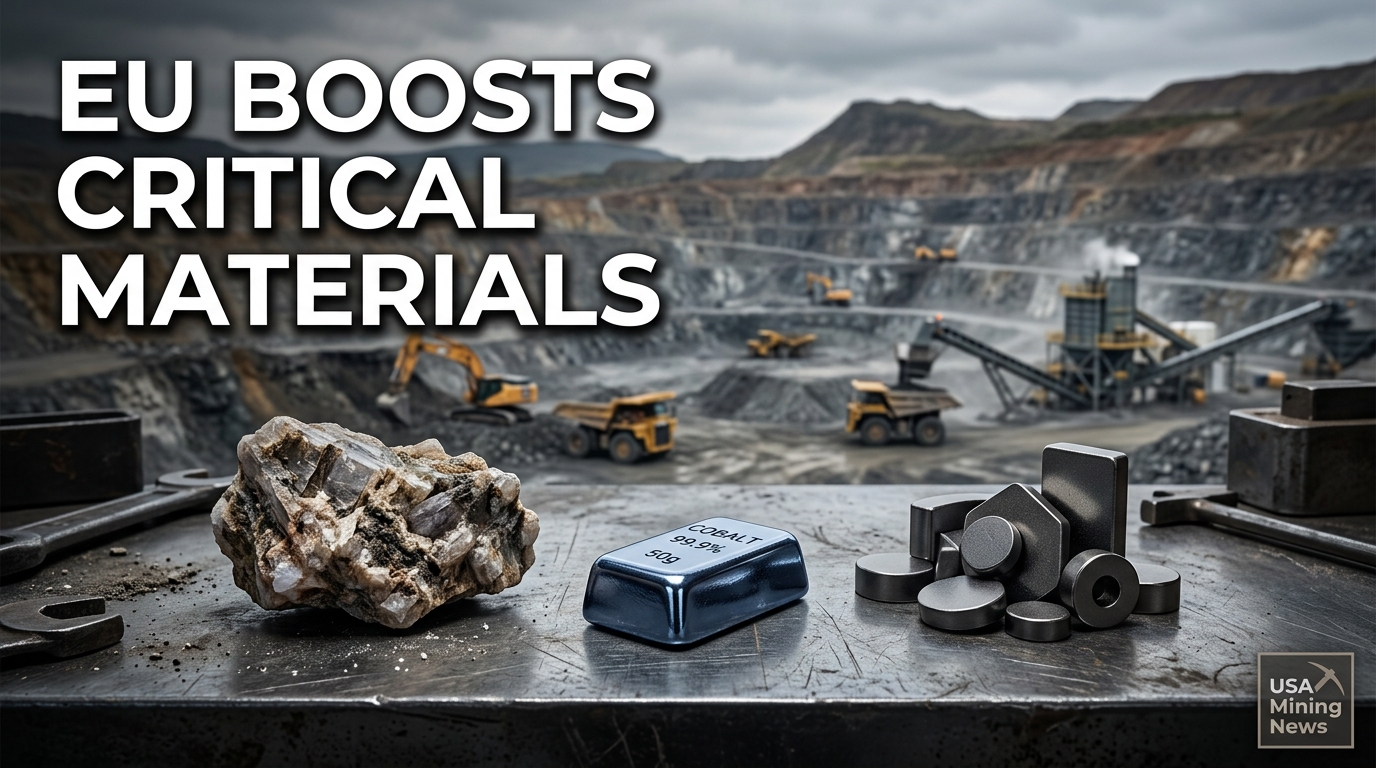
In a significant stride towards bolstering its strategic autonomy and securing vital industrial inputs, the European Commission (EC) announced the selection of 46 new strategic projects aimed at strengthening the European Union’s critical raw material supply. This landmark decision, reported on October 9, 2026, marks a critical implementation phase of the EU’s ambitious Critical Raw Materials Act (CRMA), a legislative framework designed to de-risk the bloc's reliance on external suppliers for minerals essential to its green and digital transitions, as well as its defense capabilities.
The chosen projects, distributed across 16 Member States, represent a concerted effort to build resilient and sustainable domestic supply chains, from primary extraction to advanced recycling. With global competition for critical raw materials intensifying and geopolitical uncertainties on the rise, the EU's proactive measures are poised to reshape the landscape of mining, processing, and recycling within the continent, presenting substantial implications for industry professionals and investors worldwide.
Bolstering European Raw Material Resilience: The EC's Strategic Project Initiative
The selection of these 46 projects follows an intensive evaluation process, with the EC having received 102 applications during a call that closed earlier this year. The high volume of applications underscores the industry's readiness and the Member States' commitment to participate in the EU's strategic raw materials agenda. The initiatives span the full raw materials value chain, demonstrating a comprehensive approach to securing supply. This holistic strategy is vital, as bottlenecks can occur at any stage, from the mine face to the processing plant or the recycling facility.
The imperative behind these projects is clear: to mitigate supply risks associated with critical raw materials, which are indispensable for a wide array of high-tech applications, from electric vehicle batteries and wind turbines to advanced defense systems and permanent magnets. By fostering domestic capacity, the EU aims to create a more predictable and secure supply environment for its industries, reducing exposure to volatile global markets and geopolitical pressures. This push for self-sufficiency is a direct response to global supply chain disruptions experienced in recent years, highlighting the strategic importance of secure and diversified access to these materials.
The Critical Raw Materials Act: A Foundation for Self-Sufficiency
The legal and strategic bedrock for these selections is the Critical Raw Materials Act (CRMA), which officially came into effect on May 23, 2024. The CRMA establishes specific, ambitious targets for the EU's domestic capacity by 2030, designed to significantly enhance supply chain resilience. These targets are:
- At least 10% of the EU’s annual consumption for extraction.
- At least 40% of the EU’s annual consumption for processing.
- At least 25% of the EU’s annual consumption for strategic raw materials recycling.
These benchmarks are not merely aspirational; they represent a fundamental shift in European industrial policy, aiming to reduce the bloc's heavy reliance on a limited number of external suppliers. For the mining industry, these targets signal a clear policy direction and sustained governmental support for domestic projects, potentially streamlining permitting processes and attracting necessary capital investment into what are often complex and long-lifecycle endeavors. The CRMA effectively provides a robust framework that de-risks investment in critical raw materials projects within the EU, making them more attractive to both domestic and international players.
A Comprehensive Approach Across the Value Chain
The 46 selected projects demonstrate a balanced focus across different stages of the raw materials value chain, recognizing that bottlenecks can occur at any point. The distribution is as follows:
- Eight (8) projects are focused on extraction, aiming to increase the primary supply of critical minerals from European soil. These projects are fundamental, as secure processing and recycling ultimately depend on initial material availability.
- Eleven (11) projects are dedicated to processing, a crucial stage that transforms raw ore into usable industrial-grade materials. Enhancing processing capacity within the EU is particularly important, as this stage is often concentrated in a few non-EU countries, creating significant single-point-of-failure risks.
- Nineteen (19) projects prioritize recycling, reflecting the EU's commitment to circular economy principles and maximizing resource efficiency. Recycling reduces the need for primary extraction, lowers environmental impact, and provides a sustainable domestic source of materials.
- Additionally, eight (8) projects are integrated, combining multiple stages of the value chain to enhance efficiency and create robust, localized ecosystems. Specifically, three (3) of these combine extraction and processing, while five (5) integrate processing and recycling. These integrated models can offer significant logistical and economic advantages by co-locating facilities and optimizing material flow.
These projects are geographically spread across Belgium, Bulgaria, Finland, France, Estonia, Germany, Italy, Greece, Lithuania, Portugal, Romania, the Netherlands, Poland, Spain, Slovakia, and Sweden. This broad geographical distribution highlights a collective European effort and commitment, rather than concentrating efforts in a few key nations. This collaborative approach can foster shared expertise and infrastructure development across the continent.
Targeting Key Materials for Strategic Industries
The selected projects collectively cover 15 out of the 17 strategic raw materials identified under the CRMA, demonstrating a broad yet targeted approach to critical resource security. Particular emphasis has been placed on materials vital for the burgeoning battery value chain, the defense and aerospace sectors, and the production of permanent magnets.
For the battery value chain, which is foundational to the widespread adoption of electric vehicles and renewable energy storage, the projects support:
- Lithium: Seven (7) projects are focused on this crucial component of modern rechargeable batteries.
- Nickel: Twelve (12) projects address nickel supply, essential for high-energy-density cathodes.
- Cobalt: Ten (10) projects target cobalt, a material whose supply chain has historically faced ethical and geopolitical scrutiny.
- Manganese: Five (5) projects are dedicated to manganese, an increasingly important and abundant cathode material.
- Graphite: Four (4) projects support graphite, indispensable for battery anodes.
Beyond batteries, projects are also addressing:
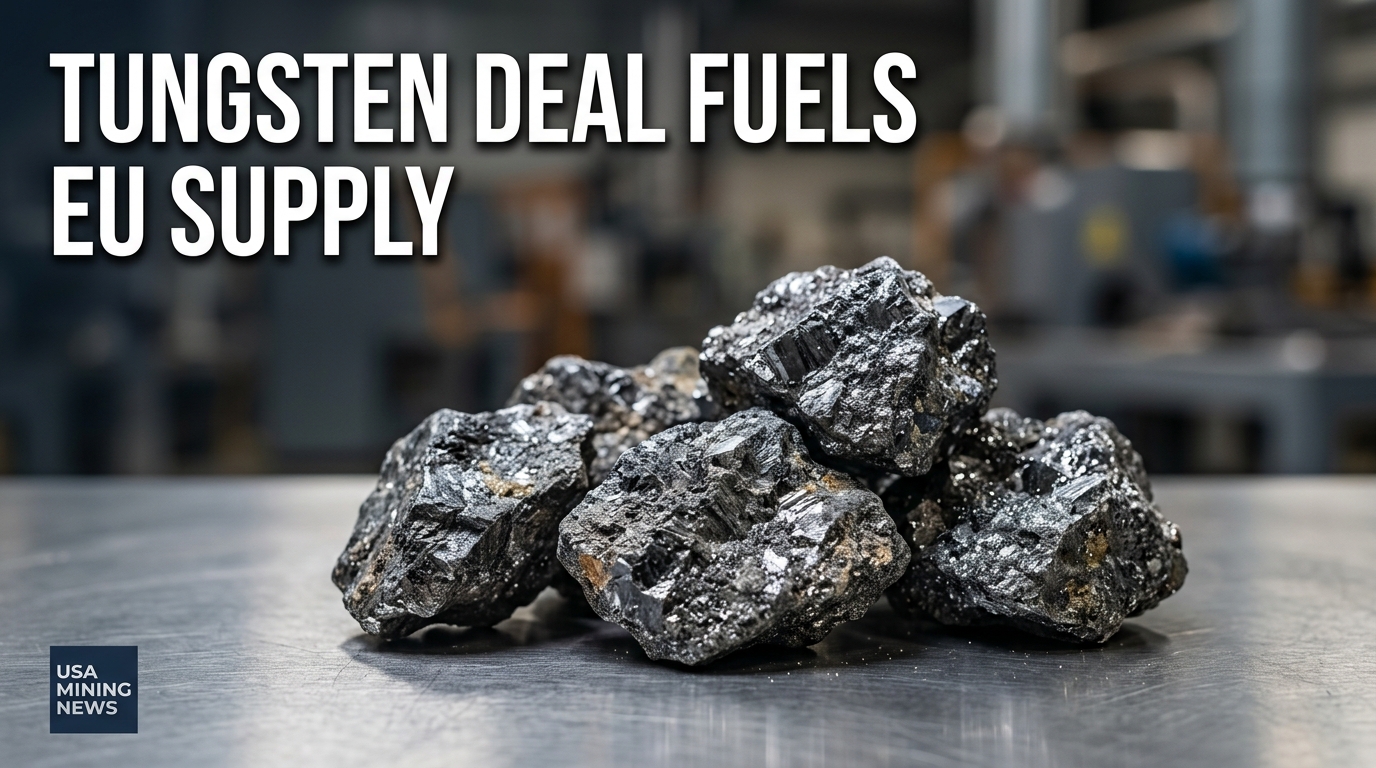
- Magnesium and Tungsten: These materials are critical for the defense and aerospace industries, known for their strength-to-weight ratio and high-temperature resistance, respectively.
- Rare Earth Elements (REEs): Projects targeting REEs are essential for the production of permanent magnets, which are fundamental to electric motors, wind turbines, and various high-tech electronics. The dominance of a single region in REE supply chains has long been a concern for Western economies.
The specific focus on these materials underlines the EU's strategic industrial priorities. For mining companies and investors, this clarity provides strong signals for where capital and development efforts are most urgently needed and likely to receive policy support.
Projected Impact on EU's 2030 Objectives
According to the European Commission's assessment, these 46 strategic projects are expected to make a substantial contribution towards achieving the ambitious 2030 targets set by the CRMA. Specifically, the EC projects that these initiatives could:
- Fully meet the 2030 extraction benchmarks for several key materials within the EU. While the specific materials are not detailed in the announcement, this indicates significant progress across a diverse portfolio of resources.
- Meet the 2030 processing targets for both lithium and Rare Earth Elements (REEs). This is a particularly impactful projection, given the high dependency on external processing capabilities for these critical materials currently.
- Achieve significant progress on the processing targets for cobalt, tungsten, and magnesium. While not fully meeting the targets, the substantial advancement will nonetheless greatly improve the EU's resilience for these important industrial inputs.
This anticipated impact signals a potential paradigm shift for the EU's industrial base. By securing greater domestic control over these essential resources, the EU can foster greater stability for its manufacturing sectors, reduce cost volatility, and position itself as a more competitive player in global high-tech markets. The progress on processing targets, especially for materials like lithium and REEs, is particularly noteworthy, as value addition and technological expertise in these areas are key to long-term industrial strength.
Looking Ahead: Sustained Investment and Future Calls
The announcement of these 46 projects is not the culmination of the EU's efforts but rather a significant milestone in an ongoing, long-term strategy. The European Commission has already indicated its intention to launch another call for strategic project applications towards the end of 2026. This forward-looking commitment provides a clear signal of sustained policy support and investment opportunities within the critical raw materials sector in Europe.
For mining industry professionals, this means continued opportunities for exploration, mine development, processing technology innovation, and advanced recycling solutions across the EU. Investors can anticipate a robust pipeline of government-backed projects, potentially de-risking investments and offering attractive returns aligned with strategic European priorities. The continuous nature of these calls also suggests that the EU will adapt its strategy based on evolving market conditions, technological advancements, and geopolitical shifts, ensuring its approach remains agile and effective. The overarching goal is to build a self-sufficient and resilient European supply chain, thereby solidifying the continent's position in the global economy.