The Silent Enabler: How Advanced Lubrication Powers the Safety and Productivity Surge in Autonomous Mining
The mining industry stands at the precipice of a technological transformation, with autonomous haul trucks leading the charge in redefining operational paradigms. These self-driving workhorses are not merely novelty; they are fundamentally reshaping how materials are moved, consistently boosting mine safety and exponentially increasing productivity through their ability to operate around the clock. However, this relentless pursuit of efficiency and safety introduces new, intensified demands on equipment. As utilization rates soar and traditional maintenance windows shrink, the role of advanced lubrication technology and sophisticated oil management strategies has moved from a routine service item to a critical strategic imperative.
In an era where operational uptime is paramount, the microscopic film of lubricant separating vital components can be the difference between sustained profitability and costly unscheduled downtime. This article explores how innovative lubrication solutions are becoming the unsung heroes, guaranteeing the reliability and longevity required to unlock the full potential of autonomous mining fleets, thereby safeguarding both assets and personnel.
The Autonomous Revolution: A Decade of Accelerated Adoption
The deployment of autonomous haul trucks is accelerating at an unprecedented pace globally, marking a significant shift in mining operations. According to robust data compiled by GlobalData, the industry experienced a staggering 84% increase in the number of autonomous haul trucks in operation between July 2024 and July 2025 alone. This exponential growth underscores the industry's commitment to leveraging automation for competitive advantage and enhanced safety.
What was once a pilot project or a feature of isolated fleets is now becoming a widespread reality. The data reveals that several prominent mining operators are no longer dabbling with a handful of autonomous units, but are now managing extensive fleets that run into the hundreds. This scale of adoption signifies a profound confidence in the technology's benefits and reflects a maturing ecosystem capable of supporting such complex operations. For mining executives and investors, this trend highlights a clear trajectory towards a highly automated future, where capital expenditure on autonomous solutions is increasingly justified by tangible returns in safety metrics and productivity gains.
The Shift in Operational Paradigms: From Human to Machine
The transition from human-operated to autonomous haulage introduces a fundamental shift in operational dynamics. Traditional mining trucks typically follow operational schedules dictated by shift changes, operator fatigue limits, and planned downtime. Autonomous trucks, conversely, are designed for near-continuous operation, limited only by refueling or recharging cycles and scheduled maintenance. This relentless operational tempo translates into significantly higher utilization rates for each asset.
While this continuous operation is a major driver of productivity, it also means that critical components—such as engines, transmissions, differentials, wheel motors, and hydraulic systems—are subjected to sustained extreme temperatures, pressures, and loads for far longer durations without the customary cooling-off periods. The conventional approach to maintenance, reliant on fixed intervals, proves increasingly inadequate under these conditions. Consequently, the window available for maintenance shrinks dramatically, demanding quicker, more efficient, and above all, more effective maintenance interventions. The imperative is not merely to perform maintenance, but to optimize it, pushing service intervals to their absolute maximum without compromising equipment integrity or safety.
Lubrication: The Unsung Hero of Uptime and Safety
Within this high-stakes environment, the role of lubrication transcends its traditional function. Lubricants are not just consumables; they are engineered fluids performing multiple critical tasks essential for the uninterrupted, safe, and efficient operation of autonomous machinery:
- Reducing Friction and Wear: By forming a protective film between moving parts, lubricants prevent metal-to-metal contact, drastically reducing friction and the associated wear that can lead to premature component failure. This is especially vital in applications like wheel bearings and gearboxes that operate under immense static and dynamic loads.
- Dissipating Heat: The continuous operation of autonomous trucks generates substantial heat within engines, transmissions, and hydraulic systems. Lubricants act as a coolant, absorbing and transferring heat away from critical components, preventing thermal degradation and maintaining optimal operating temperatures.
- Contaminant Control: Advanced lubricants incorporate detergents and dispersants that suspend contaminants like soot, sludge, and wear debris, preventing them from depositing on sensitive surfaces and carrying them to filters for removal. This is crucial for maintaining system cleanliness and extending component life.
- Corrosion Protection: Many lubricants contain additives that protect metal surfaces from corrosion and rust, particularly important in harsh mining environments exposed to moisture, aggressive chemicals, and varying temperatures.
- Power Transmission: In hydraulic systems, lubricants are the medium for transmitting power, enabling precise control and movement of various machine actuators. Maintaining viscosity and compressibility characteristics is paramount for responsive and accurate operation in autonomous control systems.
In autonomous operations, the failure of any single component can bring an entire production line to a halt, incurring substantial financial losses. Therefore, the ability of lubricants to extend component life and prevent unscheduled breakdowns becomes a cornerstone of operational robustness.
Advanced Lubricants for Demanding Environments
To meet the rigorous demands of autonomous fleets, standard lubricants are often insufficient. The industry is increasingly adopting highly specialized, advanced lubrication technologies. These include:
- High-Performance Synthetics: These lubricants are engineered from synthetic base stocks, offering superior thermal stability, oxidation resistance, and viscosity retention across a wide range of temperatures compared to conventional mineral oils. This ensures consistent performance even under the most extreme operating conditions, directly contributing to extended drain intervals.
- Specialized Additive Packages: Modern lubricants are fortified with sophisticated additive packages. These include extreme pressure (EP) agents for gears, anti-wear (AW) additives for hydraulic pumps, corrosion inhibitors, foam suppressants, and viscosity index improvers. These additives are tailored to address the unique stresses faced by different components within autonomous vehicles.
- Extended Drain Interval Formulations: Designed for longevity, these lubricants maintain their protective properties over significantly longer periods, aligning with the extended service intervals sought in autonomous operations. This reduces maintenance frequency, labor costs, and the consumption of lubricants, contributing to sustainability goals.
The development of these lubricants is often a collaborative effort between lubricant manufacturers and original equipment manufacturers (OEMs), ensuring that formulations are optimized for the specific designs and operational stresses of the latest autonomous machinery.
Smarter Oil Management: Beyond the Oil Change
Complementing advanced lubricants is the paradigm of "smarter oil management." This approach moves beyond reactive or time-based oil changes to condition-based, predictive maintenance. Key elements of smarter oil management include:
- Oil Condition Monitoring (OCM): Regular or real-time analysis of lubricant samples provides critical insights into the health of both the oil and the machinery it protects. OCM can detect early signs of wear metals, contamination (e.g., fuel, coolant, dirt), and oil degradation (e.g., oxidation, nitration, viscosity changes). This data empowers maintenance teams to intervene before catastrophic failures occur.
- Integrated Sensor Technologies: Autonomous vehicles are often equipped with an array of sensors that monitor various operational parameters. Integrating sensors to continuously monitor lubricant temperature, pressure, and even particulate counts can provide real-time data feeding into the vehicle's diagnostic systems.
- Data Analytics and Predictive Maintenance: Leveraging vast datasets from OCM and integrated sensors, advanced algorithms can predict when oil degradation or component wear will necessitate intervention. This enables maintenance to be scheduled precisely when needed, maximizing component life and minimizing unplanned downtime.
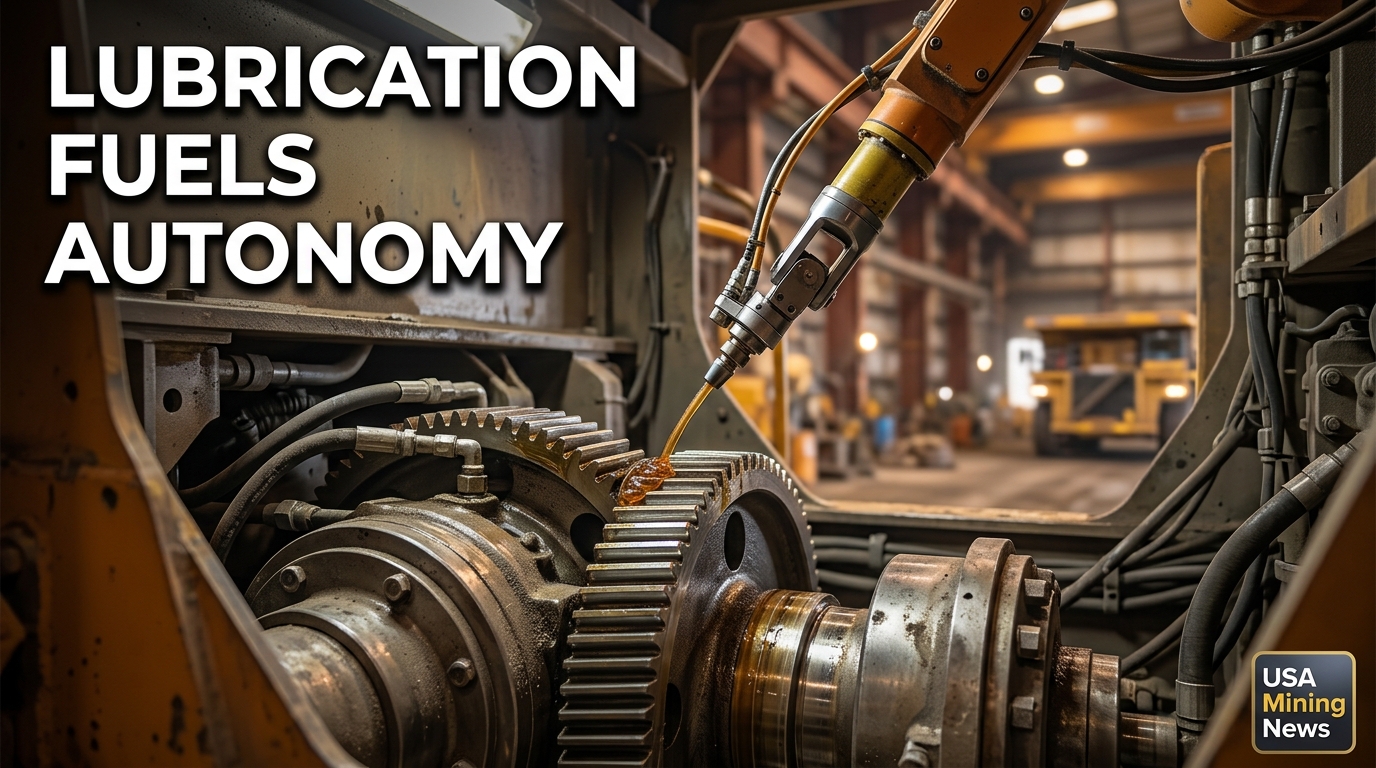
- Automated Lubrication Systems: These systems deliver precise amounts of lubricant to critical points at optimal intervals, ensuring consistent protection and reducing manual intervention. This is particularly beneficial for hard-to-reach components and in environments where human access is limited for safety reasons.
By shifting to smarter oil management, mining companies can significantly enhance the reliability of their autonomous fleets, reduce maintenance costs, and extend asset life, all while optimizing their environmental footprint through reduced waste oil generation.
Economic and Safety Implications for the Industry
The meticulous attention to lubrication technology within autonomous mining offers multifaceted benefits for the industry:
- Enhanced Safety: This is a core driver for autonomous deployment. By removing human operators from the cab of massive haul trucks, the risk of accidents, collisions, and exposure to hazardous conditions (e.g., dust, vibrations, remote areas) is dramatically reduced. Reliable equipment, facilitated by superior lubrication, further bolsters safety by reducing the need for human intervention for unexpected repairs in potentially dangerous zones.
- Increased Productivity and Uptime: Autonomous trucks operate consistently, without fatigue or breaks, leading to higher overall tonnage moved per shift. Advanced lubricants and smart management reduce unscheduled downtime by preventing premature failures, ensuring these trucks maintain their high operational tempo. This consistency translates directly into improved output and predictable production schedules.
- Reduced Operating Costs: While initial investments in advanced lubricants and monitoring systems may be higher, the long-term cost savings are substantial. These include extended component life, fewer repairs, optimized fuel efficiency (due to reduced friction), lengthened oil drain intervals (saving on lubricant purchases and disposal), and reduced labor costs associated with emergency maintenance.
- Environmental Stewardship: Fewer oil changes mean less waste oil. Extended component life reduces the need for manufacturing new parts, decreasing the overall environmental impact of mining operations.
The Future Outlook: Integration and Innovation
Looking ahead, the synergy between autonomous technology and lubrication will only deepen. Expect further integration of lubrication management systems directly into the wider autonomous vehicle operating platforms and fleet management software. This will enable real-time, self-adjusting lubrication strategies based on dynamic operational data, weather conditions, load profiles, and even predictive analytics from other vehicle subsystems.
Innovation in lubricant chemistry will continue, with ongoing research into even more durable, environmentally friendly, and specialized formulations tailored for next-generation electric and hybrid autonomous mining vehicles. The evolution of sensor technologies and AI-powered diagnostic tools will further refine predictive maintenance capabilities, pushing the boundaries of equipment reliability and operational efficiency.
In conclusion, as autonomous haul trucks continue their rapid deployment across the global mining landscape, reaching hundreds of units in major fleets and exhibiting an 84% growth from July 2024 to July 2025, the underlying importance of lubrication technology cannot be overstated. It is far more than a routine maintenance item; it is a fundamental pillar supporting the safety, productivity, and economic viability of the autonomous mining revolution. For industry professionals and investors, recognizing and investing in advanced lubrication and smarter oil management is not just good practice, but a strategic imperative for harnessing the full potential of this transformative technology.