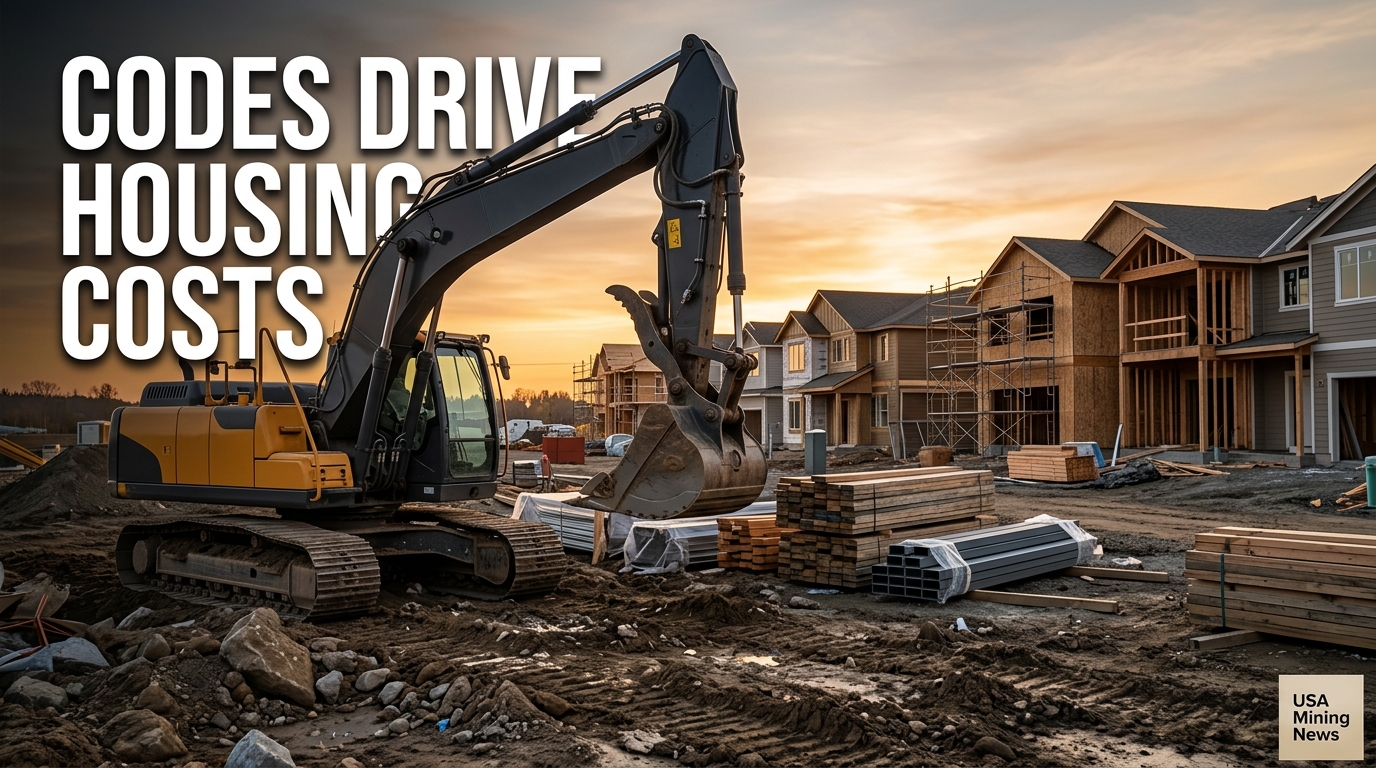
WASHINGTON – The U.S. Department of Energy (DOE) on June 26, 2026, unveiled a comprehensive new analysis that has sent ripples through the construction and allied industries, including the vital mining sector. This pivotal report concludes that the widespread implementation of the 2024 International Energy Conservation Code (IECC) across the nation would dramatically escalate housing construction expenses, imposing what the department terms "costly Green New Scam mandates" on American families. The findings suggest a potential annual increase of more than $9.2 billion in residential construction costs compared to 2006 code levels, culminating in an estimated $127 billion in cumulative expenses nationwide.
For mining industry professionals and investors, this analysis is not merely a policy debate but a critical indicator of future demand for myriad raw materials. A slowdown or cost escalation in the housing market directly impacts the consumption of everything from aggregates and cement to copper, aluminum, and gypsum, which are fundamental inputs for residential development. The DOE’s firm stance underscores an active effort by the current administration to reassess and potentially roll back regulations perceived as impediments to affordability, a trend that could influence broader market dynamics for commodities.
The Department of Energy's Stark Assessment of the 2024 IECC
The core of the DOE’s analysis centers on the financial burden projected from the 2024 IECC. According to the department, if states were to uniformly adopt these updated energy codes, the upfront cost for a typical single-family home could swell by as much as $14,000. This increase, according to the DOE, forces American families to shoulder thousands of dollars more upfront for a new home, while the anticipated energy savings, often cited as the justification for such codes, may take decades to materialize.
The analysis highlights concerning payback periods for these supposed efficiency gains. In most states, the estimated period for these savings to offset the increased construction costs exceeds 10 years, with some projections stretching beyond 20 years. This long repayment timeframe, the DOE contends, restricts consumer choice and locks American families into prolonged financial commitments without immediate tangible benefits.
U.S. Energy Secretary Chris Wright articulated the administration's position clearly, stating, “American families should not be forced to pay more for a home because of nonsensical energy-related mandates. For too long, climate activists have pushed regulations that increase housing costs, reduce consumer choice, and make it harder for Americans to build and own a home. Thankfully, President Trump will continue fighting for the American people so they can enjoy affordable energy access and the ability to buy the home they desire with the features they choose.”
Echoing these sentiments, Assistant Secretary of Energy (EERE) Audrey Robertson added, “This analysis shows how unnecessary regulations and ineffective building codes have drastically increased housing costs with little to no benefit for homeowners or communities. An average payback period of 11 years—as long as 22 years in some cases—for new residential building codes is unacceptable. Standard-setting bodies should take note: we prioritize the American homeowner and will not allow erroneous building requirements to push homeownership out of reach.” These strong statements signal a clear policy direction aimed at prioritizing affordability over what the administration perceives as overly burdensome environmental mandates.
Regulatory Landscape and Key Players
The International Energy Conservation Code (IECC) is a model code developed by the International Code Council (ICC), a non-profit association that develops a set of comprehensive model codes used in the design, build, and compliance process to construct safe, sustainable, affordable, and resilient structures. While the IECC itself is not law, it serves as a guideline that many states and local jurisdictions adopt, sometimes with modifications, into their own building codes. This makes the ICC a highly influential body in shaping the future of construction practices and, by extension, the demand for construction materials.
In response to its findings, the DOE penned a direct letter to the ICC, urging the organization to realign its code-development processes. The department's recommendations for the ICC include:
- Refocusing on affordability, transparency, and fuel-neutral energy efficiency.
- Omitting requirements for onsite energy generation, electric vehicle (EV) infrastructure, and greenhouse gas avoidance.
The DOE's rationale for these recommendations is rooted in the belief that such requirements disproportionately increase construction costs, lengthen payback periods for homeowners, and ultimately reduce consumer choice. This intervention highlights a direct challenge to the prevailing trend of incorporating increasingly stringent environmental mandates into building codes, a movement that has seen a steady rise in requirements for 'green' building materials and technologies.
Under President Trump’s leadership, the DOE has explicitly stated its commitment to implementing the Executive Order, Removing Regulatory Barriers to Affordable Home Construction. This order emphasizes putting homeowners first and empowering Americans to decide how to build and power their homes, aligning with the department's current efforts to scrutinize and potentially dismantle regulations deemed to be obstructing housing affordability.
Implications for the Mining Industry
The DOE's analysis, while focused on building codes, carries significant ramifications for the mining industry. Residential construction represents a substantial market for a diverse array of raw materials, and any factor impacting construction volume or cost directly affects demand upstream. The mining sector, as a foundational supplier, must closely monitor these regulatory shifts.
Decreased Demand for Construction Materials: Should the 2024 IECC's implementation lead to a significant slowdown in housing starts due to increased costs, the ripple effect on material demand would be immediate and considerable.
- Industrial Minerals: The bedrock of construction, including aggregates (sand, gravel, crushed stone used in concrete and asphalt), cement (primarily derived from limestone), gypsum (for drywall), silica (for glass and insulation), and various clays (for bricks and tiles), would face reduced orders. These bulk commodities are sensitive to construction volumes, with even minor fluctuations impacting regional miners significantly.
- Base Metals: Residential buildings are intensive users of base metals. Copper is essential for electrical wiring, plumbing, and HVAC systems. Aluminum finds extensive use in windows, roofing, and structural components. Zinc serves as a vital anti-corrosion coating for steel (galvanized steel) used in framing and fasteners. Any constraint on residential building activity would directly translate into lower demand and potentially softer prices for these metals.
Regulatory Uncertainty and Material Shifts: The debate over "green mandates" versus affordability creates a complex regulatory environment. If an administration favors deregulation to reduce costs, it might lessen the immediate pressure on miners to produce 'greener' materials (e.g., lower embodied carbon concrete, recycled content metals) or undergo costly certifications. Conversely, a future shift back towards aggressive environmental mandates could reignite calls for such specialized materials, requiring rapid adaptation from mining companies. The current DOE stance, by pushing back against mandates for onsite energy generation (e.g., solar panels requiring silicon, silver, aluminum) and EV infrastructure (requiring copper, lithium, nickel), indirectly influences demand for these 'green tech' metals if their mass integration into residential construction is slowed.
Energy Policy and Operational Costs: Although the analysis pertains to building codes, the underlying philosophy articulated by Secretary Wright—prioritizing "affordable energy access"—suggests a broader energy policy direction. The mining industry is highly energy-intensive, relying heavily on electricity and fuels for extraction, processing, and transportation. Policies that prioritize affordability in energy, and potentially encourage fuel-neutral choices, could lead to more stable or potentially lower energy costs for mining operations, which would be a significant boon to their bottom lines. Conversely, mandates that would drive up energy costs through specific fuel preferences could negatively impact mining economics.
Economic Impact and Workforce Stability: A healthy and affordable housing market is crucial for overall economic stability and growth. For the mining industry, which often operates in remote locations, access to affordable housing is a key factor in attracting and retaining a skilled workforce. If national housing costs continue to climb due to regulations, it could exacerbate existing labor challenges in the mining sector, making it harder to staff projects and expand operations.
Future Outlook and Stakeholder Engagement
The DOE's findings and declared intentions suggest an ongoing push to re-evaluate regulatory burdens on construction. The department remains committed to collaborating with states, builders, and a wide array of industry stakeholders. The overarching objective is clearly stated: to eliminate what they term "costly Green New Scam mandates" that inflate housing costs, limit consumer choice, and place unnecessary financial burdens on American families.
As part of this initiative, the DOE has issued a Request for Information (RFI), seeking input on its methodological approach to assessing the consumer impacts associated with building energy codes. This RFI provides an opportunity for various industry players, including those within the mining and materials supply chain, to provide data and perspectives on how these codes influence their operations and the broader economy. The outcome of such engagement could further shape future regulatory discussions and actions.
This development unfolds against a backdrop of ongoing activities within the DOE, including recent press releases like the completion of the West End Protected Area Reduction Project at NNSA’s Y-12 National Security Complex (also on June 26, 2026), and the issuance of a Draft Request for Proposal for the Hanford 222-S Laboratory Contract (June 25, 2026). While distinct projects, they illustrate the broad scope of the department’s influence and its commitment to efficiency and cost management across various national priorities.
In conclusion, the U.S. Department of Energy’s analysis of the 2024 IECC is more than just a debate about building energy efficiency; it is a significant policy statement with the potential to reshape the housing construction landscape and, by extension, the demand for raw materials from the mining sector. Mining companies and investors must keenly observe these regulatory movements, as they directly influence commodity markets, operational costs, and the overall economic environment for critical inputs into the nation's infrastructure and housing needs. The emphasis on "Promoting Affordability and Consumer Choice" signals a regulatory environment that aims to ease financial burdens, a dynamic that could have both direct and indirect benefits for the stability and demand within the mining industry.