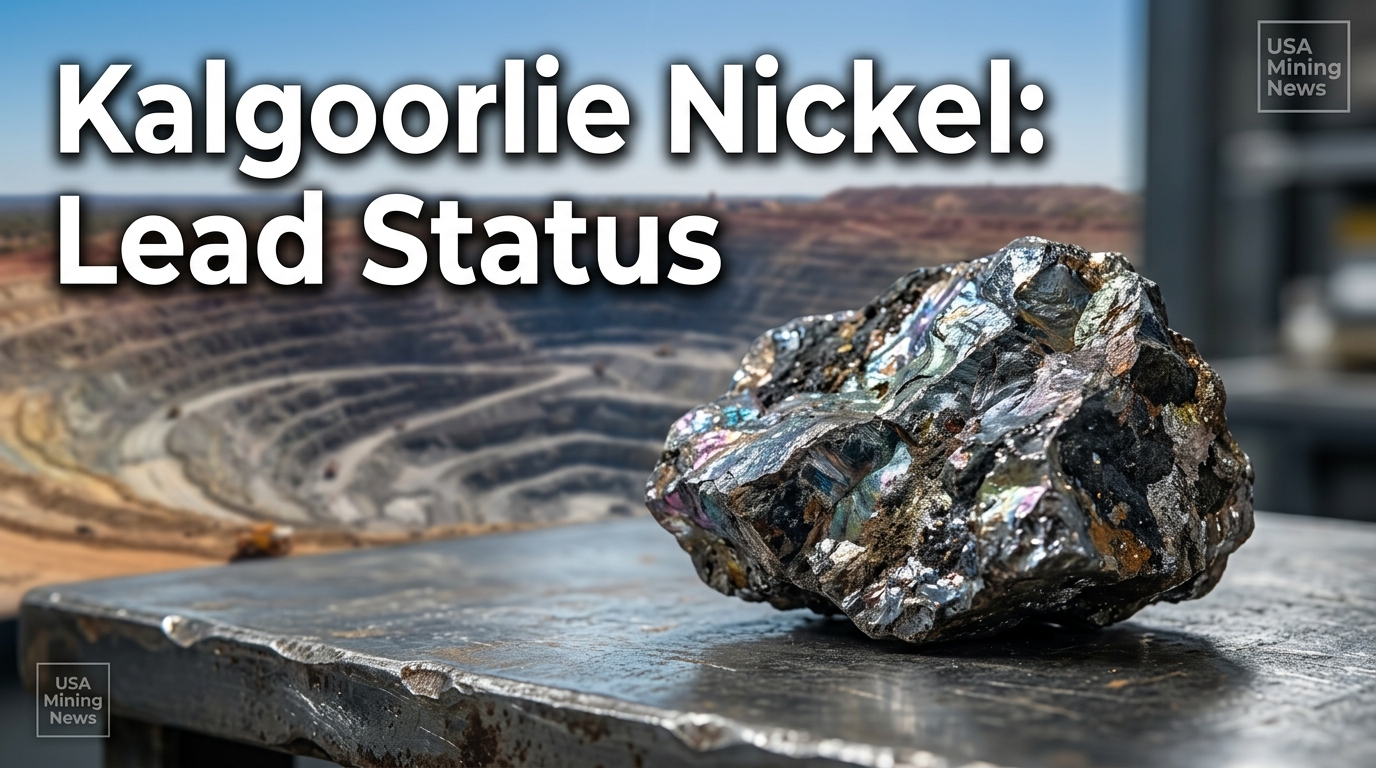
In a significant development for Australia's critical minerals sector and the global battery supply chain, the Kalgoorlie Nickel joint venture has been awarded lead agency status for its Kalgoorlie Nickel Project (KNP)-Goongarrie Hub in Western Australia. The announcement, confirmed on June 4, 2026, marks a pivotal moment for a project widely recognized as home to one of the largest nickel-cobalt resources in the developed world. This strategic designation, granted by Western Australia’s Department of Energy and Economic Diversification (DEED), is set to accelerate the project's pathway to production, reinforcing Australia's position as a stable and ethical supplier of essential battery raw materials.
A Strategic Milestone for Western Australia's Critical Minerals Ambitions
The award of lead agency status is far more than a bureaucratic formality; it represents a coordinated commitment from government bodies to facilitate the development of projects deemed strategically important to the state and national economy. Kalgoorlie Nickel’s application, submitted to DEED in late 2025, has achieved its desired outcome—a streamlined path through the often-complex regulatory and infrastructural landscape typical of major mining projects.
For a project of the KNP-Goongarrie Hub's magnitude, lead agency status translates into several tangible benefits:
- Coordinated Government Engagement: Instead of navigating multiple government departments independently, the project will benefit from a single, coordinated point of contact. This ensures consistent communication and accelerates decision-making across environmental approvals, native title agreements, infrastructure planning, and other regulatory facets.
- Streamlined Approvals: The lead agency role actively facilitates the progression of necessary permits and licenses. This can significantly reduce development timelines, which are often protracted by sequential and multi-jurisdictional approval processes.
- Infrastructure Pathways: Major resource projects require extensive infrastructure, including power, water, roads, and port access. Lead agency status helps to coordinate these needs with state and federal infrastructure planning, potentially unlocking crucial government support or investment for shared infrastructure.
- Whole-of-Government Support: As highlighted by Ardea Resources CEO and managing director Andrew Penkethman, this status signifies support not only from the Western Australian Government but also from the Commonwealth. This federal backing underscores the national strategic importance of the KNP-Goongarrie Hub in Australia's broader critical minerals ambitions.
The Western Australian Government’s decision unequivocally highlights the KNP-Goongarrie Hub’s perceived importance to the state’s long-term vision for downstream processing and the secure supply of battery minerals. This move aligns with broader national strategies to build resilient supply chains and move up the value chain from raw ore extraction to refined critical mineral products.
The Goongarrie Hub: A World-Class Nickel-Cobalt Resource
At the heart of this strategic designation is the Goongarrie Hub, an integral part of the broader Kalgoorlie Nickel Project situated within Western Australia’s mineral-rich Goldfields region. This resource is not just significant but is genuinely considered one of the largest nickel-cobalt resources in the developed world. Its vast scale and strategic location in a politically stable and mining-friendly jurisdiction imbue it with substantial global importance.
Nickel and cobalt are indispensable components of modern battery technologies, particularly the nickel-manganese-cobalt (NMC) and nickel-cobalt-aluminum (NCA) cathodes dominant in electric vehicles (EVs) and grid-scale energy storage systems. As the world accelerates its transition towards renewable energy and electrified transport, the demand for these critical minerals is projected to surge exponentially. Projects like the KNP-Goongarrie Hub are therefore not merely mining ventures but foundational pillars for the global energy transition.
The project's capacity to deliver substantial volumes of nickel and cobalt positions it as a vital contributor to securing supply chains, lessening reliance on less stable or ethically challenging sources. This aspect is particularly attractive to international manufacturers and governments committed to responsible sourcing and environmental, social, and governance (ESG) standards.
Kalgoorlie Nickel: A Collaborative Global Effort
The Kalgoorlie Nickel joint venture is a powerhouse collaboration bringing together distinct strengths and global reach. Key partners in this strategic alliance include:
- Ardea Resources: An Australian-based minerals explorer and developer with deep knowledge of the project's geology and local operational environment. Ardea Resources holds a significant stake and acts as the managing participant in the JV.
- Mitsubishi: A global Japanese conglomerate with extensive experience in resource development, trading, and financing. Mitsubishi’s involvement brings significant financial backing and global market access.
- Sumitomo Metal Mining (SMM): Another prominent Japanese diversified metals company known for its expertise in nickel production and refining, including laterite processing. SMM's technical prowess in developing large-scale nickel projects, such as the Goro mine in New Caledonia, is invaluable.
This multinational partnership underscores the global interest in and strategic importance of the Goongarrie Hub. Earlier this year, this very joint venture successfully secured potential financial backing totaling an impressive A$1 billion (approximately $714 million USD) for the Goongarrie Hub Project. This substantial commitment of capital from international partners speaks volumes about the project's robust economics and the confidence of sophisticated investors in its future prospects.
Streamlining Development in a Complex Environment
Developing a greenfield nickel-cobalt project of this scale involves navigating a labyrinth of technical, environmental, social, and economic challenges. Traditional project development often faces delays due to:
- Permitting Bottlenecks: Multiple departmental reviews, sequential approval processes, and stringent environmental impact assessments can collectively add years to project timelines.
- Infrastructure Gaps: Remote locations often lack the necessary power, water, and transport infrastructure, requiring significant capital investment and complex logistical solutions.
- Stakeholder Engagement: Extensive and sensitive negotiations with local communities, Indigenous groups, and other landholders are critical for social license to operate.
The lead agency status is specifically designed to mitigate these challenges by institutionalizing a proactive and integrated approach from the government. It provides a formal framework for ongoing, constructive engagement with all relevant government stakeholders, as highlighted by Ardea's CEO Andrew Penkethman. This framework can significantly de-risk the project by providing clearer pathways, expedited decisions, and coordinated support, ultimately leading to a more efficient and predictable development schedule.
Market Imperatives: Fueling the Battery Revolution
The impetus behind supporting projects like the KNP-Goongarrie Hub is rooted in profound shifts in global commodity markets and geopolitical dynamics. The world is witnessing an unprecedented surge in demand for critical minerals, driven primarily by:
- Electric Vehicle Adoption: Global automotive manufacturers are rapidly electrifying their fleets, requiring immense quantities of battery raw materials. Nickel demand for EV batteries alone is projected to grow significantly over the next decade.
- Renewable Energy Storage: Grid-scale battery storage is crucial for integrating intermittent renewable energy sources like solar and wind, further escalating demand for nickel and cobalt.
- Supply Chain Security: Geopolitical tensions and resource nationalism have underscored the vulnerability of fragmented supply chains. Western economies are actively seeking diversified, secure, and ethically sourced supplies of critical minerals. Australia, with its robust regulatory framework and strong ESG credentials, is uniquely positioned to fulfill this role.
The KNP-Goongarrie Hub, by providing a substantial, secure, and responsibly sourced supply of nickel and cobalt, will play a crucial role in empowering these transitions. It enhances Australia's credentials as a stable major supplier, attracts further investment in downstream processing, and contributes to the global push for sustainable industrial practices.
Looking Ahead: Pathways to Production
With lead agency status secured, Kalgoorlie Nickel is well-positioned to advance its studies, approvals, and stakeholder engagement activities with renewed momentum. The ongoing work will include:
- Feasibility Studies: Intensifying technical and economic studies to finalize project design, capital expenditure (CapEx) estimates, and operational strategies.
- Environmental and Social Impact Assessments: Completing comprehensive assessments and securing final environmental approvals, crucial for large-scale developments.
- Indigenous Land Use Agreements: Continuing fruitful engagement and negotiation with traditional owners to ensure mutual benefits and respect for Indigenous heritage.
- Financing: Leveraging the A$1 billion in potential financial backing and exploring additional funding avenues for full project construction.
The KNP-Goongarrie Hub, underpinned by strong government support and a collaborative international partnership, is progressing towards becoming a cornerstone of the global battery materials supply chain. Its successful development will not only create significant economic opportunities for Western Australia but will also crucially contribute to the world's urgent need for clean energy technologies, solidifying Australia's role as a critical minerals superpower.