Pioneering Science Recognized: Lawrence Awards Highlight Innovations Critical to Mining's Future
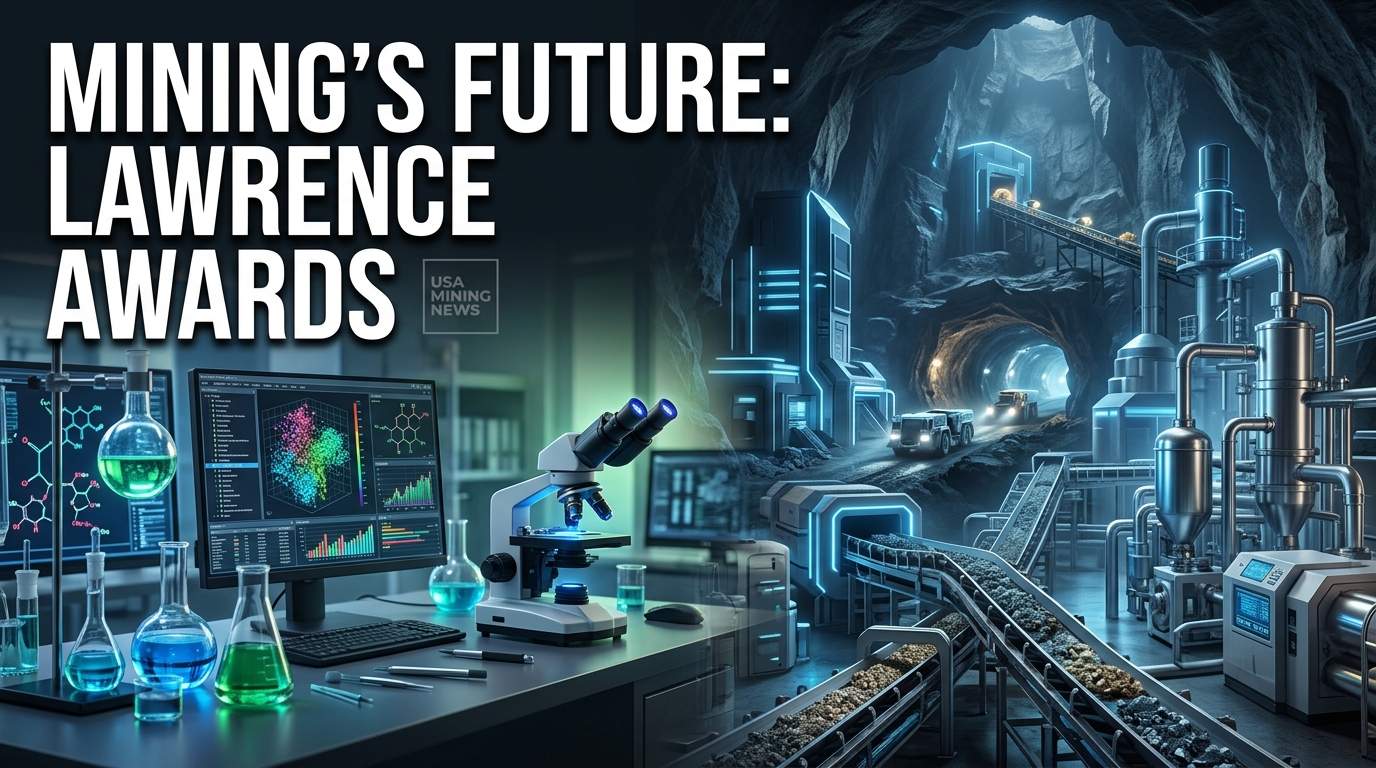
WASHINGTON—The U.S. Department of Energy (DOE) has bestowed its prestigious Ernest Orlando Lawrence Award upon nine exceptional scientists and engineers, recognizing their groundbreaking contributions to research and development that underpin the nation's strategic missions in science, energy, and national security. Announced by U.S. Secretary of Energy Chris Wright on October 13, 2026, these awards underscore a commitment to innovation that holds profound implications for the global mining sector, influencing everything from raw material sourcing and processing to energy consumption and environmental stewardship.
Established in 1959, the Lawrence Award stands as one of the U.S. government’s most enduring and respected science and technology honors, recognizing mid-career professionals for their achievements across nine distinct scientific and engineering categories. Secretary Wright emphasized the strategic importance of these breakthroughs, stating, "This year’s Lawrence Award recipients exemplify the ingenuity and determination that drive America’s leadership in science and technology. From achieving fusion ignition to advancing critical materials and high-performance computing, these scientists and engineers are tackling some of our nation’s most complex challenges and translating groundbreaking research into real-world capabilities. Their work strengthens our nation’s energy security, drives American innovation, and ensures the United States remains at the forefront of scientific discovery." For mining industry professionals, understanding these advancements is crucial for strategic planning, investment decisions, and navigating the evolving landscape of resource demand and technological integration.
Driving Efficiencies in Critical Materials: A Game Changer for Mining
Several of this year’s awardees have made strides directly pertinent to the foundational challenges and opportunities within the mining and materials processing sectors. At the forefront is Dr. Eric J. Schelter of the University of Pennsylvania, honored in the Atomic, Molecular, and Chemical Sciences category. His recognition stems from his "fundamental chemical studies of energy-critical metals leading to new methods for their selective and sustainable separations."
- Industry Impact: The efficient and sustainable separation of critical metals is a monumental challenge for the mining industry. Elements such as rare earth elements (REEs), lithium, cobalt, nickel, and others are often found in complex ore bodies, requiring energy-intensive and sometimes environmentally impactful processes for extraction and purification. Dr. Schelter’s work in developing new, selective separation methods promises to revolutionize these processes. Improved selectivity can lead to higher recovery rates from lower-grade ores, reduce chemical reagent consumption, minimize waste generation, and ultimately lower operational costs. This directly addresses the industry’s drive for greater efficiency, reduced environmental footprint, and enhanced economic viability, especially as demand for these metals skyrockets with the energy transition. For miners, this research could unlock previously uneconomical deposits and improve the competitive position of domestic supply chains by enabling more cost-effective and environmentally sound processing of complex ores.
Innovations in Materials Science and Battery Technology
The transition to a cleaner energy economy is heavily reliant on advancements in materials science, particularly in energy storage solutions. Dr. Thomas Epps, III, from the University of Delaware, recognized in Condensed Matter and Materials Sciences, was honored for his "fundamental contributions to chemistry and materials science with applications in the chemical upcycling of polymeric waste, generation of high-performance materials from biomass feedstocks, and development of membranes for lithium-ion battery technologies."
- Industry Impact: Dr. Epps’s work on lithium-ion battery membranes is particularly significant. As electric vehicle (EV) adoption accelerates and grid-scale renewable energy storage systems proliferate, the demand for lithium and other critical battery raw materials (such as nickel, cobalt, and graphite) is surging globally. Innovations in battery components, specifically more efficient and durable membranes, can enhance battery performance, safety, and longevity, thereby intensifying the demand for high-purity battery-grade minerals. Furthermore, the ability to chemically upcycle polymeric waste and utilize biomass feedstocks for high-performance materials points to a broader trend towards circular economy principles. While not directly involving the primary extraction of minerals, this research influences the types and specifications of materials required, potentially opening new markets for mineral-derived precursors or integrating with recycling infrastructure that the mining industry could support or incorporate into its operations.
Sustainable Resource Utilization and Energy Transition
Complementing efforts in advanced materials science are breakthroughs in sustainable energy resource utilization, exemplified by Dr. Gregg Beckham of the National Laboratory of the Rockies and the University of Colorado Boulder. Honored in Energy Science and Innovation, Dr. Beckham’s award recognizes his "transformative research in the conversion of lignocellulosic biomass and waste plastics via biology, chemistry, and engineering, yielding building blocks for sustainable fuels, chemicals, and materials."
- Industry Impact: While focused on biomass and plastic waste, Dr. Beckham’s work aligns with the mining sector’s increasing focus on sustainability and its integral role in the broader energy transition. The creation of sustainable fuels and materials from non-mineral sources could impact the demand for certain fossil fuels or petroleum-derived products traditionally supplied by mining and refining operations. More broadly, such research contributes to a diversified resource base, which can stabilize material markets and reduce pressure on finite primary mineral resources in specific applications. For mining companies actively investing in ESG (Environmental, Social, and Governance) initiatives, understanding these parallel developments in sustainable chemistry is vital for long-term strategic positioning and identifying potential synergies in waste management or alternative material supply chains that could reduce operational environmental footprints.
The Transformative Promise of Fusion Energy
Perhaps one of the most profound long-term implications for the energy and resource sectors stems from the achievement of fusion ignition. Dr. Andrea L. Kritcher from Lawrence Livermore National Laboratory received the Fusion and Plasma Sciences award for her "exceptional design efforts leading to the first-ever achievement of fusion ignition in the Laboratory, which is of major scientific impact to institutional and national missions, the private sector, and fusion interests within academia."
- Industry Impact: The successful achievement of fusion ignition, a monumental scientific milestone, heralds a potential paradigm shift in global energy generation. If commercially viable, fusion energy offers a virtually limitless, carbon-free energy source, significantly reducing reliance on traditional fossil fuels (coal, natural gas) and potentially even nuclear fission (uranium). For the mining industry, this would mean a fundamental re-evaluation of long-term demand for traditional energy commodities. Simultaneously, fusion reactors themselves will require a new suite of specialized materials, including specific isotopes (e.g., lithium for tritium breeding), advanced high-temperature alloys, and specialized magnets for plasma confinement. This could create new, high-value mineral markets and drive innovation in advanced material extraction and processing. While commercial fusion is still decades away, Dr. Kritcher’s breakthrough marks a critical step, necessitating that mining executives begin to model and anticipate these future shifts in commodity demand and the potential emergence of novel mineral requirements.
High-Performance Computing: Elevating Mining Operations
Beyond materials and energy, fundamental advancements in computational science are set to profoundly enhance operational efficiency across industries, including mining. Dr. Samuel W. Williams of Lawrence Berkeley National Laboratory was recognized in Computer, Information, and Knowledge Sciences for his "pioneering contributions in performance modeling, hardware/software design optimization, and novel computer architecture for high-performance computing, enabling modeling of complex computational solutions, and increasing analysis speed, simulation accuracy, and computational efficiency."
-
Industry Impact: High-performance computing (HPC) is already a critical tool in modern mining and is rapidly becoming indispensable. Dr. Williams’s work directly improves the capabilities of HPC systems. In mining, these systems are used for:
- Geological Modeling and Resource Estimation: Processing and interpreting vast geological datasets with greater accuracy and speed, leading to better-informed exploration targets and resource quantification.
- Mine Planning and Optimization: Executing complex simulations for pit design, underground tunnel layouts, haul road optimization, production scheduling, and ventilation systems, significantly reducing operational costs and improving safety.
- Process Simulation: Optimizing comminution (crushing and grinding), flotation, and leaching processes for improved metal recovery, reduced energy consumption, and lower water usage.
- Autonomous Systems and AI: Powering the sophisticated algorithms behind autonomous haul trucks, drills, and processing plants, thereby enhancing safety, increasing productivity, and enabling continuous operations.
- Predictive Maintenance: Analyzing sensor data from equipment in real-time to predict failures, minimizing costly downtime and extending asset life.
Broader Scientific Discoveries with Potential Spillover
Other awardees, while perhaps not as immediately or directly impacting mineral extraction, contribute significantly to the broader scientific ecosystem from which technological innovations often emerge. Dr. Patrick Chain from Los Alamos National Laboratory and New Mexico Consortium was honored in Biological and Environmental Sciences for his "pioneering work in genomics and microbiome science," which includes "discoveries of new bacterial-fungal interactions and revolutionizing the field by democratizing access to advanced bioinformatics tools."
- Industry Impact: While distinct from traditional hard rock mining, Dr. Chain's research could have long-term implications for bioremediation strategies in mining environments, such as mitigating acid mine drainage, reclaiming tailings ponds, or enhancing bio-leaching processes for certain ores. The democratization of bioinformatics tools also aids in understanding complex biological systems, which could be leveraged for environmental impact assessments and developing novel biotechnological solutions relevant to mining waste management and rehabilitation.
Similarly, Dr. Charles C. Polly of Fermi National Accelerator Laboratory, recognized in High Energy Physics for his "exceptional scientific and technical contributions to low-energy precision measurements in particle physics, most notably leadership of the experimental measurement of the anomalous magnetic moment of the muon with the Muon g-2 experiment," and Dr. Lijuan Ruan from Brookhaven National Laboratory, honored in Nuclear Physics for her "outstanding leadership and ingenuity in the design, construction, and operation of novel detector systems in the STAR experiment, transforming dilepton final states into precision probes of heavy ion collisions," advance fundamental physics. While their direct connection to mining operations may not be immediately apparent, advancements in fundamental physics often lay the groundwork for unforeseen technological applications. Detector technologies, for instance, could inspire new methods for mineral sensing, sorting, or process monitoring in the future, particularly in challenging environments or for detecting trace elements.
Finally, Dr. Michael Reed of the Nevada National Security Site received the National Security and Nonproliferation award for his "vital contributions to national and international nuclear emergency response through the Advanced Visualization & Integration of Data (AVID) software, which broke existing paradigms by simultaneously fusing all radiological data into a single interface connected seamlessly to world-wide expertise." While focused on nuclear response, the principles of advanced data visualization and integration for critical, time-sensitive decision-making are highly transferable across hazardous industries. Robust, real-time data systems like AVID could provide templates for enhancing safety monitoring and emergency response protocols within mining operations, particularly in underground or remote environments where rapid and accurate data synthesis is paramount for protecting personnel and assets.
The Road Ahead: Investing in Innovation
The 2026 Ernest Orlando Lawrence Awards highlight the critical role of sustained investment in fundamental and applied research, particularly within the DOE's extensive network of national laboratories and academic partnerships. Secretary Wright's announcement from Washington on October 13, 2026, reinforces the strategic imperative for the United States to maintain its leadership in scientific discovery. The hybrid award ceremony, scheduled for November 13, 2026, in Washington, D.C., will provide a platform to further celebrate these achievements and underscore their significance. In-person attendance is limited with registration closing October 30, 2026, and the event will be broadcast live online, with a recording available afterward.
For the mining industry, these awards are more than just a recognition of scientific excellence; they are powerful indicators of future trends and technological shifts that will define the sector's trajectory. From enhancing the sustainability and efficiency of critical mineral supply chains to embracing transformative energy technologies and advanced computational tools, the research celebrated by the Lawrence Awards offers a glimpse into a future where mining is more precise, more sustainable, and more integrated into a high-tech global economy. Mining companies and investors must pay close attention to these scientific frontiers, recognizing that today’s laboratory breakthroughs will be tomorrow’s industry standards and competitive advantages, ultimately strengthening American innovation and energy security.