A $4.2 Billion Boost for U.S. Nuclear Power: DOE Funds Vistra Uprates in Ohio and Pennsylvania
In a significant move poised to reshape the energy landscape of the eastern United States, the U.S. Department of Energy’s (DOE) Office of Energy Dominance Financing (EDF) announced on October 5, 2026, a conditional loan commitment of up to $4.2 billion. This substantial investment is earmarked for Vistra, a leading integrated retail and wholesale electricity company, to undertake extensive nuclear uprates and modernization efforts across its nuclear fleet in Pennsylvania and Ohio. The initiative aims to enhance the reliability of American energy, fortify the grid, alleviate energy costs, and cater to the escalating power demands within the expansive 13-state PJM Interconnection, L.L.C. (PJM) region.
Reinvigorating the Nuclear Industrial Base: Policy and Vision
This monumental investment directly aligns with President Trump’s Executive Order, Reinvigorating the Nuclear Industrial Base, marking a critical stride toward re-establishing American preeminence in nuclear technology and generation. Nuclear power, renowned for its capacity to deliver consistent, non-intermittent baseload electricity, is a cornerstone of a resilient and independent energy infrastructure. The administration's focus on nuclear assets underscores a strategic commitment to energy security and stability in an era of fluctuating energy markets and growing electrification.
U.S. Secretary of Energy Chris Wright emphasized the administration's vision, stating, “President Trump promised to unleash an American nuclear renaissance, and the Energy Department is delivering. By getting more power out of the nuclear plants we already have, we can deliver more affordable, reliable, around the-clock energy for American families and businesses.” This sentiment was echoed by EDF Director Gregory A. Beard, who added, “President Trump and Secretary Wright have set a clear direction for America’s nuclear future, and EDF is financing the projects that advance that mission. These investments will extend the life of existing reactors, increase nuclear generation, and deliver abundant, around-the-clock power to lower costs and power American prosperity for decades to come.” These statements highlight a clear governmental mandate to leverage existing nuclear infrastructure for immediate and long-term energy benefits.
Vistra's Strategic Nuclear Fleet: Key Assets and Locations
The $4.2 billion conditional loan commitment is specifically directed at Vistra’s operational nuclear facilities. In Pennsylvania, the Beaver Valley Power Station, located in Shippingport, is slated for significant upgrades. In Ohio, the Davis-Besse Nuclear Power Station in Oak Harbor and the Perry Nuclear Power Plant in North Perry will also undergo modernization. These plants are integral to the power supply of their respective states and contribute substantially to the PJM grid, serving millions of customers.
Beyond the immediate scope of these upgrades, the EDF’s conditional loan commitment also includes a crucial option to finance potential future uprates at Vistra’s Comanche Peak Nuclear Power Plant in Glen Rose, Texas. This forward-looking provision signals a broader, strategic partnership between the DOE and Vistra, potentially extending the benefits of nuclear revitalization to the ERCOT grid in Texas, another critical energy market in the U.S. The continued operation and enhancement of these large-scale nuclear facilities are vital for maintaining a diversified and robust national energy portfolio.
Technical and Operational Enhancements: Adding Capacity and Extending Life
The projects outlined in the DOE’s announcement involve comprehensive nuclear uprates and modernization. An “uprate” in the nuclear power context refers to a modification that increases the maximum power level at which a nuclear reactor can operate. These enhancements typically involve a range of technical upgrades, including:
- Turbine and Generator Upgrades: Replacing or modernizing steam turbines and electrical generators to more efficiently convert steam energy into electricity.
- Steam Generator Replacements: Improving heat transfer efficiency and reliability in pressurized water reactors.
- Digital Control Systems: Implementing advanced digital instrumentation and control systems for improved operational efficiency, safety, and monitoring.
- Improved Fuel Efficiency: Utilizing advanced fuel designs or improved fuel management strategies to extract more energy from each fuel assembly.
- Balance of Plant Improvements: Enhancements to cooling systems, pumps, and other auxiliary components to support higher power output.
Collectively, these investments are projected to preserve nearly 4 gigawatts (GW) of reliable baseload power—an amount sufficient to power more than 3 million homes—while concurrently adding an impressive 433 megawatts (MW) of new nuclear capacity. Critically, these capacity additions are achieved through the optimization of existing infrastructure, circumventing the need for new transmission corridors or the construction of equivalent new generation resources, which often entail significant land use and environmental considerations. Furthermore, a key benefit of these projects is the support for the plants’ operation for an additional 20 years beyond their existing licenses, providing long-term energy stability and a predictable return on investment.
Economic and Employment Impact: Jobs and Regional Stability
The financial commitment from the DOE carries substantial economic implications, particularly for the regions surrounding Vistra’s nuclear plants. The planned investments are expected to generate approximately 3,000 project-related jobs. These roles will span critical sectors such as engineering, construction, and specialized planned outage work, injecting significant economic activity into local economies.
Beyond the temporary project-specific roles, the modernization efforts are also crucial for preserving thousands of permanent, well-paying jobs associated with the ongoing operation and maintenance of these nuclear facilities. These high-skill positions, often held by long-term residents, contribute to the economic stability and vitality of communities in Pennsylvania and Ohio. The continuity of these jobs, coupled with the ancillary services and supply chains they support, generates a significant multiplier effect, bolstering local businesses and tax bases. For the broader PJM Interconnection region, this investment translates into enhanced energy security and economic resilience, supporting industrial growth and maintaining competitive energy costs.
The PJM Interconnection: A Crucial Energy Hub
The PJM Interconnection, L.L.C., stands as one of the largest regional transmission organizations (RTOs) in North America, coordinating the movement of wholesale electricity in all or parts of 13 states and the District of Columbia. Covering a vast territory from Illinois to North Carolina, PJM ensures the reliability of the high-voltage transmission system and operates a competitive wholesale electricity market. Within this critical grid, nuclear power plays an indispensable role.
Nuclear plants are prized for their unparalleled baseload reliability, providing continuous, 24/7 power without intermittency, unlike many renewable sources. This makes them essential for grid stability, especially as the demand for electricity continues to climb due to factors such as increased industrial activity, population growth, and the ongoing electrification of transportation and heating. The additional 433 MW of new nuclear capacity and the assurance of 4 GW of stable generation for two more decades will be vital in meeting PJM’s evolving energy needs, mitigating price volatility, and supporting the region’s economic expansion without compromising grid integrity.
Implications for the Mining Industry: Uranium Demand and Beyond
While the immediate focus of the DOE’s announcement is on energy generation and grid stability, the implications for the mining industry are profound and far-reaching. The revitalization of the U.S. nuclear fleet, particularly through capacity additions and extended operational lifespans, directly translates into sustained and potentially increased demand for specific raw materials.
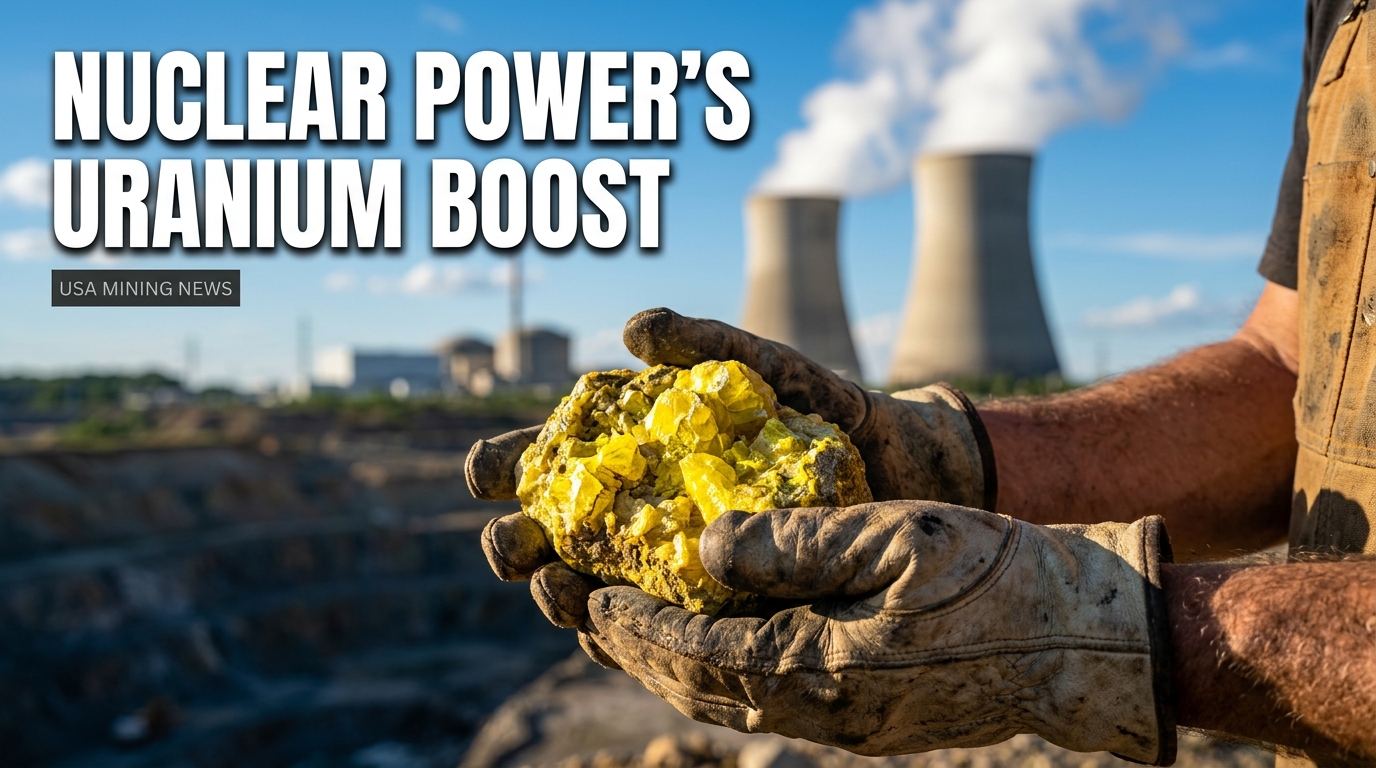
- Uranium Demand: The most direct impact is on the uranium mining sector. The addition of 433 MW of new nuclear capacity, combined with the assurance of 4 GW of existing capacity operating for an additional 20 years, creates a robust, long-term demand signal for nuclear fuel. This strengthens the investment case for uranium exploration, development, and production companies globally, including those with assets in the United States and allied nations. A stable, domestically supported nuclear fleet reduces reliance on imported uranium, aligning with national energy independence goals and potentially stimulating domestic mining activities. This commitment sends a clear message to the market, encouraging long-term contracting and investment in the uranium supply chain, which has faced significant headwinds in recent years.
- Other Mineral Inputs for Construction and Modernization: Large-scale infrastructure projects like nuclear plant uprates and modernization require vast quantities of diverse mineral resources. While not explicitly mentioned in the announcement, the engineering and construction phases will necessitate:
- Steel and Iron Ore: For structural components, piping, rebar, and pressure vessels.
- Copper and Aluminum: Essential for electrical wiring, busbars, transformers, and heat exchange components.
- Concrete Aggregates: Sand, gravel, and crushed stone are fundamental for concrete used in foundations, shielding, and structural elements.
- Specialty Metals and Rare Earths: Modern control systems, advanced sensors, and potentially new reactor cladding materials (as hinted by other DOE announcements like the $50M funding for revolutionary reactor cladding material on the same day, October 5, 2026) may require materials like zirconium, hafnium, niobium, and various rare earth elements. These investments signal a broader demand for innovative materials throughout the nuclear supply chain.
- Energy Costs for Mining Operations: Mining is an energy-intensive industry. For mining operations located within the PJM region, or those whose supply chains pass through it, the promise of lower, more reliable, and stable energy costs from an invigorated nuclear fleet is a significant benefit. Reduced energy expenditures can directly improve operational margins and competitiveness, particularly for bulk commodities like coal, industrial minerals, and aggregates that have a lower unit value and are highly sensitive to energy prices.
- Policy Signals for Investment: The substantial federal backing of nuclear power sends a strong policy signal to private investors. This governmental commitment can de-risk long-term investments in sectors supporting nuclear, including mining for critical materials. Regulatory certainty and clear policy direction are invaluable for attracting the significant capital required for new mining projects.
Navigating Conditions and Future Prospects
It is important to note that the DOE’s commitment to Vistra is conditional. Before definitive financing documents are executed and funds disbursed, Vistra must satisfy a series of technical, legal, environmental, and financial conditions. This due diligence process is standard for large federal loans and ensures that projects are rigorously vetted for feasibility, compliance, and financial soundness.
Looking ahead, this investment is a critical step in a broader strategy to unleash commercial nuclear power in the United States. While the immediate focus is on uprating existing large-scale reactors, the future of American nuclear leadership also encompasses the development and deployment of advanced reactor designs, including Small Modular Reactors (SMRs). These smaller, more flexible reactors promise to further expand nuclear power’s reach and applications. The DOE’s concurrent funding initiatives, such as the $50 million for revolutionary reactor cladding material, demonstrate a parallel commitment to innovation that will benefit both existing and next-generation nuclear technologies. The long-term vision is clear: to establish a robust, modern, and domestically supplied nuclear industrial base that secures America’s energy future for decades to come.
Conclusion
The U.S. Department of Energy’s $4.2 billion conditional loan commitment to Vistra represents a pivotal moment in the nation’s energy policy, cementing nuclear power’s role as a reliable, baseload energy source for the PJM Interconnection and potentially beyond. This investment not only ensures the continued operation and enhanced output of critical nuclear assets in Pennsylvania and Ohio but also serves as a powerful testament to the administration’s commitment to energy security, economic development, and job creation. For the mining industry, this resurgence in nuclear investment translates into a fortified demand outlook for uranium and a diverse range of critical minerals essential for construction and advanced technologies. As the U.S. reinforces its nuclear leadership, the mining sector stands to gain significantly from the sustained growth and modernization of this vital energy sector, contributing to a more resilient and prosperous American future.