WASHINGTON D.C. – On August 20, 2026, the U.S. Department of Energy’s (DOE) Office of Critical Minerals and Energy Innovation (CMEI) unveiled a substantial investment of $500 million, directed towards seven strategically selected projects aimed at fortifying America’s critical mineral and battery supply chains. This pivotal announcement signifies the federal government’s resolute commitment to enhancing domestic processing, manufacturing, and recycling capacities for the materials indispensable to modern industry and national security.
This latest round of funding is explicitly designed to expand critical mineral and material processing, battery manufacturing, and comprehensive recycling infrastructure within the United States. The initiative aligns directly with President Trump’s Executive Order, Unleashing American Energy, a policy framework geared towards strengthening the nation’s domestic critical minerals and materials supply chains, mitigating dependence on foreign sources, bolstering national security, and advancing American energy dominance. For the mining industry, this represents not just a financial injection, but a clear policy signal favoring domestic value addition and a significant shift in the strategic landscape of critical materials.
A Half-Billion Dollar Boost for Domestic Capacity
The $500 million commitment will be distributed among seven distinct projects, though specific details on each individual project were not immediately provided in the announcement. What is clear, however, is the breadth of their intended impact. These projects are slated to encompass a wide array of activities critical to developing a robust domestic supply chain, including:
- Expanding critical mineral and material processing facilities.
- Enhancing battery manufacturing capabilities.
- Increasing battery recycling capacity.
This is not an isolated effort but rather the third round of funding dispensed through two key DOE programs: the Battery Materials Processing program and the Battery Manufacturing and Recycling program. These initiatives collectively support a spectrum of project types, from early-stage demonstration projects to the construction of commercial-scale facilities, and even the retrofitting or retooling of existing industrial sites. Such a multi-faceted approach acknowledges the varying stages of development required across the critical materials value chain, from raw material beneficiation to end-of-life recycling.
Strategic Imperatives: National Security and Economic Resilience
The rationale behind this substantial investment is rooted in deeply embedded concerns regarding America’s historical reliance on foreign entities for critical materials. U.S. Secretary of Energy Chris Wright articulated this sentiment unequivocally, stating, "For too long, America has depended on foreign actors for critical materials essential to modern life that underpin our economy, energy security, and national security. President Trump is reversing that dependence by securing our critical supply chains, unleashing American industry, and bringing critical materials production and processing back to the United States."
This declaration underscores a fundamental shift in U.S. policy, prioritizing domestic self-sufficiency over reliance on potentially unstable or geopolitically adversarial foreign suppliers. Critical minerals and materials are not merely commodities; they are foundational components for numerous advanced technologies, defense systems, and renewable energy infrastructure. The consistent and secure supply of these materials is thus directly linked to the nation’s technological leadership and overall strategic autonomy.
Assistant Secretary of Energy Audrey Robertson echoed these strategic objectives, emphasizing, "DOE is taking decisive action to secure the critical supply chains necessary to power our nation. These projects underscore DOE’s commitment to driving innovation, reducing reliance on foreign sources, and promoting American energy dominance." This dual focus on innovation and reduction of foreign reliance highlights a comprehensive strategy aimed at fostering a resilient and competitive domestic critical materials ecosystem.
The Criticality of Minerals: Beyond the Battery
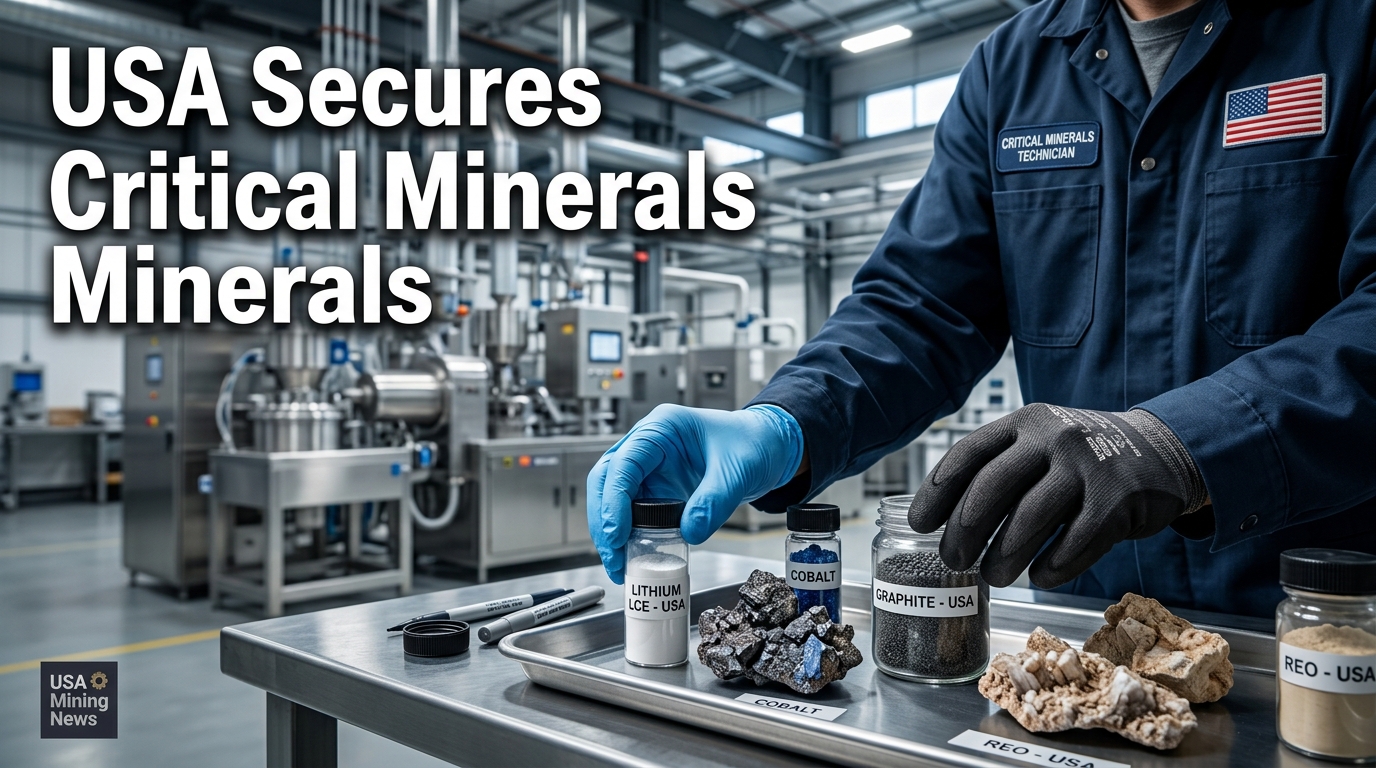
While the funding programs explicitly mention "battery materials processing," the broader context of "critical minerals and materials" extends far beyond the electric vehicle market. These essential elements—such as lithium, cobalt, nickel, graphite, rare earth elements, manganese, and a host of others—are indispensable across a myriad of American industries. They are vital for:
- Energy Production: Components in solar panels, wind turbines, and advanced nuclear reactors.
- National Security: Crucial for defense technologies, including precision-guided munitions, jet engines, and stealth technology.
- Advanced Manufacturing: Essential for high-strength alloys, catalysts, and specialized electronics.
- Everyday Technology: Found in smartphones, computers, medical devices, and other consumer electronics.
The expansion of domestic capacity for processing, manufacturing, and recycling these materials is therefore not just an economic imperative but a national security mandate. By ensuring that the resources America needs are processed, manufactured, and recycled within its borders, the U.S. aims to mitigate vulnerabilities to supply disruptions, price volatility, and geopolitical leverage exerted by dominant foreign suppliers.
Implications for the Mining Industry and Investment
For the U.S. mining industry, this $500 million investment represents a significant validation of efforts to develop domestic critical mineral resources. While direct extraction is often the first step, the larger challenge and opportunity lie in the midstream and downstream segments of the value chain – specifically, processing raw ores into battery-grade materials or other high-purity inputs. Historically, the U.S. has often exported raw concentrates for processing in other nations, particularly China, which dominates many critical mineral processing industries.
This DOE funding directly targets this processing gap, creating demand for sophisticated chemical engineering and metallurgical facilities within the United States. This will likely spur increased exploration and development activities for critical mineral deposits, as the economic viability of domestic mines is greatly enhanced when there are local processing options that capture more value. Investors in the mining sector will be keenly observing how these funds translate into tangible project development and capacity increases, signaling new avenues for capital deployment in domestic resource projects.
Furthermore, the emphasis on battery manufacturing and recycling creates a circular economy opportunity. Recycling critical materials from end-of-life batteries can significantly reduce the need for virgin mining, diversify supply sources, and improve the overall environmental footprint of the battery industry. This also creates a domestic feedstock source that is less susceptible to geopolitical risks.
The Road Ahead: Challenges and Opportunities
While the $500 million investment is a crucial step, scaling up America's critical mineral and battery supply chains presents a complex set of challenges:
- Permitting and Regulatory Hurdles: Expediting the permitting process for new mines and processing facilities while maintaining stringent environmental standards remains a critical balance.
- Skilled Workforce Development: A robust domestic industry will require a highly skilled workforce, from geologists and metallurgists to chemical engineers and specialized manufacturing technicians.
- Technological Innovation: Continuous investment in research and development is needed to improve extraction, processing, and recycling efficiencies, and to discover viable substitutes for certain critical materials.
- Capital Intensity: Building commercial-scale processing plants and battery factories requires significant capital investment beyond federal grants, necessitating strong private sector participation.
Despite these challenges, the long-term vision articulated by the DOE is clear: to establish a resilient, self-sufficient, and globally competitive critical materials industry within the United States. This strategic pivot not only aims to secure vital supply chains but also to unleash American innovation, create high-value jobs, and reassert leadership in the global energy transition.
Conclusion
The $500 million allocation by the U.S. Department of Energy on August 20, 2026, marks a watershed moment in America’s pursuit of energy independence and national security through domestic critical mineral and battery supply chain development. By focusing on critical mineral processing, battery manufacturing, and recycling, the DOE is taking concrete steps to move beyond rhetoric and towards tangible capacity building. This strategic investment, aligning with President Trump’s Unleashing American Energy agenda, signals a robust commitment to fostering a resilient domestic industry capable of supporting the nation's economic growth, technological advancement, and defense imperatives for decades to come. For stakeholders across the mining, manufacturing, and investment sectors, this represents a significant call to action and a blueprint for future growth and collaboration.