Winshear Metals Unlocks Metallurgical Potential at Portsoy's Rodburn Target
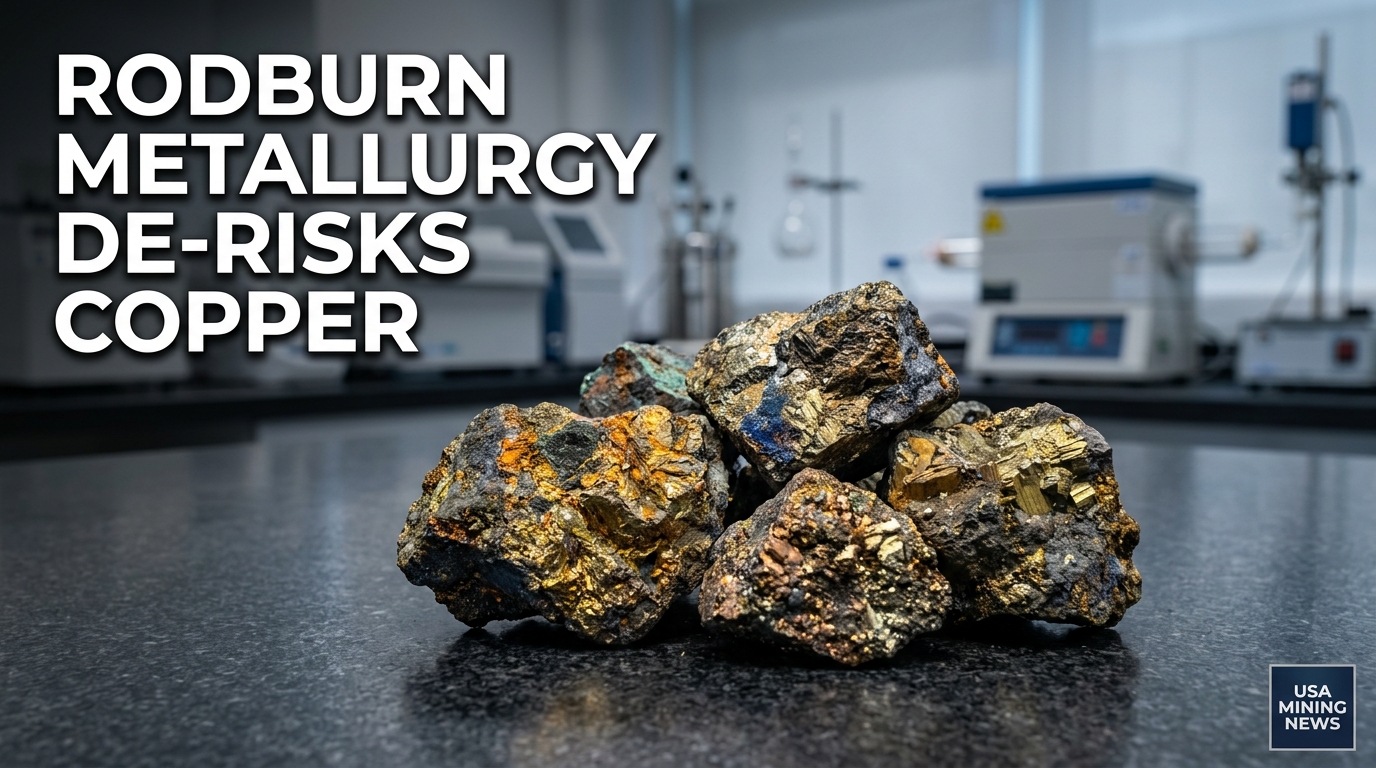
In a significant development for the global base metals sector, Winshear Metals announced positive initial metallurgical test results from its Rodburn Target, located within the Portsoy Project in north-east Scotland, UK. The findings, released on July 28, 2026, indicate a promising pathway for processing the project’s sulphide mineralisation, affirming its potential to yield high-quality, saleable copper and nickel concentrates with valuable cobalt by-products. This early-stage validation of metallurgical success represents a critical milestone for Winshear Metals, underpinning the economic viability of the Portsoy Project amidst escalating global demand for these essential critical minerals.
The Portsoy Project stands at the forefront of the United Kingdom's potential contribution to the supply of key industrial and battery metals. As economies worldwide pivot towards green energy and electric vehicle technologies, robust and ethically sourced supplies of copper, nickel, and cobalt are becoming increasingly strategic. Winshear Metals’ methodical approach to derisking the Rodburn Target, beginning with comprehensive metallurgical assessments, positions the project as a notable prospect in a region keen to reduce its reliance on imported raw materials.
The Foundation of Success: Initial Metallurgical Testwork Details
The initial metallurgical testwork programme was meticulously executed by Blue Coast Research, a highly regarded metallurgical consulting firm based in British Columbia, Canada. This selection underscores Winshear Metals' commitment to leveraging expert capabilities for thorough and reliable project assessment. The programme benefited from the direct oversight of key personnel: Rob Thorpe, Winshear’s Vice-President of Innovation and Technology, and Project Metallurgist Tony Tran, whose combined expertise ensured rigorous methodology and interpretation of results.
The objective of this initial testing was clear and strategically vital: to ascertain whether the mineralisation from the Rodburn Target could be efficiently processed using standard sequential flotation techniques. This conventional method is widely adopted within the mining industry for separating different sulphide minerals into distinct concentrates, making it a crucial benchmark for project feasibility. Demonstrating amenability to standard processing methods at an early stage significantly de-risks a project, reducing potential capital expenditure on bespoke or complex processing plants in future development phases.
The testing utilised a representative composite sample derived from drilling campaigns conducted across 2023 and 2024. This composite comprised both massive and disseminated sulphide mineralisation, ensuring that the metallurgical characteristics evaluated were reflective of the broader geological context of the Rodburn Target. The careful selection and preparation of samples are fundamental to generating accurate and predictive metallurgical data, providing a robust foundation for subsequent project development decisions.
Impressive Head Assays and Recovery Rates Signal Project Potential
The composite samples used for the testwork returned highly encouraging head assays, indicative of a valuable polymetallic deposit. These assays showed an average of 0.82% copper, 1.64% nickel (with 1.38% identified specifically as sulphide nickel), and 0.11% cobalt. For industry professionals, these grades represent a compelling starting point for a base metal project, with nickel content, particularly the sulphide component, being robust and cobalt offering significant by-product value. Sulphide nickel deposits are often preferred due to their generally simpler processing compared to laterite deposits.
Initial batch testing, a standard preliminary metallurgical procedure, yielded promising recovery rates. Copper recoveries ranged between 75% and 80%, while nickel recoveries were in the scope of 60% to 65%. While these figures represent early-stage, single-batch tests, they provide strong evidence of the mineralisation's responsiveness to flotation. In the context of preliminary metallurgical work, such recovery rates are considered positive and offer substantial scope for improvement as the project progresses to more advanced testing. It is standard practice in the mining industry to anticipate enhancements in recovery efficiency through further optimisations, such as grind size modifications, reagent scheme adjustments, and importantly, locked-cycle studies.
Locked-cycle tests (LCTs) are designed to simulate a continuous flotation circuit more accurately, providing a clearer picture of attainable recoveries and concentrate grades in a steady-state operation. The expectation from Winshear Metals that further testing, including LCTs, will improve these initial recovery rates is a standard and well-founded projection within the metallurgical engineering domain. The initial results successfully demonstrate that a significant percentage of the valuable metals can be liberated and recovered using established processing techniques.
Quality Concentrates: Attracting Smelter Interest
A particularly encouraging aspect of the test results was the quality of the concentrates produced. The processing successfully yielded two distinct, high-quality concentrates:
- Nickel Concentrates: These concentrates demonstrated impressive nickel grades, ranging between 14% and 16%. Crucially, they also contained over 1% cobalt, positioning Rodburn’s nickel concentrate as a significant source of this critical battery metal. Furthermore, the nickel concentrate included 0.54% copper, which under standard industry terms, would be considered payable by smelters, adding an additional revenue stream. Blue Coast Research, the independent metallurgical consultants, explicitly described this material as “highly attractive to nickel smelters.” This assessment is vital, as the marketability of concentrates directly impacts a project’s economic viability. Smelters seek concentrates with high metal content and low deleterious impurities, and Rodburn’s material appears to fit these criteria well.
- Copper Concentrates: The copper concentrates achieved grades of approximately 25% copper. Importantly, the nickel content in these copper concentrates was reported to be below 1%. This is a significant factor in concentrate marketability, as penalty charges are routinely applied by smelters for elevated levels of certain impurities, including nickel, in copper concentrates. By keeping nickel below typical penalty thresholds, Winshear has demonstrated the ability to produce a clean copper concentrate, further enhancing its appeal to purchasers.
The successful production of two distinct, high-grade concentrates through sequential flotation highlights the metallurgical characteristics inherent in the Rodburn mineralisation. Sequential flotation involves separating one mineral (e.g., copper sulphides) from another (e.g., nickel sulphides) in a staged process, which requires precise control and a good understanding of the mineralogy. The favourable outcomes from this initial testwork underscore the robust nature of the Portsoy mineralization and the potential for a financially attractive processing flowsheet.
Strategic Implications for Winshear Metals and the Portsoy Project
Richard Williams, CEO of Winshear Metals, highlighted the strategic importance of these findings. “These are very positive results at this stage of the Portsoy Project. It was key for us to understand the metallurgical characteristics of the mineralisation, and to ensure the recoverability of the copper, nickel and cobalt and the quality of the concentrates produced at an early stage,” Williams stated. He further added, “The results provide confidence that the Rodburn mineralisation can be processed using conventional methods, with the potential to produce saleable copper and nickel concentrates, supporting the case for further optimisation testwork as the project advances.”
Williams' comments underscore a fundamental principle in mineral project development: early-stage metallurgical understanding is paramount for de-risking a project. Confirming that conventional processing methods can achieve satisfactory recoveries and produce marketable concentrates significantly reduces technical risk and builds confidence among potential investors and financiers. It transitions a project from being a geological discovery to a potentially economically viable mining operation. This early validation of processing amenability informs subsequent stages of development, including resource modelling, mine planning, and economic studies such as preliminary economic assessments (PEAs) and feasibility studies (PFS/FS).
The Broader Market Context: Critical Minerals in Europe and Beyond
The positive metallurgical results from the Rodburn Target arrive at a time when the global appetite for copper, nickel, and cobalt is surging. These metals are indispensable for the ongoing energy transition and the burgeoning electric vehicle (EV) market. Copper is crucial for electrical infrastructure, wiring, and renewable energy systems. Nickel is a primary component in many modern EV battery chemistries, such as nickel-manganese-cobalt (NMC) and nickel-cobalt-aluminium (NCA), driven by its ability to increase energy density and lifespan. Cobalt, though its role is evolving in battery technology, remains a key ingredient for stability and performance in existing high-nickel cathodes and various other high-tech applications.
For Europe, the development of domestic sources of these critical raw materials is a strategic imperative. The continent faces significant dependence on external supplies for many of its raw materials, particularly those critical to industrial modernization and decarbonisation goals. Initiatives such as the European Union's Critical Raw Materials Act underscore the urgency of bolstering local supply chains. The Portsoy Project, situated in Scotland, UK, could therefore play a pivotal role in strengthening regional supply resilience, offering a potentially secure and ethically traceable source of essential metals for the European industrial base. This geopolitical context amplifies the significance of Winshear Metals' progress, attracting attention not just from mining investors but also from governments and end-users alike who are focused on supply chain security and sustainability.
Next Steps and Future Outlook
With the initial metallurgical hurdles successfully cleared, Winshear Metals is now poised to advance the Rodburn Target through further stages of optimisation. The immediate next steps will undoubtedly involve the already mentioned locked-cycle tests, which will provide more accurate projections of recovery rates and concentrate grades reflecting a continuous operation. Beyond this, a logical progression may include detailed mineralogical studies, pilot plant trials to test processing on a larger scale, and engineering studies to design a potential processing plant.
These metallurgical successes will feed directly into updated resource estimates and subsequent economic evaluations, such as a Preliminary Economic Assessment (PEA) or Pre-Feasibility Study (PFS). Such studies are crucial for outlining the economic parameters of the project, including capital and operating costs, and demonstrating the potential for profitability. The confidence gained from these early metallurgical results will undoubtedly support these ongoing efforts, fostering a positive trajectory for resource definition and, ultimately, the potential for Portsoy to develop into a significant UK base metal producer. For investors, these results provide tangible evidence of the project’s technical viability, substantially de-risking future investment decisions and reinforcing Winshear Metals’ position as a serious contender in the critical minerals space.