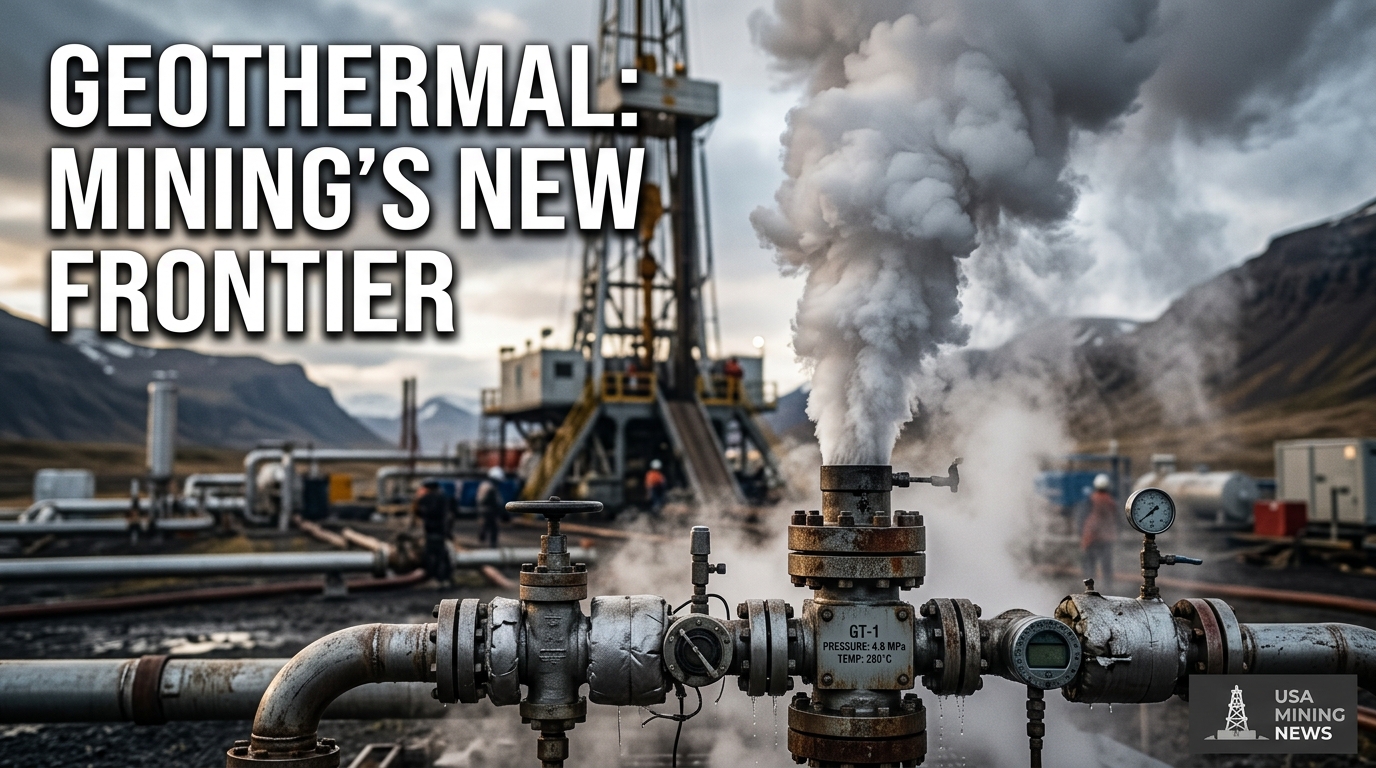
WASHINGTON, D.C. – In a move set to significantly accelerate the development of domestic clean energy, the U.S. Department of Energy (DOE) announced on September 21, 2026, an allocation of more than $99 million for 21 groundbreaking projects across the United States. This substantial investment is specifically targeted at advancing geothermal energy development, focusing on field-scale testing of next-generation technologies and extensive exploration drilling to characterize and potentially confirm high-potential geothermal resources. The announcement, made by Under Secretary of Energy Kyle Haustveit, reinforces the nation's commitment to leveraging its abundant domestic energy resources to enhance energy security, reliability, and affordability.
Geothermal energy, harnessing the Earth’s natural heat, stands out in the renewable energy landscape for its unique capability to provide reliable, around-the-clock power. Unlike intermittent sources such as solar or wind, geothermal plants can operate continuously, offering a stable baseload power supply that is critical for grid stability. This characteristic positions geothermal as a vital component in meeting the nation’s growing energy demand and strengthening the overall U.S. energy security posture. The DOE’s latest funding initiative is poised to reduce the technical and developmental risks associated with this promising energy source, paving the way for increased commercial investment and broader deployment.
Driving Innovation Through Focused Projects
The 21 selected projects represent a dual-pronged approach to geothermal advancement, strategically dividing efforts between technological validation and resource identification. This comprehensive strategy is designed to tackle the primary hurdles in geothermal development, from proving the efficacy of new operational methods to pinpointing economically viable reserves.
- Enhanced Geothermal Systems (EGS) Field Tests (5 projects): A significant portion of the funding is directed towards five projects that will conduct field-scale tests of Enhanced Geothermal Systems (EGS). EGS technology aims to create or enhance permeability in hot rock formations where natural water flow is insufficient for conventional geothermal power generation. This typically involves injecting water under pressure to create a subsurface fracture network, allowing water to circulate through the hot rock and extract heat before being brought back to the surface to generate electricity. These field tests are crucial for validating new drilling techniques, reservoir engineering strategies, and subsurface imaging technologies under real-world conditions. Success in these projects can dramatically expand the geographic potential for geothermal energy beyond traditionally active volcanic or tectonic regions, unlocking vast resources previously considered inaccessible.
- Exploration Drilling and Resource Characterization (16 projects): The majority of the projects, 16 in total, are dedicated to exploration drilling. These initiatives will focus on identifying and characterizing promising next-generation geothermal resources. This involves drilling exploratory wells to gather critical geological, geophysical, and geochemical data. The objective is to assess rock permeability, temperature gradients, fluid chemistry, and stress fields at various depths. Accurate characterization of these resources is fundamental for de-risking future commercial development, providing investors with the confidence needed to commit capital to large-scale projects. These exploration efforts are not just about finding heat; they are about understanding the specific geological conditions that will allow for efficient and sustainable heat extraction.
Under Secretary Kyle Haustveit articulated the broader vision, stating, These projects will empower American innovators to unlock the tremendous geothermal resources beneath our feet. Under President Trump’s leadership, we’re advancing next-generation geothermal technologies that can lower costs, strengthen American energy dominance, and turn more of our vast domestic geothermal resources into reliable and affordable power.
This statement underscores the strategic importance of geothermal in the national energy agenda, emphasizing its role in achieving energy independence and driving economic growth through technological leadership.
Implications for the Mining Industry: Synergies and Opportunities
While primarily focused on energy production, the DOE's significant investment in geothermal energy development carries profound implications and presents substantial opportunities for the mining industry. The fundamental processes involved in geothermal exploration and development share considerable technological, operational, and supply chain overlaps with mineral exploration and extraction.
Shared Expertise in Subsurface Operations
The core of both geothermal and mining operations lies in understanding and manipulating subsurface geology. The 16 exploration drilling projects funded by the DOE will require sophisticated drilling technologies, geological surveying, and geophysical imaging techniques that are routine in mineral exploration. Mining companies and their service providers possess decades of experience in:
- Advanced Drilling Techniques: Geothermal drilling, especially for EGS projects, involves penetrating deep, often hot and challenging rock formations. This demands high-temperature drilling fluids, specialized bits, and durable casing materials. Many of these requirements mirror those in deep mineral exploration or unconventional oil and gas extraction, areas where the mining services sector has significant expertise. Companies specializing in directional drilling, wireline logging, and core analysis will find a growing market in geothermal.
- Geological and Geophysical Characterization: Identifying promising geothermal reservoirs requires detailed geological mapping, seismic surveys, electromagnetic studies, and gravity measurements. These are standard tools in the mining industry for delineating ore bodies. The interpretation of these complex datasets for resource modeling is a shared skill set, opening avenues for geological consulting firms with mining backgrounds to diversify into geothermal.
- Reservoir Engineering: For EGS projects, understanding rock mechanics, fluid flow through fractured media, and heat transfer is critical. This overlaps with hydrogeological studies in mining, particularly concerning groundwater management and geotechnical stability of underground workings.
Supply Chain Demands and Material Opportunities
The expansion of geothermal infrastructure will generate significant demand for various raw materials and manufactured components, creating direct opportunities for the mining supply chain. Geothermal power plants, whether conventional hydrothermal or EGS, require substantial material inputs:
- Steel and Alloys: Drilling rigs, well casings, pipelines, and power plant structures are all steel-intensive. High-temperature and corrosion-resistant alloys are often necessary for components exposed to aggressive geothermal fluids. This drives demand for iron ore, nickel, chromium, and other alloy-forming minerals.
- Cement and Aggregates: Well cementing, foundational concrete for power plants, and road construction to access remote sites will require large volumes of cement and construction aggregates.
- Specialized Equipment: Pumps, turbines, heat exchangers, and associated control systems demand a range of metals and sophisticated manufacturing processes. Components designed for high-pressure, high-temperature, and corrosive environments often use specialized materials, creating niche markets for producers of specific metals and alloys.
- Critical Minerals: While not explicitly stated in the source, it is important to note that geothermal brines can sometimes be rich in critical minerals such as lithium, rare earth elements, and zinc. As geothermal development progresses, particularly in certain geological settings, there-extraction of these valuable co-products from geothermal fluids could become an economically significant ancillary activity, directly linking geothermal energy to critical mineral supply chains. This potential for integrated resource extraction could offer new revenue streams and strategic advantages to mining companies exploring diversified portfolios.
Infrastructure Development and Environmental Synergy
Developing geothermal projects often necessitates significant infrastructure development, including access roads, transmission lines, and water management systems. Mining companies frequently undertake similar large-scale infrastructure projects, possessing the logistical and engineering capabilities to support geothermal site development. Furthermore, the mining industry's growing focus on environmental stewardship and sustainable practices aligns with geothermal energy's clean energy profile. Collaborations could extend to sharing best practices in land reclamation, water usage, and minimizing environmental footprints.
Democratizing Data for Accelerated Progress
A crucial aspect of the DOE’s initiative is the commitment to making data publicly available. Data generated from these 21 projects, encompassing detailed geological findings from exploration drilling and performance metrics from EGS field tests, will be housed within the DOE’s Geothermal Data Repository (GDR). The GDR serves as a vital public resource, offering industry stakeholders, researchers, and other interested parties unparalleled access to foundational information. This transparent data sharing mechanism is expected to:
- Reduce Risk: By providing extensive data on subsurface conditions and technological performance, the GDR helps de-risk future commercial projects. Companies can leverage this information to make more informed investment decisions, reducing the need for redundant preliminary studies.
- Foster Innovation: Researchers and technology developers can utilize the data to refine existing models, develop new tools, and accelerate the pace of innovation in geothermal science and engineering.
- Inform Policy and Planning: Policymakers and grid operators can use the comprehensive data to better understand geothermal potential, aiding in long-term energy planning and regulatory development.
The availability of such a rich dataset extends the value of individual projects beyond their immediate scope, creating a cumulative knowledge base that benefits the entire geothermal sector and by extension, industries like mining that provide crucial support services and technologies.
Future Outlook and Commercialization Pathways
The selection of these 21 projects marks a pivotal step in the U.S. strategy to expand its geothermal energy footprint. However, the DOE notes that Selection for award negotiations is not a commitment by DOE to issue an award or provide funding. Before funding is issued, DOE and the applicants will undergo a negotiation process, and DOE may cancel negotiations and rescind the selection for any reason during that time.
This standard procedural caveat ensures rigorous scrutiny before the final allocation of funds, guaranteeing that only the most promising and well-vetted projects proceed.
Successful execution of these projects will provide critical empirical evidence and operational experience, significantly lowering the perceived risk for private sector investment. As technical uncertainties diminish and resource reliability is confirmed, more private capital is anticipated to flow into geothermal development. This will create a virtuous cycle where increased investment drives further technological refinement and larger-scale project deployment, ultimately fostering a robust domestic geothermal industry.
For the mining industry, these developments signify an expanding market for drilling services, geological expertise, advanced materials, and heavy equipment. Companies that proactively engage with the geothermal sector, adapting their existing capabilities and supply chains, will be well-positioned to capitalize on this burgeoning clean energy opportunity. The DOE's $99 million investment is not just about producing clean electricity; it is about cultivating an entire ecosystem of innovation and industrial growth, with mining playing an integral, if sometimes indirect, role in building the foundation for America's geothermal future.