WASHINGTON D.C. – In a move set to significantly bolster critical infrastructure in a strategically vital region, the U.S. Department of Energy (DOE) announced on October 5, 2026, its intent to utilize Defense Production Act (DPA) funding for the development of a second high-voltage connection across Alaska’s Railbelt. This monumental undertaking, known as the Alaska Energy Authority’s (AEA) Beluga-Healy Transmission Project, represents a planned total investment of $418 million, comprising up to $150 million in DPA funding alongside $268 million in non-federal contributions. The project is poised to enhance grid reliability, reduce electricity costs, and crucially, support both major U.S. military installations and the expanding resource development sector, including mining, which is deemed critical to national security.
Strategic Investment in Alaska's Energy Backbone
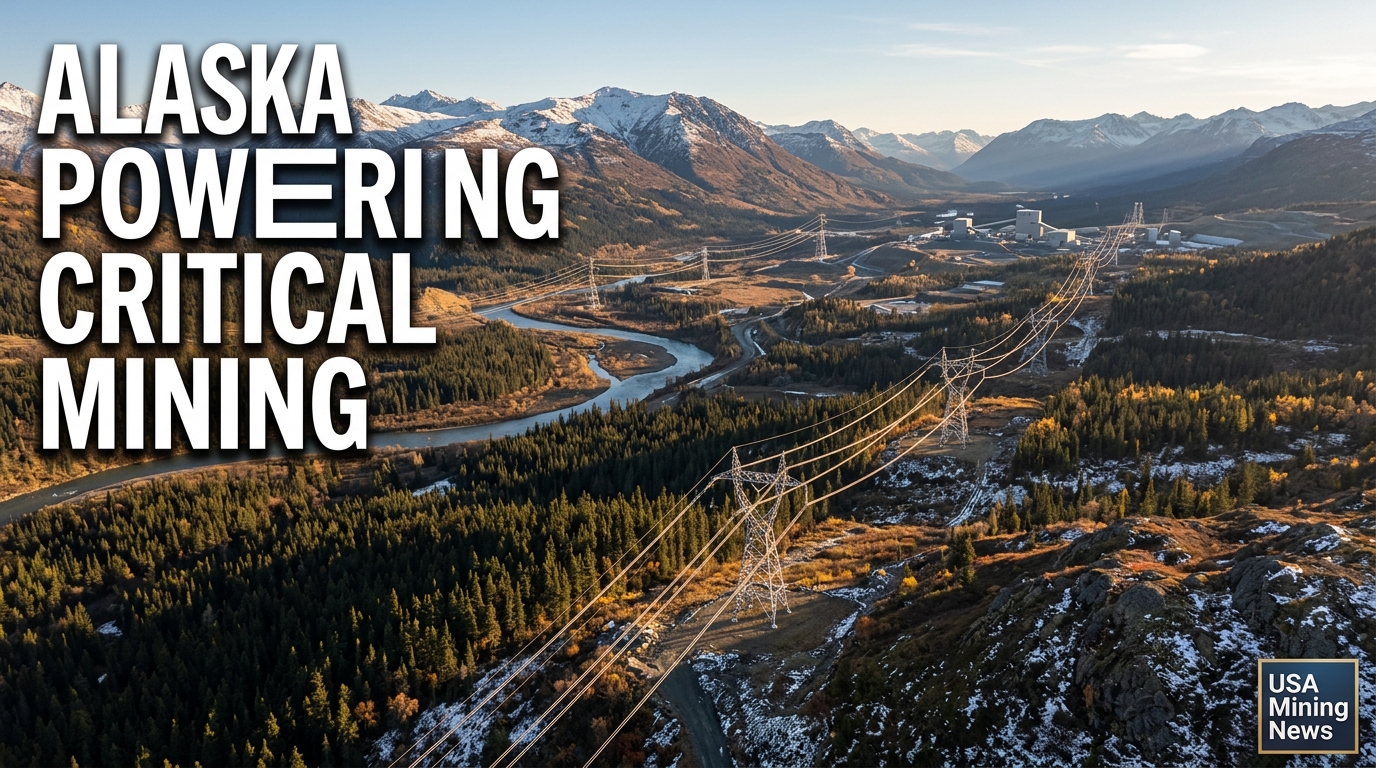
The Beluga-Healy Transmission Project is designed to construct approximately 223 miles of new transmission line, creating an additional pathway to move power between Alaska’s most densely populated communities and its significant military installations. This strategic infrastructure development is anticipated to benefit approximately 75% of Alaska’s population by strengthening grid reliability and lowering electricity costs. The project will connect Beluga, located in Southcentral Alaska, to Healy in Interior Alaska, thereby establishing a critical redundancy that is essential given the state’s challenging environment and the growing demands on its energy network.
The total preliminary planning estimate for this project stands at $418 million. This funding allocation reflects a concerted effort by the Trump Administration to deliver vital energy infrastructure while upholding fiscal responsibility. For the mining sector, the implications of a more robust and cost-effective power supply cannot be overstated, particularly in a region characterized by remote operations and the high energy demands inherent in mineral extraction and processing.
The Defense Production Act: A Tool for National Security
The application of Defense Production Act funding underscores the project’s strategic importance. The DPA, a Cold War-era statute, empowers the President to require businesses to accept and prioritize contracts for materials and services deemed necessary for national defense. Its invocation for the Beluga-Healy project highlights a significant federal recognition of energy transmission infrastructure as a cornerstone of national security.
This deployment of DPA funding follows Presidential Determination No. 2026-10, which explicitly identifies transmission lines and conductors, substations, and power-control and protection equipment as essential to national defense. This determination broadens the scope of critical assets beyond traditional military hardware to include fundamental energy infrastructure. Furthermore, the initiative is supported by $1 billion in federal funding appropriated for energy-related projects critical to national security, a direct result of President Trump and the passage of the Working Families Tax Cut.
For the mining industry, this precedent is significant. It signals a governmental willingness to leverage powerful legislative tools like the DPA to de-risk and enable infrastructure development that supports not just direct military needs but also the broader industrial base—including the secure domestic supply of critical minerals—that underpins national defense capabilities.
Key Players and Their Commitments
The U.S. Department of Energy has taken the lead in this strategic initiative. U.S. Secretary of Energy Chris Wright emphasized the administration’s commitment, stating, “Supporting improvements to Alaska’s transmission infrastructure with Defense Production Act funds reflects the Trump Administration’s commitment to strengthening national security, improving grid reliability, and lowering electricity costs.” Secretary Wright recounted an extensive briefing received from the Alaska Energy Authority during his August visit to Anchorage, facilitated by Senator Sullivan, which, combined with insights from Alaska Command, confirmed the urgent need for expanded energy infrastructure.
Crucially for the mining sector, Secretary Wright directly linked the project’s benefits to resource development: “This project will not only support the major U.S. military expansion currently underway in Alaska, but also mining and other resource development critical to our national security.” This explicit acknowledgment positions mining as a key beneficiary and a strategic asset in its own right.
Further reinforcing the necessity of the project, Office of Electricity Assistant Secretary Katie Jereza noted the unique challenges of Alaska’s environment: “Alaska’s weather is unforgiving, and its grid needs another way to keep power moving. Beluga-Healy will provide that critical second route, helping protect communities from disruptions and and meet growing demand.” The Alaska Energy Authority (AEA) is the primary entity responsible for the project’s execution, aligning with its mission to develop, manage, and operate energy projects for the benefit of Alaskans.
Powering Alaska's Resource Development: A Boon for Mining
Secretary Wright’s direct mention of "mining and other resource development critical to our national security" is a pivotal statement for the mining industry. Alaska is a state rich in mineral potential, including significant deposits of copper, gold, zinc, lead, silver, and increasingly, critical minerals and rare earth elements vital for modern technologies and defense applications. However, the high cost and unreliability of energy, particularly in remote regions often accessible only via air or sea, have historically been significant barriers to exploration, development, and production.
Mining operations are inherently energy-intensive, requiring substantial power for drilling, blasting, hauling, crushing, grinding, and processing ores. For many operations, particularly in isolated parts of Alaska, power is generated on-site using diesel fuel, which is expensive to transport and highly susceptible to price volatility and supply chain disruptions. The Beluga-Healy project, by providing a more reliable and potentially lower-cost grid connection, could fundamentally alter the economic viability of prospective and existing mines.
- Reduced Operating Costs: Connecting to a stable, high-voltage grid can dramatically lower electricity costs compared to diesel generation, improving profitability and extending mine life.
- Enhanced Reliability: A redundant transmission pathway minimizes the risk of power outages, which can lead to costly operational downtime, safety issues, and production losses.
- Investment De-risking: Improved infrastructure and energy security can make Alaska more attractive for new mining investments, especially for critical minerals that the U.S. seeks to secure domestically.
- Support for Expansion: As new military installations expand and local communities grow, demand for energy will rise. A strengthened grid ensures that resource development, including new mine projects, can access the necessary power without overburdening existing infrastructure.
The strategic imperative to secure domestic supplies of critical minerals, often sourced from geopolitical rivals, makes projects like Beluga-Healy even more vital. By providing the foundational energy infrastructure, the U.S. government is indirectly—and now explicitly—supporting the development of a resilient domestic supply chain for essential raw materials, many of which lie dormant in Alaska due to infrastructure limitations.
Enhancing Grid Reliability and Economic Resilience
Beyond its direct impact on military and mining operations, the Beluga-Healy project promises to significantly enhance the overall reliability and resilience of Alaska’s grid. The state’s extreme weather conditions, as noted by Assistant Secretary Jereza, pose constant threats to power infrastructure. A second high-voltage connection provides crucial redundancy, ensuring that if one line is disrupted, power can still be supplied, minimizing outages and protecting communities and industrial users from costly interruptions.
For existing industrial operations and businesses, this means more stable power, reduced operational risks, and potentially lower insurance costs. For communities, it translates to increased comfort, safety, and economic stability. Lower electricity costs can also foster broader economic growth, making the region more competitive for various industries and attracting new investment beyond the mining sector.
Future Outlook and Implications for the Mining Sector
The announcement marks a significant step, with the intent to deploy DPA funding providing a strong federal commitment to the Beluga-Healy project. While specific construction timelines were not provided in the initial announcement, the project's preliminary planning estimate of $418 million and the DPA's expedited mechanisms suggest an aggressive path forward.
For the mining industry, this development signals a potentially transformative era for Alaska. Companies engaged in exploration and development in the state should closely monitor the project’s progression, as its completion could fundamentally alter feasibility studies and investment decisions. The enhanced power infrastructure could unlock previously uneconomic deposits, especially those requiring large-scale processing facilities. It also underscores a broader federal recognition of the mining industry’s indispensable role in national security, potentially paving the way for similar infrastructure-focused support in other mineral-rich, remote regions of the United States.
Ultimately, the Beluga-Healy Transmission Project is more than just an energy infrastructure upgrade; it is a strategic investment in Alaska’s future, fortifying national defense, empowering local communities, and critically, enabling the responsible development of mineral resources essential for the nation’s economic prosperity and security.