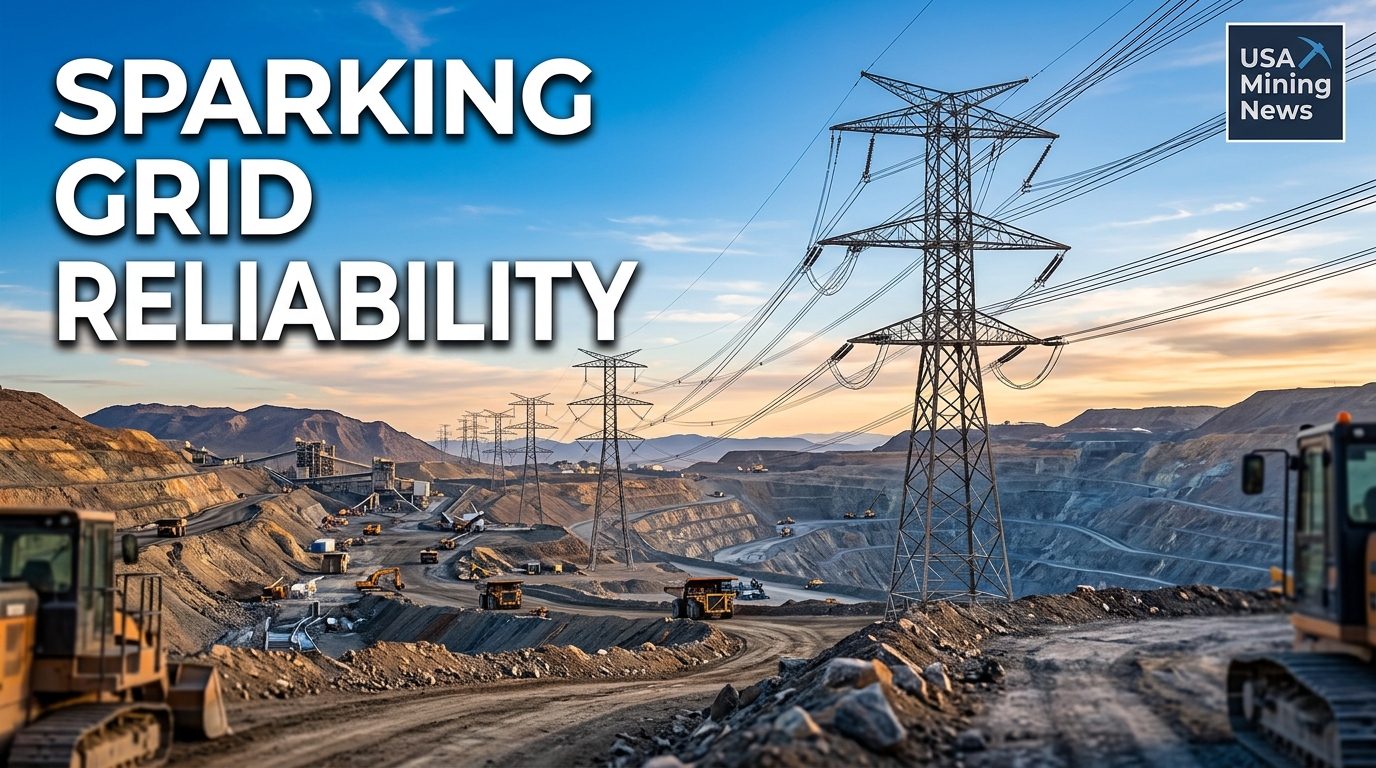
WASHINGTON D.C. – In a monumental step towards modernizing the nation’s electrical infrastructure, the U.S. Department of Energy’s (DOE) Office of Electricity (OE) unveiled on September 24, 2026, its intention to co-fund 31 pivotal grid-improvement projects spanning 26 states. This initiative, dubbed Speed to Power through Accelerated Reconductoring and other Key Advanced Transmission Technology Upgrades (SPARK), represents a total investment of $5.25 billion, with $1.9 billion in federal funding from the DOE and $3.35 billion contributed through recipient cost-share. The ambitious program is set to significantly enhance grid reliability and reduce electricity costs for an estimated 100 million Americans, marking a critical advancement for industries reliant on stable, affordable power, including the mining sector.
The SPARK Initiative: A Strategic Leap in Transmission Modernization
The SPARK initiative is strategically designed to extract maximum value from existing infrastructure, circumventing the protracted timelines and escalating costs often associated with entirely new transmission corridor development. Its core tenets involve reconductoring or rebuilding over 1,500 miles of transmission lines using higher-capacity conductors, thereby upgrading the electrical throughput of existing rights-of-way. This is coupled with the widespread deployment of Grid-Enhancing Technologies (GETs) across nearly 21,000 miles of the grid.
These Advanced Transmission Technologies (ATTs) are expected to yield substantial benefits:
- Expanded Grid Capacity: By replacing older, less efficient lines with modern, high-capacity conductors, the projects will unlock over 23 gigawatts of additional electricity capacity, a crucial factor for meeting growing demand.
- Increased Operational Efficiency: GETs and ATTs will optimize power flow, reduce transmission losses, and improve the overall performance of the grid.
- Lower Prices for Consumers and Businesses: By eliminating congestion bottlenecks and reducing operating costs, the initiative aims to directly lower electricity bills for American families and businesses.
- Enhanced Reliability and Security: Modernized lines and advanced technologies will bolster the grid's resilience against disruptions, including severe weather events, wildfire hazards, and potential blackouts.
This strategy is particularly noteworthy for its efficiency, as it endeavors to deliver massive grid upgrades in record time, sidestepping the multi-decade timelines typically required for greenfield construction projects. This agile approach is a direct response to the urgent need for a more robust and responsive national grid.
Significant Investment and Broad Reach
The $5.25 billion financial commitment underscores the scale and importance of the SPARK initiative. The federal contribution of $1.9 billion from the DOE, specifically channeled through the Grid Resilience and Innovation Partnerships (GRIP) program, leverages an additional $3.35 billion from the project recipients. This cost-sharing model fosters collaboration between federal agencies and local entities, ensuring a diversified investment in the nation’s energy future.
With 31 projects spread across 26 states, the geographical reach of SPARK is extensive, ensuring that the benefits of improved grid reliability and reduced electricity costs are distributed broadly across the country. The anticipated addition of more than 23 gigawatts of electricity capacity is a substantial increment, equivalent to powering millions of homes and supporting a significant portion of industrial demand.
Strategic Vision from Washington
The announcement was accompanied by strong endorsements from key U.S. energy officials. U.S. Secretary of Energy Chris Wright emphasized the administration’s commitment to pragmatic energy policies. "Today’s announcement reinforces the Trump Administration’s commitment to commonsense energy addition policies that lower electricity prices and strengthen our grid," stated Secretary Wright. He further highlighted that "These investments will get more out of the infrastructure we already have, move more electricity across the grid, and help deliver affordable, reliable, and secure power that will fuel American prosperity for decades to come." This statement aligns with President Trump’s Executive Order, Unleashing American Energy, which prioritizes maximizing the potential of existing energy infrastructure.
OE Assistant Secretary Catherine Jereza echoed this sentiment, underscoring the transformative potential of the selected projects. "These selected SPARK projects put advanced transmission technologies to work, modernizing critical infrastructure, maximizing the capacity of existing lines, and unlocking more than 20 gigawatts of additional grid capacity," Jereza remarked. She added, "DOE is moving with urgency to strengthen our grid, lower costs, and ensure America has the energy infrastructure needed to power the next generation of economic growth." The emphasis on urgency reflects a recognition of the evolving demands on the U.S. power grid.
Enhancing Resilience and Reducing Consumer Costs
Beyond the raw figures of capacity and mileage, the SPARK initiative promises tangible improvements in the daily lives of Americans and the operational viability of businesses. By maximizing existing rights-of-way, these projects will eliminate congestion bottlenecks that often lead to higher energy prices during peak demand. This approach avoids the significant financial and logistical hurdles of building entirely new transmission corridors, leading to lower operating costs that are expected to translate into reduced electricity bills for consumers.
Furthermore, strengthening overall grid resilience is a critical objective. The upgrades are designed to mitigate wildfire hazards, which have become an increasingly severe threat to infrastructure in several U.S. regions. They will also enhance protection against severe weather events, a frequent cause of widespread blackouts, and generally improve the grid's ability to withstand disruptions, thereby ensuring a more stable and secure power supply for all sectors.
Profound Implications for the Mining Industry
For the mining industry, a sector characterized by its significant energy intensity and reliance on uninterrupted power, the SPARK initiative carries profound implications. A modernized, more reliable, and cost-effective electrical grid is not merely beneficial; it is foundational for both current operations and future strategic growth.
- Energy Security and Cost Stability: Mining operations, from crushing and grinding to processing and refining, are highly energy-intensive. Fluctuations in electricity costs or unreliable supply can severely impact operational profitability, especially for high-volume, low-margin endeavors. The SPARK initiative's promise of lower, more stable electricity prices directly improves the economic viability of mining projects across the 26 states. Enhanced grid reliability also reduces the risk of costly downtime due to power interruptions, safeguarding production schedules and capital investments.
- Electrification and Decarbonization Pathways: The global mining industry is increasingly moving towards electrification of its fleets and operations as part of broader decarbonization efforts. This shift, involving battery-electric haul trucks, loaders, and other heavy equipment, requires a robust, high-capacity grid to support charging infrastructure and increased power demand. The >23 gigawatts of additional capacity and improved transmission lines provided by SPARK directly facilitate this transition, making it more feasible for U.S. mines to adopt sustainable practices and reduce their carbon footprint.
- New Project Development and Expansion: The availability of reliable and affordable power is a critical gating factor for the permitting and financing of new mining projects or the expansion of existing ones. Increased grid capacity and reduced congestion can unlock previously uneconomic deposits, particularly those located in remote areas or requiring substantial processing power. This infrastructure upgrade lowers the overall risk profile for new mining investments within the U.S.
- Bolstering the Critical Minerals Supply Chain: As the U.S. strives to secure its domestic supply chain for critical minerals—such as lithium, copper, nickel, and rare earth elements—robust electrical infrastructure becomes non-negotiable. These minerals are vital for renewable energy technologies, electric vehicles, and defense applications. The SPARK initiative's focus on faster grid upgrades can significantly accelerate the development and operationalization of domestic mines and processing facilities, thereby reducing reliance on foreign sources and strengthening national economic security. The projects themselves will demand significant volumes of copper and aluminum for new conductors, driving direct demand for the mining sector.
- Regional Economic Impact: With projects spread across 26 states, the benefits are regionally diverse. States with significant mining activities will likely see tangible improvements in their energy infrastructure, directly supporting local mining communities and associated industries.
Accelerating Grid Modernization: A New Model
The SPARK initiative represents a fundamental shift in how the U.S. approaches grid modernization. By prioritizing advanced technologies and leveraging existing infrastructure, it offers a pragmatic and rapid pathway to significant upgrades, moving beyond the traditional challenges of new corridor construction. The DOE’s approach, informed by extensive industry feedback gathered through the Speed to Power (STP) Request for Information (RFI) Analysis, demonstrates a commitment to designing programs that are responsive to real-world operational needs and technological advancements.
The Path Forward
The 31 projects announced under the SPARK initiative are poised to kickstart a new era of grid development in the United States. This strategic investment is expected to deliver tangible benefits in terms of reliability and cost, which are fundamental pillars for industrial growth and national competitiveness. For the mining industry, a sector at the very foundation of modern infrastructure, a stronger, more resilient, and more affordable energy grid facilitated by SPARK is not just an improvement—it is an essential catalyst for innovation, sustainability, and expanded domestic production, ensuring that American mining can power the next generation of economic prosperity.