In a move poised to significantly impact the global tungsten supply chain and Rwanda's burgeoning critical minerals sector, Almonty Industries has entered into a binding agreement with the Government of Rwanda. This partnership, formalized on September 15, 2026, establishes a new tungsten-focused entity, Almonty Rwanda, designed to streamline the collection and export of tungsten ore, pre-concentrates, and panning tailings from the nation's numerous small-scale licence holders. The agreement not only solidifies Almonty's presence in a key African mining jurisdiction but also represents a strategic alignment with international efforts to secure diversified and traceable supplies of critical minerals.
Strategic Partnership Forged: Almonty and Rwanda Unite on Tungsten Initiative
The newly formed partnership, Almonty Rwanda, is structured with the Government of Rwanda holding a 25% interest, underscoring a shared commitment to the project's success and the economic development of the country. Almonty Industries, a company with a global footprint in tungsten mining, will retain the remaining 75% stake, bringing its operational expertise, processing technology, and market access to the venture. A cornerstone of Rwanda's contribution to this partnership is the provision of the Shyorongi exploration concession, an area spanning approximately 32 square kilometers, alongside a crucial mineral processing licence. These contributions are vital, providing the new platform with both a prospective resource base and the regulatory framework necessary for operations.
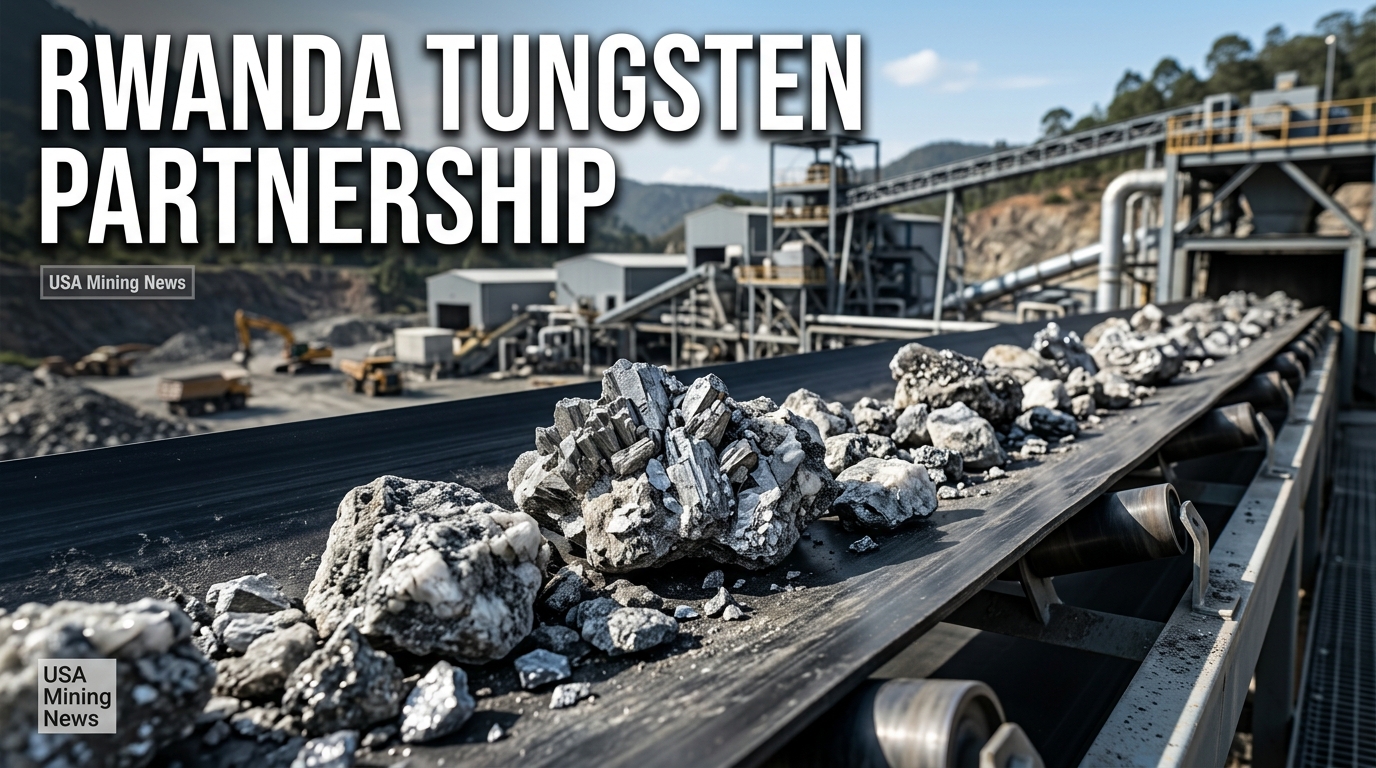
The primary objective of Almonty Rwanda is to create a robust and efficient system for collecting and exporting tungsten materials sourced from small-scale operators across the country. This model aims to integrate a fragmented sector into a more structured supply chain, addressing common challenges associated with artisanal and small-scale mining, such as informal trade, limited processing capabilities, and difficulties in traceability. The direct involvement of the Rwandan government as an equity partner in Almonty Rwanda is expected to facilitate smoother operations, particularly in navigating local regulations and fostering collaboration with local communities and mine operators.
Leveraging Existing Production and Modernizing Supply Chains
A key immediate focus of the Almonty Rwanda partnership is to capitalize on the tungsten material already being produced by Rwanda’s small-scale licence holders. As Almonty chairman, president and CEO, Lewis Black, elaborated, "The most immediate opportunity here is the material that is already being produced. Rwanda’s small-scale license holders are producing ore, pre-concentrate and panning tailings today, and this agreement allows us to collect, upgrade and export that material while we build out the collection and processing plant." This strategy acknowledges the existing production base and seeks to enhance its value proposition through modern processing techniques.
To achieve this, the partnership plans to deploy a mobile processing unit dedicated to upgrading these collected materials. This interim solution will enable the export of processed products while the longer-term goal of constructing a permanent, centralized collection and processing plant in Rwanda is pursued. The commitment to developing a centralized facility signifies a move towards industrial-scale operations and a more integrated processing capability within the country, potentially adding greater value to Rwanda’s mineral exports. The government's role will extend to assisting Almonty Rwanda in the acquisition of material from local mine operators, landowners, and existing licence holders, providing critical logistical and relational support.
Mr. Black further emphasized the synergistic nature of the partnership: "We are combining that existing production base with modern processing, traceability and our own exploration programme, with the Government of Rwanda participating alongside us as an equity partner." This statement highlights the multi-faceted approach, encompassing not just processing and export but also the integration of modern traceability standards and future exploration efforts to expand the resource base.
The Role of Government Support and International Frameworks
This initiative is not merely a commercial venture but also a product of significant diplomatic efforts, particularly from the United States. The agreement follows an introduction facilitated by the US Department of State, under the auspices of the 2025 US-Rwanda Framework for Shared Economic Prosperity. This framework underscores a broader strategic interest from the US in fostering economic development and securing critical mineral supply chains from diverse, geopolitically stable sources.
Further demonstrating its commitment to the region, the US has also signaled additional support for investments in critical minerals through the Washington Accords for Peace and Prosperity. These diplomatic overtures highlight the increasing geopolitical importance of critical minerals like tungsten, which are essential for advanced technologies, defense applications, and renewable energy infrastructure. Such international backing provides an added layer of stability and potential for future growth for the Almonty Rwanda partnership, positioning it within a wider strategic context of global critical mineral security.
Both Almonty and the Government of Rwanda view this transaction as a crucial first stage towards a more expansive investment framework. This broader vision includes future development initiatives and, ultimately, the construction of the aforementioned centralized processing facility in Rwanda. This incremental approach allows the partnership to build capacity and demonstrate success with immediate exports before scaling up to larger, more capital-intensive projects.
Shyorongi Concession: A Hub for Near-Term Production
The Shyorongi exploration concession, encompassing approximately 32 square kilometers, is more than just a land grant; it is strategically chosen to provide access to near-term production. Its location is designed to tap into the existing output of the small-scale mining sector, making it an ideal hub for the collection and initial processing activities. This focus on immediate production avoids the significant lead times often associated with greenfield exploration and development, allowing the partnership to generate revenue and build operational experience swiftly.
The concession's role in the partnership's strategy is to provide a geographical focal point for consolidating material flows, applying modern processing techniques, and establishing a traceable supply chain from the ground up. This methodical approach is critical for building confidence among international buyers and meeting the increasingly stringent demands for responsibly sourced minerals.
Global Tungsten Market Dynamics and Traceability Imperatives
The timing of this partnership is particularly relevant given evolving global market dynamics and regulatory requirements for tungsten. Tungsten is a high-strength, high-temperature metal crucial for numerous industrial and defense applications, including cutting tools, armor-piercing ammunition, and electronics. Its designation as a critical mineral by several leading economies underscores its strategic importance.
A significant driver for increased scrutiny of tungsten supply chains is the forthcoming US defence procurement regulations. Starting from 2027, these regulations will mandate greater traceability of tungsten ore and feedstock. This shift places increased emphasis on documented sources of supply, moving away from opaque or conflict-affected regions. The Almonty Rwanda partnership, with its focus on structured collection, modern processing, and government oversight, is ideally positioned to meet these stringent requirements, offering a transparent and verifiable source of tungsten for international markets.
Almonty Industries is not a newcomer to government-backed mining developments, with its project pipeline including significant operations supported by government agencies in other countries, such as South Korea and Germany. For instance, in July 2026, Almonty commenced processing plant throughput operations at its Sangdong Mine in South Korea, demonstrating its capability to bring large-scale tungsten projects into production with government collaboration. This track record lends credibility to its approach in Rwanda and its ability to navigate complex regulatory and operational landscapes in partnership with national governments.
Future Outlook and Broader Implications for Critical Minerals
The Almonty-Rwanda partnership represents a strategic convergence of interests: Almonty's pursuit of diversified, high-quality tungsten sources; Rwanda's ambition to develop its mining sector and create economic opportunities; and the US's broader objective of securing critical mineral supply chains. As a "first stage" transaction, it lays the groundwork for potentially much larger investments and infrastructure development in Rwanda's critical minerals sector.
The successful implementation of this partnership could serve as a model for future critical mineral initiatives in Rwanda and the wider East African region. By formalizing and modernizing the small-scale mining sector, enhancing traceability, and establishing local processing capabilities, Almonty Rwanda aims to contribute significantly to the country's economic diversification and industrial growth. For the global mining industry, it exemplifies a collaborative approach to resource development that aligns commercial objectives with national development goals and international strategic imperatives for critical minerals security. The world watches keenly as this partnership progresses, anticipating its role in reshaping the future of tungsten supply.