WASHINGTON – The U.S. Department of Energy (DOE) has allocated up to $65.5 million in federal funding to advance domestic oil and natural gas production and delivery systems, an initiative poised to bolster the nation's energy security and industrial resilience. Announced on July 23, 2026, the funding will support cost-shared research, development, and deployment projects designed to improve the efficiency and reliability of critical energy infrastructure while also converting underutilized resources into valuable commodities. This strategic investment highlights the ongoing commitment by the U.S. government to ensure a robust and stable energy supply, a factor critically important for energy-intensive sectors such as mining.
The funding opportunity, explicitly structured to support President Trump’s Executive Order, Unleashing American Energy, aligns with the broader Trump Administration’s objective of providing Americans with access to affordable, reliable, and secure energy through the responsible development of the nation’s abundant hydrocarbon resources. This federal commitment extends beyond merely extracting more fuel; it delves into the technological and infrastructural advancements necessary to modernize the entire oil and natural gas value chain.
Driving Efficiency and Reliability
DOE Under Secretary of Energy Kyle Haustveit emphasized the strategic importance of these investments. "Thanks to President Trump’s leadership, the Energy Department is making strategic investments to strengthen America’s oil and natural gas industry and reinforce the critical infrastructure that powers our economy," stated Under Secretary Haustveit. He further articulated that the funding is intended to empower American producers to eliminate waste, improve operational efficiency, and deliver the affordable, reliable, and secure energy fundamental to economic stability and national security. For the mining industry, a sector heavily reliant on stable energy prices and secure fuel supplies for its extensive operations, these foundational improvements in the oil and natural gas sector translate directly into greater operational predictability and potentially lower energy costs.
The extensive U.S. oil and natural gas production and delivery system is a cornerstone of the national economy, supplying vital energy for manufacturing, chemical production, electric power generation, residential consumption, and a burgeoning energy export sector. The DOE’s Notice of Funding Opportunity (NOFO) invites innovative proposals addressing three primary areas, each with profound implications for how the nation manages its energy resources and infrastructure.
Maximizing the Value of Stranded and Underutilized Resources
One of the core objectives of this funding initiative is to develop and validate technologies capable of transforming oil, natural gas, and associated product streams—particularly those currently stranded, flared, or limited by contaminants—into high-value, readily transportable products. This area directly addresses the significant environmental and economic waste associated with flaring natural gas at wells where pipeline infrastructure is absent or insufficient, or where the gas quality is too poor for immediate commercialization.
Funded projects under this category are expected to progress through several critical stages:
- Laboratory-scale validation: Focusing on new catalysts, reactor systems, and separation processes that can efficiently convert difficult-to-process hydrocarbons.
- Field-testing modular, decentralized gas conversion systems: Deploying smaller, adaptable units directly at production sites to process gas that would otherwise be flared or remain unutilized.
- Sour gas processing facilities: Developing and testing technologies to handle natural gas with high concentrations of hydrogen sulfide and other contaminants, converting it into saleable products while concurrently reducing harmful emissions.
The implications for the mining industry are noteworthy. Many remote mining operations face similar challenges regarding energy supply, often relying on diesel generators or localized power solutions. Technologies developed to utilize stranded gas in active oil and gas basins could potentially be adapted or inspire solutions for remote mining sites, offering more sustainable and cost-effective power generation alternatives through localized resource utilization instead of relying solely on transported fuels.
Enhancing Supply Chain Durability and Infrastructure Reliability
Another crucial focus area is the development, validation, and field-testing of advanced materials, innovative equipment, and novel infrastructure components designed to prevent product losses and bolster domestic chemical supply chains. This component of the funding is vital for upgrading the physical backbone of the energy delivery system, ensuring its resilience against operational failures, extreme weather events, and other disruptions.
Specific areas of improvement include:
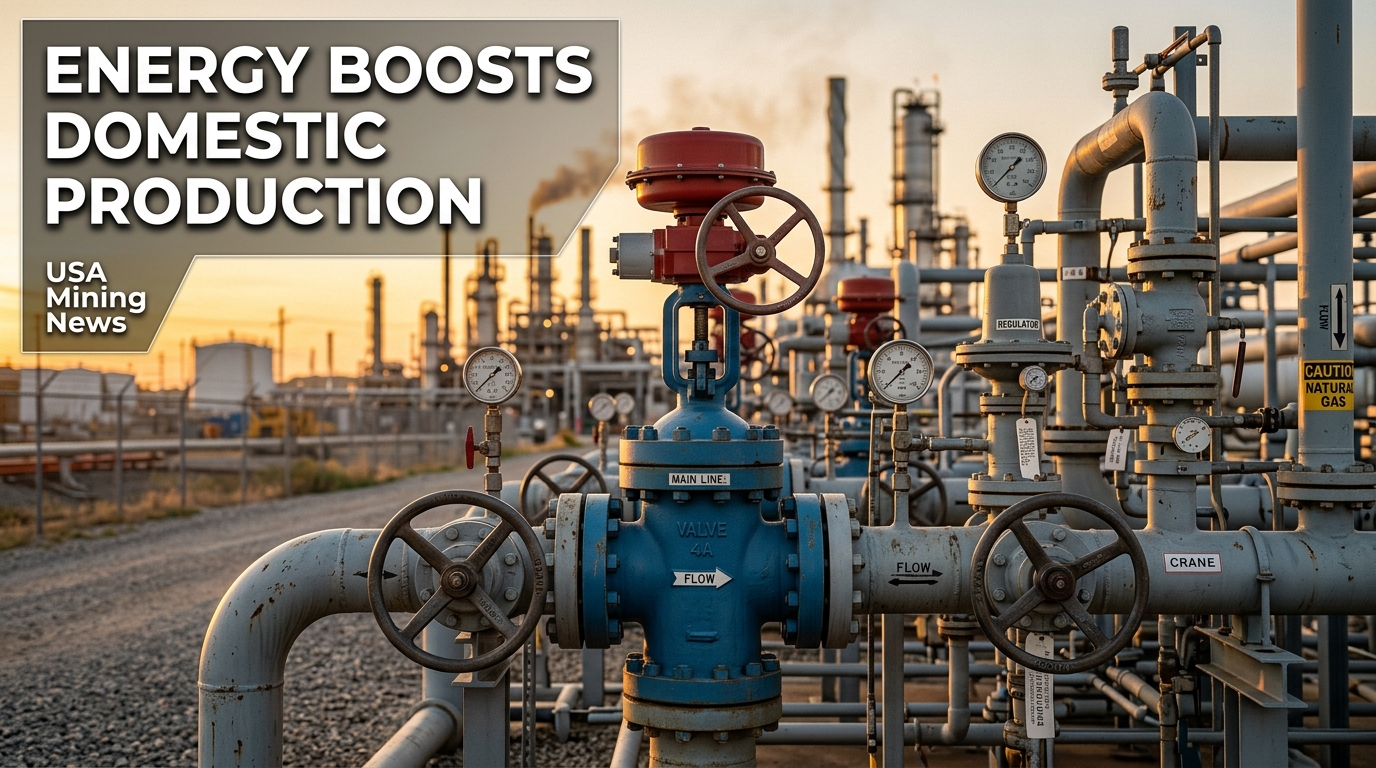
- Facility-level equipment: Enhancing the durability and performance of key components such as compressors, valves, and piping within processing plants and along transport routes.
- Transport infrastructure: Improving the integrity of storage tanks, coatings, and specialized alloys used in pipelines to maximize safe and efficient energy delivery.
For the mining sector, the health and reliability of chemical supply chains are paramount. Mining operations are highly dependent on a continuous supply of various chemicals and reagents for processing ores, managing tailings, and treating water. Strengthening domestic chemical supply chains by ensuring stable and efficient delivery from the oil and gas sector (which provides many chemical feedstocks) indirectly supports the operational stability and cost-efficiency of mining ventures across the U.S. Furthermore, advanced materials and infrastructure components developed for oil and gas could find analogous applications in mining's demanding operational environments, improving the longevity and safety of mining equipment and facilities.
Optimizing Operations Through Digitalization and Smart Test Sites
The third major thrust of the DOE funding is to accelerate the adoption of digital technologies, smart facility concepts, and advanced analytics within the upstream and midstream oil and natural gas sector. This embrace of digitalization is a critical step towards modernizing energy operations, enhancing safety, and boosting overall efficiency.
Projects under this area will specifically:
- Utilize full-scale, field-based validation platforms and test sites to deploy continuous monitoring systems.
- Implement artificial intelligence-supported digital twins for real-time simulation and predictive maintenance.
- Develop infrastructure optimization systems aimed at increasing saleable hydrocarbons, reducing operating costs, and providing a robust framework for tracking the technical maturity of emerging technologies.
The push for digitalization in the oil and gas sector carries significant lessons and potential direct transfers for the mining industry. Mining, too, is increasingly adopting digital technologies, from autonomous equipment to integrated operational centers and predictive analytics for maintenance. The development of AI-supported digital twins and continuous monitoring systems in oil and gas can serve as blueprints for similar implementations in mining, where complex interactions between machinery, geology, and processing plants make simulation and predictive capabilities invaluable. These advancements promise to enhance safety, reduce unscheduled downtime, and optimize resource extraction, mirroring the benefits sought in the oil and gas sector.
Broader Context and Previous Investments
This $65.5 million announcement on July 23, 2026, builds upon the DOE’s recent allocation of a separate $150 million funding opportunity. That earlier initiative focused on enhancing recovery efficiency from unconventional oil and gas reservoirs, advancing hydraulic fracture characterization technologies, and developing innovative approaches for produced water management. Taken together, these substantial federal investments underscore a comprehensive strategy by the U.S. government to not only sustain but also significantly modernize and de-risk the domestic oil and natural gas industry.
For the mining industry, these broader energy policies and investments are foundational. Reliable and affordable energy is a fundamental input for nearly every stage of mining, from exploration and extraction to processing and transportation. By fostering a more efficient, resilient, and technologically advanced oil and natural gas sector, these DOE initiatives contribute to a more stable energy landscape for all heavy industries. This stability can mitigate operational risks, control energy costs—which can often constitute a significant portion of a mine's operating expenses—and support the development of crucial infrastructure that indirectly benefits remote mining operations.
Future Outlook and Application Deadline
The applications for this notice of funding opportunity are due by September 22, 2026, at 5:00 p.m. ET. The projects selected will not only contribute to the technological advancement of the oil and natural gas industry but also set new benchmarks for efficiency, environmental stewardship, and supply chain resilience. The outcomes are expected to translate into reduced energy waste, lower carbon footprints, and a more secure domestic energy supply capable of meeting the diverse demands of the U.S. economy.
Ultimately, a thriving and innovative oil and natural gas sector translates into more predictable and potentially lower energy costs for mining companies, more robust supply chains for critical reagents and equipment, and a stronger national energy infrastructure that can support future industrial growth. These federal investments thus represent a strategic commitment that extends beyond the immediate beneficiaries, touching all sectors that rely on a powerful, reliable, and secure energy future for the United States.