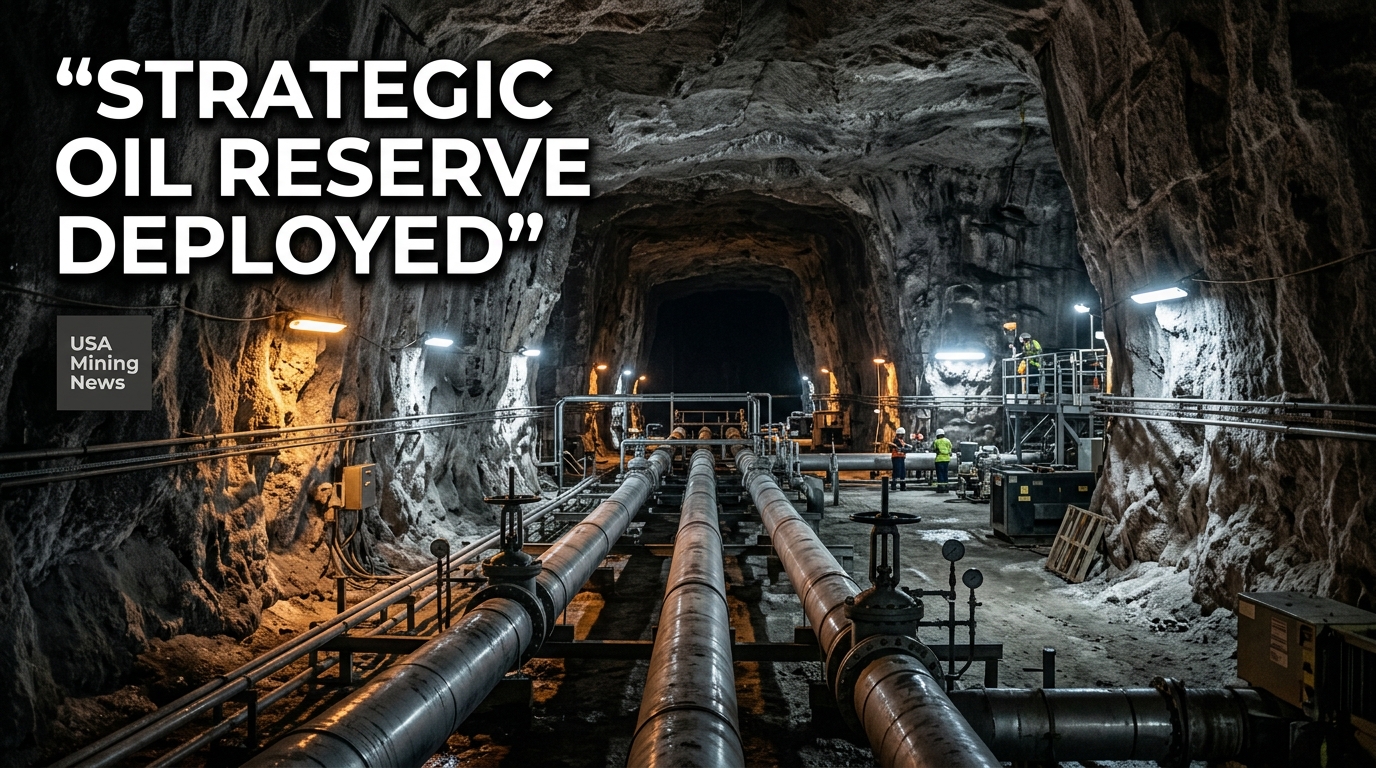
WASHINGTON—In a decisive move to bolster regional energy security and alleviate burgeoning costs for consumers, the U.S. Department of Energy (DOE) announced on October 21, 2026, an authorized exchange of ultra-low sulfur distillate from the Northeast Home Heating Oil Reserve (NEHHOR). This strategic release, aimed at addressing immediate supply chain disruptions, will see up to 315,000 barrels of fuel oil enter the market, a measure the Trump Administration frames as a commitment to reliable energy access and cost reduction for American citizens. For the mining industry, a sector critically reliant on consistent and affordable energy supplies, this intervention serves as a stark reminder of the intricate vulnerabilities within national energy infrastructure and the far-reaching economic implications of supply instability.
Strategic Maneuver: Tapping the Northeast Home Heating Oil Reserve
The DOE’s decision to tap into NEHHOR is a direct response to prevailing supply chain challenges that have been disrupting the flow of fuel oil, threatening to escalate home heating costs for residents across the Northeast during the impending winter season. U.S. Secretary of Energy Chris Wright underscored the administration's commitment, stating, "The Trump Administration is committed to doing everything in our power to lower energy costs for the American people." This directive followed extensive discussions, including a letter from Senators Collins and King, highlighting the urgency of the situation. While presented as a temporary solution to a temporary disruption, the action signals the federal government’s willingness to utilize strategic reserves to stabilize markets and protect consumers from acute price shocks, a factor that resonates deeply within the capital-intensive mining sector.
Under the terms of the exchange, borrowing companies will be obligated to return the equivalent volume of fuel oil, along with a premium, ensuring that the NEHHOR is fully refilled well in advance of the 2027–2028 heating season. This repayment mechanism is crucial for maintaining the reserve's integrity and its intended purpose as a strategic buffer against future emergencies. The specific sites from which the fuel oil will be exchanged include:
- South Portland, Maine
- Boston, Massachusetts
- New Haven, Connecticut
The logistics are ambitious, with fuel transfers or deliveries scheduled to be completed by November 13, 2026, demonstrating the urgency with which the DOE is approaching the current supply predicament.
The Mechanics of the Exchange: Volume and Bidding Process
The Request for Proposal (RFP) issued by the DOE outlines a structured bidding process designed to maximize participation and ensure efficient distribution of the released fuel. The solicitation allows for competitive engagement from various market participants, including fuel retailers and terminal holders. Key parameters for the bids include:
- An exchange of up to 315,000 barrels of ultra-low sulfur distillate (fuel oil).
- A minimum offer quantity of 25,000 barrels.
- A maximum offer quantity of 30,000 barrels per single offer.
- The volume available per individual storage site shall not exceed 150,000 barrels.
- Offerors are permitted to submit multiple offers, fostering broader competition.
Bids for this solicitation are due no later than 11:00 A.M. Central Time on Tuesday, October 27, 2026. This tight turnaround underscores the immediate need to inject supply into the market ahead of the harshest winter months. The structure of the solicitation aims to facilitate the rapid flow of product into areas experiencing the most significant fuel shortages, directly supporting the objective of mitigating heightened home heating oil costs.
Broader Implications for Energy Security and Supply Chains in Mining
While the immediate focus of this DOE action is on home heating oil in the Northeast, its underlying rationale—addressing supply chain disruptions and managing energy costs—carries significant resonance for the global mining industry. Mining operations are among the most energy-intensive industrial activities, requiring vast quantities of fuel and electricity to extract, process, and transport raw materials.
Ultra-low sulfur distillate, commonly known as diesel fuel, is the lifeblood of modern mining fleets. Heavy-duty equipment such as haul trucks, excavators, loaders, and drills consume millions of gallons of diesel annually. Any disruption in the supply chain of this critical fuel, or any significant volatility in its price, directly impacts mining companies’ operational stability and financial performance. A situation requiring the release of strategic reserves, even for home heating, signals a fragility in the broader distillate market that mining companies must continuously monitor and plan for. Such interventions highlight that vulnerabilities can quickly spread across different end-use sectors, affecting availability and pricing across the entire market.
The Cost of Energy: A Direct Hit to Mining Operations
For mining executives and investors, the price of energy inputs, particularly diesel, is a fundamental determinant of profitability. Fluctuations in fuel costs can dramatically alter project economics, influence capital allocation decisions, and even dictate the viability of marginal operations. For example, a sustained increase in diesel prices can:
- Escalate Operating Expenses: Fuel typically represents a significant percentage of a mine’s direct operating costs, sometimes as high as 20-30% for open-pit operations.
- Impact Transportation Logistics: The cost of transporting mined ore to processing plants or ports, as well as delivering equipment and supplies to remote mine sites, becomes prohibitively expensive.
- Affect Investment Decisions: Higher energy costs can reduce the net present value (NPV) of new projects, making them less attractive to investors.
- Force Operational Adjustments: Mines might be compelled to reduce production, defer maintenance, or even temporarily suspend operations if fuel costs become unsustainable.
The federal government’s intervention to lower heating oil costs in the Northeast through a reserve exchange demonstrates a political and economic sensitivity to energy prices that extends beyond residential consumers. It reflects an understanding that high energy costs ripple through the economy, affecting industrial production and consumer purchasing power, ultimately impacting demand for a vast array of mined commodities from copper and lithium to iron ore and coal.
Infrastructure Debates and Long-Term Solutions: Natural Gas vs. Distillates
Beyond the immediate tactical maneuver, Secretary Wright’s remarks introduce a broader strategic discussion relevant to the mining industry: the role of natural gas infrastructure. He explicitly encouraged the "governors of New York and New England to work with the Trump Administration to build the Constitution Pipeline and replace home heating oil with low-cost natural gas." He asserted that doing so "would save their residents billions of dollars in home heating and electricity costs."
This emphasis on natural gas infrastructure is highly pertinent to mining. Natural gas is often a more cost-effective and environmentally favorable energy source compared to fuel oil for electricity generation and industrial heat. Many mining operations, particularly those with processing plants requiring significant thermal energy (e.g., smelting, refining), have increasingly looked to natural gas as a primary fuel source where pipeline access permits. The debate over pipeline development, therefore, directly influences the long-term energy security and cost structure for potential industrial users, including mining facilities, in regions like the Northeast. Expanding natural gas infrastructure could offer greater energy diversity and price stability, benefiting industries that depend on consistent and affordable electricity or direct combustion for their operations.
Market Dynamics and Government Intervention
The authorization of an exchange from NEHHOR, while localized and specific, highlights the intricate interplay between government policy, strategic reserves, and commodity markets. Such actions, even if temporary, can influence market sentiment and price expectations. For mining investors, understanding these interventions is key to assessing broader market risks and opportunities. The existence and deployment of strategic reserves provide a backstop against extreme price volatility and supply shocks, offering a degree of predictability that is valued by long-term industrial planners. However, they also underscore the ongoing need for robust, diversified energy infrastructure to prevent reliance on emergency measures.
Looking Ahead: Ensuring Resilience for the 2027-2028 Heating Season and Beyond
The immediate objective is to ensure that the Northeast stays warm this winter and that the NEHHOR is refilled for the 2027–2028 heating season. However, the larger narrative revolves around long-term energy strategy, infrastructure development, and the continuous effort to achieve energy affordability and reliability. For the mining industry, these events reinforce the imperative for proactive energy management, including:
- Diversifying Energy Sources: Exploring alternatives to traditional fossil fuels where feasible, such as renewable energy integration for electricity or increased reliance on natural gas.
- Optimizing Energy Consumption: Investing in energy-efficient technologies and operational practices to reduce overall demand.
- Hedging Strategies: Implementing financial instruments to mitigate exposure to volatile fuel prices.
- Advocating for Infrastructure Development: Supporting policies that promote robust and resilient energy transmission and distribution networks.
The U.S. Department of Energy’s actions, though focused on home heating, are a testament to the persistent challenges of energy supply chain resilience in a dynamic global environment. For the mining industry, these developments are a critical signal to continue prioritizing energy security as a core component of operational planning and strategic investment.