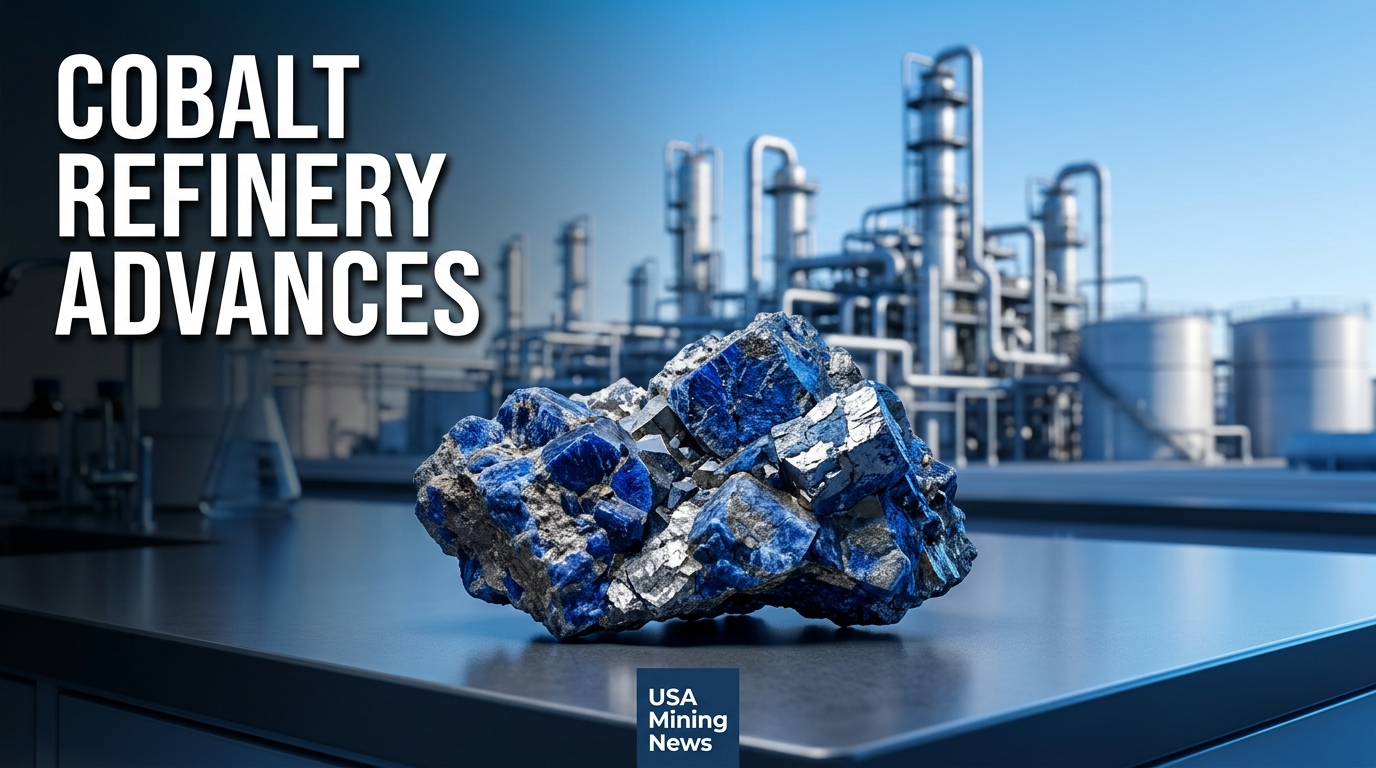
In a significant development for the global critical minerals sector, Australia's Cobalt Blue Holdings Limited announced on October 19, 2026, the signing of a non-binding offtake term sheet with STG Metals. This agreement outlines preliminary commercial terms for the potential sale of standard-grade cobalt metal rounds, boasting a purity of more than 99.8% cobalt, to be produced at Cobalt Blue’s planned Kwinana Cobalt Refinery (KCR) in Western Australia (WA). This strategic move marks a pivotal step in de-risking the KCR project and establishing an early pathway for its anticipated cobalt product, aligning with the growing global demand for ethically sourced and securely refined critical battery minerals.
Pioneering Cobalt Refining in Australia: The Kwinana Cobalt Refinery
The proposed Kwinana Cobalt Refinery is positioned as a transformative project, set to become Australia's inaugural dedicated mid-stream cobalt refinery. Located strategically within the Kwinana Industrial Zone, approximately 40 kilometers south of Perth, the facility leverages existing industrial infrastructure and its proximity to the crucial Fremantle Port for efficient logistics. This positioning is not merely geographic but also strategic, aiming to capitalize on Western Australia's robust mining ecosystem and its commitment to becoming a global hub for critical minerals processing.
The refinery’s stage one capacity is ambitious, targeting approximately 3,000 tonnes per annum (tpa) of contained cobalt. This output is further delineated into two key product streams to cater to diverse market requirements:
- Approximately 1,000 tpa of high-purity cobalt metal, specified as metal rounds containing more than 99.8% cobalt. This product is intended for specialized applications in advanced manufacturing and the defense industry, where stringent quality and purity standards are paramount.
- Approximately 2,000 tpa of cobalt in cobalt sulphate form. Cobalt sulphate is a crucial precursor material for the rapidly expanding lithium-ion battery market, essential for electric vehicles (EVs), grid-scale energy storage, and portable electronics.
By establishing a mid-stream refinery, Cobalt Blue is poised to add significant value to raw cobalt materials within Australia, moving beyond simple ore extraction to advanced processing. This aligns with broader national and international strategies to develop more resilient and diversified critical mineral supply chains, reducing reliance on single geographic regions for refined products.
The Offtake Agreement: A Step Towards Commercialization
The term sheet with STG Metals, while non-binding in its overall commitment to complete the offtake deal, is critically important for Cobalt Blue. It formalizes the preliminary commercial terms for the sale of a significant portion of the KCR’s cobalt metal output. The non-binding nature of the main terms allows for flexibility during the ongoing negotiation process, but crucially, both companies have committed to binding conditions requiring them to invest resources and actively conduct negotiations towards a definitive, legally binding offtake agreement. This commitment signals serious intent from both parties to advance the commercial relationship.
For Cobalt Blue, securing early offtake pathways is a cornerstone of its final investment decision (FID) process. As Cobalt Blue CEO Andrew Tong underscored, “Offtake is a key pillar of our FID process, and this term sheet with STG is a meaningful addition to Cobalt Blue’s commercial framework.” Such agreements provide a critical layer of revenue certainty and market validation, essential for attracting the significant capital investment required to bring a large-scale refinery project to fruition. The involvement of STG Metals, a company likely involved in the trading or distribution of industrial metals, suggests a strategic partner capable of integrating KCR’s high-purity cobalt into relevant supply chains.
Strategic Feedstock and Infrastructure Advantages
A key enabler for the Kwinana Cobalt Refinery's operational viability is its secure feedstock strategy. Cobalt Blue has already established a supply agreement with global mining giant Glencore, ensuring a reliable and consistent supply of raw material for the refining process. Glencore, with its extensive global footprint in commodity trading and mining operations, including significant cobalt production from its African assets, provides a robust and diversified feedstock source. This agreement de-risks a major operational challenge for any new refinery by guaranteeing access to essential input materials.
Furthermore, the selection of the Doral Fused Materials facility site for construction provides substantial advantages. Utilizing existing industrial infrastructure, rather than developing a completely greenfield site, offers potential cost savings, expedited development timelines, and access to established utility connections. The site’s proximity to Fremantle Port is equally crucial, facilitating efficient import of feedstock and export of refined products to international markets, thereby enhancing the project’s logistical competitiveness and overall economic efficiency.
Diverse Market Pathways: Batteries, Advanced Manufacturing, and Defense
The KCR’s product strategy reflects a sophisticated understanding of the diverse and growing demand for cobalt. By producing both high-purity cobalt metal and cobalt sulphate, Cobalt Blue is positioning itself to cater to distinct, high-value markets:
- Cobalt Metal (>99.8% purity): This grade is critical for advanced manufacturing sectors, including aerospace, specialized alloys, and certain high-performance electronics. Its superior purity is also attractive for defense applications, where material reliability and performance are paramount. The KCR aims to deliver a product suitable for these demanding specifications, contributing to the security of supply for strategic industries in Western economies.
- Cobalt Sulphate: The predominant form of cobalt used in lithium-ion battery cathodes, particularly for nickel-cobalt-manganese (NCM) and nickel-cobalt-aluminum (NCA) chemistries. The global surge in electric vehicle adoption and renewable energy storage initiatives has created unprecedented demand for battery-grade cobalt. By supplying cobalt sulphate, the KCR will directly support the burgeoning battery industry, contributing to the clean energy transition.
This dual-product approach not only diversifies revenue streams for Cobalt Blue but also enhances the KCR’s resilience against potential fluctuations in specific market segments, making it a more attractive investment proposition.
Technological Validation and Regulatory Green Light
Cobalt Blue’s commitment to robust technical development is evident through the ongoing work at its technology center in Broken Hill. This facility has been instrumental in producing pilot samples of both cobalt metal and cobalt sulphate, validating the company's proprietary refining technology and ensuring product quality meets market specifications. This internal validation process is critical for de-risking the scale-up to commercial production and building confidence among potential customers and investors.
In parallel, the project has received a crucial regulatory endorsement from the Western Australian Department of Water and Environmental Regulation. This approval to proceed with building and operating the facility signifies that the KCR project has met stringent environmental and operational standards, mitigating regulatory risks and clearing a significant hurdle in the development timeline. Such governmental approvals are fundamental for large-scale industrial projects, ensuring compliance with local laws and fostering community confidence.
Industry Context: Australia's Role in Critical Minerals Supply Chains
The Kwinana Cobalt Refinery project holds substantial significance within the broader global mining and critical minerals landscape. Cobalt, designated as a critical mineral by numerous governments, including the United States, is vital for modern technological applications. The vast majority of global cobalt refining capacity is concentrated in a single country, creating supply chain vulnerabilities and geopolitical risks. Projects like KCR, located in politically stable jurisdictions with high environmental and labor standards such as Australia, are crucial for diversifying and securing these vital supply chains.
Australia has been actively positioning itself as a reliable and responsible supplier of critical minerals, not just raw materials but also value-added processed products. The KCR aligns perfectly with this national strategy, transforming mined cobalt into high-value refined products. This not only enhances Australia's economic contribution from its mineral wealth but also provides Western manufacturers and defense industries with a transparent, ethically sourced, and environmentally responsible supply of cobalt. The project contributes to creating a more robust and resilient global battery and advanced manufacturing ecosystem.
Path to Final Investment Decision (FID) and Future Outlook
The offtake term sheet with STG Metals is a clear indicator that Cobalt Blue is systematically addressing the key prerequisites for a Final Investment Decision (FID). As CEO Andrew Tong highlighted, this agreement, when combined with the binding feedstock agreement with Glencore and the ongoing product qualification work at the Broken Hill Technology Centre, significantly strengthens the project's commercial foundations. An FID typically hinges on securing financing, firming up feedstock and offtake agreements, and completing all necessary technical and regulatory approvals.
The next steps for Cobalt Blue will involve continued negotiations with STG Metals to finalize a definitive offtake agreement, potentially alongside other similar agreements for both cobalt metal and cobalt sulphate. Successfully securing these commercial arrangements will be paramount in de-risking the project further and unlocking the necessary funding to proceed with construction and operation. The Kwinana Cobalt Refinery, once operational, is poised to become a cornerstone asset in the emerging Western critical minerals processing supply chain, offering a vital and diversified source of high-quality cobalt to meet the escalating demands of the 21st century's technological revolution.