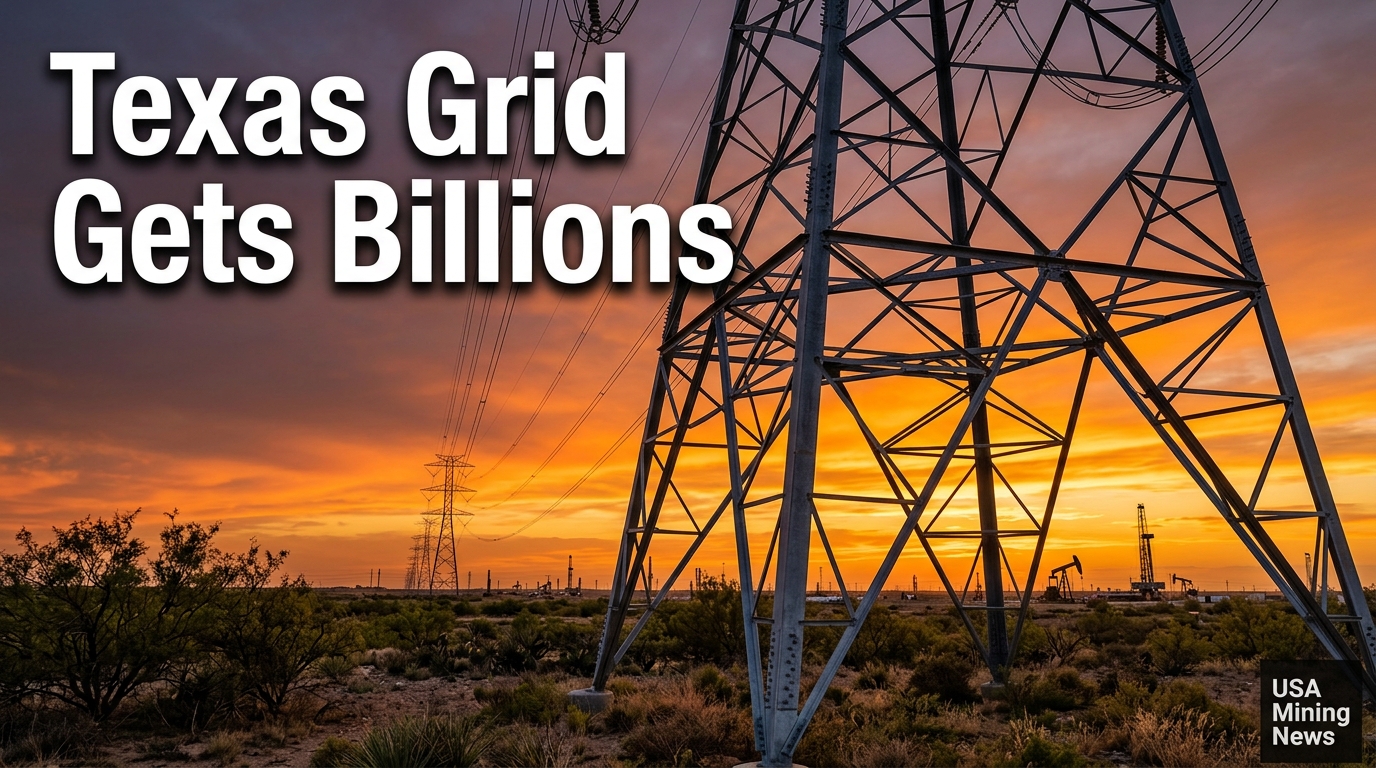
In a move poised to reshape Texas's energy landscape and bolster national energy security, the U.S. Department of Energy’s (DOE) Office of Energy Dominance Financing (EDF) officially closed a monumental loan of up to $3.26 billion to AEP Texas on July 8, 2026. This substantial federal backing is earmarked for a comprehensive initiative to lower electricity costs for millions of Texans and to significantly strengthen and modernize the state's sprawling and complex electricity grid. For an industry as energy-intensive as mining, and one that directly supports the very sectors driving Texas’s growth, this infrastructure commitment signals improved operational stability and potential cost efficiencies.
A Landmark Investment for Texas Grid Modernization
The financing, officially announced in Washington, D.C., represents a critical investment in one of the nation's most dynamic energy markets. AEP Texas, a major utility provider in the state, will utilize these funds to undertake an ambitious program of infrastructure development. The core objective is multifaceted: to enhance the reliability of the grid, reduce power interruptions, and ensure a stable, affordable energy supply for a rapidly growing population and an expanding industrial base. This action stands as the Trump Administration’s third concurrent conditional commitment and financial close, as well as the third utility financing completed through the robust Energy Dominance Financing Program, underscoring a consistent federal strategy to empower the private sector in achieving national energy goals.
The Energy Dominance Financing program, operating under President Trump's leadership, is explicitly committed to fostering American energy and manufacturing projects that meaningfully contribute to U.S. energy security, grid reliability, and the reduction of costs for all Americans. This philosophy is deeply embedded in the AEP Texas loan, which aims to provide tangible benefits not just to consumers but also to the industrial backbone of the Texan economy.
Strategic Objectives and Economic Impact
The financial commitment is projected to deliver significant economic returns, most notably in direct cost savings for Texan consumers and businesses. Thanks to President Trump’s Working Families Tax Cuts Act, the investment is anticipated to save more than one million Texas households and businesses approximately $685 million in electricity costs over the next 30 years. These savings are a direct result of increased efficiency and reduced operational overhead for AEP Texas, projected to translate into lower tariffs for end-users.
Beyond the financial benefits, the broader strategic objectives are equally compelling. The initiative is set to create thousands of jobs across the state, from construction and engineering roles to long-term maintenance positions, providing a substantial stimulus to the local economy. U.S. Energy Secretary Chris Wright articulated the broader vision, stating, President Trump's Working Families Tax Cuts Act is driving investments that strengthen America’s energy infrastructure while lowering costs for hardworking families.
Wright further emphasized that This investment will modernize Texas’ electric grid, support the energy needed for AI, advanced manufacturing, the Permian Basin, and help keep electricity costs down for Texans.
This statement directly highlights the critical role of robust energy infrastructure in supporting emerging technologies and established industrial powerhouses, segments where the mining industry plays a foundational role.
Project Scope and Technical Enhancements
The scale of the planned infrastructure overhaul is immense. In accordance with President Trump’s Executive Order, Unleashing American Energy, the $3.26 billion loan will finance approximately 100 distinct transmission projects across Texas. These projects encompass a comprehensive modernization effort, including:
- Rebuilding or reconductoring existing transmission lines: This involves upgrading older infrastructure with newer, more efficient materials and designs capable of handling increased power loads and reducing line losses.
- Constructing new transmission infrastructure: Expanding the physical footprint of the grid to reach new areas of demand, including burgeoning industrial zones and population centers.
- Spanning roughly 2,800 miles: This extensive reach ensures that the upgrades will have a statewide impact, connecting disparate regions and improving overall grid stability.
Technically, these projects are designed to double the power-carrying capacity of the upgraded transmission infrastructure. This significant enhancement will directly address projected increases in electricity demand while simultaneously reducing the frequency and duration of power interruptions, a common concern in large, dynamic grids. Furthermore, the expansion of transmission capacity will facilitate the connection of new sources of reliable baseload generation to the grid, ensuring a more diversified and robust energy supply to meet the state's growing needs. Integrating new generation, whether from traditional thermal sources or utility-scale renewables, requires robust transmission to deliver power efficiently to load centers.
Meeting Surging Demand: The Role of Industrial Growth
A driving force behind these grid improvements is the surging electricity demand emanating from a diverse array of industrial sectors. Secretary Wright’s remarks underscore the primary beneficiaries of this modernized grid: data centers, advanced manufacturing facilities, and critically for the mining sector, the intensive oil and natural gas development in the Permian Basin. Each of these sectors represents significant and growing load centers, requiring reliable and high-capacity electricity to sustain operations.
For the mining industry, the expansion of oil and natural gas activities in the Permian Basin is of paramount importance. The Permian, located primarily in West Texas and Southeastern New Mexico, is one of the world's most prolific hydrocarbon basins, responsible for a significant portion of U.S. crude oil and natural gas production. Operations within the Permian are highly energy-intensive, from drilling and hydraulic fracturing (fracking) to pumping, processing, and midstream transportation. These activities rely heavily on electricity for compressors, pumps, lighting, and sophisticated monitoring equipment. A more stable, higher-capacity grid directly supports the continued expansion and operational efficiency of these vital extraction operations. This, in turn, drives demand for a myriad of mined products, including frac sand, steel for drilling rigs and pipelines, rare earth elements for advanced drilling technology, and various industrial minerals used in the processing of hydrocarbons.
Similarly, the growth of data centers and advanced manufacturing in Texas translates into increased demand for raw materials. Data centers require significant quantities of copper, aluminum, and other specialized metals for cabling and cooling systems, while advanced manufacturing facilities, ranging from semiconductors to aerospace components, are voracious consumers of diverse minerals and metals. A reliable power grid is the foundational infrastructure that enables these industries to operate and expand, thereby creating a sustained and growing market for the products of the mining sector.
Implications for the Mining Sector
While the loan directly targets utility infrastructure, the ripple effects for the mining industry are significant and overwhelmingly positive. A modernized and more reliable Texas grid offers several key benefits:
- Enhanced Operational Stability: Mining operations, whether for industrial minerals, aggregates, or specialized metals, are highly sensitive to power interruptions. Unplanned outages can lead to significant downtime, damage to equipment, and safety concerns. By reducing power interruptions, the AEP Texas projects ensure greater continuity of operations for energy-intensive processes like crushing, grinding, conveying, and pumping, minimizing costly delays.
- Predictable and Lower Energy Costs: Electricity represents a substantial operational expenditure for most mining companies. The projected $685 million in cost savings across Texas, while primarily benefiting households, also signals a more stable and potentially lower-cost energy environment for commercial and industrial users. More affordable and predictable energy prices allow mining companies to better manage their budgets, improve profitability, and allocate capital more effectively to exploration and development.
- Increased Demand for Raw Materials: The construction of 2,800 miles of new and upgraded transmission lines requires a colossal amount of raw materials. This includes copper and aluminum for conductors, steel for transmission towers and support structures, and aggregates for foundations and access roads. The demand generated by these approximately 100 projects provides a direct stimulus to the mining and aggregate production sectors within Texas and surrounding regions.
- Support for Industrial Expansion: As the grid strengthens, it enables the further expansion of energy-intensive industries such as oil and gas, data centers, and advanced manufacturing. This growth, in turn, fuels an increased demand for the specific minerals and metals these industries consume, creating a robust long-term market for mining products.
- Regional Competitiveness: A strong, reliable, and affordable energy infrastructure enhances Texas’s attractiveness for industrial investment. This improved competitiveness can encourage the establishment of new mining operations or expansions of existing ones within the state, as companies seek locations with optimal infrastructure support.
The EDF Program and Future Outlook
The DOE’s Office of Energy Dominance Financing program is a cornerstone of the broader national strategy to reinforce U.S. energy independence and economic strength. By leveraging federal financing to de-risk private sector investments in critical infrastructure, EDF empowers industries to innovate and expand. The AEP Texas loan is a clear example of this strategy in action, demonstrating EDF’s commitment to financing projects that contribute meaningfully to U.S. energy security, grid reliability, and economic competitiveness.
The program's focus on enabling the private sector to invest in the future, win the AI race, strengthen American industry, and restore American Energy Dominance underscores a comprehensive approach to national progress. This includes ensuring that foundational industries like mining have the energy infrastructure necessary to thrive and supply the raw materials essential for these ambitious goals. As the nation continues to emphasize domestic energy production and manufacturing, demand for a diverse range of critical minerals and metals will only escalate, making reliable and affordable electricity more crucial than ever.
The successful closing of this $3.26 billion loan to AEP Texas represents more than just a financial transaction; it is a strategic investment in the future of American energy infrastructure. It promises a more reliable and cost-effective electricity supply for Texas, enabling continued industrial growth across vital sectors. For the mining industry, this translates into direct demand for its products, combined with the assurance of a stable and affordable energy backbone—factors critical for long-term operational success and strategic planning in a highly competitive global market.