Navigating the Nuances of North American Nuclear Energy Hiring
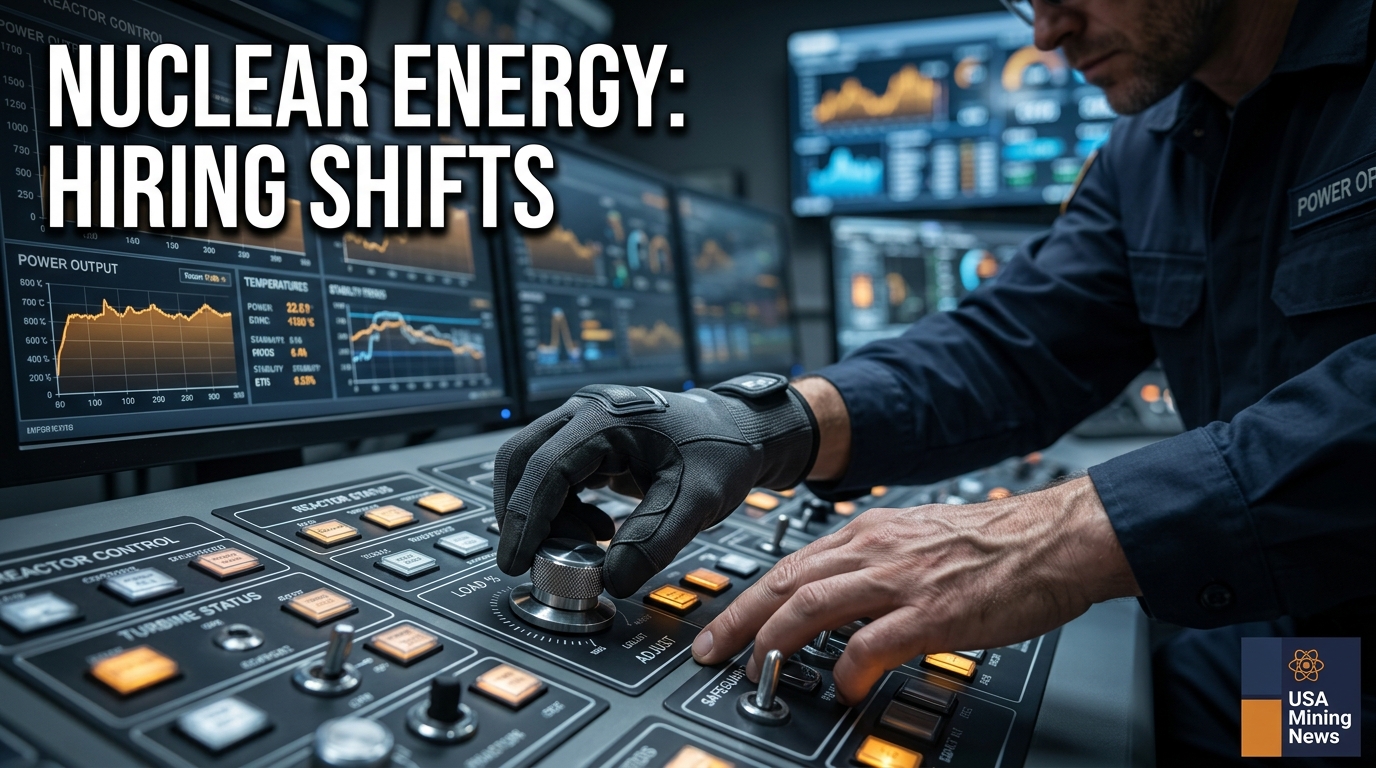
For discerning leaders and investors across the energy and mining complex, granular hiring and workforce data serves as an invaluable early warning system, offering a forward-looking perspective on sector performance. By meticulously tracking job postings across specific roles, skill sets, and geographic regions, industry participants can gain critical insights into competitive movements, emerging market opportunities, and potential strategic misalignments. The latest analysis of the North American nuclear energy sector, covering the period from June 2025 to May 2026, reveals a compelling narrative that diverges significantly from initial aggregate observations. While a deceleration in overall hiring volumes might suggest a broader slowdown, a deeper dive into the data uncovers strategic capacity-building by key pure-play nuclear operators, a trend with profound implications for energy stability and the upstream uranium market.
The effective positioning window for interpreting these hiring signals is typically narrow, ranging from one to three months. By the time market consensus fully reacts, the underlying data has often already shifted, underscoring the necessity of real-time, comprehensive intelligence. GlobalData Jobs Analytics, by capturing point-in-time job postings directly from company career pages and meticulously tagging them by company, sector, and theme, provides this essential clarity. It illuminates where investment and capability-building are progressing, where markets are cooling, and where demand is beginning to amplify. This in-depth examination allows industry stakeholders to look past the superficial contraction and identify formidable players strategically positioning for sustained nuclear growth, while others quietly adjust their footprints.
The Shifting Tides: A Deep Dive into Hiring Statistics
The headline figures regarding North American nuclear energy hiring initially suggest a period of growth followed by a pullback. Indeed, the sector experienced robust expansion throughout the second half of 2025, with year-over-year (YoY) active posting growth rates ranging impressively from 30% to 73% between June and November of that year. However, this growth cycle demonstrably turned in early 2026. YoY comparisons became negative starting in February 2026, and the most recent data for May 2026 unequivocally confirms that the sector is undergoing a volume correction.
A closer examination of the data reveals the specifics of this inflection. Active nuclear job postings peaked at 15,167 in March 2026, representing a significant increase from the 12,847 roles recorded at the August 2025 trough. By May 2026, however, active postings had retraced to 14,016, marking a 12% decrease year-over-year. Similarly, posted jobs for May 2026 stood at 8,624, down 13% compared to May 2025. This inflection point is clear: eight consecutive months of positive YoY growth from June 2025 through January 2026 were followed by four consecutive months of contraction. Notably, June 2025 recorded a posted volume of 10,605, the highest in the trailing twelve months, a level that May 2026 has not yet recovered.
Beyond active postings, the volume of closed postings provides additional insight. From February through May 2026, closed postings consistently ran above new posted volumes. This critical indicator signals a genuine drawdown of open role inventory, suggesting that companies are not merely slowing new requisitions but are actively and efficiently filling the positions they have. The sector is posting fewer new jobs, and simultaneously, it is filling existing roles at a faster pace.
Strategic Divergence: Who is Building Capacity and Who is Retracting?
The aggregate contraction in nuclear hiring masks a crucial split, one that maps directly onto the type of operator. This analytical distinction is paramount for understanding the strategic direction of the industry. Pure-play nuclear operators, those with primary or significant exposure to nuclear energy generation, are conspicuously ramping up their workforces, directly countering the broader sector mean. For instance, GE Vernova, the dedicated nuclear equipment and services company that spun off from GE in 2024, posted 585 roles in May 2026, an astonishing 280% increase year-over-year compared to 154 roles in May 2025. Vistra Corp, recognized as the largest competitive power generator in the United States and possessing substantial nuclear capacity, saw its postings rise by 74% YoY. Similarly, Exelon, a pure-play nuclear and regulated utility operator, increased its hiring by 40% year-over-year. These are not minor adjustments; these companies are making deliberate and material commitments to build workforce capacity even as the sector at large contracts.
In stark contrast, several prominent service and engineering contractors, along with broader energy management businesses, are pulling back. Amentum Services, while still a volume leader with 1,534 postings in May 2026, registered a 2% decrease year-over-year. Schneider Electric, a diversified energy management business with exposure to the nuclear sector, experienced a significant 28% reduction in its nuclear-related postings. Both PG&E and Westinghouse also saw their hiring volumes decline in the mid-teen percentages. The cross-sectional spread between GE Vernova's robust 280% growth and Schneider Electric's 28% contraction exceeds 300 percentage points, underscoring the profound differences in strategy currently at play. This wide variance illustrates that a reliance on aggregate nuclear hiring data risks overlooking these critical directional signals, failing to differentiate between companies making significant long-term workforce investments and those adopting a more cautious approach.
Workforce Composition: Scaling Operations vs. Capability Investment
An examination of the seniority profiles within May 2026 nuclear postings reveals a highly operational focus. The overwhelming majority of positions, 97% to be precise, fall below the senior level. Mid-level roles constitute the largest segment at 49% of postings, followed by junior roles at 33%, and entry-level positions at 15%. Senior-level roles account for a mere 3% of the total. This mix stands in stark contrast to other capital-intensive sectors, such as Liquefied Natural Gas (LNG) hiring in the same month, where operators skewed approximately 80% toward mid- and senior-band roles. This specific seniority distribution in nuclear energy hiring is highly sectoral. Nuclear operations demand substantial workforces comprising licensed operators, highly skilled maintenance technicians, specialist radiation protection personnel, and diligent quality assurance staffers, all predominantly falling within the mid and junior experience bands. Therefore, the seniority mix primarily reflects the essential operational headcount requirements for managing and sustaining a nuclear fleet, rather being indicative of a preference for depth over breadth in strategic capabilities.
However, within this operational context, a critical nuance emerges: companies that are specifically building senior and specialist hiring into their otherwise mid-level dominated programs are making a profound capability statement. These targeted senior hires, while few in aggregate, signal strategic investments in leadership, advanced engineering, or specialized technical expertise, positioning those operators for future innovation, challenge resolution, and expansion that the broad seniority data might not immediately surface.
Thematic Focus: Navigating Regulatory and Operational Pressures
The thematic composition of nuclear hiring postings provides insight into the sector's most pressing concerns and strategic priorities. Environment-related roles lead all nuclear hiring themes, with 1,955 postings. This prominence is entirely consistent with the rigorous compliance and extensive safety reporting obligations that are endemic to nuclear operational hiring. Following closely is Governance, with 1,352 postings, which further reinforces the significant regulatory burden and emphasis on stringent oversight within the nuclear industry. Together, these two categories represent the largest thematic areas, highlighting an unwavering focus on safety, compliance, and regulatory adherence.
These leading themes collectively outpace other important categories, including Future of Work, which accounts for 1,284 postings, and Social, with 1,044 postings. The "Nuclear" theme itself ranks fifth with 934 postings, indicating specific requirements for specialist domain expertise distinct from general operational roles. The strong showing of "Environment" and "Governance" underscores the sector's commitment to managing its environmental footprint, ensuring regulatory compliance, and upholding the highest safety standards, which are non-negotiable aspects of nuclear power generation. The presence of "Future of Work" and "Social" themes suggests an industry also grappling with broader trends such as attracting and retaining talent, fostering innovation in work methodologies, and addressing social responsibility in its operations and community engagement.
Implications for the Mining Industry
For the mining industry, particularly those involved in uranium extraction and processing, these trends in nuclear energy hiring in North America offer crucial forward-looking signals. The sustained and even expanding workforce capacity among pure-play nuclear operators like GE Vernova, Vistra Corp, and Exelon directly underpins the long-term viability and growth prospects of nuclear power. This, in turn, translates into a committed, long-term demand for uranium as a critical fuel source.
The capital-intensive nature of both nuclear power generation and uranium mining means that stability and growth in one directly influence the other. When power generators and equipment providers are investing in their human capital – particularly in operational, safety, and regulatory compliance roles – it signals confidence in the future of their nuclear fleets and potential expansions. This confidence reinforces the justification for investments in new uranium exploration and mine development, projects that often span decades from discovery to production. The consistent need for licensed operators, maintenance technicians, and regulatory specialists points to a reliable base load demand for fuel, mitigating some of the market volatility often seen in other commodities. Furthermore, the strong emphasis on "Environment" and "Governance" themes in nuclear hiring aligns with increasing Environmental, Social, and Governance (ESG) expectations across the mining sector, pushing for even greater accountability and sustainability in uranium supply chains.
Future Outlook: Strategic Positioning for the Next Phase of Growth
The current landscape of North American nuclear energy hiring, while presenting a mixed aggregate picture, offers profound strategic insights for those willing to scrutinize the underlying data. The core takeaway is clear: despite an overall slowdown in new job postings, key pure-play operators are not merely maintaining but actively augmenting their nuclear workforces. This targeted capacity building, specifically in core operational, safety, and regulatory roles, suggests a deliberate positioning for the sector's next phase of growth or, at minimum, a robust commitment to maintaining and optimizing existing assets.
Looking ahead, the success of these strategic workforce expansions will be pivotal. Efficiently staffing complex nuclear operations with licensed and skilled personnel is a prerequisite for project execution, safe operation, and achieving desired output levels. If these companies successfully integrate their new hires and scale their operational capabilities, it could pave the way for future capacity additions or life extensions of existing plants, further solidifying the long-term demand for uranium. For investors and decision-makers in the mining industry, understanding these granular hiring trends provides a distinct competitive advantage, allowing for more informed investment decisions and strategic planning in anticipation of the evolving energy landscape. The "next phase of nuclear growth" may not be uniform across all industry participants, but it is demonstrably being built, person by person, within the strategies of its most committed players.