WASHINGTON D.C. – The U.S. Department of Energy (DOE) announced on April 30, 2026, a significant move to bolster global oil supply stability by issuing a Request for Proposal (RFP) for an emergency exchange of up to 92.5 million barrels of crude oil from the Strategic Petroleum Reserve (SPR). This latest action represents a critical continuation of President Trump’s directive for a swift 172-million-barrel crude oil release, forming a key component of a broader 400-million-barrel coordinated action orchestrated by the International Energy Agency (IEA) member nations.
For the mining industry, a sector heavily reliant on stable and affordable energy inputs, such developments in global petroleum markets are more than just headline news; they are fundamental to operational efficiency, cost management, and long-term planning. The stability of crude oil prices directly impacts the cost of fuel for heavy machinery, electricity prices for processing plants, and the overall economic environment in which mining projects operate. The DOE's proactive stance aims to mitigate short-term supply disruptions, thereby contributing to a more predictable and stable energy landscape globally.
The Latest Strategic Petroleum Reserve Exchange
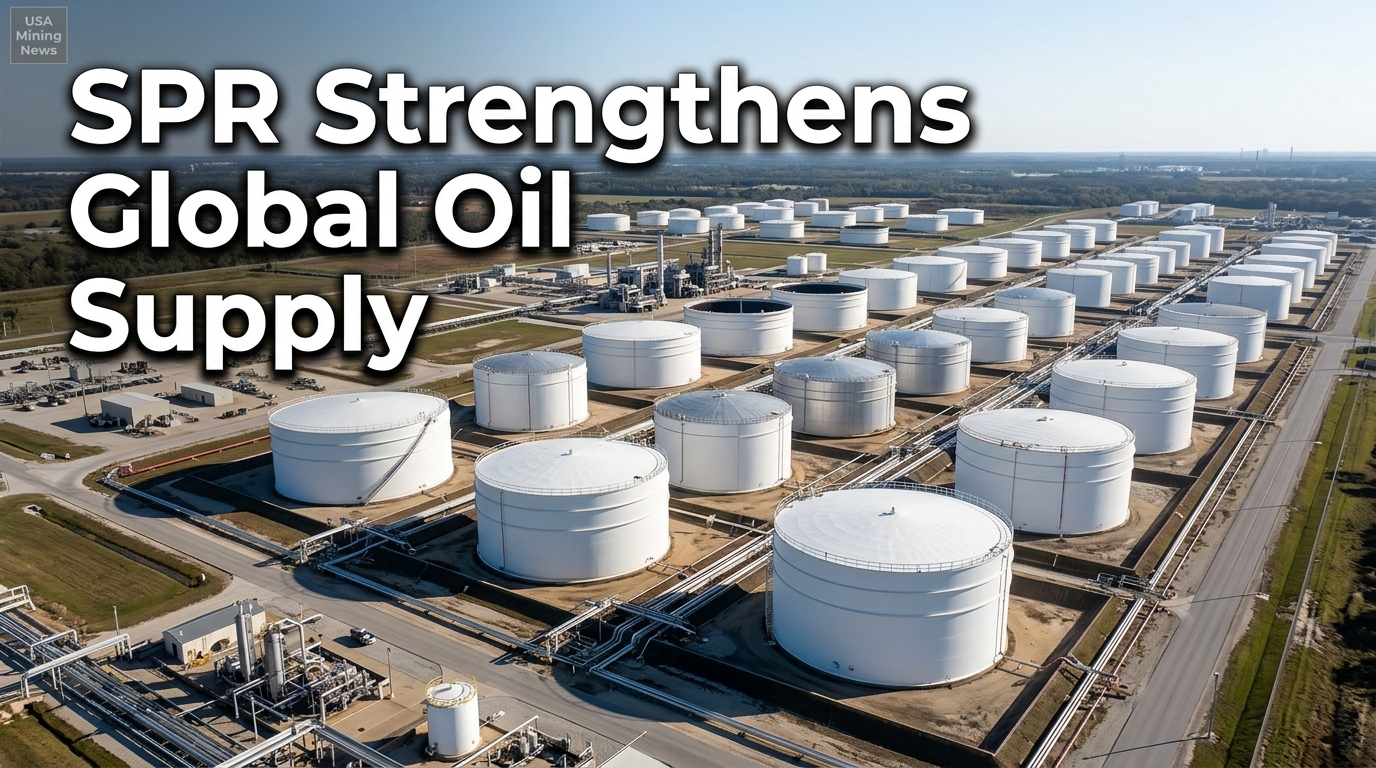
The RFP, issued by the Office of Petroleum Reserves, opens competitive bidding for crude oil to be drawn from the SPR’s strategic sites, specifically Bayou Choctaw, Bryan Mound, Big Hill, and West Hackberry. These facilities, integral to America’s energy infrastructure, are designed to hold crude oil reserves for release during national or international supply disruptions. The bid submission deadline for this solicitation is set for 11:00 A.M. Central Time on Monday, May 4, 2026, underscoring the urgency with which the DOE is moving to address current market dynamics.
This initiative builds upon three prior emergency exchange RFPs that have already awarded approximately 80 million barrels across two completed exchanges. These earlier exchanges successfully demonstrated the SPR’s robust capability to rapidly deploy crude oil under emergency authorities, a testament to the reserve’s operational readiness and the DOE's logistical expertise. The overarching goal of these releases is to ensure critical crude oil supplies quickly reach the market, thereby addressing immediate supply pressures and enhancing energy security for the United States and its allies.
A Mechanism for Market Stability and Reserve Growth
A distinctive feature of the DOE’s exchange authority is its innovative mechanism for both offering immediate supply relief and strengthening the SPR. Under this framework, participating companies that borrow crude oil are required to return the barrels at a later date, along with additional “premium” barrels. This premium ensures a net increase in the SPR’s total volume, allowing the reserve to grow beyond its current levels without direct cost to American taxpayers.
Assistant Secretary for the Hydrocarbons and Geothermal Energy Office, Kyle Haustveit, emphasized this dual benefit, stating, “With today’s announcement, we are issuing an additional exchange to continue the President’s commitment to the coordinated release. These actions help move oil quickly into the market, address short-term supply pressures, and ensure that the Strategic Petroleum Reserve remains strong through the return of premium barrels.” Previous exchanges have already yielded a notable 24 percent premium in returned crude oil barrels, highlighting the financial prudence and strategic foresight embedded within this policy.
Historical Context and Presidential Directives
The series of SPR exchange solicitations under President Trump's leadership has been described by the Department as the largest and fastest in the Reserve’s 50-year history. This aggressive approach reflects a commitment to leveraging national energy assets to stabilize global markets and protect U.S. economic interests. The Strategic Petroleum Reserve, established in 1975 following the 1973-74 oil embargo, serves as a critical buffer against major energy supply disruptions, offering a strategic national asset that can be deployed rapidly to address crises ranging from natural disasters to geopolitical events.
This specific coordinated action, totaling 400 million barrels across IEA member nations’ strategic reserves, underscores an international commitment to energy security. Such multilateral efforts are crucial in complex global commodity markets, providing a unified front against volatility. The administration’s broader energy policy, as indicated by a previous press release regarding Secretary Wright signing agreements to grow American LNG exports and advance the ‘Trump Peace Pipelines Framework’ on April 28, 2026, points to a comprehensive strategy aimed at enhancing U.S. energy influence and securing global supply chains.
Operational Logistics: From Storage to Market
The four SPR sites involved in this exchange—Bayou Choctaw, Bryan Mound, Big Hill, and West Hackberry—are strategically located along the Gulf Coast of Texas and Louisiana, areas vital to the U.S. petroleum refining and distribution network. These sites utilize vast underground salt caverns to store crude oil, offering an efficient and secure method of long-term storage. The ability to rapidly deliver crude oil from these geographically diverse locations ensures that refiners can access necessary supplies quickly, minimizing disruptions to the national and international supply chain.
The process of an emergency exchange typically involves receiving bids from eligible companies, awarding contracts, and then physically transferring crude oil from the SPR facilities to commercial pipelines or tankers for onward distribution to refineries. The speed with which these operations can be executed, as demonstrated by the previous 80 million barrels awarded, is a key characteristic of the SPR’s effectiveness as a stabilization tool.
Implications for the Mining Industry
While the immediate focus of SPR releases is on the petroleum market, the ramifications extend significantly to the mining industry. Mining operations are inherently energy-intensive. Heavy-duty equipment, such as excavators, haul trucks, and drills, typically run on diesel fuel. Fluctuations in crude oil prices directly translate into volatile operational costs for mining companies. A stabilized oil market, supported by actions like the current SPR exchange, provides a more predictable cost environment, enabling better financial planning and risk management for mining ventures worldwide.
- Fuel Costs: Diesel fuel is a primary expenditure for open-pit mines, where massive volumes of overburden and ore are moved daily. Unexpected spikes in diesel prices can severely erode profit margins, making marginal projects uneconomical.
- Electricity Generation: Many remote mining sites rely on diesel generators for electricity, especially for processing plants involved in crushing, grinding, and refining ores. Stable crude oil prices indirectly support stable electricity costs.
- Transportation: The cost of transporting mined commodities to market, often via rail, truck, or marine vessels, is also heavily influenced by fuel prices. Consistent energy costs benefit the entire logistics chain.
- Investor Confidence: A stable energy market fosters greater confidence among investors, who are more likely to fund projects when major input costs are predictable. This is particularly crucial for exploration and capital-intensive development projects in mining.
For an industry grappling with increasing demands for critical minerals while navigating complex geopolitical and environmental landscapes, consistent energy supply and pricing are foundational to meeting global material needs. The DOE’s actions, therefore, contribute to the broader economic stability that underpins sustained investment and development in the mining sector.
Looking Ahead: Ensuring Energy Resilience
The immediate next step following the May 4, 2026, bid deadline will be the evaluation of proposals and the awarding of contracts to participating companies. Once awarded, the delivery of the 92.5 million barrels will proceed, contributing to the global supply of crude oil. The successful execution of this exchange will not only provide immediate market relief but also reinforce the role of the SPR as a robust instrument of U.S. national and global energy security policy.
Beyond this specific exchange, the continuous monitoring of global oil markets and geopolitical developments will dictate future strategies for the SPR. The ability to replenish the reserve with a premium of returned barrels ensures its long-term viability and effectiveness. As the world continues to evolve its energy mix, the strategic management of petroleum reserves remains a critical component of ensuring economic stability and resilience, providing a vital safeguard that resonates across industrial sectors, including the vital mining industry.